
Self-host scanopy
v0.19.6- Stars
- 5 950
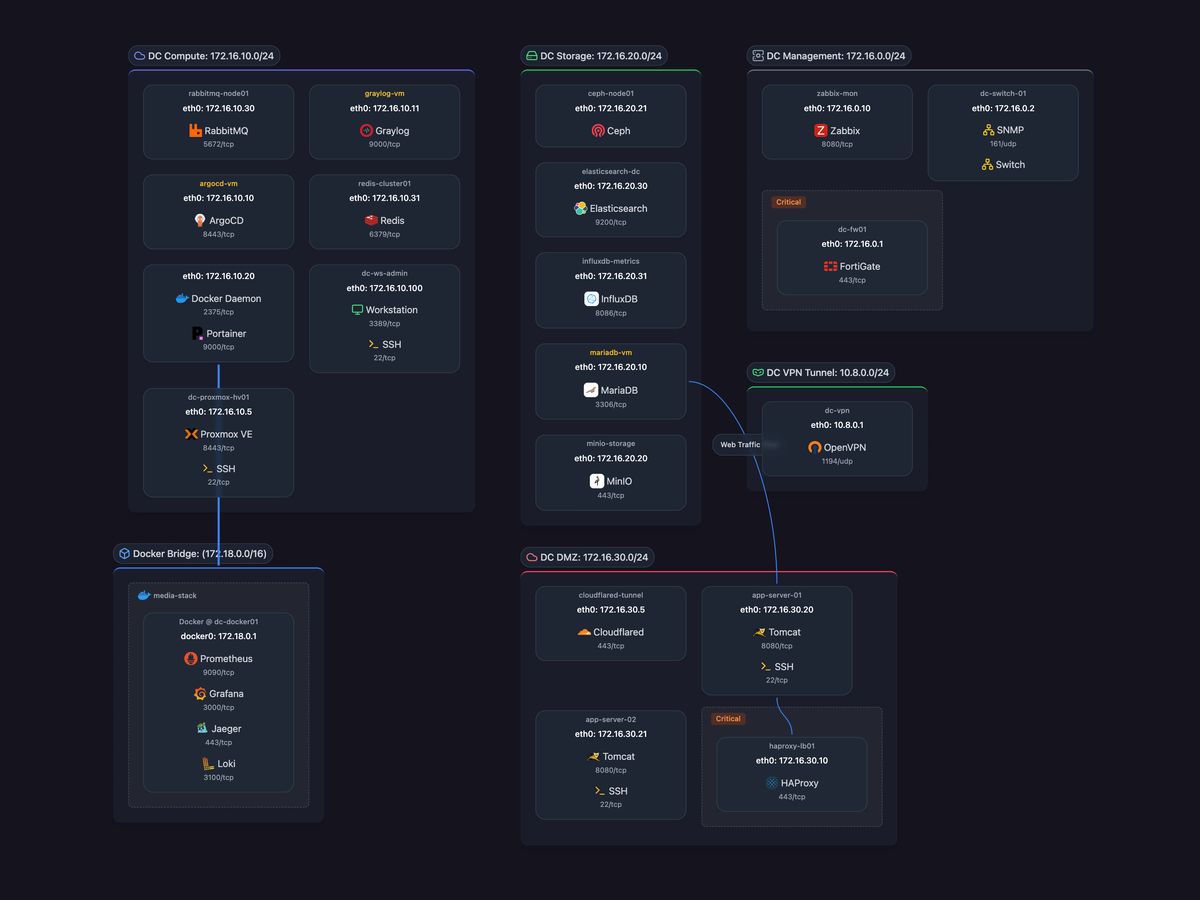
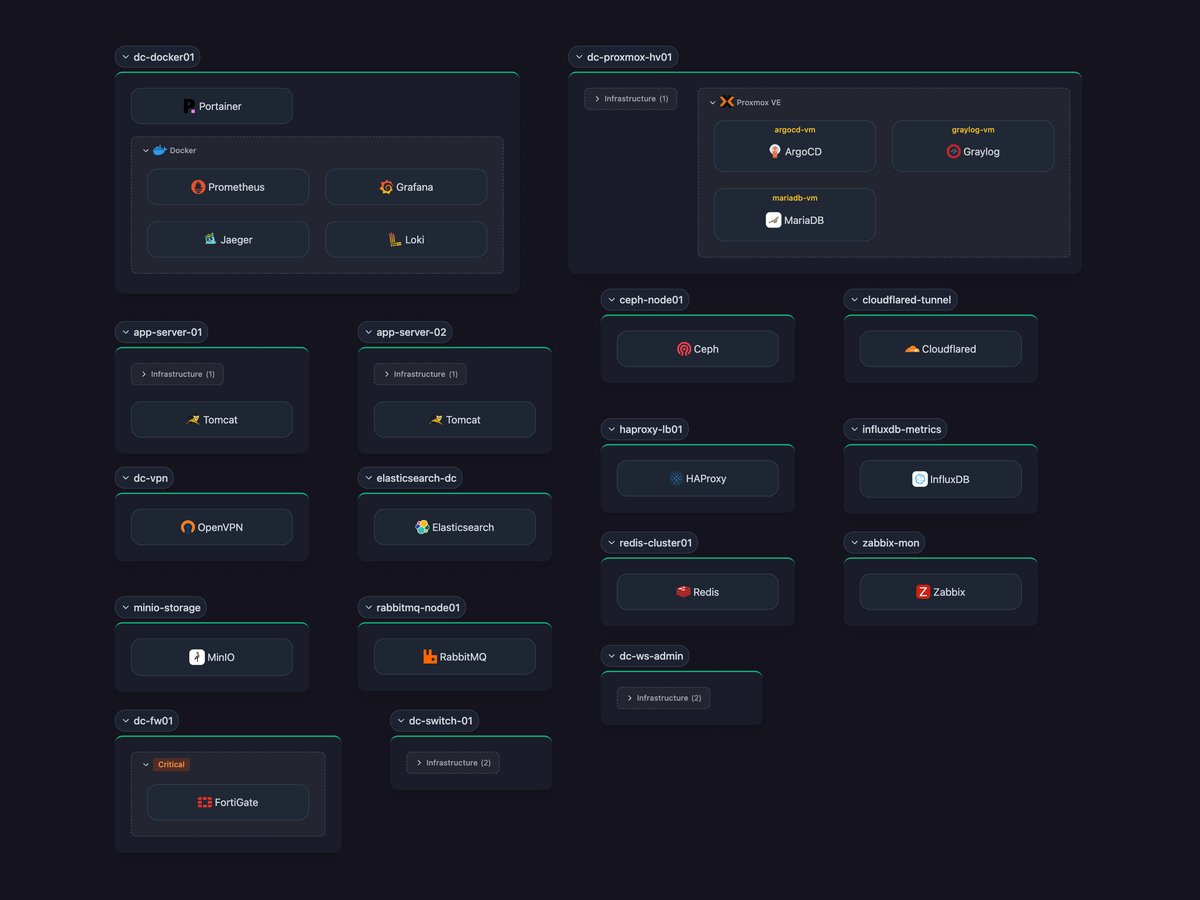
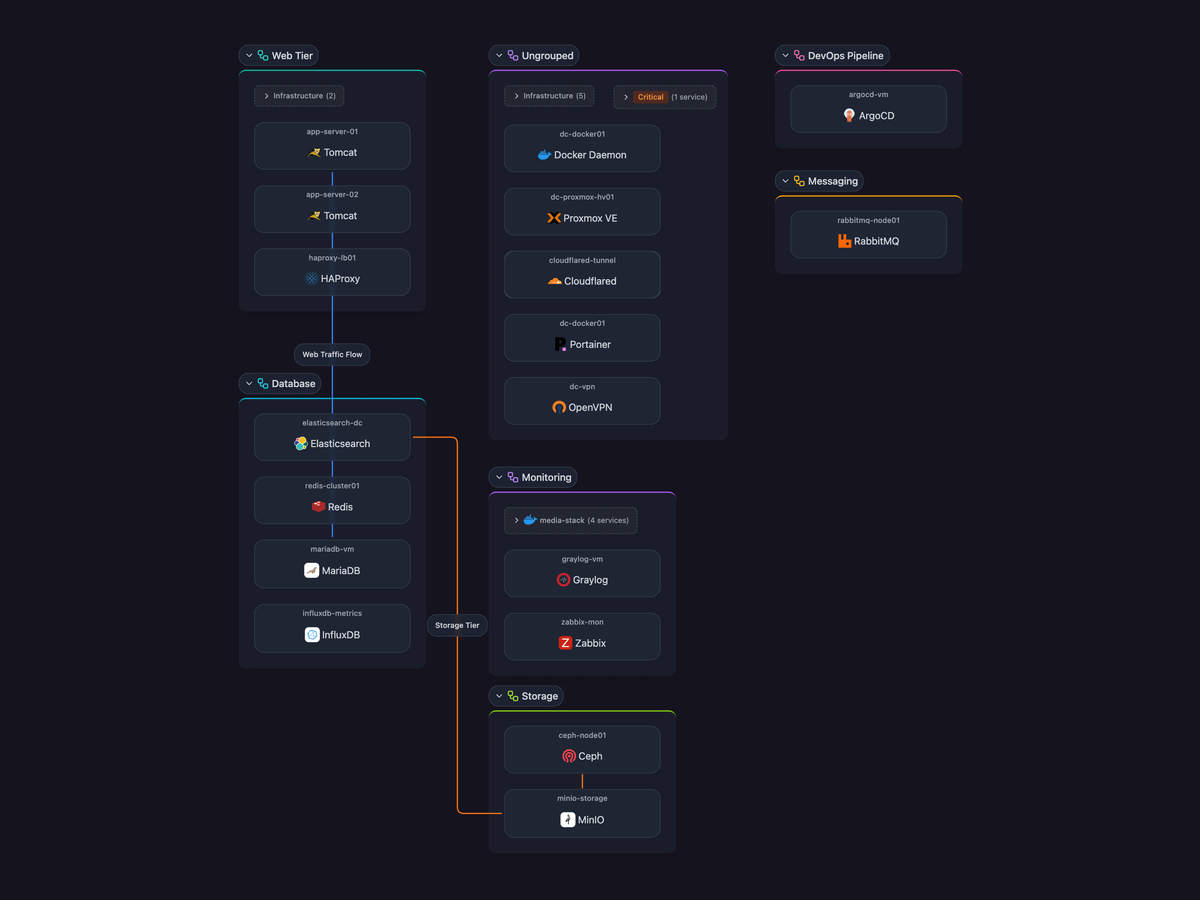
What is scanopy?
Scanopy is a self-hosted network documentation platform that automatically generates and maintains up-to-date network diagrams. Instead of manually drawing diagrams in tools like draw.io or Visio—which quickly become outdated—Scanopy continuously scans your network to create a living model of your infrastructure. It maps hosts, services, subnets, and dependencies using protocols like SNMP, LLDP, ARP, and Docker integration, providing four distinct views: L2 (physical), L3 (logical), workloads, and applications.
Designed for IT operations, DevOps, network engineers, MSPs, and homelab enthusiasts, Scanopy eliminates the need for manual updates by rescanning on a schedule. It supports over 230 service definitions, distributed scanning for multi-site and multi-VLAN topologies, and integrates with Docker and SNMP for comprehensive discovery. The platform also includes multi-user support with role-based access control (RBAC), shareable live views, and export options for SVG, Mermaid, and Confluence markup.
Scanopy is available as a free, self-hosted Community Edition under the AGPL-3.0 license, with a commercial license option for those who cannot comply with AGPL terms. A hosted solution, Scanopy Cloud, is also available for teams preferring a managed service.
scanopy alternatives
 NetMapNetMap is a self-hosted, open-source network monitoring and IPAM tool for home labs. Combines topology, inventory, monitoring, firewall logs, and alerting.CompareNetMap with scanopy
 The-One-FileSelf-hosted offline-first network topology editor in a single HTML file with optional Docker collaboration.CompareThe-One-File with scanopy
 atlasOpen-source, self-hosted network scanner that discovers Docker containers and subnet hosts, then maps them in an interactive React dashboard.Compareatlas with scanopy
 HomeLabInfoSelf-hosted, open-source network scanner and visualization dashboard for homelab infrastructure with DHCP discovery, topology mapping, and container monitoring.CompareHomeLabInfo with scanopy
 LanLensLanLens is a self-hosted, open-source network inventory that discovers devices via ARP scanning, documents them with SNMP context, and exports to CMDB/i-doit via Docker.CompareLanLens with scanopy
 netxmsSelf-hosted, open-source network monitoring with L2/L3 topology discovery, distributed agents, NXSL scripting, and no node limits on Linux.Comparenetxms with scanopy
 LibreNMSSelf-hosted, open-source network monitoring system that auto-discovers devices over SNMP and graphs, alerts and bills traffic, with Docker or LAMP-style installs.CompareLibreNMS with scanopy
 FossFLOWFossFLOW is a self-hosted, open-source PWA for creating isometric infrastructure diagrams with drag-and-drop editing, connector routing, and JSON import/export.CompareFossFLOW with scanopy
Should you self-host scanopy?
scanopy scores 64/100 on selfhost.directory (how scoring works) and ranks #1 of 10 in Network. It has 5 950 GitHub stars, +103 in the last 30 days.
It shipped 43 stable releases in the past year. The latest, v0.19.6, came out on 3 November 2026. New versions land roughly every 3 days.
Setup is moderate: expect some configuration beyond a single command. It is AGPL-3.0-licensed and written mostly in Rust.
Its closest alternative on selfhost.directory is openHop Repeater (53/100, 309 stars). scanopy scores higher overall. See scanopy vs openHop Repeater side by side.
scanopy README


More in Network
 SimpleXSimpleXMQ is an open-source, self-hosted message broker implementing the SimpleX Messaging Protocol for private communication without user IDs.
 socks5-proxy-serverA self-hosted SOCKS5 proxy server with optional authentication and a Telegram bot for user management, deployed via Docker Compose with Redis backend.
 traefik-crowdsec-bouncerSelf-hosted HTTP service that integrates CrowdSec decisions with Traefik v2 ForwardAuth middleware to block malicious IPs before they reach your services.
 Traefik-Koptraefik-kop is an open-source agent that reads Docker labels and publishes them to Redis for Traefik, enabling multi-host routing without Swarm or Kubernetes.
 tunwgTunwg is a self-hosted, open-source ngrok alternative creating encrypted WireGuard tunnels with automatic HTTPS certificates and custom domains.
 webrtc_turnOpen-source TURN relay for AndroMeld that relays encrypted WebRTC traffic when P2P fails. Deploy via Docker on your VPS or one-click Cloudflare Worker.
 WireGuard EasyThe easiest way to run WireGuard VPN + Web-based Admin UI.
 aiwayaiway is a self-hosted transparent SNI proxy that routes AI service traffic through your VPS using DNS and SNI routing, no VPN needed.
 Apt-Cacher NGapt-cacher-ng is a self-hosted, open-source caching proxy that shares downloaded packages across a local network, supporting Debian, Ubuntu, Arch, and openSUSE.
 awlAnywherelan is a self-hosted, open-source mesh VPN connecting devices directly without a central server. It provides SOCKS5 proxy and full-tunnel VPN gateway.
 blocky-uiSelf-hosted web UI for blocky DNS ad-blocker. Toggle blocking, run queries, manage lists, flush cache — works without JavaScript.
 cftunnelcftunnel is a self-hosted, open-source tunneling CLI for free HTTP/WS via Cloudflare and full TCP/UDP via self-hosted frp relay.
0 comments