
Self-host ProjectAchilles
v2.7.0AI-powered continuous security validation platform
- Stars
- 27
- CPU
- 2 vCPU (4+ recommended)
- RAM
- 8 GB (16 GB recommended, 32 GB with Elasticsearch)
- Storage
- 10 GB free (20 GB recommended)
- Ports
- 3000 (Backend API server), 80 (Frontend web UI (nginx))
- Requires
- Clerk, SQLite
What is ProjectAchilles?
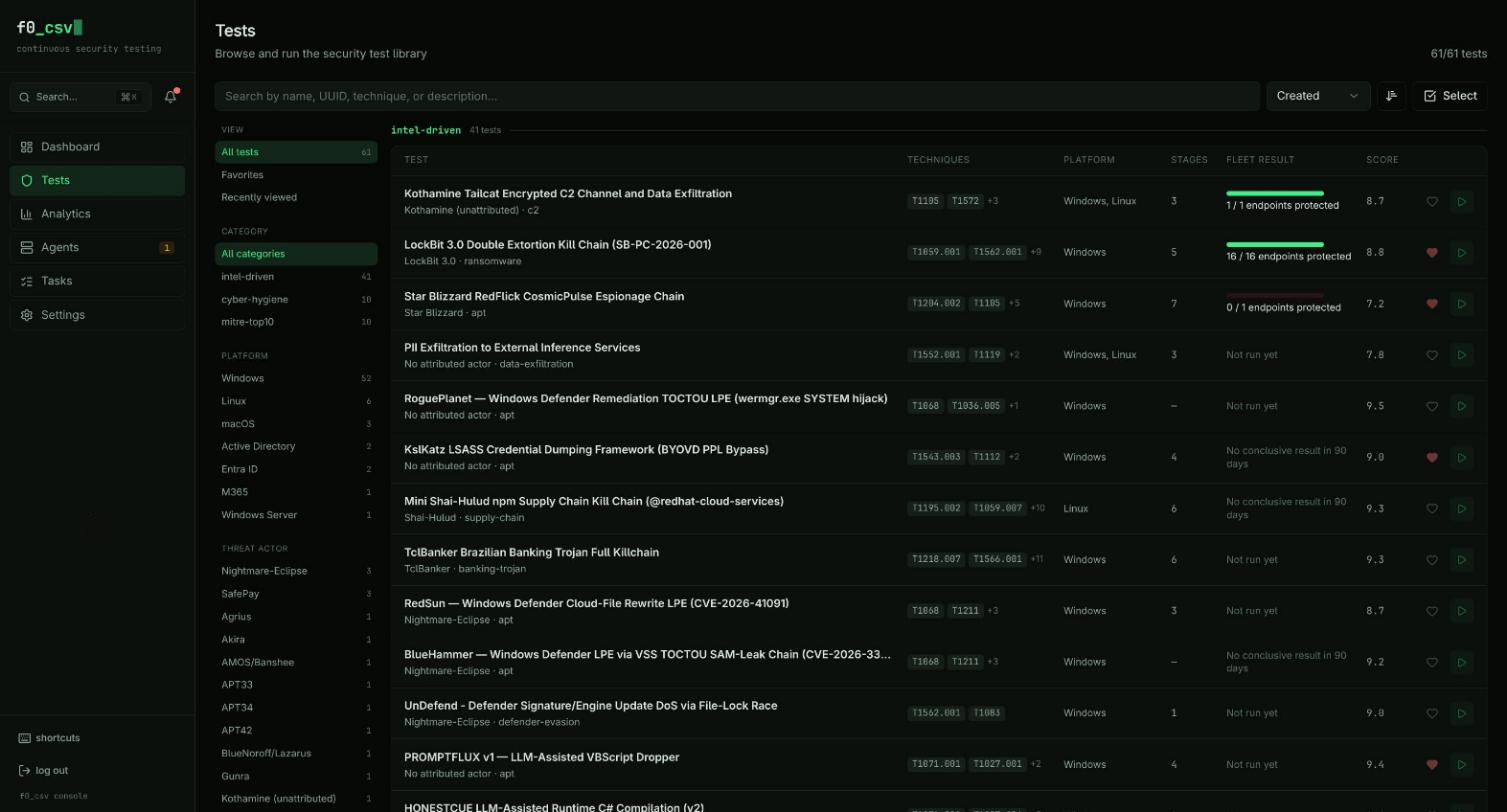
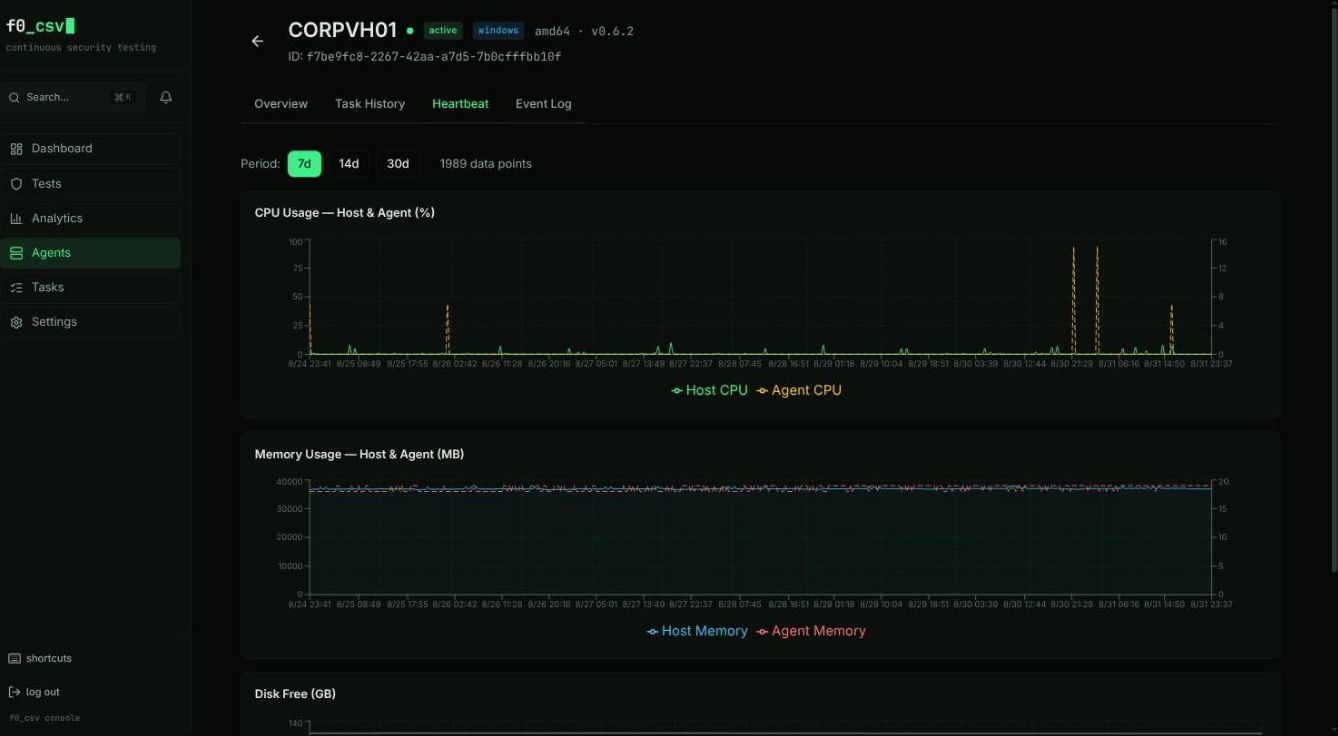
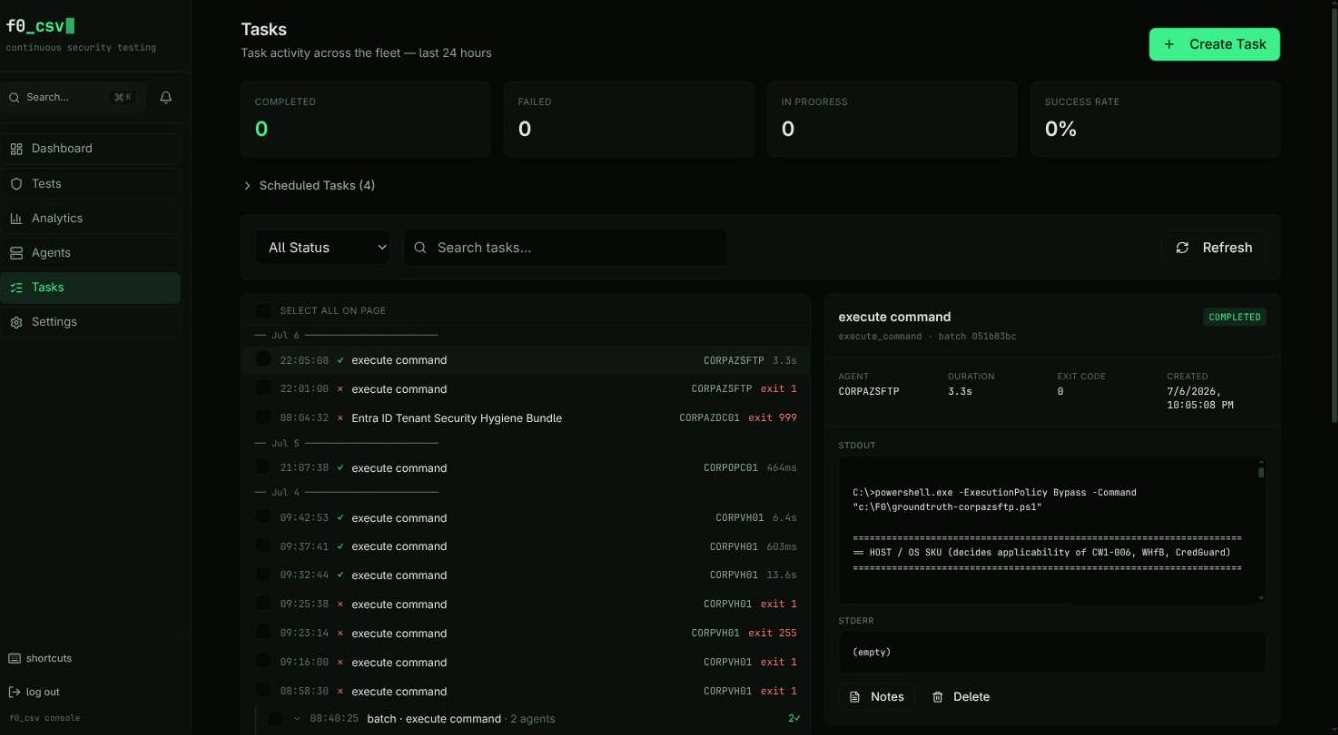
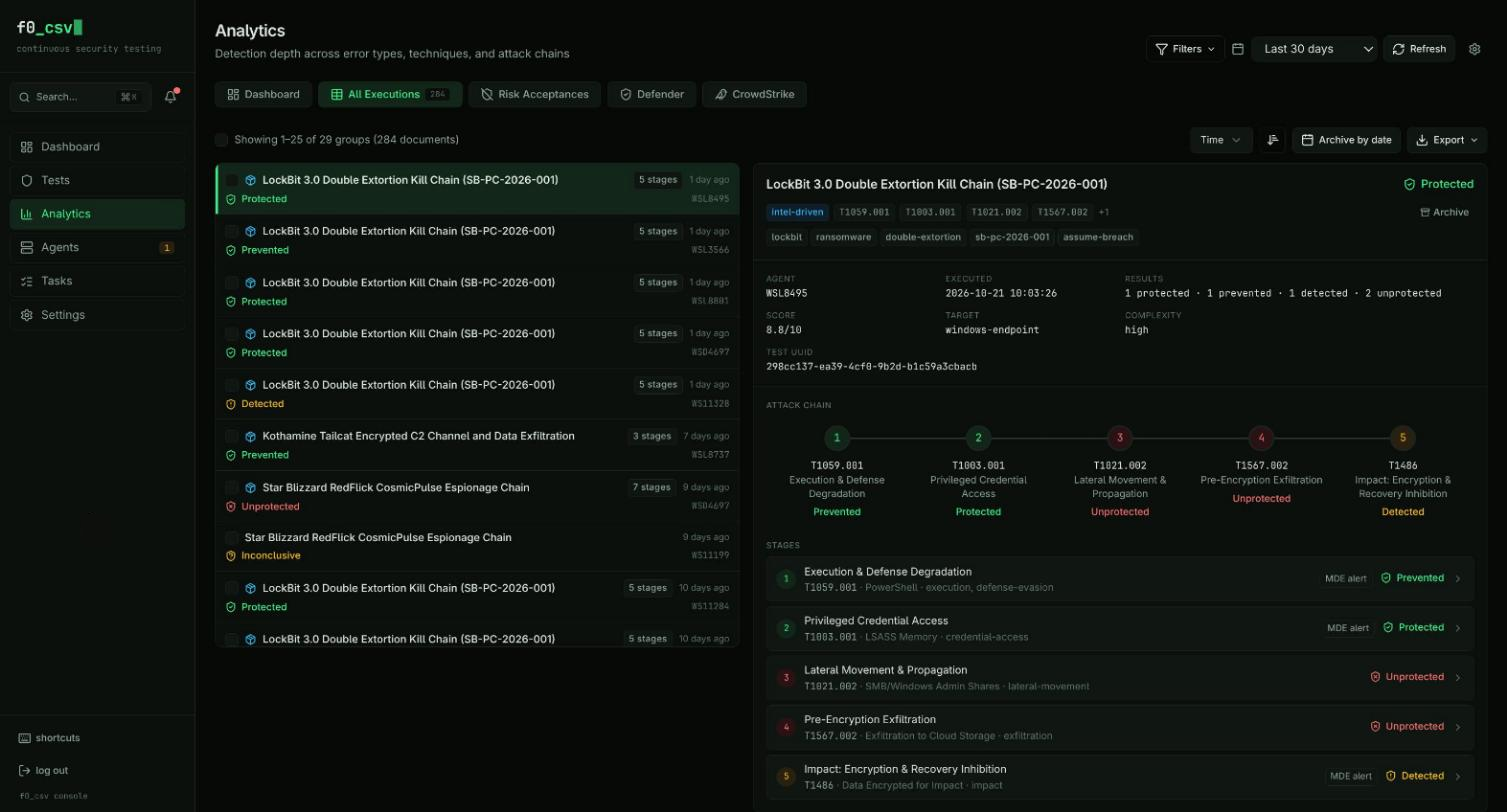
ProjectAchilles is an open-source platform for continuous security validation. It takes threat intelligence reports and automatically builds complete test packages — including compiled binaries, detection rules for SIEMs, hardening scripts, and documentation — using an AI-driven pipeline. These tests run on Windows, Linux, and macOS endpoints through a lightweight Go agent that reports results with cryptographic verification. An Elasticsearch-backed dashboard then turns raw results into defense scores, MITRE ATT&CK heatmaps, and trend analysis. The system also connects to Microsoft Defender and CrowdStrike Falcon to correlate internal test results with the EDR's own telemetry. Deployment uses Docker Compose with SQLite for agent data and optional Elasticsearch for analytics. A Bun-based CLI with an AI chat mode lets operators manage the fleet from the terminal.
ProjectAchilles alternatives
 AiSOCSelf-hosted, open-source AI SOC with 2,535 detection rules and agents that record every step in an auditable ledger. MIT licensed, no API keys needed.CompareAiSOC with ProjectAchilles
 pwnflowPwnflow is a self-hosted, open-source mind-mapping platform for cybersecurity professionals to visualize and track security testing methodologies with AI assistance.Comparepwnflow with ProjectAchilles
 pentagiSelf-hosted, open-source multi-agent platform that runs autonomous penetration tests with professional security tools in Docker sandboxes and produces reports.Comparepentagi with ProjectAchilles
 DarkMoonDarkMoon is an autonomous AI penetration testing platform with 50 specialist agents that runs on your infrastructure using local LLMs behind a Privacy Gateway.CompareDarkMoon with ProjectAchilles
 openlegionSelf-hosted platform for isolated AI agent teams with credential vaulting, spend limits, and a web dashboard — free for internal use under a source-available license.Compareopenlegion with ProjectAchilles
 WazuhSelf-hosted, open-source XDR and SIEM platform: endpoint agents plus server, indexer and dashboard for log analysis, file integrity, vulnerabilities and compliance.CompareWazuh with ProjectAchilles
 Vigil365Self-hosted open-source dashboard aggregating M365 security signals into one UI with alert policies, notifications, RBAC, and scheduled reports. Runs on Windows/Docker.CompareVigil365 with ProjectAchilles
 WildboxWildbox is a self-hosted, open-source security operations platform with threat intelligence, AWS cloud security, vulnerability management, SOAR, and LLM analysis.CompareWildbox with ProjectAchilles
Should you self-host ProjectAchilles?
ProjectAchilles scores 40/100 on selfhost.directory (how scoring works) and ranks #66 of 78 in Security. It has 27 GitHub stars.
It shipped 13 stable releases in the past year. The latest, v2.7.0, came out on 27 October 2026. New versions land roughly every 1 days.
Setup is advanced: plan for several services and some ongoing maintenance. It is Apache-2.0-licensed and written mostly in Typescript.
Its closest alternative on selfhost.directory is CyberChef (83/100, 36 254 stars). It scores higher overall, so compare the two before you pick. See ProjectAchilles vs CyberChef side by side.
Features
- AI-Powered Test Development
- CLI with AI Chat Agent
- Code Signing
- Continuous Security Validation
- Cross-Platform Test Execution
- CrowdStrike Falcon Integration
- Defense Scoring
- Detection Rule Generation
- Hardening Script Generation
- Lightweight Endpoint Agent
- Microsoft Defender Integration
- MITRE ATT&CK Coverage Mapping
- Programmatic API Keys
- Risk Acceptance Tracking
- Task Scheduling
ProjectAchilles README


Continuous Security Validation — From Threat Intelligence to Defense Readiness
Stop hoping your defenses work. Start proving it.
Install on Linux · Quick Start · Features · Architecture · Documentation · Roadmap · Contributing

More in Security
- pwnflowPwnflow is a self-hosted, open-source mind-mapping platform for cybersecurity professionals to visualize and track security testing methodologies with AI assistance.
 qauthQAuth is a self-hosted, open-source OAuth 2.1/OIDC 1.0 server for AI agents with on-behalf-of delegation, audience-bound tokens, and post-quantum ready crypto.
 QeliA self-hosted, open-source VPN with custom protocol, anti-DPI modes, post-quantum encryption, and native apps for desktop, mobile, and routers.
 QtapQtap is a self-hosted, open-source eBPF agent capturing network traffic before TLS encryption for HTTPS payload visibility without app changes.
 rauthyOpen-source, self-hosted Rust identity provider: single sign-on for apps and Linux hosts via OIDC, OAuth 2 and PAM, with passkey-first MFA, HA mode and an admin UI.
 ReconnerSelf-hosted bug-bounty platform for attack surface intelligence and verification-first DAST with continuous monitoring, asset discovery, and evidence-based findings.
 rhombusRhombus is a self-hosted, open-source CTF platform in Rust with ticket system, Discord integration, CTFtime feeds, health checks, and plugin system.
 ring-mqttSelf-hosted open-source bridge connecting Ring devices to MQTT with RTSP video streaming for automation platforms.
 RspamdOpen-source, self-hosted spam filtering daemon with Milter support for Postfix and Exim, Bayesian, DNSBL and SPF/DKIM/DMARC checks plus a web dashboard.
 rudderRudder is a self-hosted, open-core infrastructure security automation platform for configuration, patching, and compliance across Linux and Windows.
 s3-encryption-gatewaySelf-hosted transparent HTTP proxy adding client-side encryption to any S3-compatible storage without code changes, with envelope encryption via local or external KMS.
 SafeLineSafeLine is an open-source, self-hosted WAF protecting web apps from SQL injection, XSS, and DDoS via intelligent semantic analysis. Runs as a Docker reverse proxy.
0 comments