
Self-host uptime-kuma
2.5.11Self-hosted uptime monitoring with status pages
- Stars
- 94 411
- Port
- 3001 (HTTP web UI and API)
louislam/uptime-kuma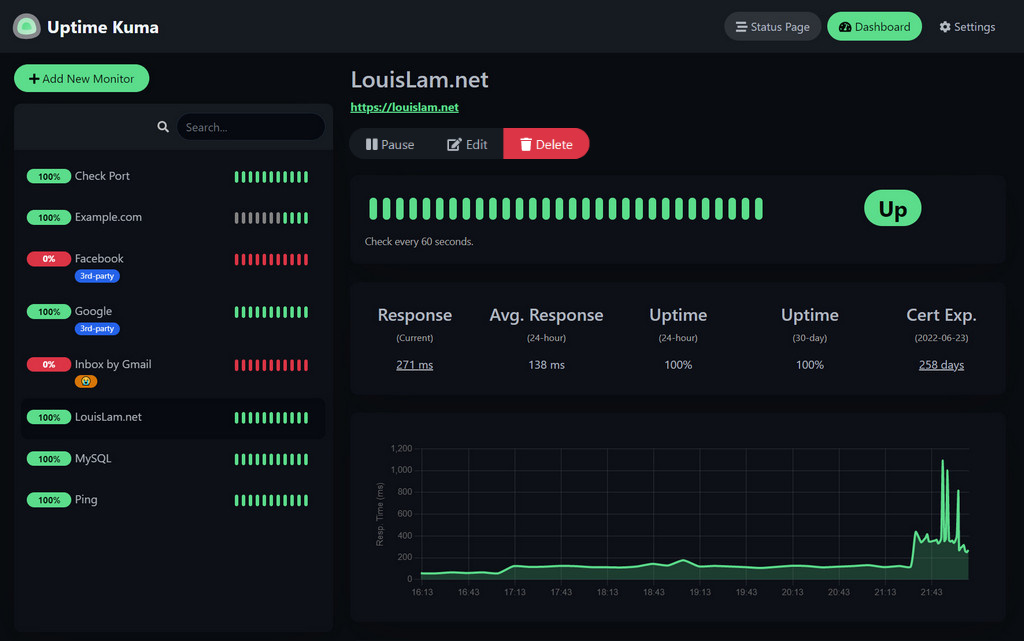
What is uptime-kuma?
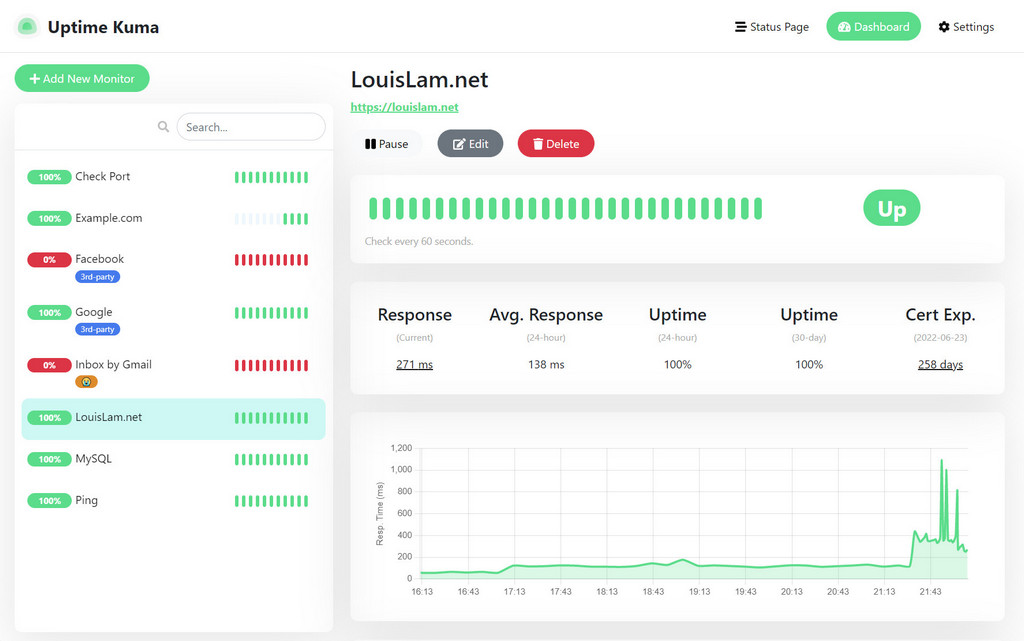
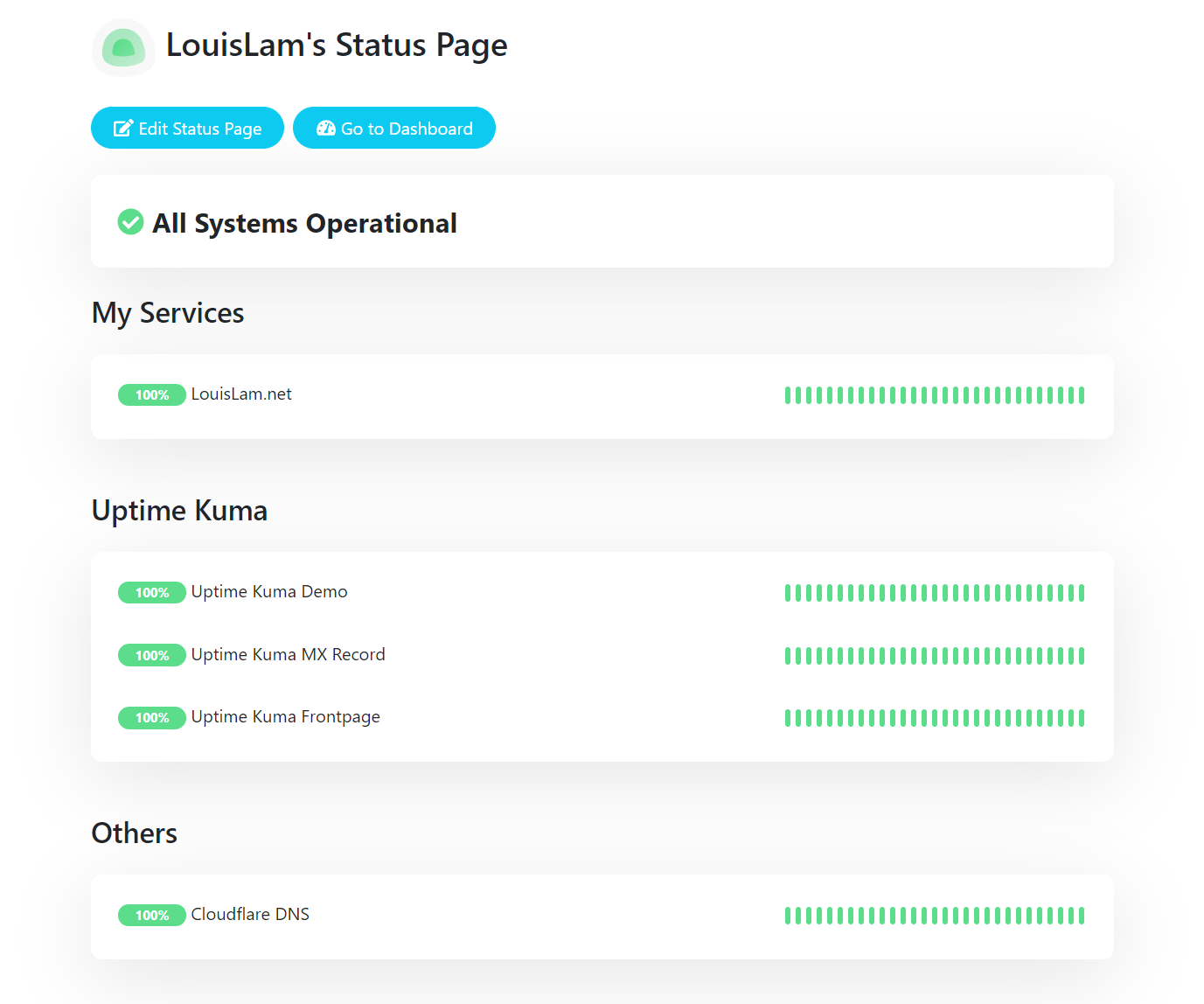
Uptime Kuma is a self-hosted monitoring tool built as an alternative to commercial services like Uptime Robot. It checks the availability of HTTP(s), TCP, keyword, JSON query, WebSocket, ping, DNS, push, Steam game servers, and Docker containers. The Vue 3 single-page application provides a fast, reactive interface with check intervals as low as 20 seconds. Users can create multiple public status pages and map them to custom domains. The tool includes SSL certificate details, ping latency charts, proxy support, and two-factor authentication. Alerts are delivered through over 90 channels via built-in providers and Apprise, covering Telegram, Discord, Gotify, Slack, Pushover, and SMTP email. Deployment options include Docker Compose (recommended), plain Docker, or a direct Node.js installation on Linux and Windows managed by PM2. Data defaults to SQLite with optional MariaDB/MySQL. The project is actively developed under the MIT license.
uptime-kuma alternatives
 UptimeFlareFree, open-source monitor and status page built on Cloudflare's Workers platform: geo-aware checks from 310+ cities, HTTP and TCP probing, plus incident history.CompareUptimeFlare with uptime-kuma
 kenerAn open-source, self-hosted status page and uptime monitor: 11 monitor types, incidents, maintenance windows, subscriber alerts and OIDC login.Comparekener with uptime-kuma
 arewedownAre We Down? is a self-hosted, open-source uptime monitor with a web dashboard checking HTTP, SSH, Docker, and more, alerting via email and Slack.Comparearewedown with uptime-kuma
 checkcleOpen-source, self-hosted monitoring platform for uptime checks, server metrics, SSL expiry and incidents, with regional probes, alert channels and public status pages.Comparecheckcle with uptime-kuma
 maintenantSelf-hosted monitoring auto-discovering Docker, Swarm, and Kubernetes containers, endpoints, TLS certs, cron jobs, and host resources from one Go binary (~100MB).Comparemaintenant with uptime-kuma
 phpservermonSelf-hosted, open-source uptime monitor that checks websites and TCP ports from your own PHP server, with cron jobs, graphs and email, SMS or Telegram alerts.Comparephpservermon with uptime-kuma
 statusnookSelf-hosted status page with HTTP endpoint monitoring, incident timelines, and Slack/SMTP notifications.Comparestatusnook with uptime-kuma
 homarr-iframesSelf-hosted Go API generating embeddable iFrames for 17+ services like Linkwarden, Vikunja, Overseerr, Sonarr, Radarr, Uptime Kuma — works in any dashboard.Comparehomarr-iframes with uptime-kuma
Should you self-host uptime-kuma?
uptime-kuma scores 90/100 on selfhost.directory (how scoring works) and ranks #2 of 105 in Monitoring & observability. It has 94 411 GitHub stars, +2 073 in the last 30 days.
It shipped 22 stable releases in the past year. The latest, 2.5.11, came out on 12 November 2026. New versions land roughly every 6 days.
Setup is easy: most people get it running in one sitting. An official Docker image is available. It is MIT-licensed and written mostly in JavaScript.
Its closest alternative on selfhost.directory is prometheus (92/100, 67 629 stars). It scores higher overall, so compare the two before you pick. See uptime-kuma vs prometheus side by side.
Features
- 20-second intervals
- Badges
- Browser engine monitoringRequires full Docker image (not slim)
- Certificate info
- Multi-language Support
- Notifications
- Ping charts
- Prometheus metrics export
- Proxy Support
- Status Pages
- Two-factor authentication
- Uptime Monitoring

More in Status Pages
 VigilOpen-source, self-hosted status page that probes HTTP, TCP, SSH and ICMP services, publishes announcements, and alerts via Slack, Twilio SMS, email, Telegram and more.
 cachetSelf-hosted, open-source status page app for publishing incidents, component outages, scheduled maintenance and metrics, with a JSON API, webhooks and 2FA.
- checkcleOpen-source, self-hosted monitoring platform for uptime checks, server metrics, SSL expiry and incidents, with regional probes, alert channels and public status pages.
 checkmateSelf-hosted, open-source uptime and infrastructure monitor: HTTP, ping, DNS, Docker and gRPC checks with incidents, status pages and Slack or email alerts.
 CheckupSelf-hosted distributed health checks and status pages in Go. Supports HTTP, TCP, DNS, TLS checks with S3, filesystem, GitHub, MySQL, PostgreSQL, SQLite storage.
 Cloudflare Workers Status PageSelf-hosted, open-source status page on Cloudflare Workers that monitors websites, shows daily uptime history, and sends Slack, Discord or Telegram alerts.
 FettleFettle is a self-hosted, open-source status page running on GitHub Pages with Actions for monitoring and Issues for incidents. No server or database needed.
 gatusSelf-hosted, open-source uptime monitor and status page: probe HTTP, TCP, ICMP or DNS endpoints with custom conditions and alert via Slack, Discord, PagerDuty, etc.
- kenerAn open-source, self-hosted status page and uptime monitor: 11 monitor types, incidents, maintenance windows, subscriber alerts and OIDC login.
 Kuvasz UptimeSelf-hosted, open-source uptime & SSL monitor with HTTP, ping, TCP, DNS and Docker checks, status pages, maintenance windows, REST API, and Prometheus export.
 NezhaOpen-source, self-hosted server and website monitor: a dashboard plus agents track host metrics, HTTP/TCP/ping checks, SSL certs, alerts and a web terminal.
 oneuptimeSelf-hosted open-source observability platform combining uptime monitoring, incident management, on-call alerting, status pages, logs, traces, metrics, error tracking.
0 comments