
Self-host VaultSync
hub-v0.3.0Obsidian vault sync for iOS using self-hosted Syncthing
- Stars
- 149
- Ports
- 22000 (Syncthing sync protocol (TCP+UDP)), 21027 (Syncthing local discovery (UDP)), 8390 (Hub pairing and discovery (TCP+UDP))
- Requires
- iOS/iPadOS, Obsidian (iOS/iPadOS), Syncthing
ghcr.io/psimaker/vaultsync-hub
What is VaultSync?
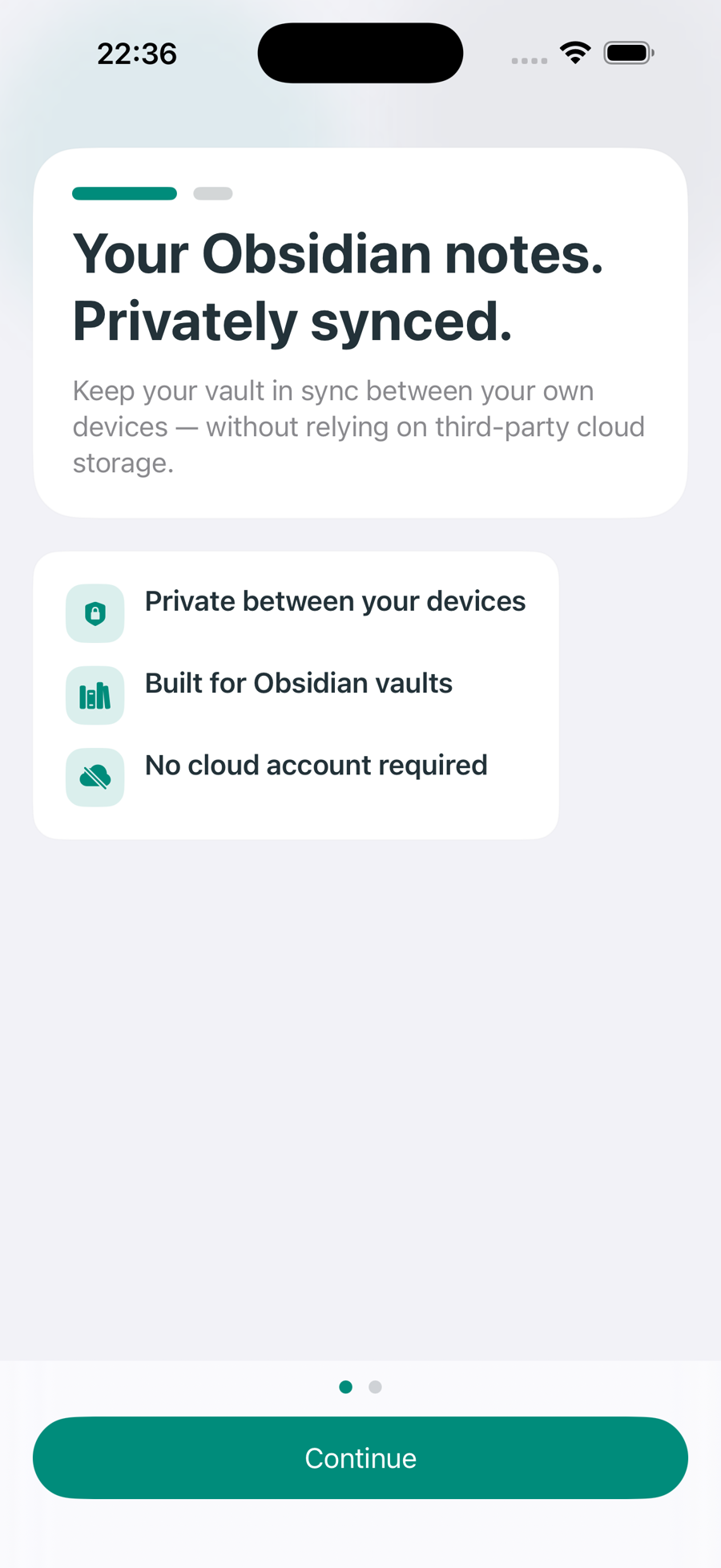
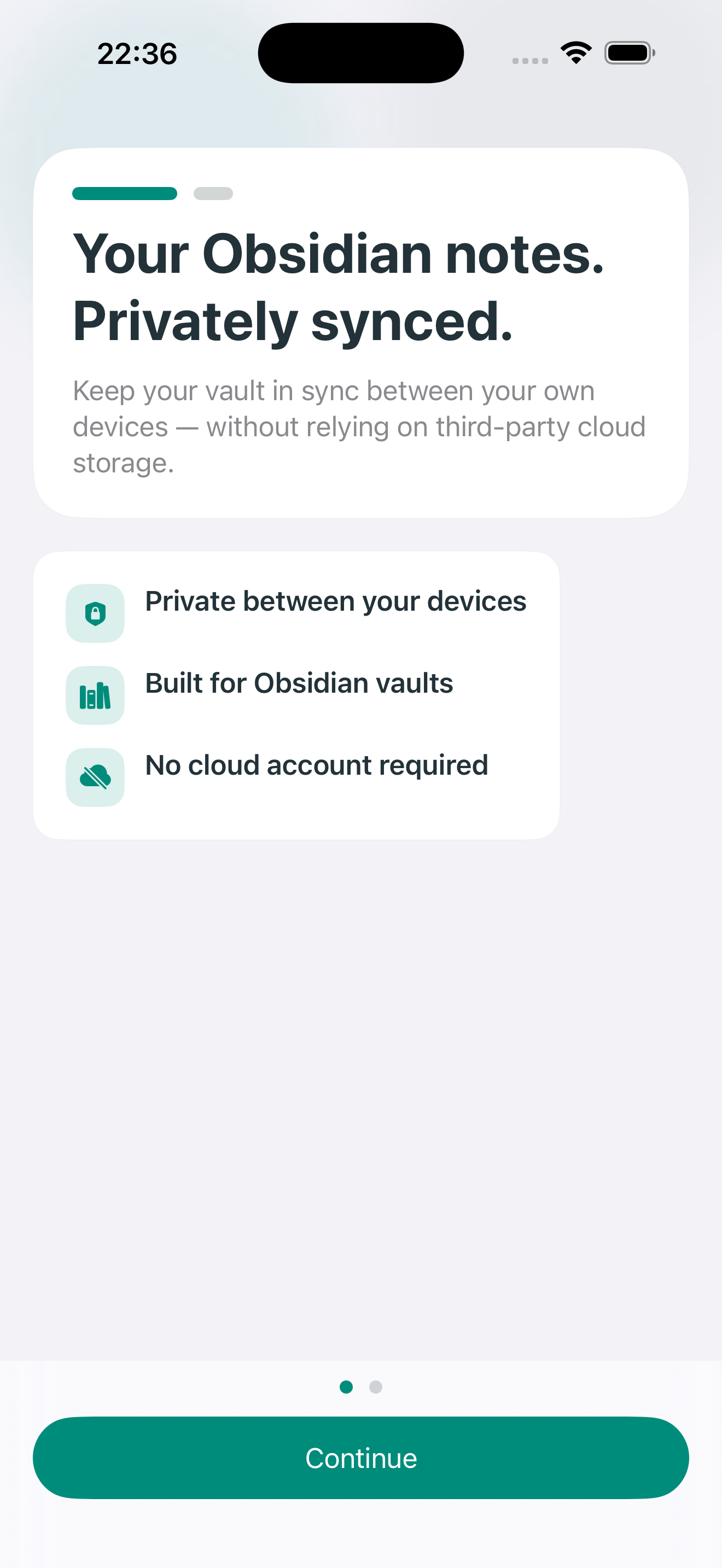
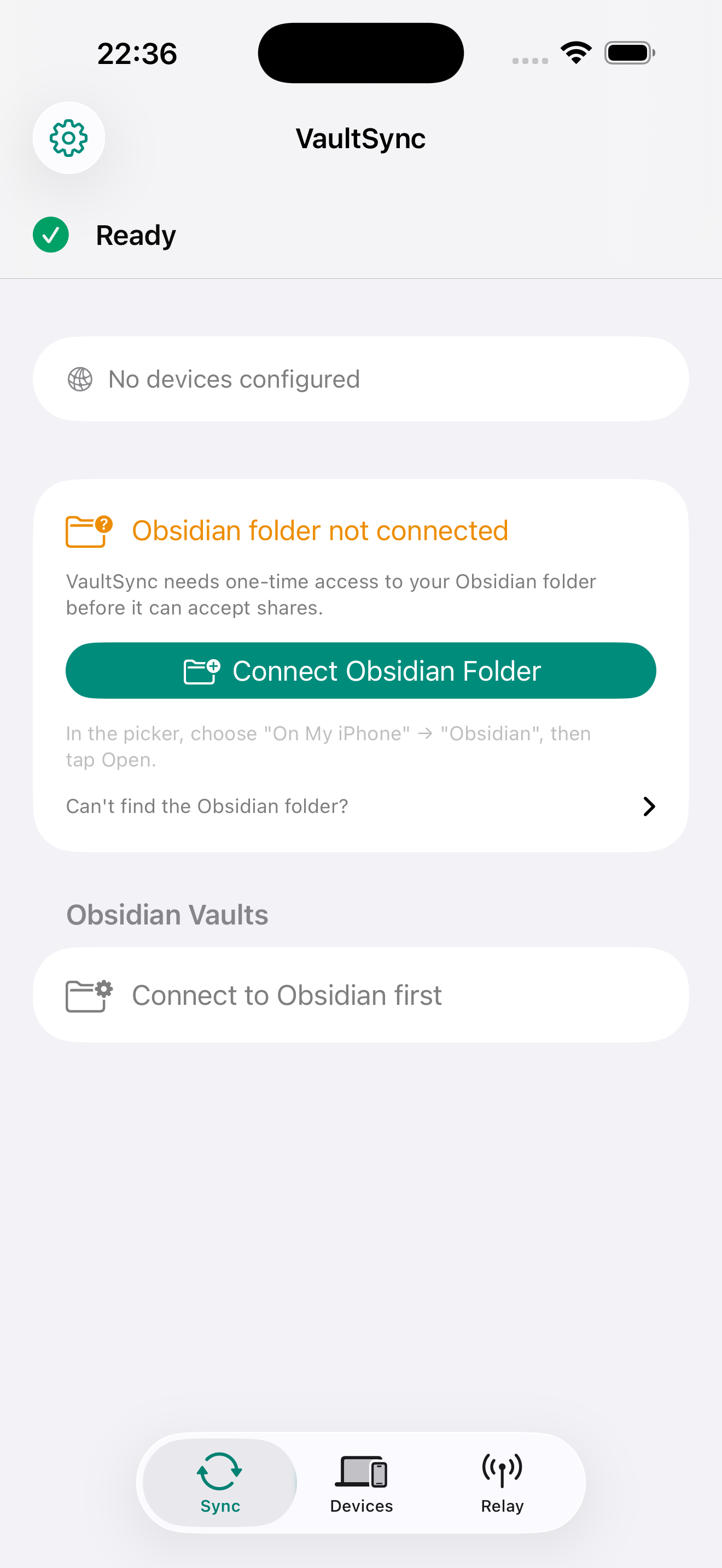
VaultSync keeps Obsidian vaults in sync between iOS devices and a personal server using Syncthing's peer-to-peer engine. The iOS app places notes straight into Obsidian's sandbox. A Docker-based Hub runs on a Linux box or NAS, handling Syncthing, short pairing codes, and an optional notify sidecar that fires APNs silent pushes via a Cloud Relay when the server changes. The core sync is free and open-source under MPL-2.0; Cloud Relay is a paid in-app subscription. The Hub stores vaults as plain files with 30-day versioning and conflict copies, never auto-merging or deleting. Desktop agents for macOS and Linux are also provided. The project is built independently by Umut Erdem.
Should you self-host VaultSync?
VaultSync scores 45/100 on selfhost.directory (how scoring works) and ranks #9 of 15 in File Sync. It has 149 GitHub stars.
It shipped 9 stable releases in the past year. The latest, hub-v0.3.0, came out on 7 October 2026. New versions land roughly every 3 days.
Setup is moderate: expect some configuration beyond a single command. An official Docker image is available. It is MPL-2.0-licensed and written mostly in Go.
Its closest alternative on selfhost.directory is NoteDiscovery (62/100, 2 855 stars). It scores higher overall, so compare the two before you pick. See VaultSync vs NoteDiscovery side by side.
Features
- 30-day versioning and conflict copies
- Activity timeline and diagnostics
- Cloud Relay (optional)Requires in-app subscription ($1.99/mo or $14.99/yr)
- Conflict resolution with diffs
- Desktop agents (macOS/Linux)
- Instant upload via Shortcuts
- Local-first Privacy
- Multi-language Support
- Peer-to-peer vault sync
- QR code pairing
- VaultSync Hub
- VoiceOver and Dynamic Type support
VaultSync README
More in File Sync
 yet-another-rclone-dashboardSelf-hosted, open-source web UI for managing rclone remotes, browsing files, monitoring transfers, and controlling the rclone RC daemon with dark mode and PWA support.
 zotero-webdav-serverA self-hosted WebDAV server using Caddy and Tailscale that enables file syncing for Zotero desktop and iOS apps without relying on Zotero's paid storage.
 abs-kosync-bridgeBookBridge is a self-hosted, open-source sync engine aligning reading and listening progress across Audiobookshelf, KOReader, Grimmory, BookOrbit. Runs in Docker.
 Alist-SyncAlist-Sync is a self-hosted, open-source web app for syncing files between Alist storage backends with a visual UI, cron scheduling, and configurable difference handling.
 alt-coreAlterante Core is a self-hosted, open-source decentralized filesystem in Java for file discovery, automated backup/replication, and web-based file access.
 alteroaltero is a self-hosted, open-source Zotero sync server implementing the Web API v3 for libraries, groups, notes, attachments, and full-text search.
 any-sync-bundleA self-hosted, open-source sync backend for Anytype that bundles all sync components into one deployable unit with built-in database and cache.
 AnyTypeSelf-hosted Docker Compose deployment of the any-sync network powering Anytype — run your own encrypted sync backend with MongoDB, Redis, and Garage S3 storage.
 armadiettoArmadietto is a self-hosted, open-source RemoteStorage server in Node.js for personal cloud storage with modular (S3-backed) and classic (filesystem) variants.
 Aurora FilesSelf-hosted open-source file storage platform with end-to-end encryption, WebDAV access, mobile apps, and OnlyOffice integration for document editing.
 BackupPCBackupPC is a self-hosted, open-source backup server that deduplicates and compresses backups from Linux, Windows, and macOS clients to a central disk with a web UI.
 BeeCount CloudSelf-hosted sync cloud for BeeCount personal accounting app with real-time multi-device sync, shared ledgers, AI bookkeeping, and encrypted backup.
0 comments