
Self-host mere-medical
2026.10.27Offline-first personal health record for patient portals
- Stars
- 321
- Port
- 8080 (HTTP web server)
cfu288/mere-medical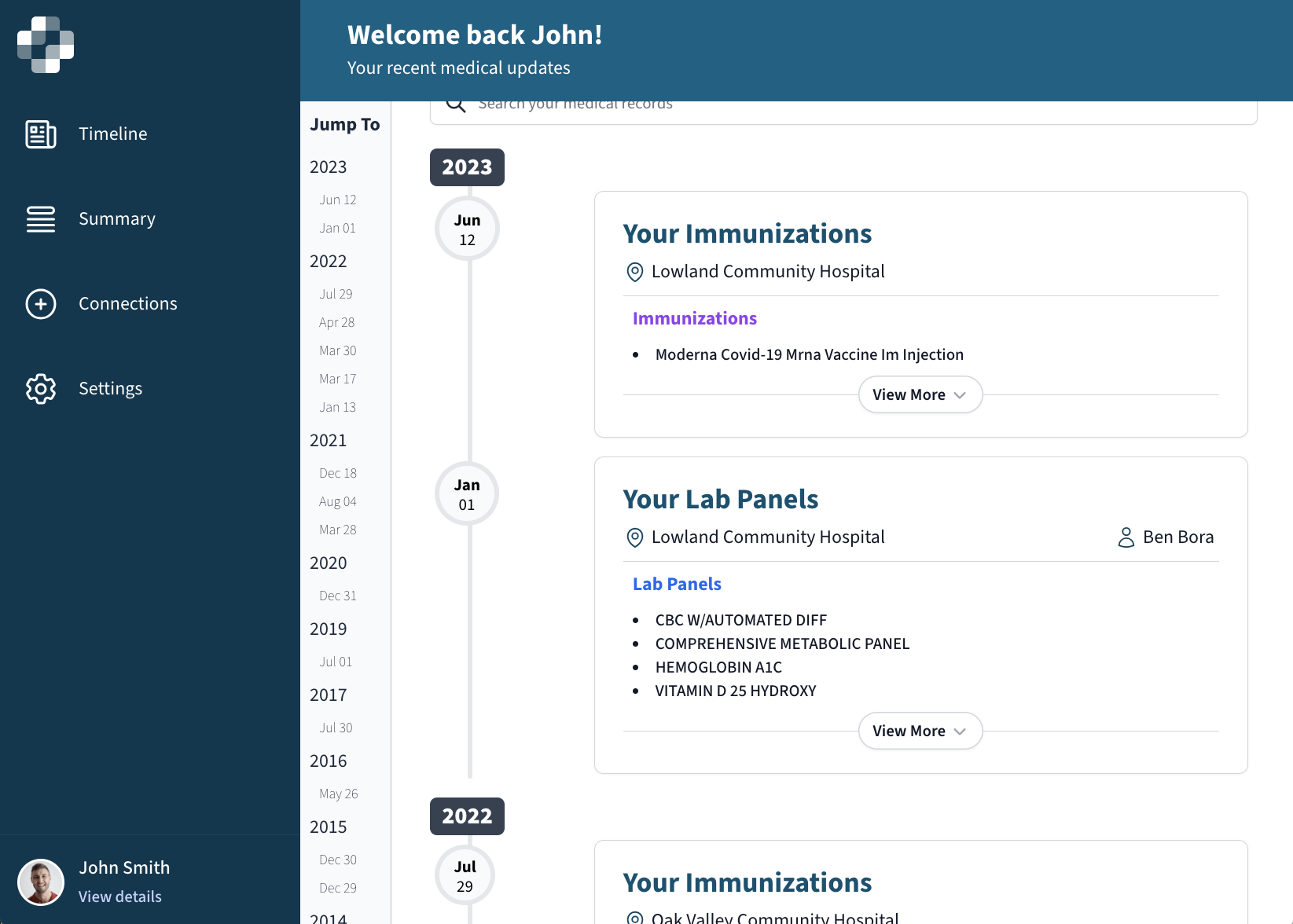
What is mere-medical?
This application helps patients gather medical records from multiple hospital and clinic portals into one unified timeline. It connects to major EHR systems like Epic MyChart, Cerner, Athena, Healow, VA, OnPatient, Veradigm, and NextGen. All data stays on the user's device with zero-knowledge encryption, works without internet, and needs no account creation. Deployment uses Docker or Docker Compose on port 8080. The MIT-licensed project is maintained by a medical resident.
Should you self-host mere-medical?
mere-medical scores 46/100 on selfhost.directory (how scoring works) and ranks #19 of 31 in Health & Fitness. It has 321 GitHub stars.
It shipped 14 stable releases in the past year. The latest, 2026.10.27, came out on 27 October 2026. New versions land roughly every 5 days.
Setup is moderate: expect some configuration beyond a single command. An official Docker image is available. It is MIT-licensed and written mostly in Typescript.
Its closest alternative on selfhost.directory is wger (73/100, 7 201 stars). It scores higher overall, so compare the two before you pick. See mere-medical vs wger side by side.
Features
- Multi-portal sync
- No sign-in required
- Offline First
- SMART on FHIR
- Timeline View
- Zero-Knowledge Encryption
mere-medical README
More in Health & Fitness
 moodmoA private, self-hosted mood tracker and journal built with Django, offering full-text search, data portability, and simple Docker deployment.
 NightscoutOpen-source web app that turns CGM sensor readings into a live shared chart with alarms and 30-minute forecasts. Runs on Node.js plus MongoDB; Compose file included.
 nightscout-librelink-upSelf-hosted TypeScript sidecar that fetches glucose readings from Abbott's LibreLink Up cloud and pushes them to a Nightscout instance for diabetes data visualization.
 nutritraceSelf-hosted nutrition tracker with diary, food database, barcode scanning, wearable sync, adaptive TDEE goals, and AI assistant. Docker, AGPL-3.0, no cloud.
 OpenAthleteOpenAthlete is a self-hosted, open-source endurance training platform tracking workouts, CTL/ATL/TSB metrics, syncing with Strava, Garmin, Polar, Suunto.
 openGymOpen-source, self-hosted gym and body-weight tracker: plan weekly routines, log guided workouts over 5,600 exercises, sync devices via passkeys, one docker compose up.
 OpenHabitTrackerA free, open-source habit tracker that runs everywhere and lets you sync data to your own Docker server.
 open-wearablesOpen-source, self-hosted wearable data platform that unifies Garmin, Oura, Whoop and Apple Health behind one REST API, with webhooks, a portal and an MCP server.
 OvumcySelf-hosted menstrual cycle tracker with period logging, predictions, webhook/calendar reminders, OIDC/TOTP auth, CSV/JSON export — runs on your server.
 ownhealthrecordSelf-hosted PHP/MySQL personal health record app for storing medical records, doctor contacts, and medications with AES encryption.
 PerficePerfice is a self-hosted, open-source self-tracking platform for tracking anything, finding correlations, and setting goals with local-first privacy.
 polar-flow-serverSelf-hosted server syncing all Polar health data to PostgreSQL with personal baselines, anomaly detection, and a built-in MCP server for AI assistants.
0 comments