
Self-host joinstr
Nostr-coordinated CoinJoin pools for Bitcoin
docker run --rm -p 127.0.0.1:5000:5000 -e JOINSTR_MANAGED=1 -e BITCOIN_RPC_URL=http://<node>:8332 -e BITCOIN_RPC_USER=<user> -e BITCOIN_RPC_PASS=<password> joinstr-web:dev- Port
- 8000 (joinstrd REST API)
- Requires
- Bitcoin Core, Tor
What is joinstr?
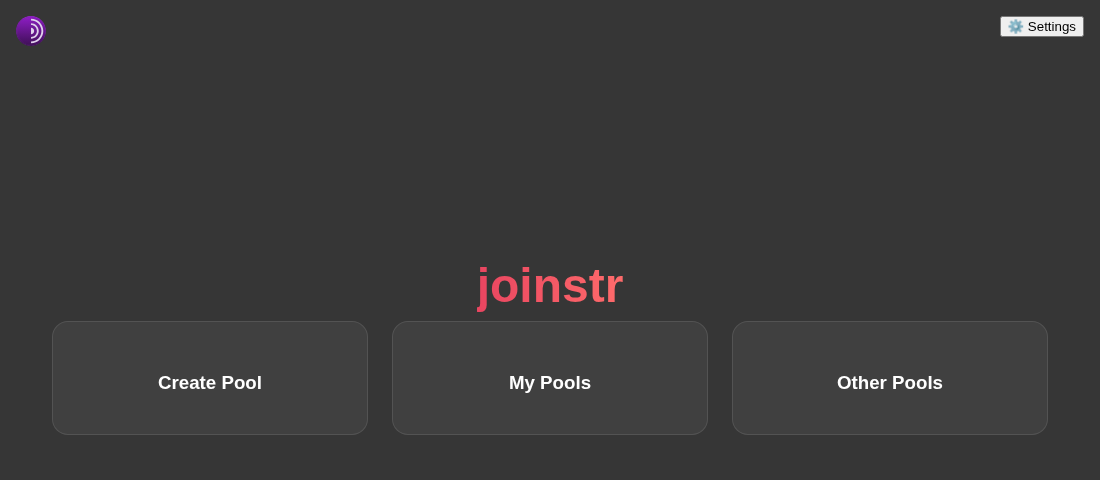
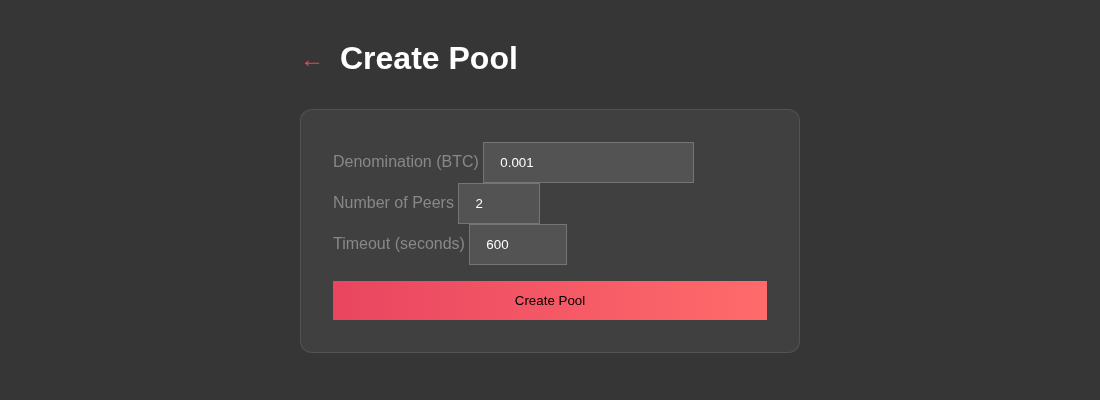
joinstr mixes bitcoin coins without a trusted hub: peers announce pools on ordinary nostr relays, each member signs their own input early with SIGHASH_ALL|ANYONECANPAY, and everyone verifies and then relays the finished transaction. Each pool fixes one denomination and a peer count of 2 to 10, and coordination traffic runs over Tor using isolated circuits, which keeps a relay from linking inputs to outputs by IP. This GitLab repository ships the Python side of the ecosystem — an Electrum plugin, a Flask-based web UI, a command line client and joinstrd, a loopback-only daemon exposing a REST API documented at /docs, /redoc and /openapi.json. To self-host it you need Python 3, a Bitcoin Core node with RPC and a local Tor proxy; the container build under contrib/docker packages its own Tor and opens the interface at TCP 5000, and that same Flask app is what the Umbrel app store distributes. Optional aut-ct keyset pools help defend against sybil attackers. Android, Sparrow and Rust clients are maintained in separate repositories; versioning is pre-1.0 but mainnet use is documented.
joinstr alternatives
 jamSelf-hosted web interface for JoinMarket NG that makes CoinJoin privacy accessible with sensible defaults for beginners and advanced features for power users.Comparejam with joinstr
 NNostrNNostr is a self-hosted, open-source Nostr relay and client library written in C# that supports paid events via BTCPay Server integration.CompareNNostr with joinstr
 bitcoin-full-node-with-dockerSelf-hosted, open-source Docker stack running a Bitcoin full node with Electrs, block explorer, Tor, and optional I2P — all built locally from verified sources.Comparebitcoin-full-node-with-docker with joinstr
 Nostr VPNSelf-hosted, open-source mesh VPN using Nostr identities for enrollment and Bitcoin-paid exit nodes.CompareNostr VPN with joinstr
 ShopstrShopstr is a self-hosted, open-source Nostr marketplace enabling censorship-resistant Bitcoin commerce via Lightning and Cashu with no KYC or platform fees.CompareShopstr with joinstr
 public-poolSelf-hosted open-source Bitcoin stratum mining server built on NestJS; supports mainnet and testnet and pairs with the public-pool-ui web interface.Comparepublic-pool with joinstr
 Spiral PoolSelf-hosted solo mining pool for 16 cryptocurrencies supporting Stratum protocols, merge mining, and direct wallet payouts.CompareSpiral Pool with joinstr
 nostreamOwn a relay for social network nobody can switch offComparenostream with joinstr
All self-hosted alternatives to JoinMarket → All self-hosted alternatives to Wasabi Wallet (WabiSabi) → All self-hosted alternatives to Whirlpool (Samourai) →
Should you self-host joinstr?
joinstr scores 53/100 on selfhost.directory (how scoring works) and ranks #24 of 44 in Cryptocurrency.
There was no stable release in the past 12 months, so check the repository's recent activity before you rely on it.
Setup is advanced: plan for several services and some ongoing maintenance. It is mit-licensed.
Its closest alternative on selfhost.directory is Freqtrade (87/100, 56 935 stars). It scores higher overall, so compare the two before you pick. See joinstr vs Freqtrade side by side.
Features
- CLI Client
- Custom pool denomination and peer count
- Hardware / air-gapped signing
- Nostr relay coordination
- OpenAPI documentation
- REST API daemon
- Resume interrupted pools
- Ring signature drop-out recovery
- Sybil resistance via aut-ctSupported in the Electrum plugin and Sparrow clients.
- Web UI
How to install joinstr
Install joinstr with Docker
JOINSTR_MANAGED, BITCOIN_RPC_URL, BITCOIN_RPC_USER, BITCOIN_RPC_PASS, JOINSTR_WALLETcd contrib/docker
docker build --build-arg JOINSTR_REF=$(git rev-parse HEAD) -t joinstr-web:dev .
docker run --rm -p 127.0.0.1:5000:5000 \
-e JOINSTR_MANAGED=1 -e BITCOIN_RPC_URL=http://<node>:8332 \
-e BITCOIN_RPC_USER=<user> -e BITCOIN_RPC_PASS=<password> \
joinstr-web:dev
The container build lives in contrib/docker; the image runs Tor inside the container and serves the web UI on port 5000.
FAQ
Where can I ask questions?
On the joinstr forum at forum.joinstr.xyz; bugs go to the issue tracker of the client you use.
Is there a fee for market makers?
No; joinstr currently has no makers and no coordinator fees.
Can a pool creator steal my coins?
No — your client checks the full transaction before signing and broadcasting and refuses rounds costing more than 15000 sats or inputs that could be broadcast alone.
What happens if a peer disappears in the middle of a round?
Before signing, the others can complete a smaller coinjoin via ring signature recovery; after signing nothing changes because every peer broadcasts the transaction.
Is the old Riseup VPN option still there?
Yes, as an option in the Electrum plugin and the Android app; a VPN pool makes every peer use the same Riseup gateway, with Tor still the default.
Do I need Tor?
Tor is the default and strongly recommended; the main clients refuse to reach a relay without it unless the pool uses the VPN transport.
Which relay should I use?
Any nostr relay accepting kind 2022 and kind 4 events; the default is wss://nos.lol and paid relays reduce spam.
How many peers should a pool have?
At least 2; more peers give a larger anonymity set but take longer to fill. The web UI allows 2 to 10.
What does a coinjoin cost?
Only the shared mining fee plus the premium your coin holds over the denomination; there is no coordinator fee, though a paid relay may charge.
Which denominations can I use?
Any — the pool creator chooses the denomination, and your coin must be worth that denomination plus 500 to 5000 sats since there is no change output.
Do I need to run Bitcoin Core?
Not necessarily: the Electrum plugin (and Sparrow) work with an Electrum server, while the web UI, daemon and Android app need Bitcoin Core.
Can I use joinstr on mainnet?
Yes; the Electrum plugin, web UI, daemon, Android app and Sparrow all work on mainnet, though a test round on Mutinynet or signet is suggested first.
More in Cryptocurrency
 Lightning TerminalLightning Terminal: Your Home for Lightning Liquidity
 LNbitsOpen-source, self-hosted Bitcoin Lightning wallet accounts system with per-wallet API keys, LNURL and Nostr support, 50+ extensions, and LND or Core Lightning backends.
 LNDSelf-hosted, open-source implementation of a full Lightning Network node: open channels, route and send payments, with autopilot, watchtower and gRPC/REST APIs.
 lndgLNDg is a self-hosted, open-source web UI for Lightning Network node operators to analyze LND data and automate channel rebalancing, fee management, and peer monitoring.
 machinarisSelf-hosted WebUI for Chia plotting/farming bundling MadMax, Gigahorse, Bladebit, Plotman, and Chiadog in Docker with multi-blockchain support.
 mempoolOpen-source Bitcoin block explorer and mempool visualizer with fee estimates, mining and Lightning dashboards; self-host it via Docker or one-click node distros.
 MobazhaSelf-hosted open-source P2P commerce platform where sellers own their storefront and data, connecting to shared marketplaces with multi-chain crypto payments.
 MoneroOpen-source core implementation of the Monero cryptocurrency: run your own self-hosted monerod node and CLI wallet, with pruning, RPC access and Tor support.
 monero-lwsSelf-hosted Monero light-wallet server implementing the MyMonero API with LMDB backend and ZeroMQ block notifications for real-time scanning.
 monero-nodeboardSelf-hosted Docker project bundling a Monero node and web dashboard for running a remote node with browser UI on your own server.
 Monero P2PoolMonero P2Pool is a self-hosted, decentralized mining pool using a separate blockchain for zero-fee PPLNS payouts. Requires a Monero node and optionally XMRig miner.
 NMController_webSelf-hosted web dashboard that monitors NMMiner and NMAxe devices via UDP broadcast, showing real-time hashrate, temperature, RSSI, and Bitcoin mining statistics.
0 comments