
Self-host rustmailer
1.7.6Email middleware unifying IMAP, SMTP, Gmail and Graph APIs
- Stars
- 514
- Ports
- 15630 (HTTP/REST API and Web UI), 16630 (gRPC API)
rustmailer/rustmailer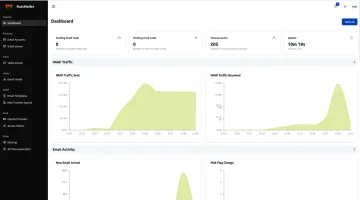
What is rustmailer?
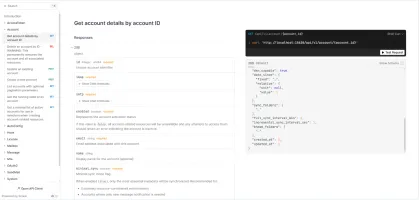
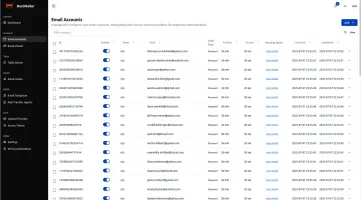
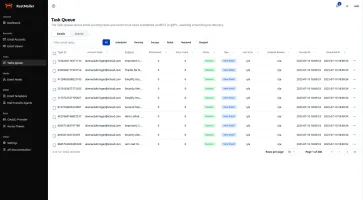
RustMailer is a self-hosted email middleware for developers who need to add email sync and sending to their applications. It connects to IMAP, SMTP, Gmail API, and Microsoft Graph API through a unified REST and gRPC interface. A built-in web client and admin dashboard let you inspect synced mailboxes, view headers, and test templates. Features include multi-account IMAP sync with incremental UID-based strategy, SMTP sending with connection pooling and Handlebars templates, OAuth2 flows for Gmail and Outlook with automatic token refresh, webhook and NATS event delivery with VRL scripting for payload transformation, open and click tracking, and Prometheus metrics. It runs as a single ~60MB Rust binary with no external dependencies like Redis or databases, deployable via Docker or direct binary. The code is source-available on GitHub but requires a paid license for production use after a 14-day free trial.
Should you self-host rustmailer?
rustmailer scores 44/100 on selfhost.directory (how scoring works) and ranks #81 of 106 in Email. It has 514 GitHub stars.
It shipped 9 stable releases in the past year. The latest, 1.7.6, came out on 16 October 2026. New versions land roughly every 10 days.
Setup is moderate: expect some configuration beyond a single command. An official Docker image is available. It is Other-licensed and written mostly in Rust.
Its closest alternative on selfhost.directory is Listmonk (80/100, 24 017 stars). It scores higher overall, so compare the two before you pick. See rustmailer vs Listmonk side by side.
Features
- Built-in webmail client and admin dashboard
- Email templates with Handlebars
- Gmail API integration
- Microsoft Graph API integration
- Multi-account IMAP synchronization
- NATS event streaming
- OAuth2 authentication flow
- Open and click tracking
- Prometheus Metrics
- Proxy Support
- REST and gRPC APIs
- SMTP sending with connection pooling
- Webhook delivery with VRL scripting
rustmailer README
FAQ
What are the payment or purchase options?
Licenses are purchased via embedded Stripe Checkout after signing in via Clerk or OAuth provider.
Can I customize webhook events in RustMailer?
Yes, webhook payloads can be filtered and transformed using VRL (Vector Remap Language) scripts per account or globally.
What dependencies does RustMailer require?
RustMailer runs as a single binary with no external dependencies like Redis or databases required.
How does RustMailer handle email syncing?
RustMailer performs periodic full or incremental synchronization of IMAP folders using UID-based strategy, not real-time push.
More in API
 scalarAn open-source platform for API docs and testing: self-hosted API references from OpenAPI/Swagger specs via a Docker image, plus an offline-first API client.
 SeekStormOpen-source Rust search engine with BM25 lexical and vector search fused in one hybrid query, multi-tenant REST server, web UI and MCP support. Self-hosted, free forever.
 Signal-APISelf-hosted, open-source Docker container that wraps signal-cli as a REST API, so scripts can register a Signal number and send, receive and manage messages.
 storStor is a self-hosted, open-source JSON database that exposes a REST-like HTTP API for CRUD operations, using MongoDB as its storage backend and Node.js for the server.
 SupabaseMetaOpen-source, self-hosted REST API that manages Postgres over HTTP: list and alter tables, columns, roles, functions and triggers, run SQL, generate types.
 tabbyAPITabbyAPI is a self-hosted, open-source FastAPI server providing an OpenAI-compatible REST API for running ExllamaV3-quantized LLMs on your own GPU hardware.
 tempmail-serverSelf-hosted disposable email backend with SMTP server and REST API. Features auto-expiring addresses, multi-domain support, and PostgreSQL storage.
 teslamateapiTeslaMateApi is a self-hosted, open-source REST API exposing TeslaMate vehicle data as JSON with endpoints for status, drives, charges, and remote commands.
 TrailBaseOpen-source, self-hosted Firebase alternative: one Rust executable with SQLite, type-safe REST and realtime APIs, auth, file storage, WASM endpoints and an admin UI.
 TurtlOpen-source, self-hosted backend server for Turtl clients: account management, data storage, syncing, sharing permissions and a plugin architecture, on Node and Postgres.
 unbagrndUnbagrnd - Free, Fast & Open-source AI-powered background remover for Windows, macOS, Linux and Android.
 UniFi-API-BrowserSelf-hosted, open-source PHP tool to browse UniFi Controller API data: multiple classic or API-key controllers, site switching, JSON/PHP output.
0 comments