Self-host Ouroboros
v7.8.0Self-creating AI agent with persistent identity
- Stars
- 1 587
- Port
- 8765 (web runtime HTTP/WebSocket server)
- Requires
- Git
What is Ouroboros?
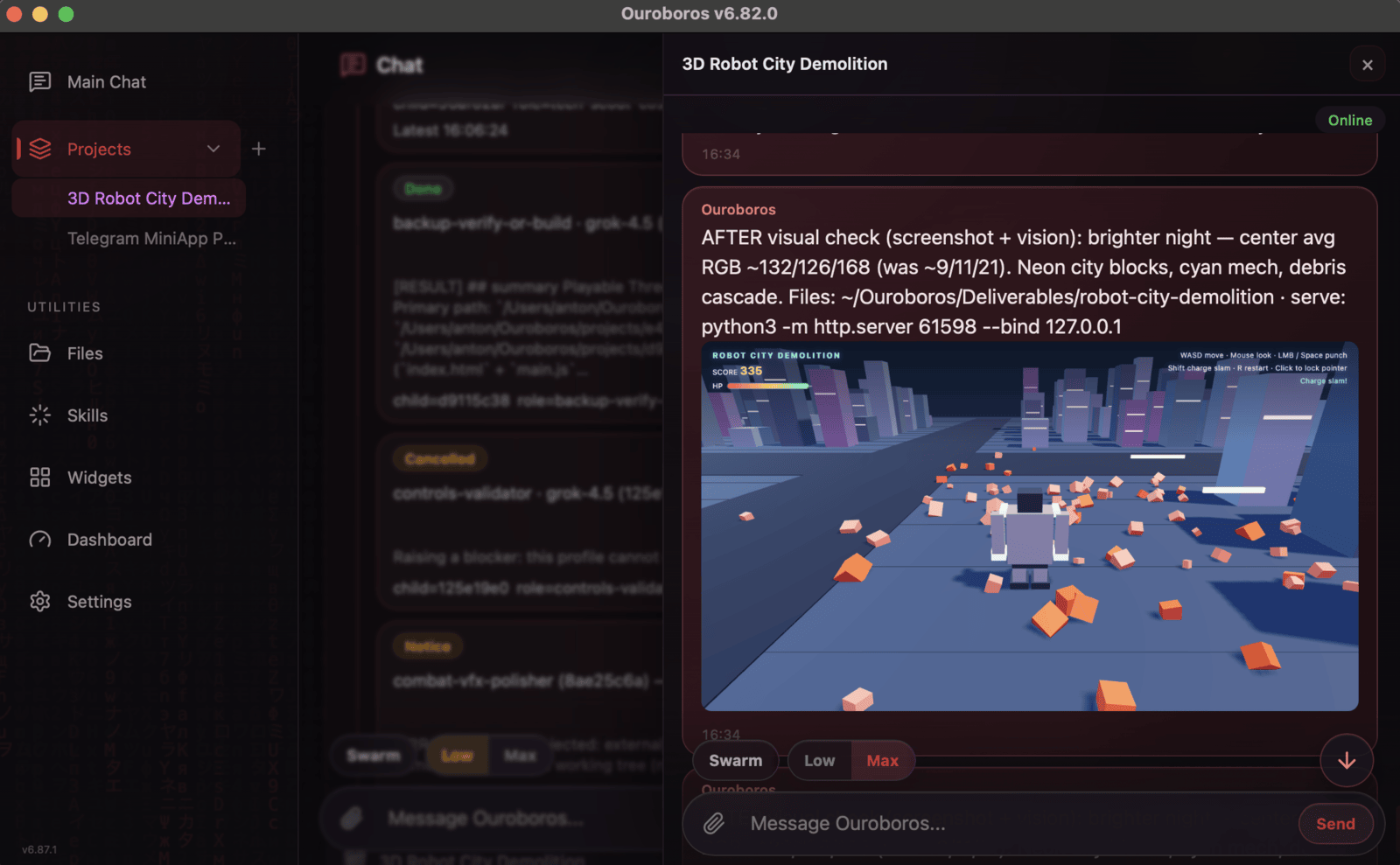
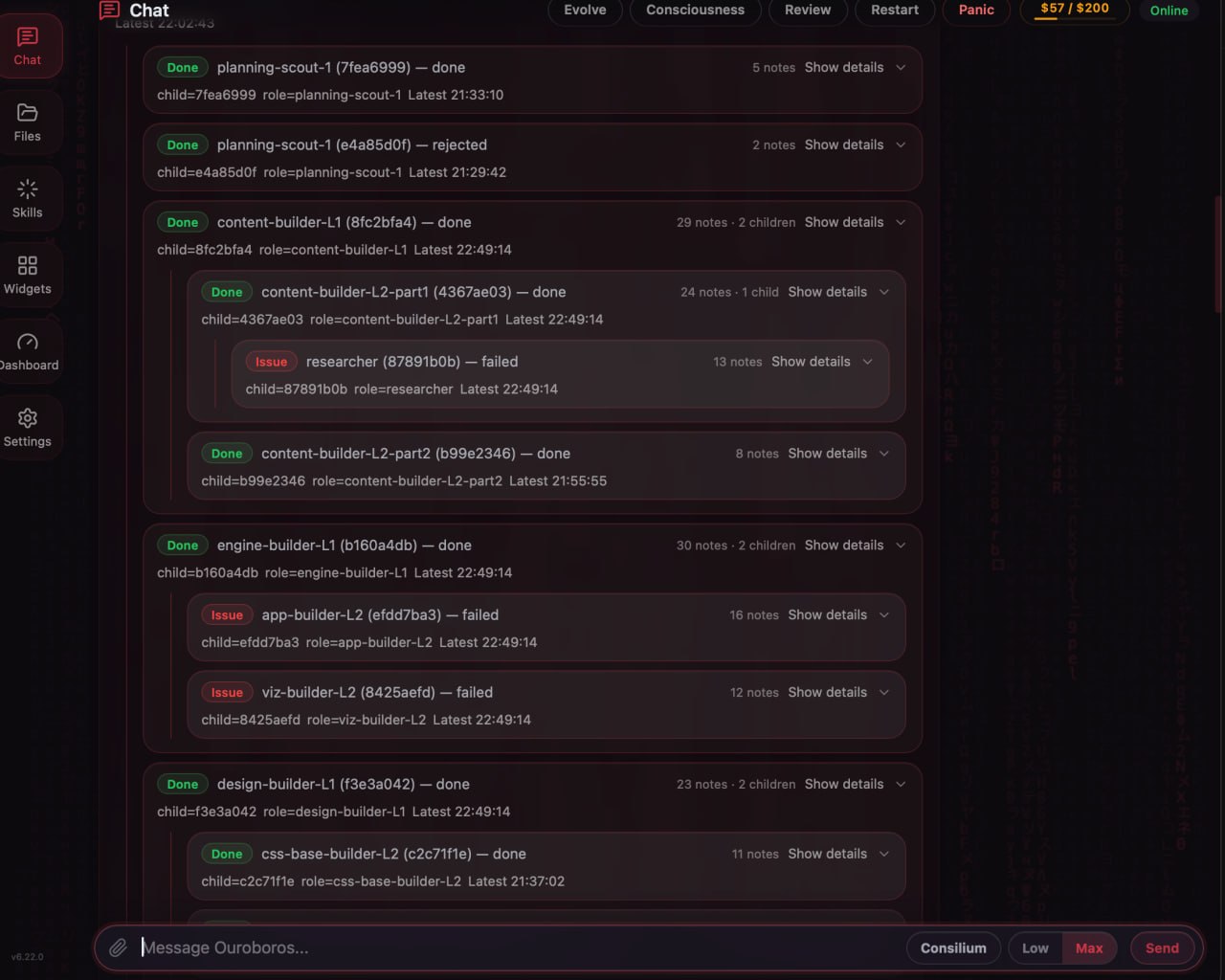
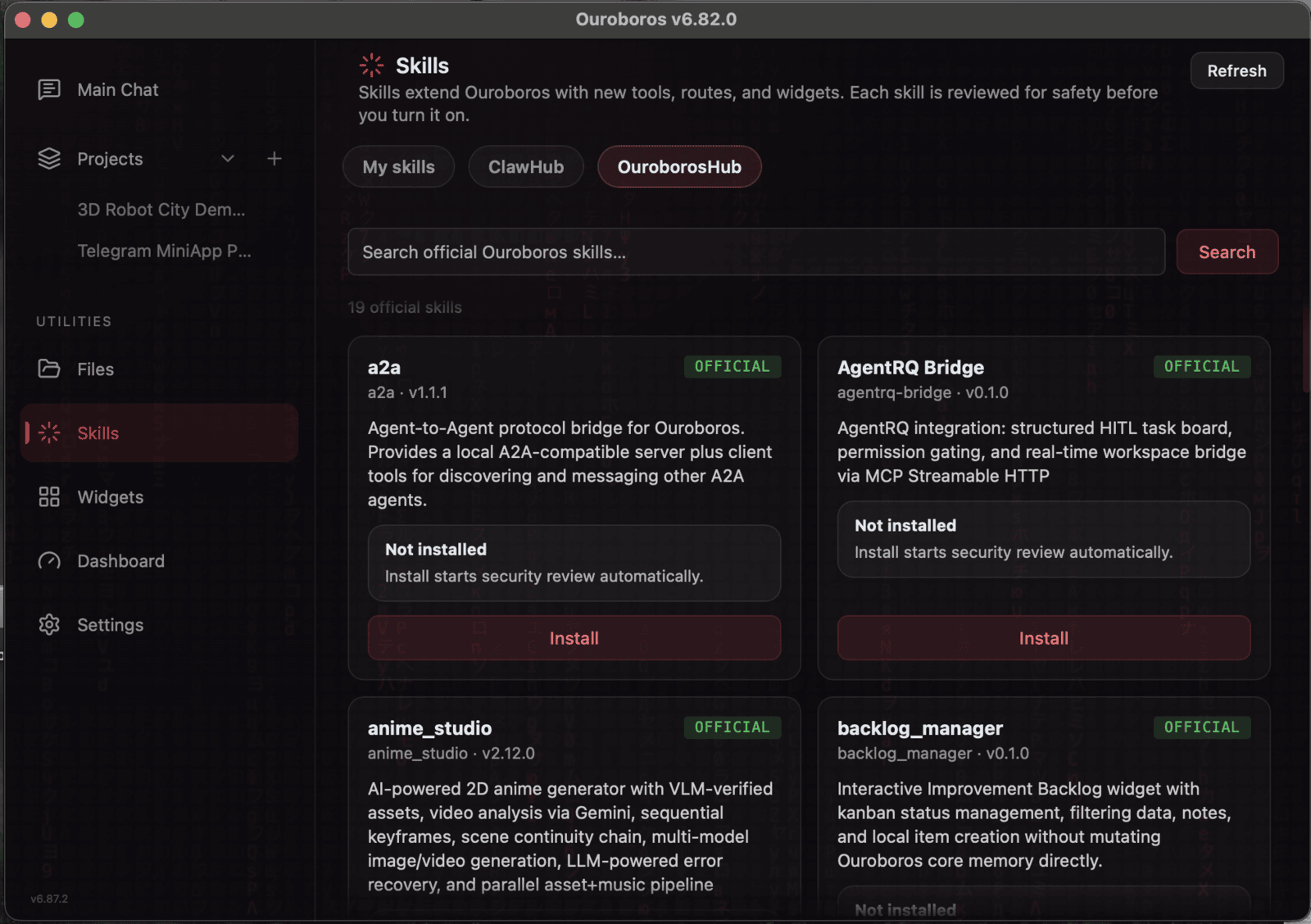
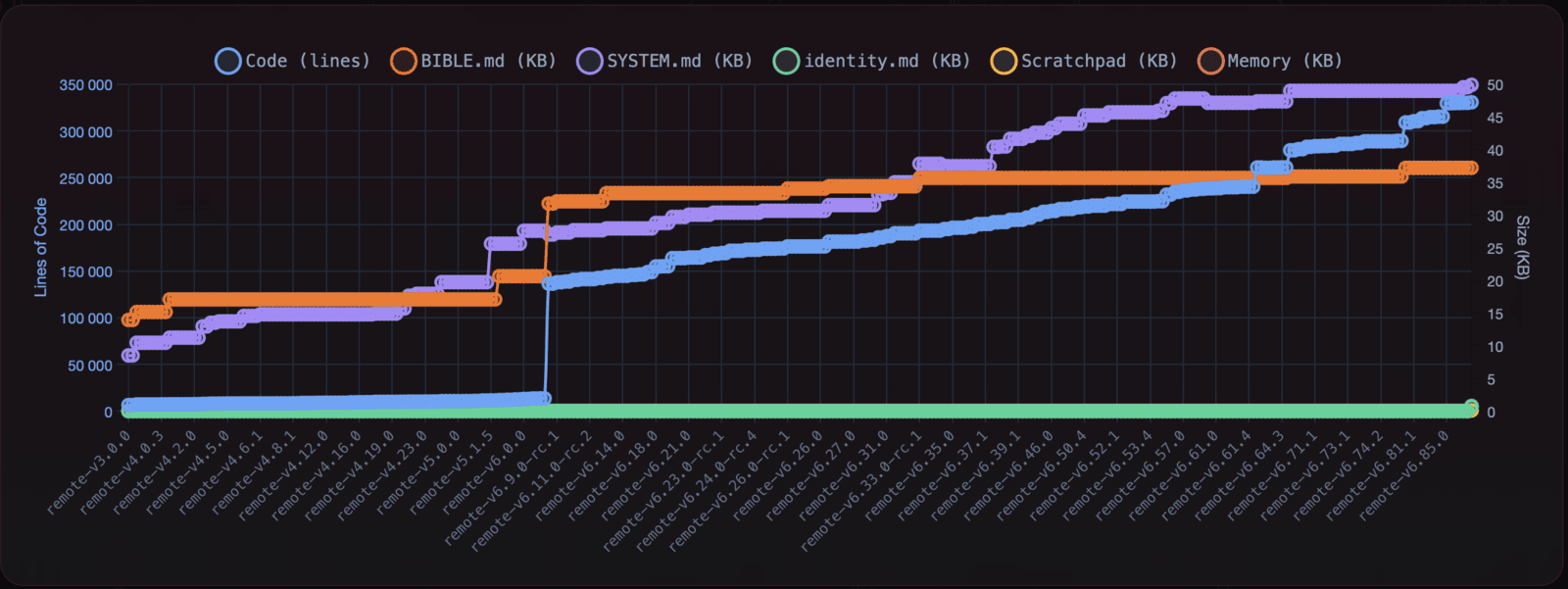
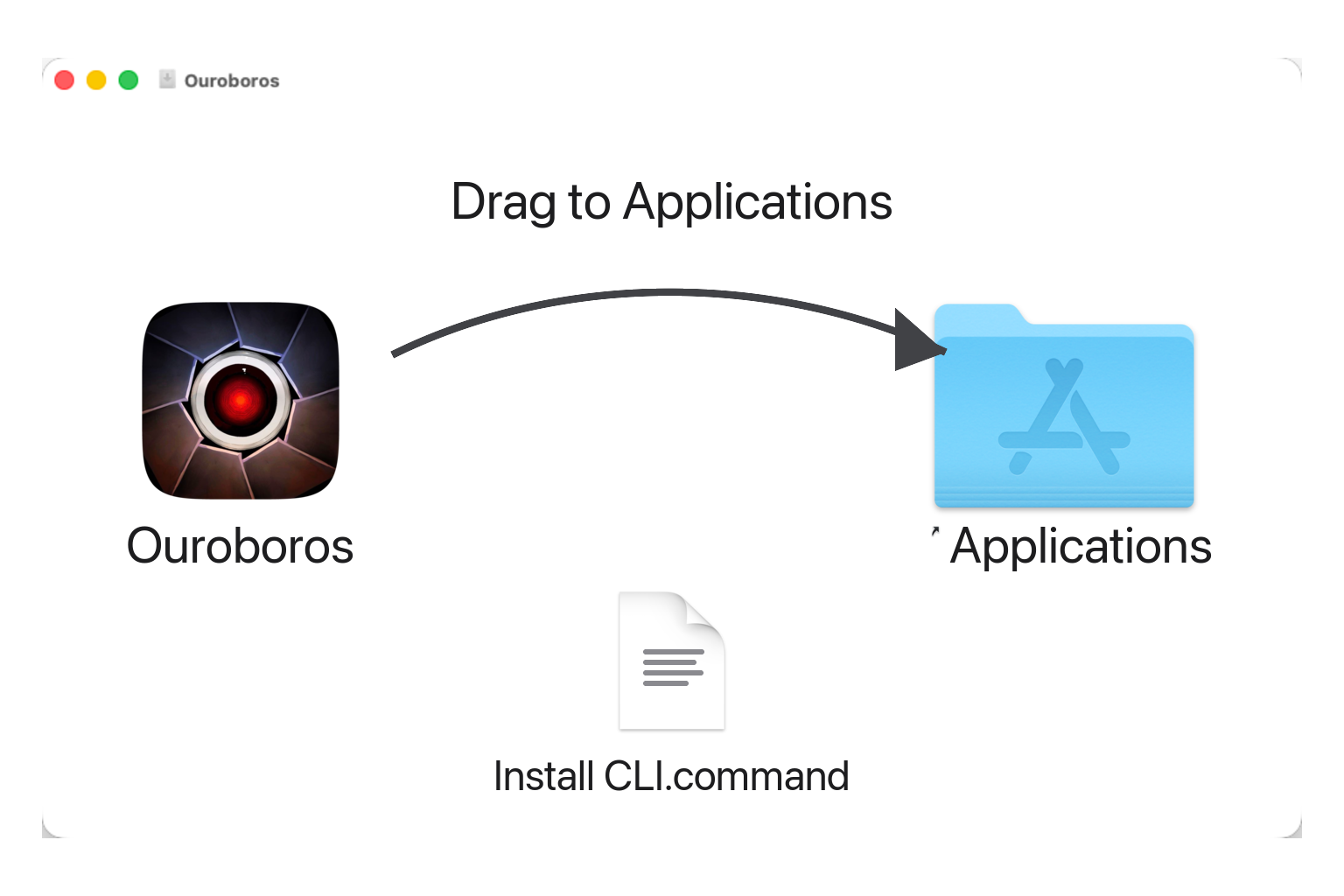
This open-source AI agent runs on your own machine and maintains a continuous identity with durable memory across tasks and restarts. It can work on external projects, coordinate a swarm of specialist sub-agents, and autonomously modify its own implementation — including its codebase, architecture, prompts, tools, and dependencies. Available as a native desktop application for macOS, Windows, and Linux, plus a headless CLI, with a web interface on port 8765. Model inference supports remote APIs like OpenRouter, OpenAI, and Anthropic, as well as local GGUF models. Desktop bundles include CPython 3.10 and SQLite, so no separate Python installation is needed. Optional integrations connect to Codex, Claude Code, and Cursor subscriptions through the bundled Claudexor execution layer. Extensions like skills, transport bridges, widgets, and MCP tools are distributed via the OuroborosHub marketplace. Released under the MIT license with frequent updates.
Should you self-host Ouroboros?
Ouroboros scores 55/100 on selfhost.directory (how scoring works) and ranks #65 of 209 in AI Agents. It has 1 587 GitHub stars.
It shipped 7 stable releases in the past year. The latest, v7.8.0, came out on 23 October 2026. New versions land roughly every 4 days.
Setup is moderate: expect some configuration beyond a single command. It is MIT-licensed and written mostly in Python.
Its closest alternative on selfhost.directory is Orca (91/100, 108 815 stars). It scores higher overall, so compare the two before you pick. See Ouroboros vs Orca side by side.
Features
- Agent swarm coordination
- Autonomous self-evolution
- Background consciousness
- Constitutional governance (BIBLE.md)
- Delegated coding via Claudexor
- Headless CLI and desktop app
- Local and remote model support
- MCP (Model Context Protocol) Support
- Persistent identity and memory
- Project rooms for long-running work
- Reviewed evolution with immune system
- Self-change inspectability
- Skills marketplace (OuroborosHub)
- Web runtime with HTTP/WebSocket API
Ouroboros README
More in AI Chat
 OvertChatSelf-hosted AI chat with local models, bundled voice/search, multi-user accounts, native mobile/desktop apps, and portable SQLite database.
 OwlySelf-hosted AI support agent unifying WhatsApp, Email, and Phone with cross-channel identity, knowledge base, automation, and tickets.
 parlantOpen-source, self-hosted conversational harness for customer-facing AI agents: guidelines, journeys, canned replies and tools matched per turn by a FastAPI server.
 PerplexiBotPerplexiBot is a self-hosted Discord bot for AI web research using GPT 3.5 or Ollama models with SearXNG. Runs via Docker Compose.
 PHOBOSSelf-hosted AI OS running LLMs, image/video generation, web browsing, audio, and tasks locally with no cloud.
 pinchchatA self-hosted webchat UI for OpenClaw agents with real-time tool call visualization, live streaming, and a GPT-like session sidebar.
 PocketRisuPocketRisu is a self-hosted, open-source AI roleplay chat platform that runs on your hardware and connects to multiple LLM providers via a web browser.
 PrivateDocBotPrivateDocBot is a self-hosted, open-source chatbot for querying PDF documents locally using LLMs like Llama 2 via Chainlit.
 profclawRun AI agents on your hardware with this open-source engine. 35 model providers, 72 tools, 22 chat services. Three sizes from tiny to full-featured.
 Project N.O.M.A.D.Open-source, self-hosted offline knowledge and education server: Wikipedia, maps, Khan Academy courses and optional local AI, all managed from one Docker dashboard.
 QA-PilotQA-Pilot is a self-hosted, open-source chat app that helps developers understand GitHub code repositories using local or cloud LLMs with code graph visualization.
 ragSelf-hosted, open-source retrieval-augmented generation chat app on txtai and Streamlit: vector RAG plus graph path queries, with your own LLM.
0 comments