Self-host ibl.ai/os
v0.190.3Open-source AI agent platform for building agents
- Stars
- 654
- Ports
- 3000 (Development server), 5000 (Docker production server), 3001 (Alternative development port)
- Requires
- ASGI/WebSocket Server, ibl.ai API Gateway, ibl.ai Auth Service, LiveKit server
What is ibl.ai/os?
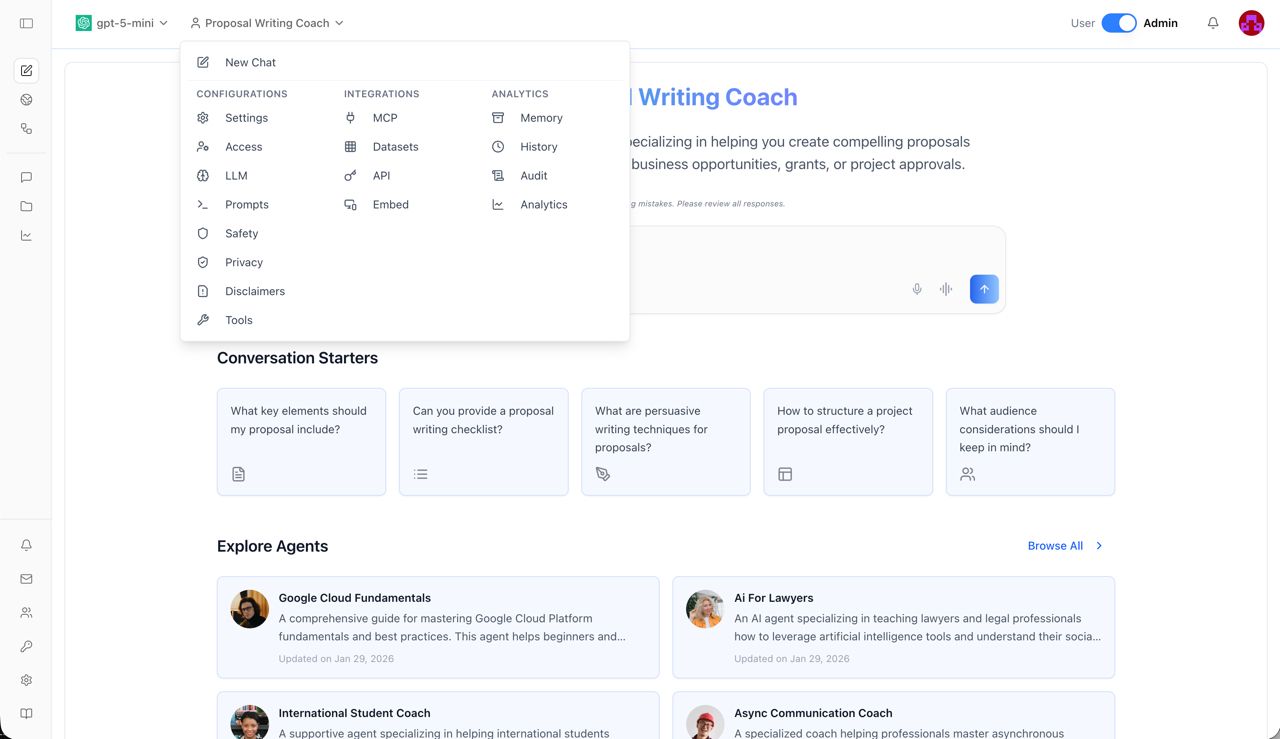
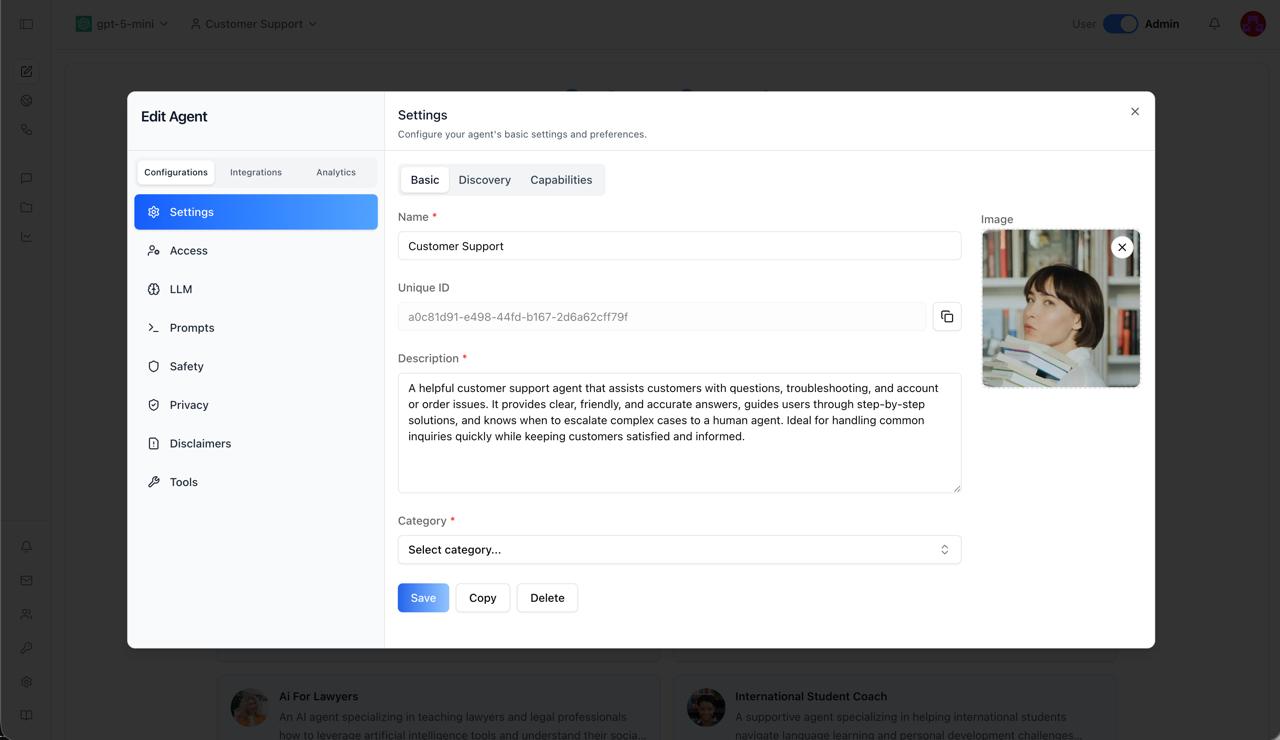
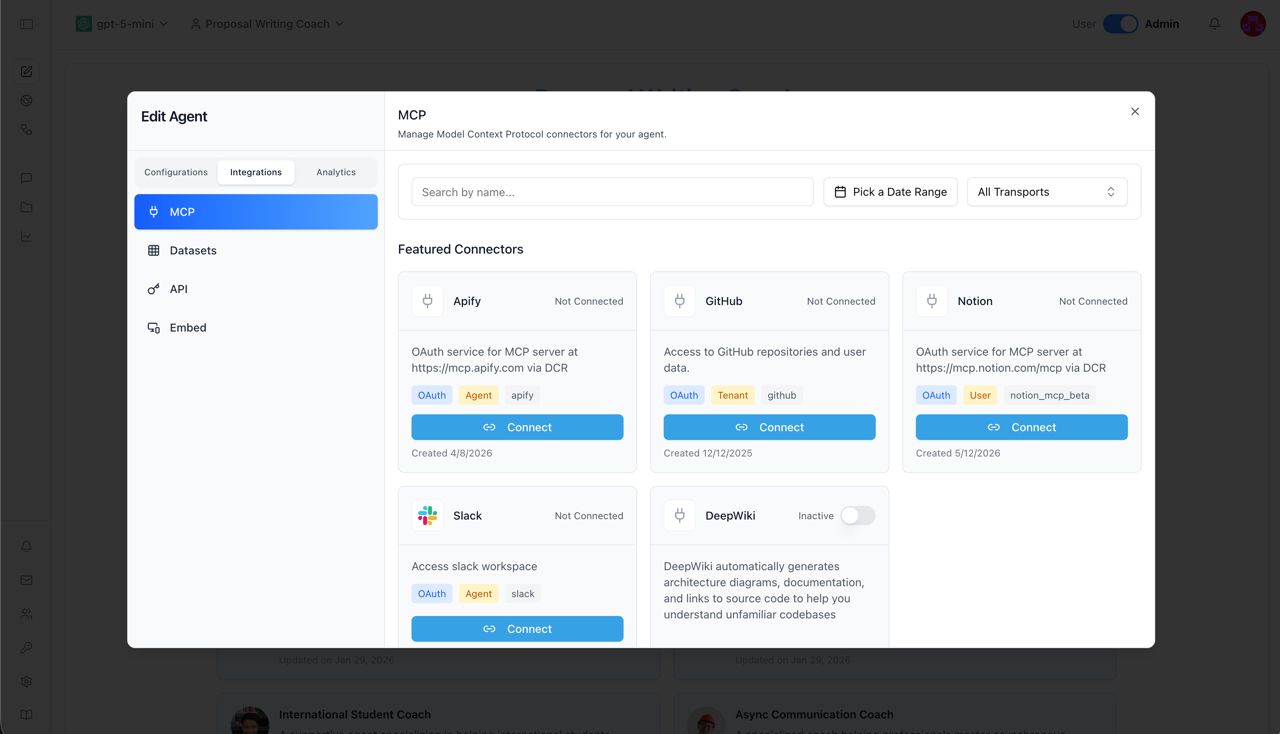
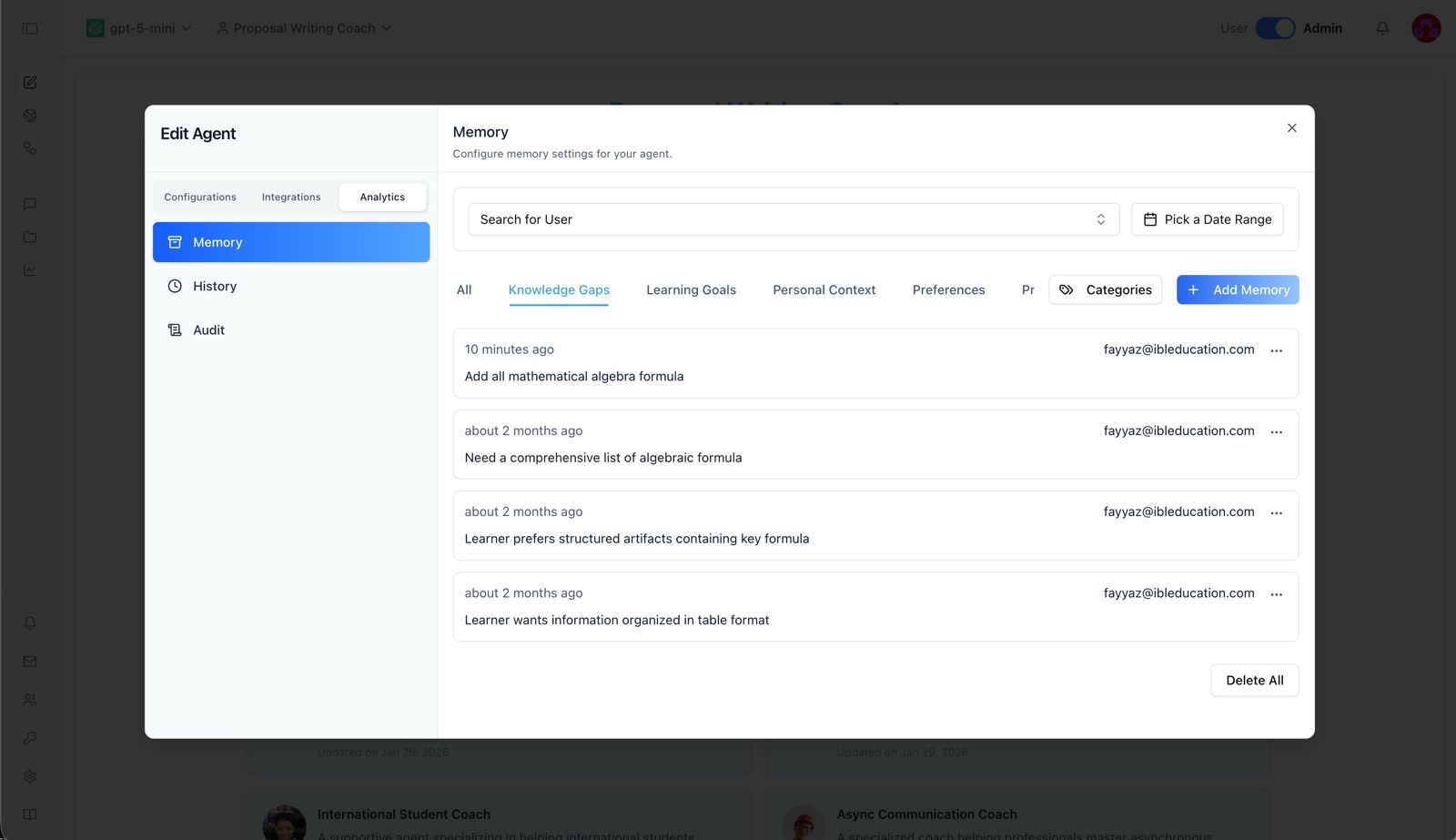
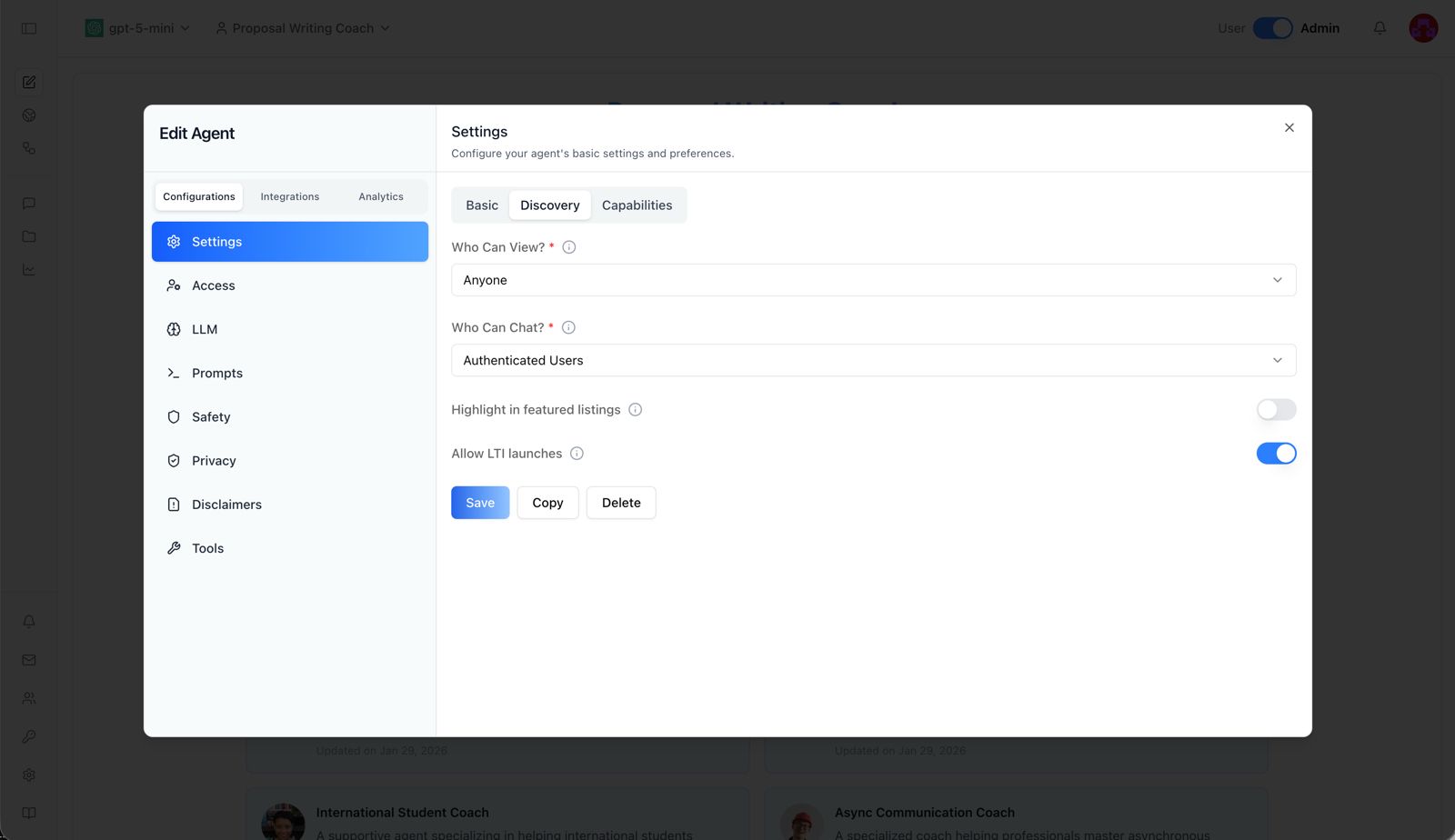
ibl.ai/os is the open-source frontend for the ibl.ai platform, giving organizations a way to build and run their own AI agents. The software works with many LLM providers and includes real-time chat, voice conversations through LiveKit WebRTC, screen sharing, retrieval-augmented generation for document training, Model Context Protocol server support, analytics dashboards, multi-tenancy with per-organization branding, single sign-on via OAuth/OIDC/SAML, role-based access control, Stripe billing, iframe embedding, API access, and white-labeling options. One codebase delivers a web application (deployable via Docker or as a standalone Node.js server), native desktop applications for macOS, Windows, and Linux, native mobile applications for iOS and Android, and a Chrome side-panel extension. Running it yourself requires the separate ibl.ai backend (authentication, API gateway, LiveKit, ASGI) which is not part of this repository; the frontend connects through environment variables. The code is MIT-licensed and receives frequent updates.
Should you self-host ibl.ai/os?
ibl.ai/os scores 54/100 on selfhost.directory (how scoring works) and ranks #82 of 209 in AI Agents. It has 654 GitHub stars, -139 in the last 30 days.
It shipped 30 stable releases in the past year. The latest, v0.190.3, came out on 7 November 2026.
Setup is advanced: plan for several services and some ongoing maintenance. It is MIT-licensed and written mostly in Typescript.
Its closest alternative on selfhost.directory is Orca (91/100, 118 764 stars). It scores higher overall, so compare the two before you pick. See ibl.ai/os vs Orca side by side.
Features
- AI Agents
- Analytics
- Canvas / Artifacts
- Deep Research
- Embed & API
- MCP Servers
- Multi-tenancy
- Projects
- RAG Training
- Screen sharing
- SSO & RBAC
- Stripe Billing
- Voice calls
- Web Search
- Whitelabeling
ibl.ai/os README
The open-source AI agent platform.
Build, deploy, and manage intelligent conversational agents — from prototype to production, in minutes. One codebase. Every platform. Your code, your data, any LLM.
Windows ARM64 · older builds · Linux → all downloads
▶︎ Watch the demo · by Miguel Amigot, CTO at ibl.ai
Why ibl.ai/os · Every platform · Features · Case studies · Screenshots · Quick Start · Deployment
SOC 2 Type II · Universities, enterprises, and governments run on ibl.ai — read the case studies →
More in AI Agents
 IM.codesSelf-hosted open-source messaging and control layer for AI coding agents providing shared memory, remote desktop, supervised execution, and cross-provider audit.
 invisible_dotsAn open-source self-hosted AI agent platform where each Dot gets a QEMU virtual machine with persistent Linux desktop and browser automation.
 ironclawSecure open-source AI agent framework that runs locally or on NEAR AI Cloud with encrypted vaults and WASM sandboxing. Compatible with OpenAI, Anthropic, Ollama LLMs.
 It's a PlanOpen-source, self-hosted issue tracker where AI agents work alongside humans on shared boards. Replaces Linear, Jira, Plane with built-in AI, multiple views, initiatives.
 Jentic OneJentic One is a self-hosted, open-source execution layer letting AI agents securely call real APIs without handling credentials.
- Kanban CLISelf-hosted, open-source (AGPL-3.0) Rust CLI that runs agile task, sprint, role and metrics tracking entirely in local JSON files, with agent-friendly JSON output.
 Keeper.shOpen-source, self-hosted calendar syncer keeping CalDAV, iCloud, Google, Fastmail and Outlook schedules in step, with every Pro feature plus an MCP server.
 KittyClawSelf-hosted kanban where AI agents (Claude, Codex, Grok, Mistral, Ollama) work alongside humans with pipelines, processors, live streaming, and MCP server.
 kiwifsKiwiFS is a self-hosted markdown filesystem turning .md files into a knowledge server with git versioning, search, a web UI, and 78 MCP tools for AI agents.
 langflowLangflow is a self-hosted, open-source low-code platform for building AI agents and RAG workflows with a visual drag-and-drop interface.
 latitudeThe open-source AI agent observability platform that groups failing traces into signals and dispatches coding agents; self-hosted via Docker Compose or Helm.
 leatherleather is a self-hosted, open-source local agent runtime running declarative AI agents from a single zero-dependency Go binary.
0 comments