
Self-host kraken
v1.7On-premise CI/CD system focused on massive-scale testing
docker run -e KRAKEN_SERVER_ADDR=<host-addr>:6363 -e KRAKEN_CLICKHOUSE_ADDR=<host-addr>:9001 -e KRAKEN_MINIO_ADDR=<host-addr>:9999 --rm us-docker.pkg.dev/kraken-261806/kkagent:<version>- Stars
- 160
- Ports
- 8080 (Web UI), 6000 (API Server), 7997 (Planner), 9001 (ClickHouse Proxy), 9999 (MinIO)
- Requires
- ClickHouse, Minio, PostgreSQL, Redis




What is kraken?
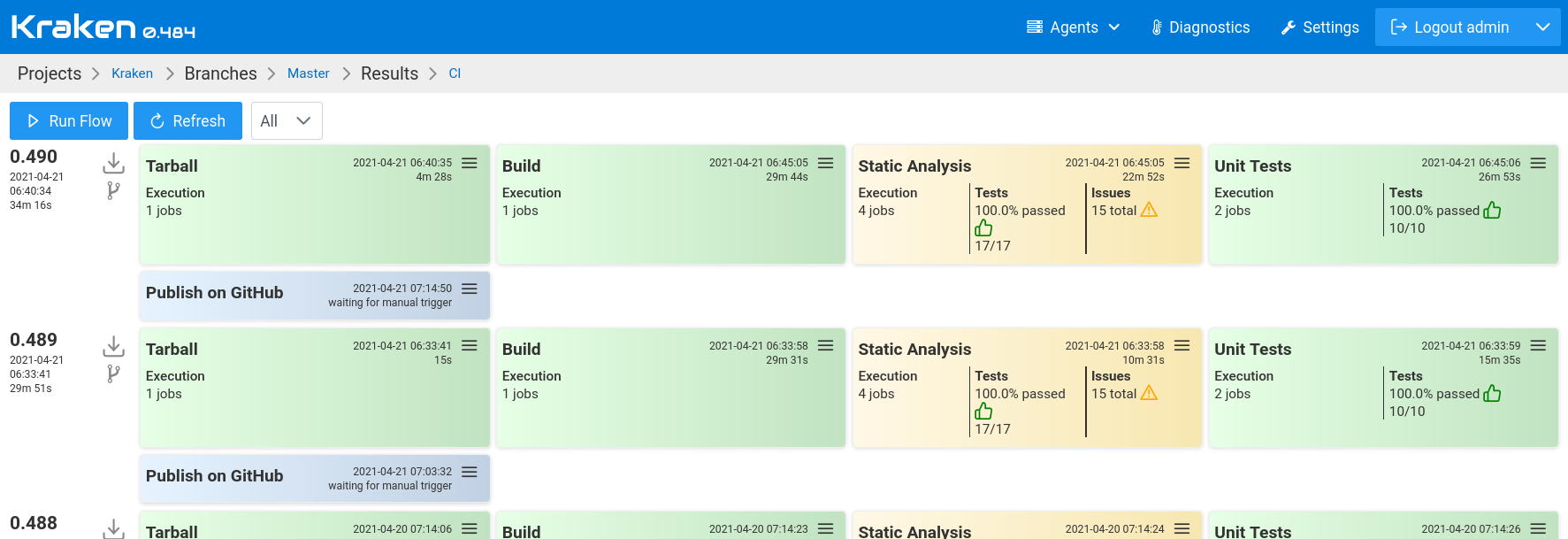
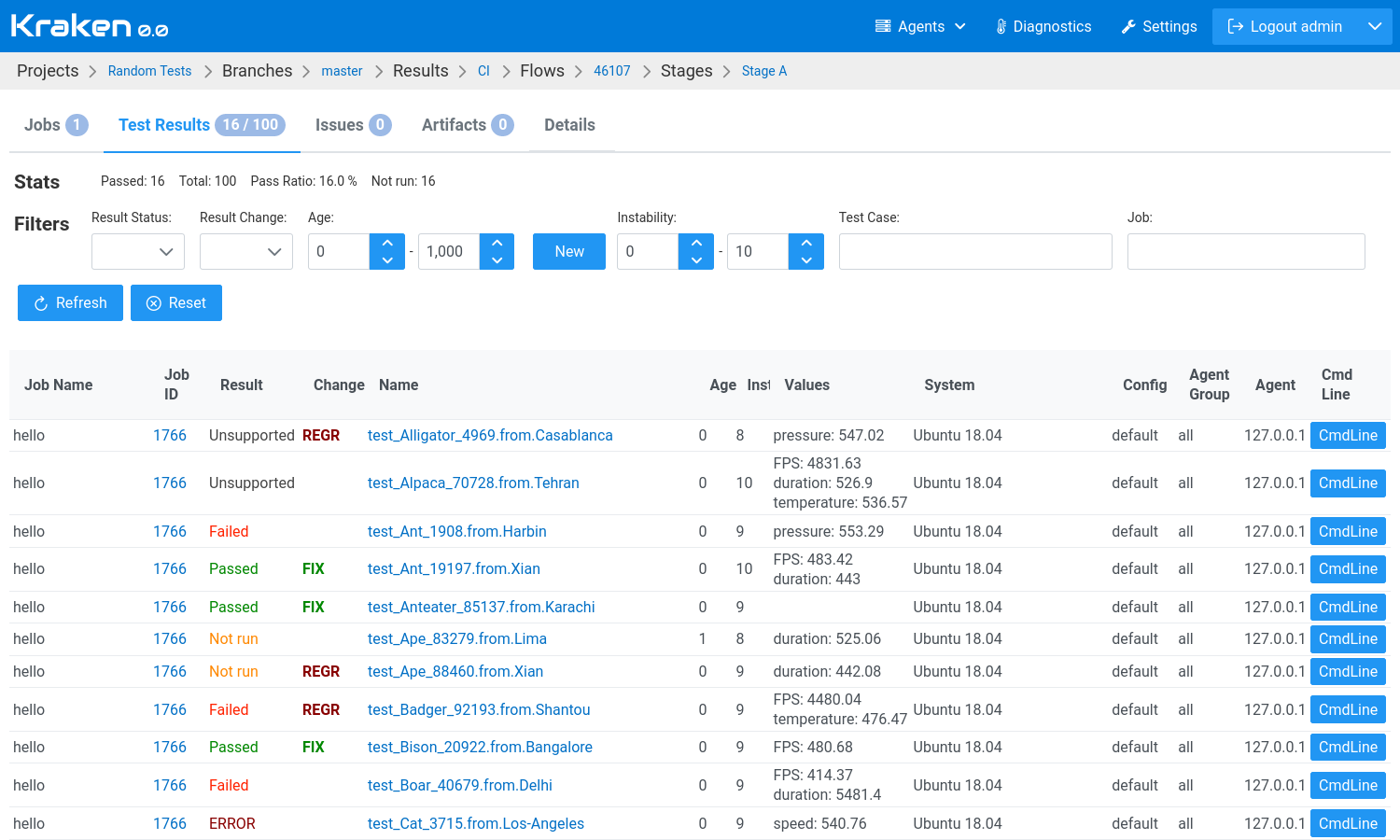
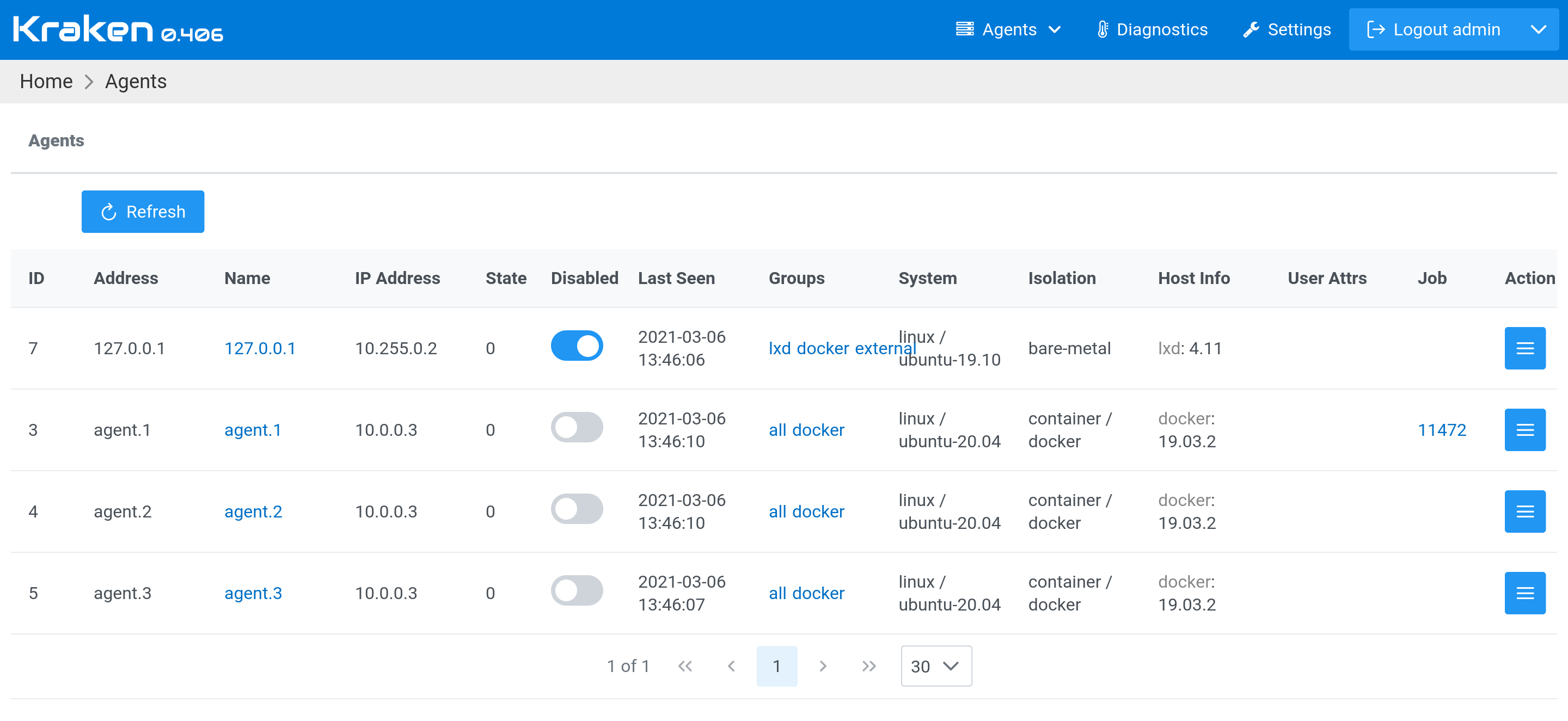
Kraken CI is an open-source, on-premise continuous integration and testing system built for massive-scale test execution. It supports hundreds of thousands of tests per build and specializes in hardware testing where hardware may be unstable and require monitoring or rebooting. The system uses a Python/Starlark-based workflow schema to define jobs, triggers, and environments. It can execute jobs locally, in Docker containers, or in LXD containers across bare metal, VMs, and Kubernetes. Kraken includes cloud autoscaling for AWS EC2/ECS, Azure VMs, and Kubernetes. Test results are tracked over time with regression detection, performance analytics, and charts. It integrates with GitHub, GitLab, Gitea, and Radicle via webhooks, and sends notifications via Email, Slack, Discord, and GitHub PR. Installation options include Docker Compose, Helm charts for Kubernetes, and manual installation on Ubuntu. The web UI supports dark mode and LDAP/OIDC authentication.
Should you self-host kraken?
kraken scores 48/100 on selfhost.directory (how scoring works) and ranks #23 of 28 in CI/CD. It has 160 GitHub stars.
There was no stable release in the past 12 months, so check the repository's recent activity before you rely on it.
Setup is advanced: plan for several services and some ongoing maintenance. It is Apache-2.0-licensed and written mostly in Python.
Its closest alternative on selfhost.directory is jenkins (82/100, 26 704 stars). It scores higher overall, so compare the two before you pick. See kraken vs jenkins side by side.
Features
- Artifact storage
- Cloud autoscaling
- Hardware testing focus
- Job designer
- LDAP/OIDC Authentication
- Massive-scale testing
- Multiple Executors
- Notifications
- Performance testing
- Python/Starlark workflow schema
- Real-time test streaming
- Test result tracking
- User management with roles
- Webhook Triggers
kraken README
More in Testing
 LocustOpen-source, self-hosted load-testing tool: scenarios are plain Python, driven from a web UI on port 8089, headless for CI, or across distributed master/worker nodes.
 mailcueMailCue is a self-hosted, open-source email testing server with Postfix, Dovecot, DKIM, DMARC, SpamAssassin, REST API, and React UI in one Docker container.
 MailHogOpen-source SMTP testing tool: capture outgoing mail in a web UI or JSON API, release it to a real server. Runs self-hosted as a single binary or Docker image.
 MailpitAn open-source SMTP mail catcher for developers: a self-hosted single binary or Docker image with a web UI, REST API, POP3 server and HTML, link and spam checks.
 MQTTX WebOpen-source MQTT 5.0 client toolbox: desktop app, CLI and a Docker-deployable web client for pub/sub testing, scripting, simulation and broker benchmarks.
 pixeleyePixeleye is a self-hosted, open-source visual testing platform for reviewing UI changes across browsers and devices with testing framework integrations.
 Request BasketsSelf-hosted HTTP requests collector for testing webhooks, notifications, and REST clients. Provides RESTful API and simple web UI, replacing RequestBin service.
 RocketshipRocketship is an open-source, self-hosted QA testing framework for coding agents to write and run end-to-end web tests using declarative YAML and plugins.
 tapflowOpen-source, self-hosted stand-in for Appetize or BrowserStack App Live: a relay plus macOS agents drive simulators and emulators your team tests in a browser.
 VeridropSelf-hosted, open-source tool that probes Claude, OpenAI and Gemini API relay endpoints to expose swapped models, stripped features and bogus token billing.
 WebHook TesterSelf-hosted, open-source tool for testing and debugging webhooks with customizable responses, WebSocket notifications, and multiple storage backends.
 ZealotSelf-hosted, open-source beta app distribution server for iOS, Android, macOS, Windows and Linux builds, with OTA install pages, webhooks and a fastlane plugin.
0 comments