
Self-host iCloud Prime
v0.1.10Local web console for iCloud Hide My Email alias management
- Stars
- 150
- Port
- 8081 (HTTP web console and API)
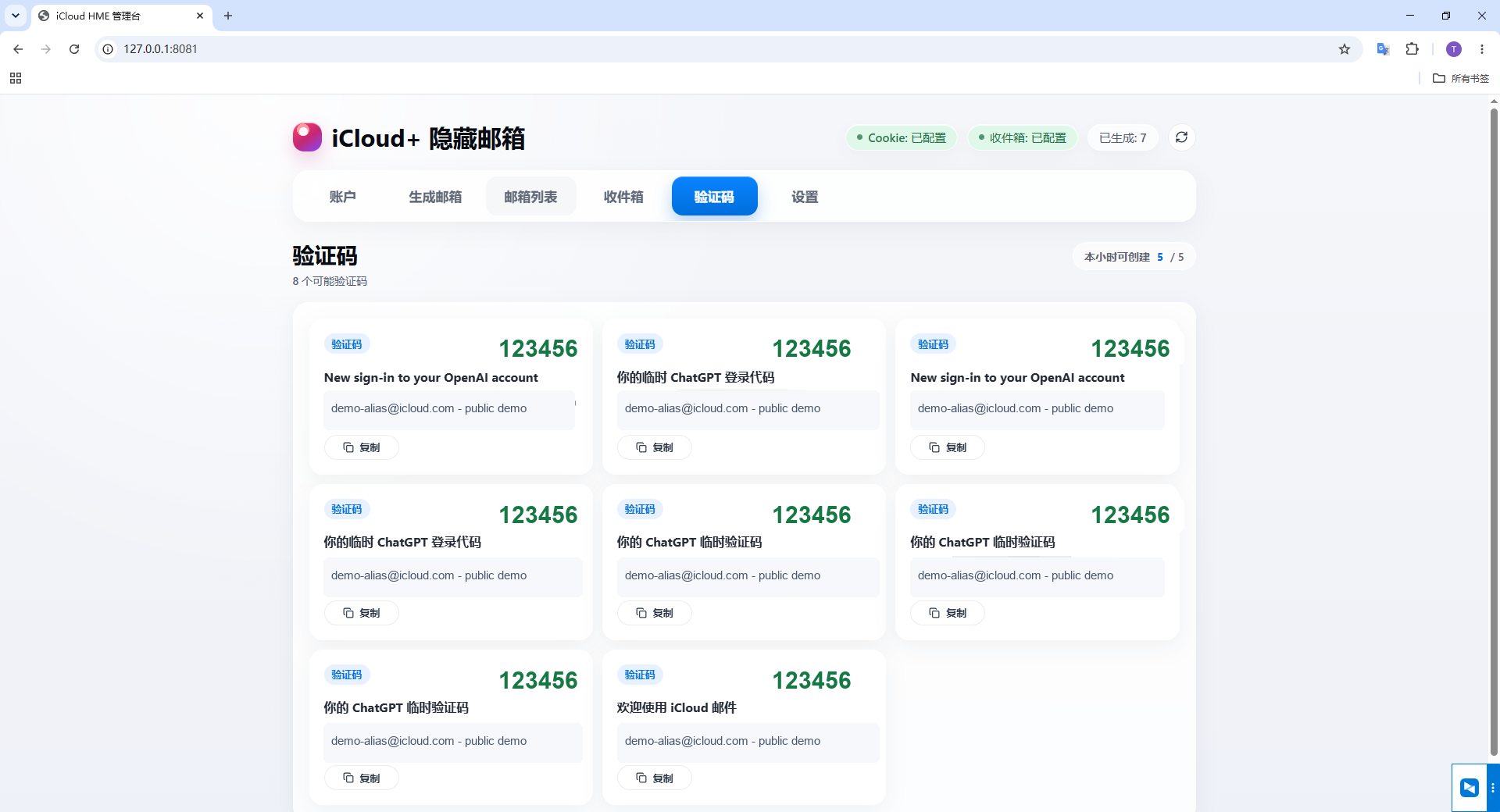
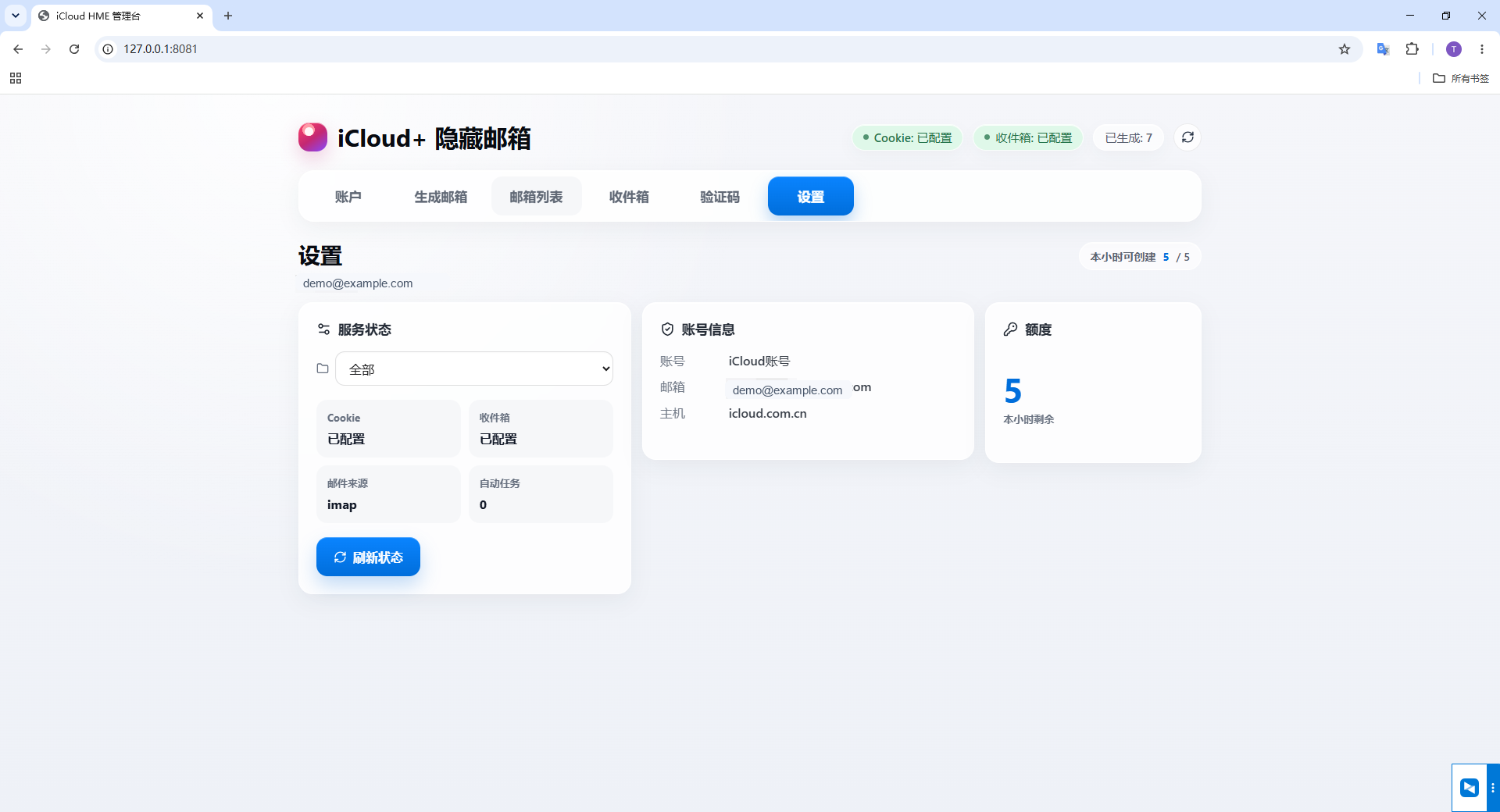
What is iCloud Prime?
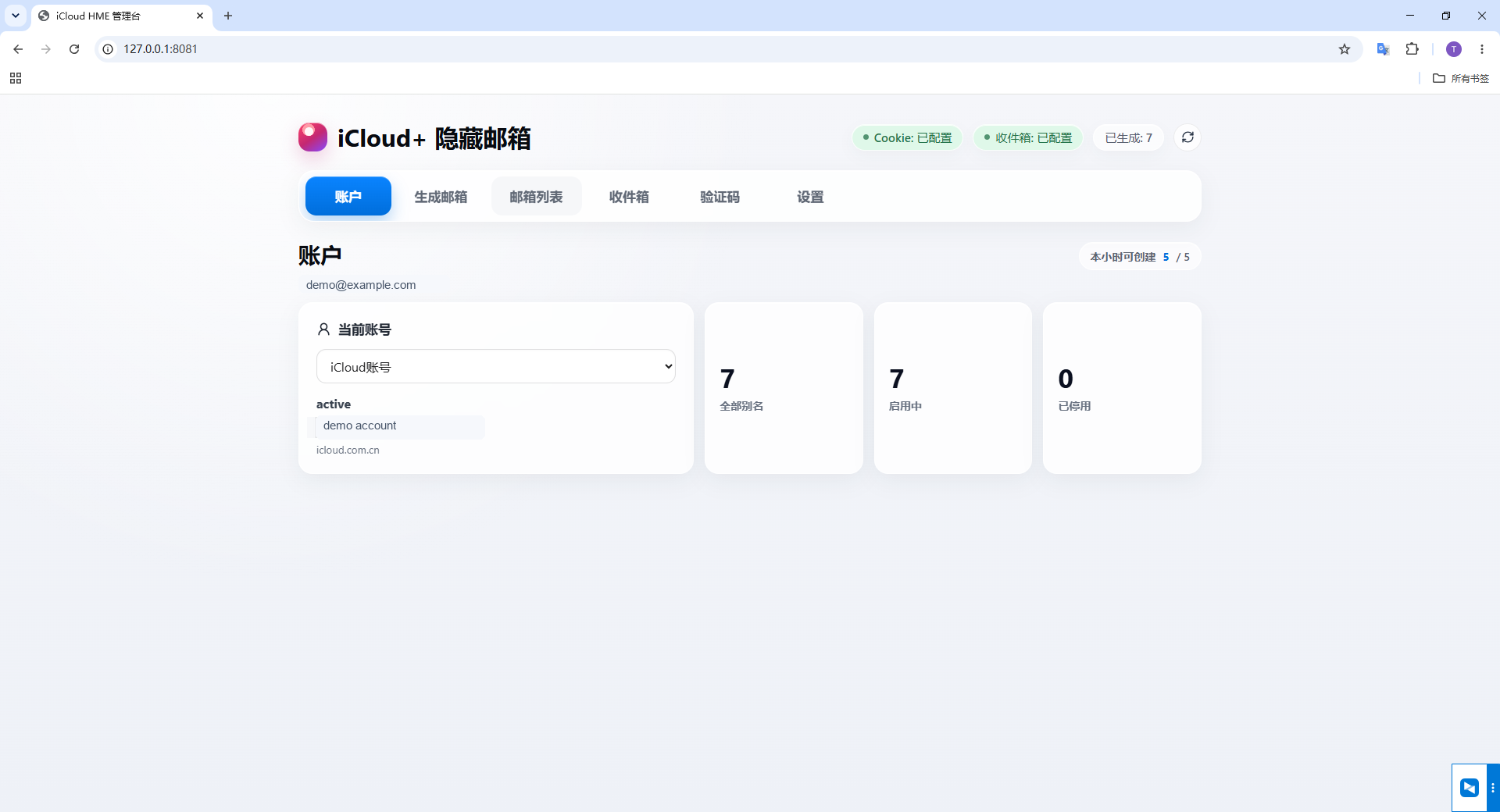
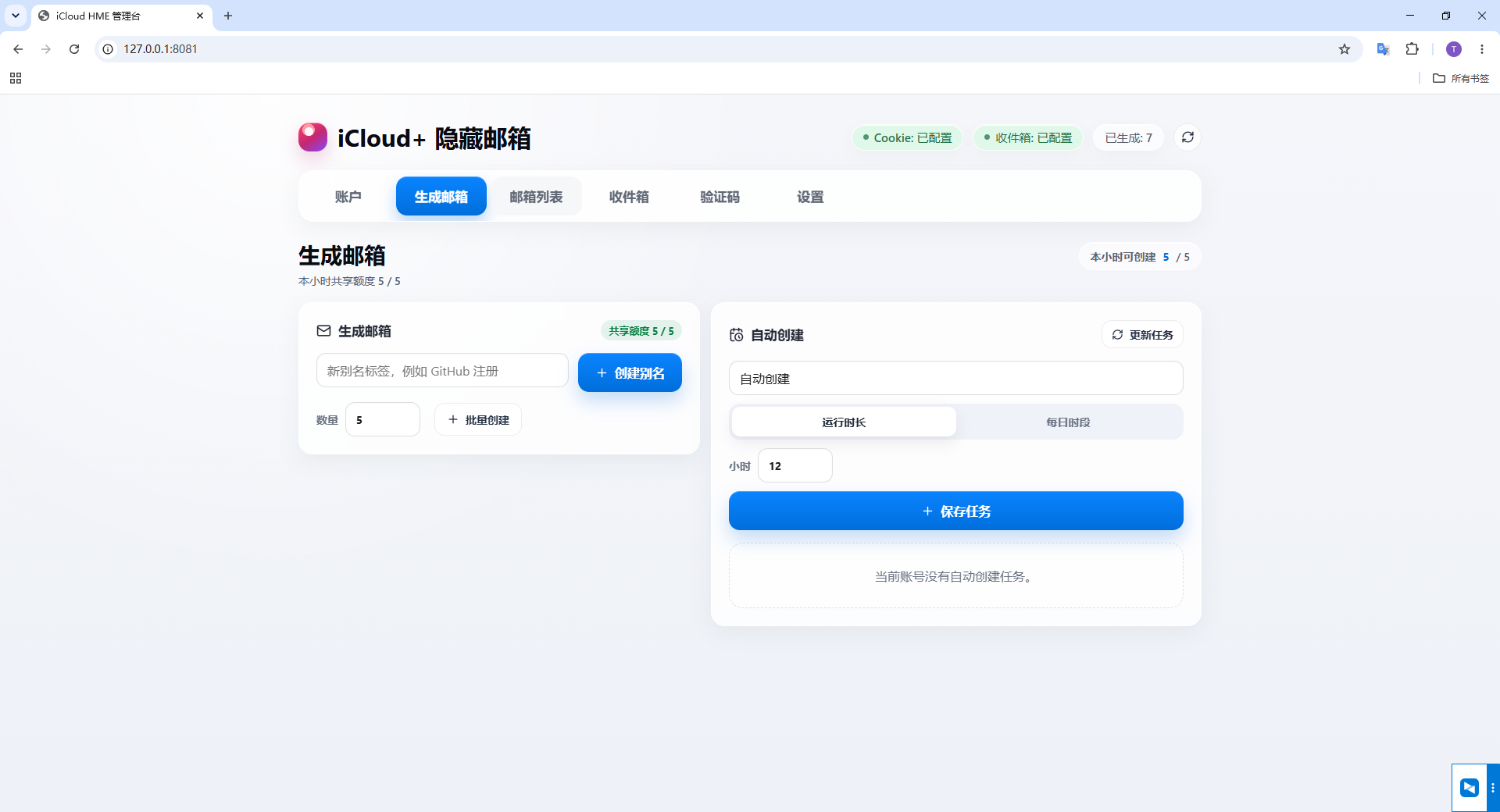
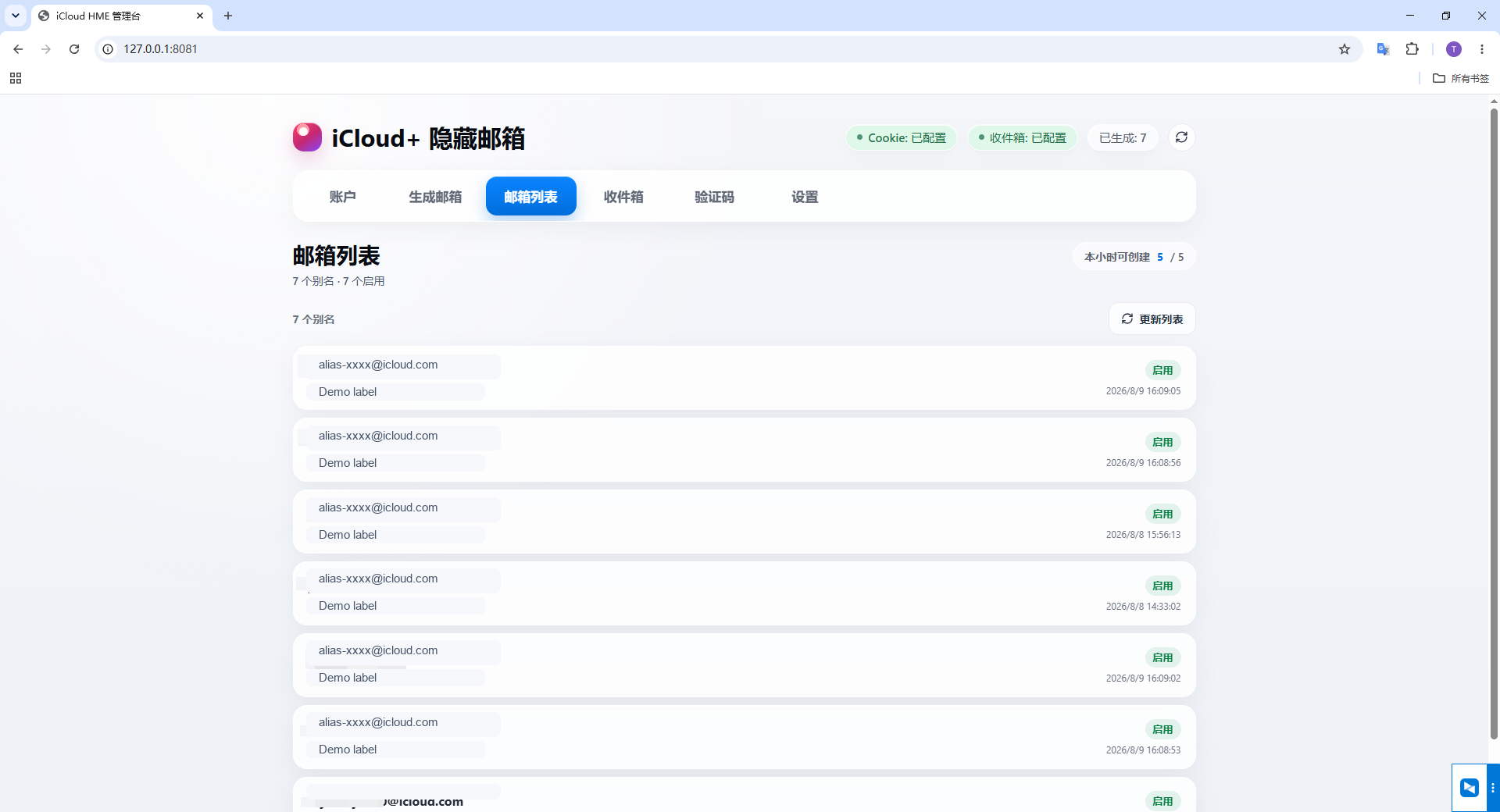
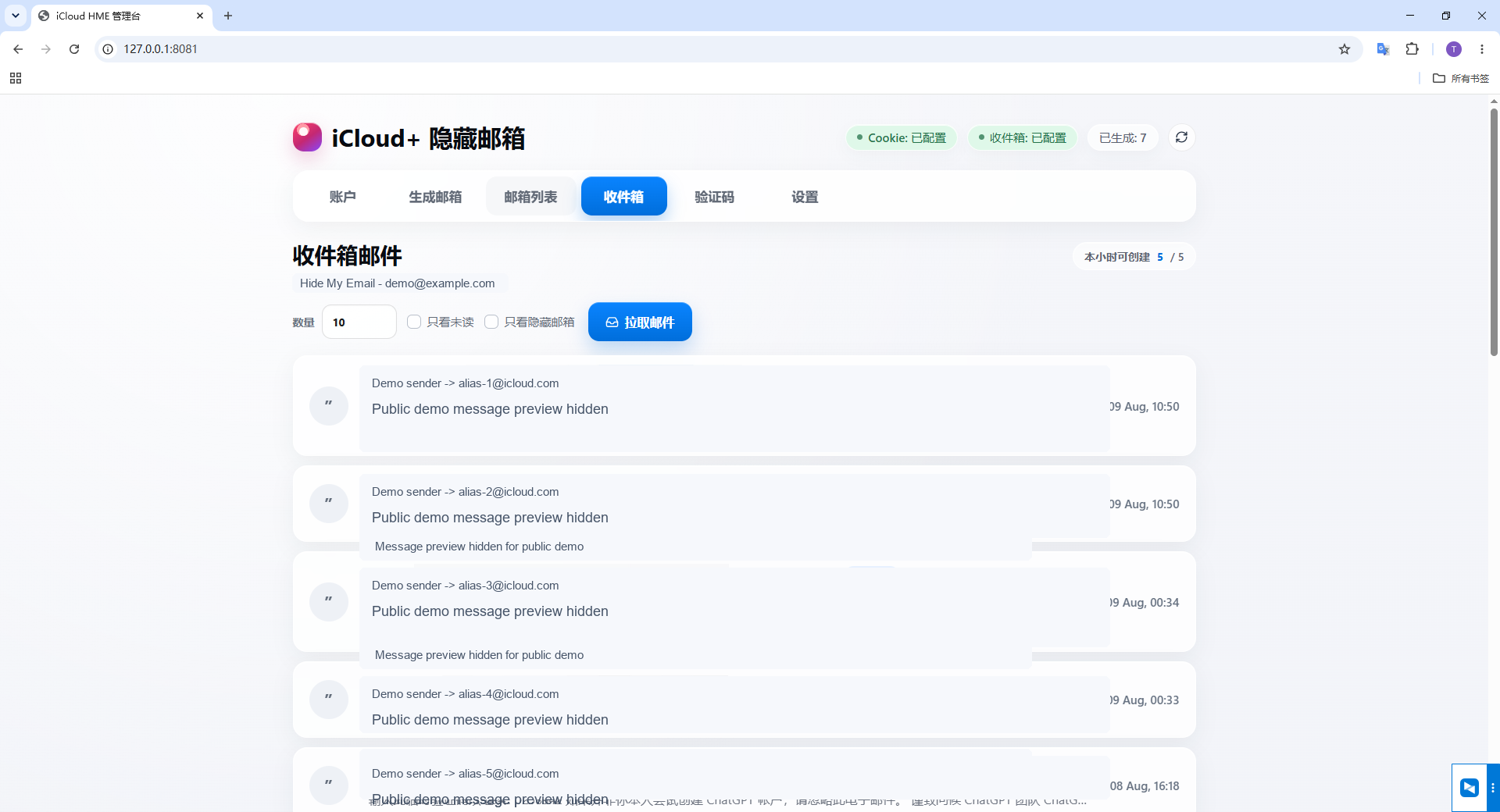
This application provides a local web dashboard and HTTP API to manage Apple's Hide My Email aliases. It supports multiple iCloud accounts, lets you create and list aliases, schedule automatic generation by duration or daily windows, and batch create up to five aliases per account per hour. Messages sent to aliases are fetched via IMAP using an app-specific password, with a web API cookie fallback. You can run it via a Windows 10 portable package, a Docker image, or by building from source with Go 1.26+ and Node.js 20+. Account data and scheduled jobs persist locally in JSON files. Both global and China-region iCloud endpoints are supported, along with optional HTTP/SOCKS5 proxy settings. Remote access requires an API token. Licensed under MIT.
Should you self-host iCloud Prime?
iCloud Prime scores 43/100 on selfhost.directory (how scoring works) and ranks #82 of 106 in Email. It has 150 GitHub stars.
It shipped 10 stable releases in the past year. The latest, v0.1.10, came out on 16 September 2026. New versions land roughly every 3 days.
Setup is moderate: expect some configuration beyond a single command. It is MIT-licensed and written mostly in Go.
Its closest alternative on selfhost.directory is Listmonk (80/100, 24 018 stars). It scores higher overall, so compare the two before you pick. See iCloud Prime vs Listmonk side by side.
Features
- Batch alias creation
- Create Hide My Email aliases
- Dual region support
- Hourly quota management
- List and manage aliases
- Local data persistence
- Multi-account Management
- Proxy Support
- Read mail via IMAP and web fallback
- REST API
- Scheduled automatic alias creation
- Windows 10 portable release
iCloud Prime README
More in Self-hosting
 isoA self-hosted, open-source dashboard for organizing and accessing all your self-hosted services with multi-language support, customizable themes, and built-in search.
 KoitoSelf-hosted, open-source ListenBrainz scrobbler with imports from Spotify, LastFM, Maloja, and relay support.
 LanQin EmailLanQin Email is an open-source self-hosted webmail with multi-domain support, DKIM, anti-spam, and single-container Docker deployment.
 lebkuchen-fmSelf-hosted multiplayer radio station streaming YouTube music with Discord control, synchronized playback, soundboard, and stats.
 Lighttpdlighttpd is a secure, fast, and flexible open-source web server optimized for high-performance environments, with low memory and CPU usage.
 llotSelf-hosted, open-source translation service using local LLMs via Ollama with 38 languages, real-time translation, dark mode, and Wyoming TTS support.
 LobsterBoardSelf-hosted dashboard builder with drag-and-drop editing, 60+ widgets, templates, and custom pages on a single Node.js server.
 mailspring-apiSelf-hosted API server replacing Mailspring's official sync backend, enabling metadata sync, read receipts, link tracking, and scheduled sending for the email client.
 MastodonOpen-source self-hosted microblogging server that federates over ActivityPub, with chronological timelines, media posts, moderation tools and an OAuth2 REST API.
 matrix-docker-ansible-deployOpen-source Ansible playbook automating a Matrix homeserver and services like Element Web, bridges, and admin tools via Docker on your Linux server.
 mem0-aiomem0-aio packages OpenMemory's web UI, API server, and Qdrant vector database into one Docker container for easy self-hosted deployment on Unraid and other platforms.
 MINDMIND is a self-hosted, open-source reminder app sending push notifications via 100+ Apprise platforms with mobile-friendly UI and REST API.
0 comments