
Self-host LanQin Email
v1.2.4Full-stack self-hosted webmail with multi-domain support
- Stars
- 161
- Ports
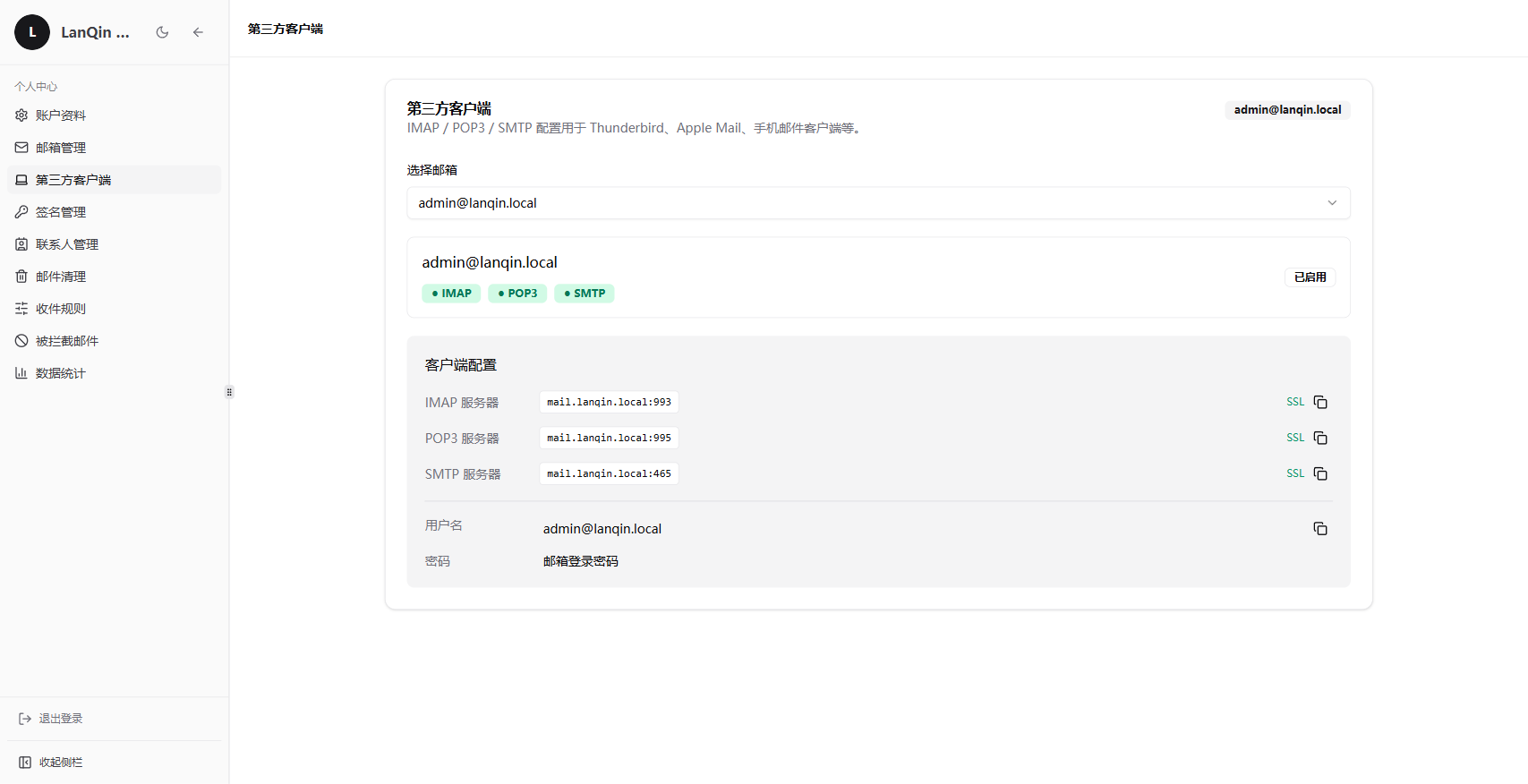
- 80 (HTTP webmail), 443 (HTTPS webmail), 25 (SMTP inbound), 465 (SMTP submission (SSL)), 587 (SMTP submission (STARTTLS)), 993 (IMAP (SSL)), 995 (POP3 (SSL))
ghcr.io/lanqin996/lanqin-email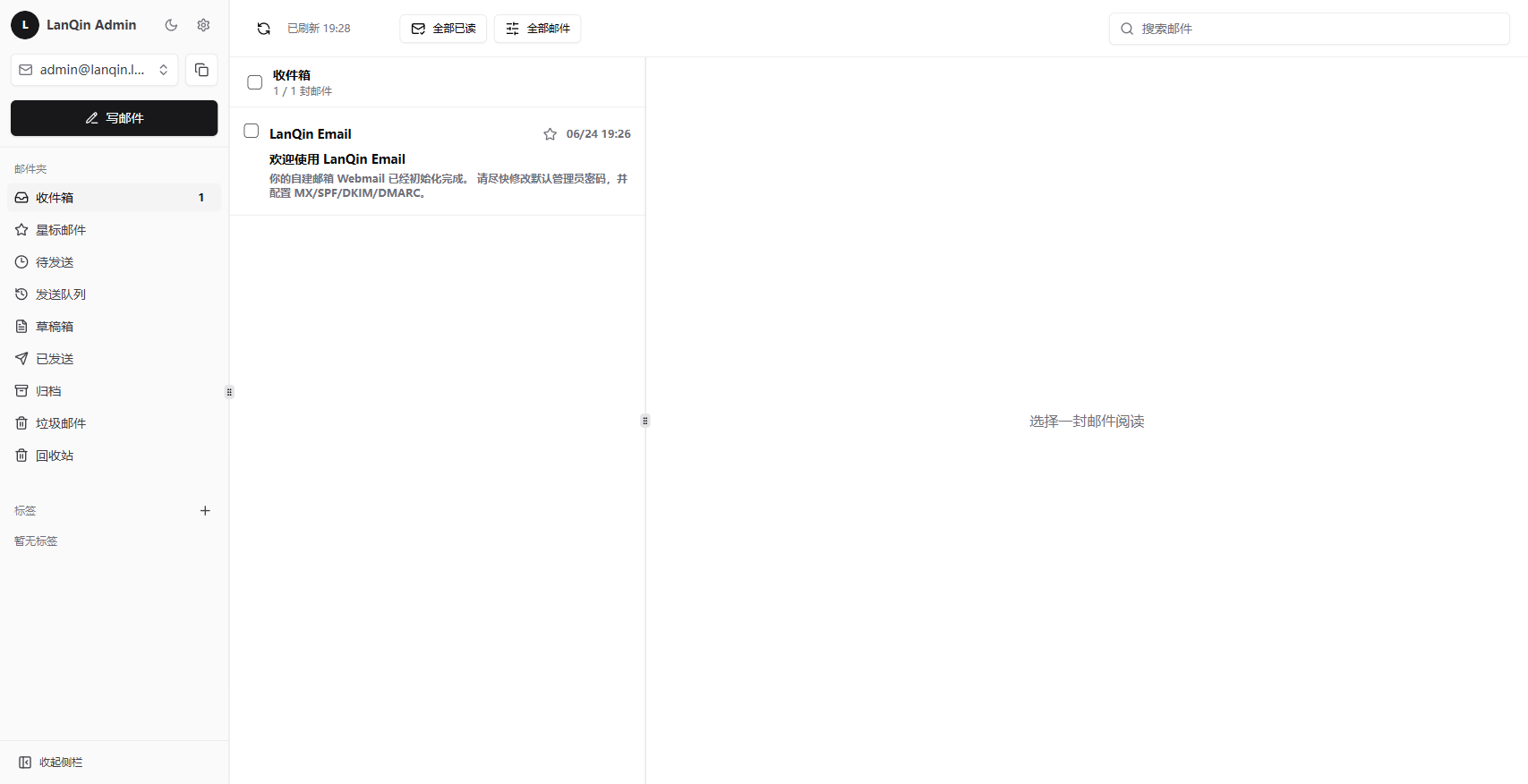
What is LanQin Email?
This self-hosted mail system gives you a modern webmail interface with multi-mailbox support, rich-text editing, scheduled sending, contacts, signatures, and inbox rules. Administrators manage domains, DKIM keys, DNS records, mailboxes, aliases, users, and permission groups with quotas for attachment size, send rates, and mailbox counts. The integrated mail stack runs Postfix for SMTP, Dovecot for IMAP/POP3, and Rspamd for spam filtering and DKIM signing. Deployment is a single Docker container with SQLite (or MySQL/PostgreSQL), plus a multi-container option for debugging. Features include Linux.do OAuth2 SSO, TOTP 2FA, Cloudflare Turnstile, invitation codes, external IMAP aggregation with Gmail/Outlook OAuth2, and an Open API with webhooks. Licensed under GPL-3.0-only.
Should you self-host LanQin Email?
LanQin Email scores 46/100 on selfhost.directory (how scoring works) and ranks #77 of 106 in Email. It has 161 GitHub stars.
It shipped 12 stable releases in the past year. The latest, v1.2.4, came out on 28 October 2026. New versions land roughly every 5 days.
Setup is advanced: plan for several services and some ongoing maintenance. An official Docker image is available. It is GPL-3.0-licensed and written mostly in Go.
Its closest alternative on selfhost.directory is Listmonk (80/100, 24 019 stars). It scores higher overall, so compare the two before you pick. See LanQin Email vs Listmonk side by side.
Features
- Admin Panel
- Contacts and signatures
- External IMAP aggregation
- Inbox rules
- Integrated mail stack
- Invitation-based registration
- Linux.do OAuth2 SSO
- Mail statistics
- Multi-domain Management
- Open API with webhooks
- Permission groups with quotas
- Rich-text compose
- Sender blacklist
- TOTP two-factor authentication
- Webmail Client
LanQin Email README
More in Self-hosting
 lebkuchen-fmSelf-hosted multiplayer radio station streaming YouTube music with Discord control, synchronized playback, soundboard, and stats.
 Lighttpdlighttpd is a secure, fast, and flexible open-source web server optimized for high-performance environments, with low memory and CPU usage.
 llotSelf-hosted, open-source translation service using local LLMs via Ollama with 38 languages, real-time translation, dark mode, and Wyoming TTS support.
 LobsterBoardSelf-hosted dashboard builder with drag-and-drop editing, 60+ widgets, templates, and custom pages on a single Node.js server.
 mailspring-apiSelf-hosted API server replacing Mailspring's official sync backend, enabling metadata sync, read receipts, link tracking, and scheduled sending for the email client.
 MastodonOpen-source self-hosted microblogging server that federates over ActivityPub, with chronological timelines, media posts, moderation tools and an OAuth2 REST API.
 matrix-docker-ansible-deployOpen-source Ansible playbook automating a Matrix homeserver and services like Element Web, bridges, and admin tools via Docker on your Linux server.
 mem0-aiomem0-aio packages OpenMemory's web UI, API server, and Qdrant vector database into one Docker container for easy self-hosted deployment on Unraid and other platforms.
 MINDMIND is a self-hosted, open-source reminder app sending push notifications via 100+ Apprise platforms with mobile-friendly UI and REST API.
 Mobazha UnifiedSelf-hosted, open-source commerce frontend for storefronts, marketplace discovery, checkout, and seller management, connecting to a self-hosted Node for crypto payments.
 ModoboaMail hosting made simple
 my-virtual-officeSelf-hosted 2D workspace visualizing AI agents in a retro office. Integrates OpenClaw, Hermes, Codex, Claude Code. Free demo, $9.99 license for premium.
0 comments