
Self-host Yuxi
v0.7.2Private knowledge agent workspace: RAG, graphs, agents
docker compose up --build -d- Stars
- 7 529
- Ports
- 5173 (Web 前端界面), 5050 (FastAPI 后端 API 与 Swagger 文档)
- Requires
- etcd, Milvus, Minio, PostgreSQL, Redis
What is Yuxi?
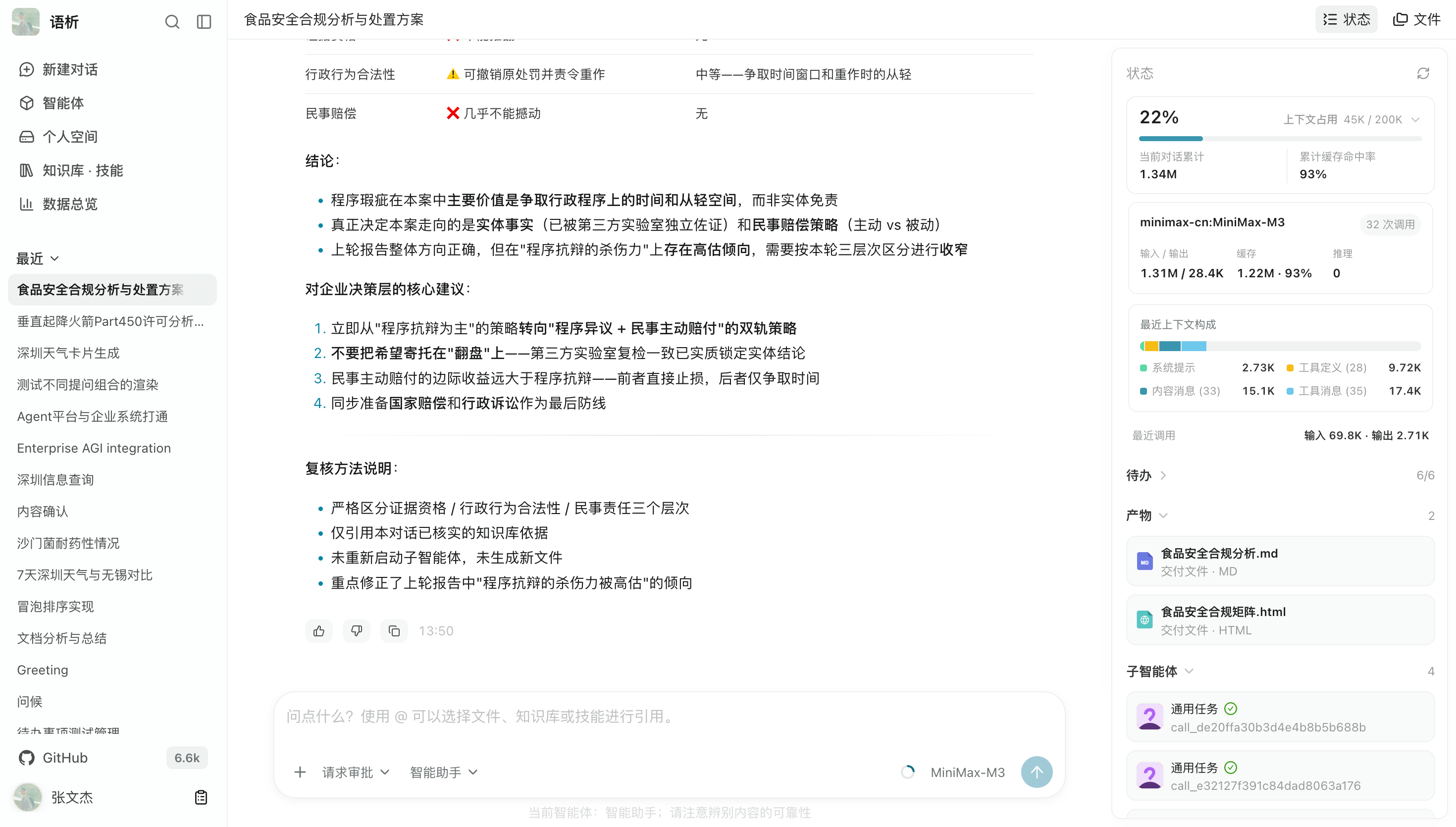
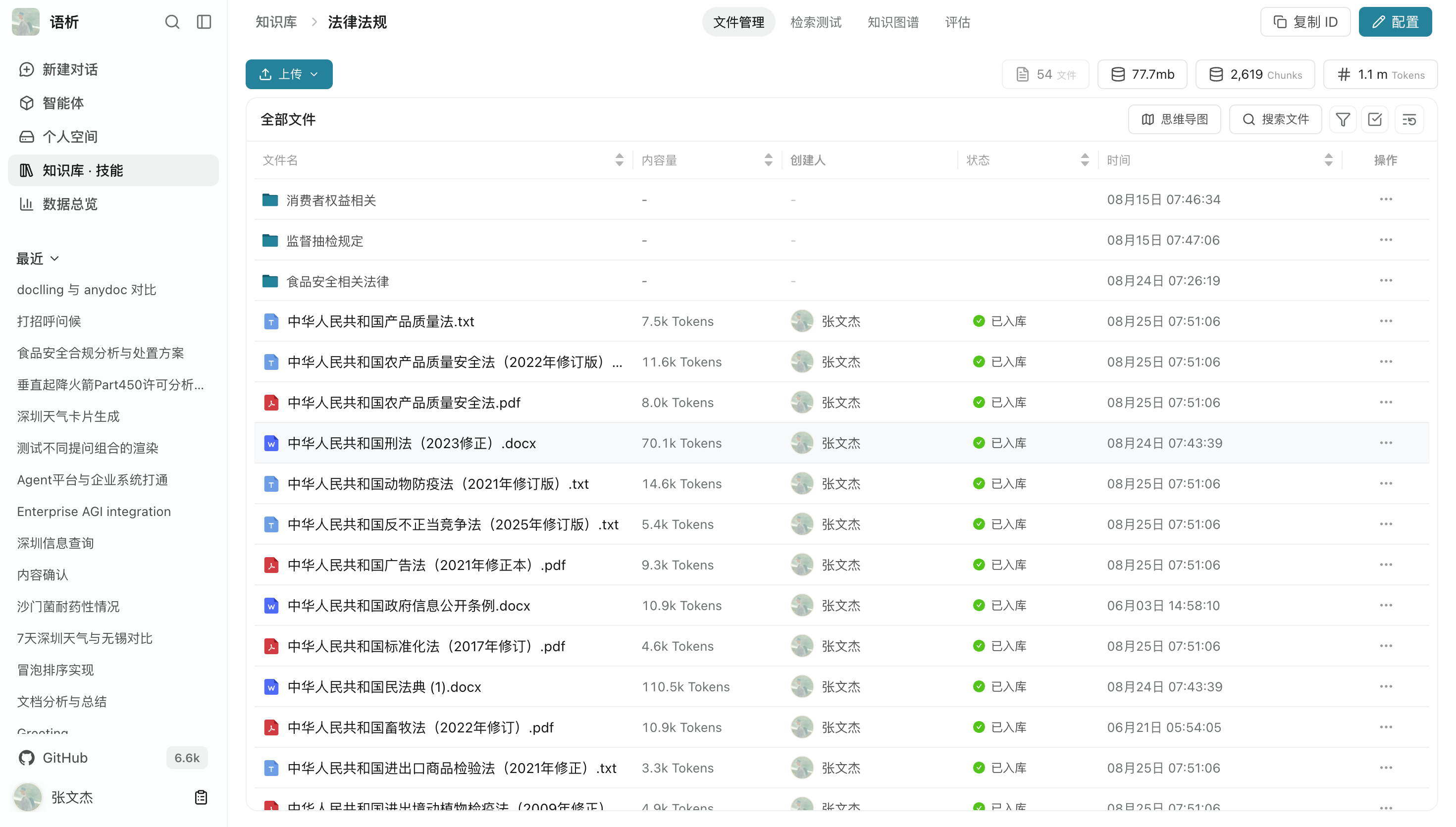
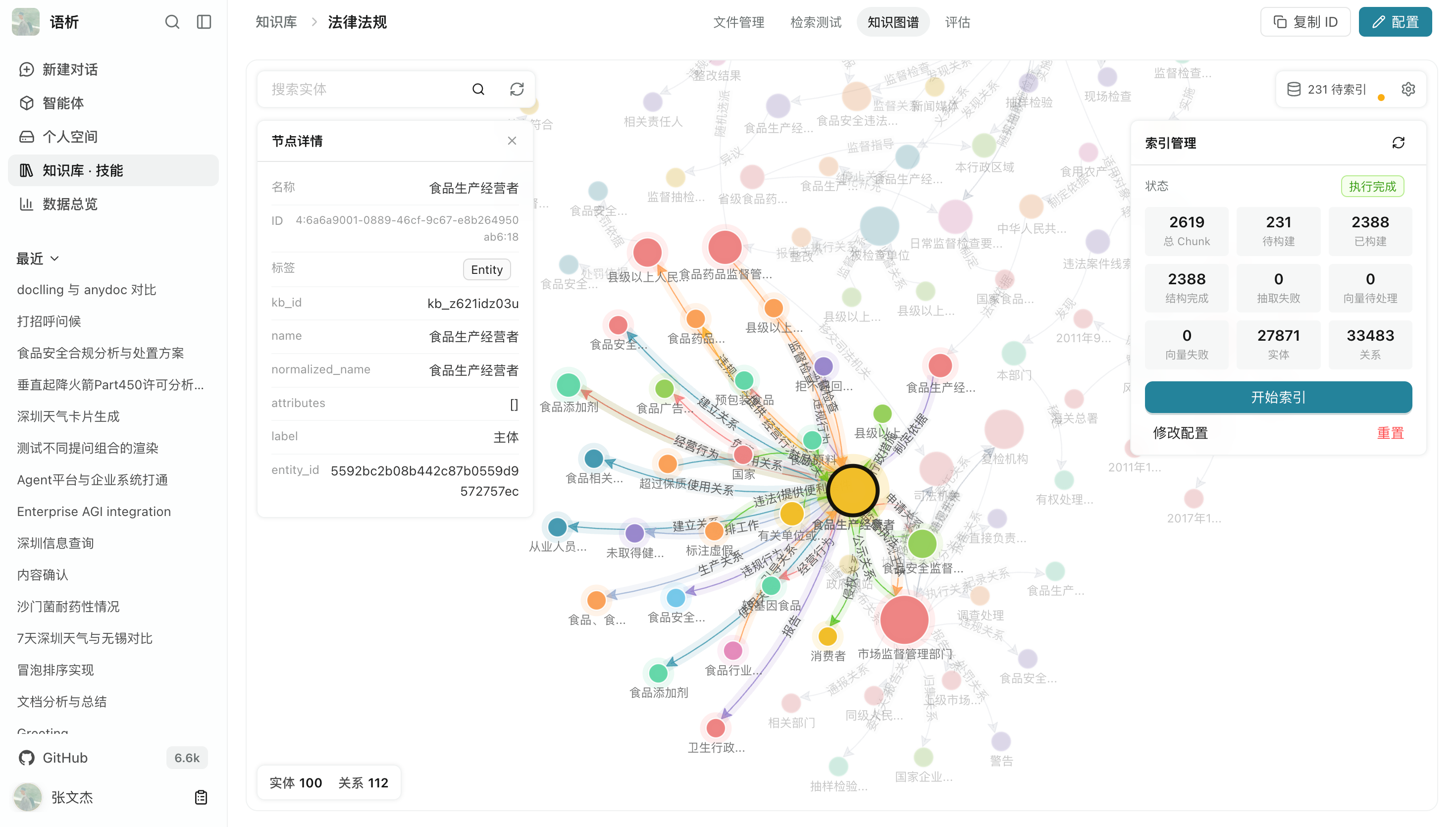
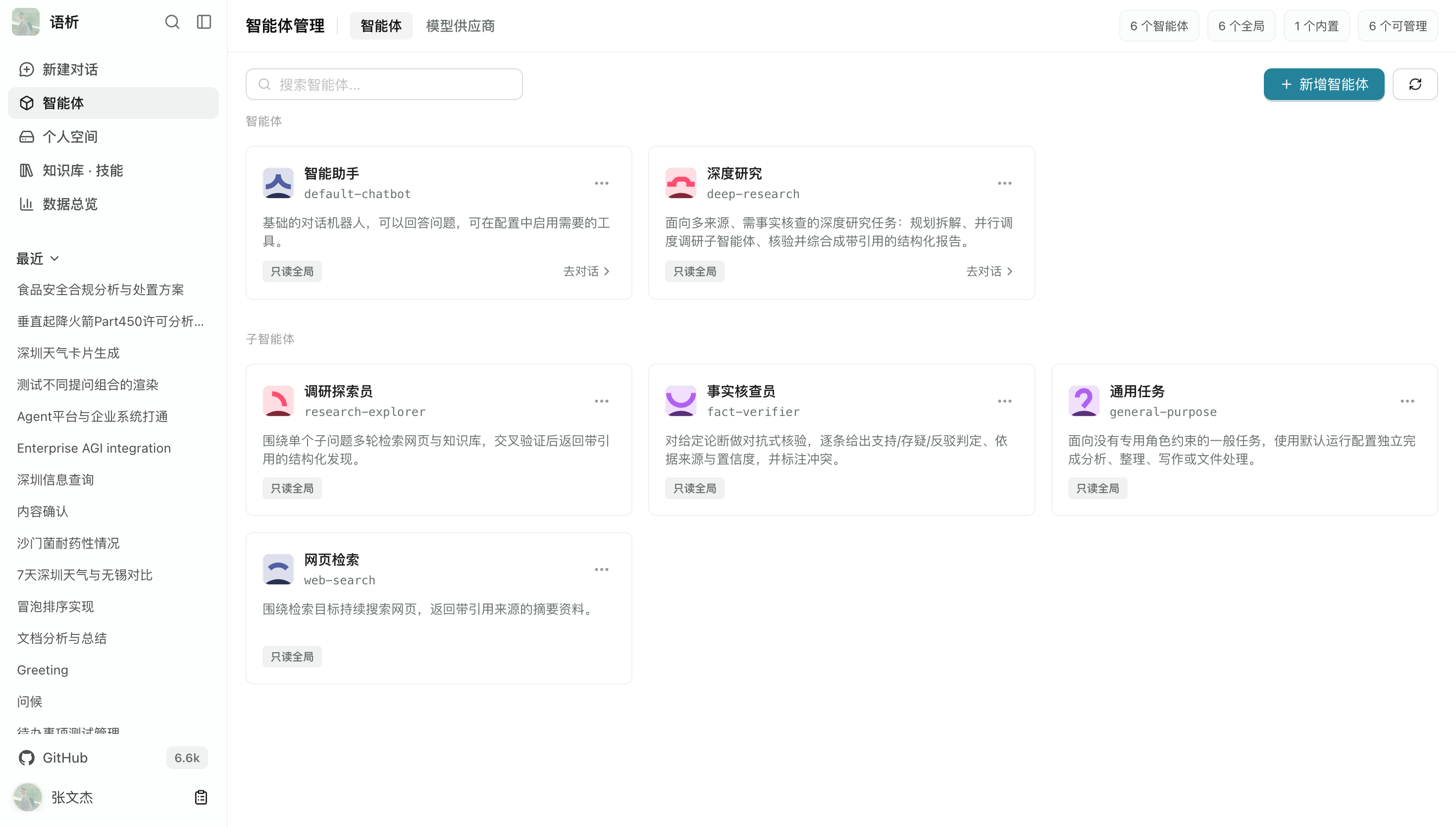
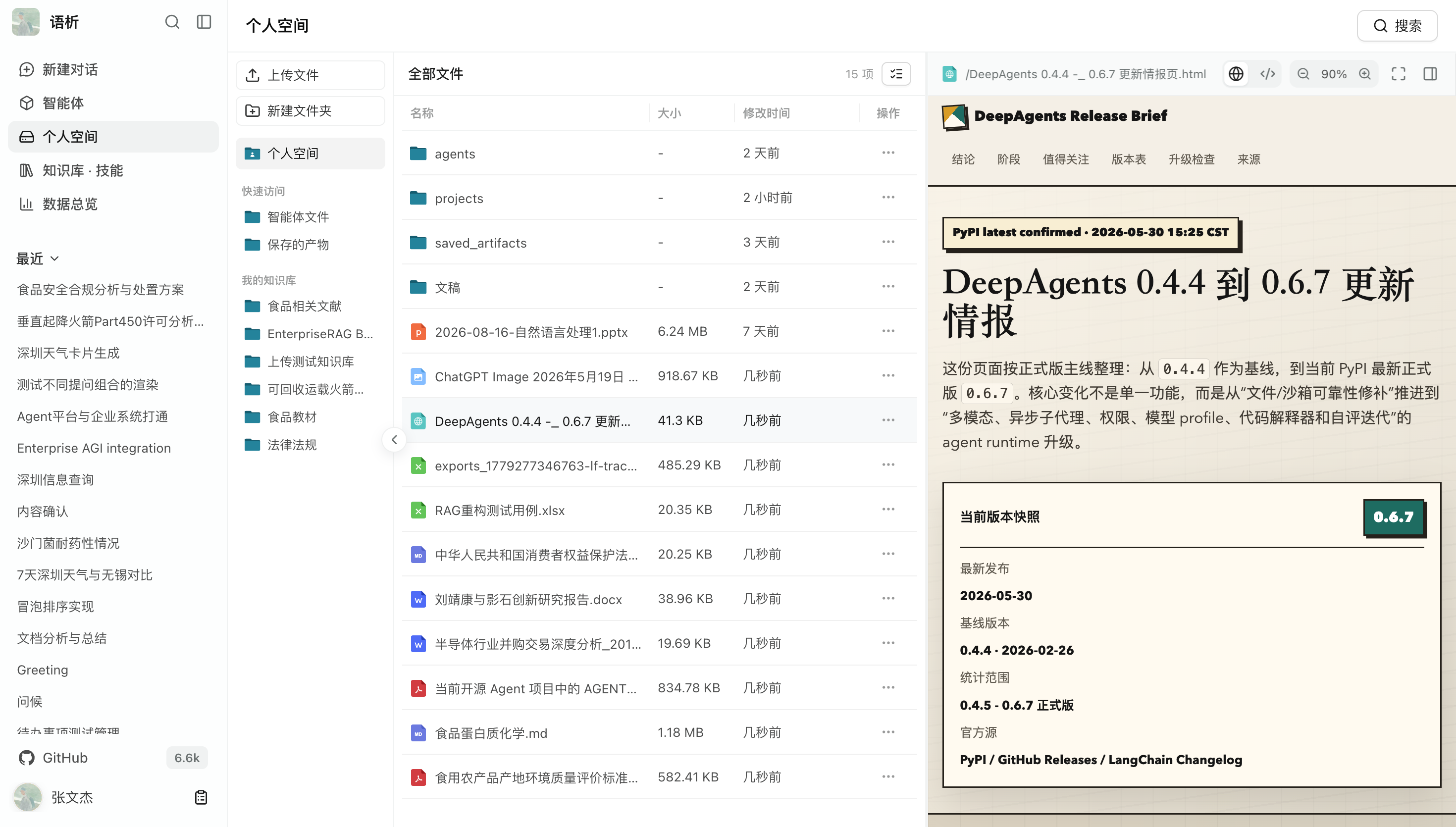
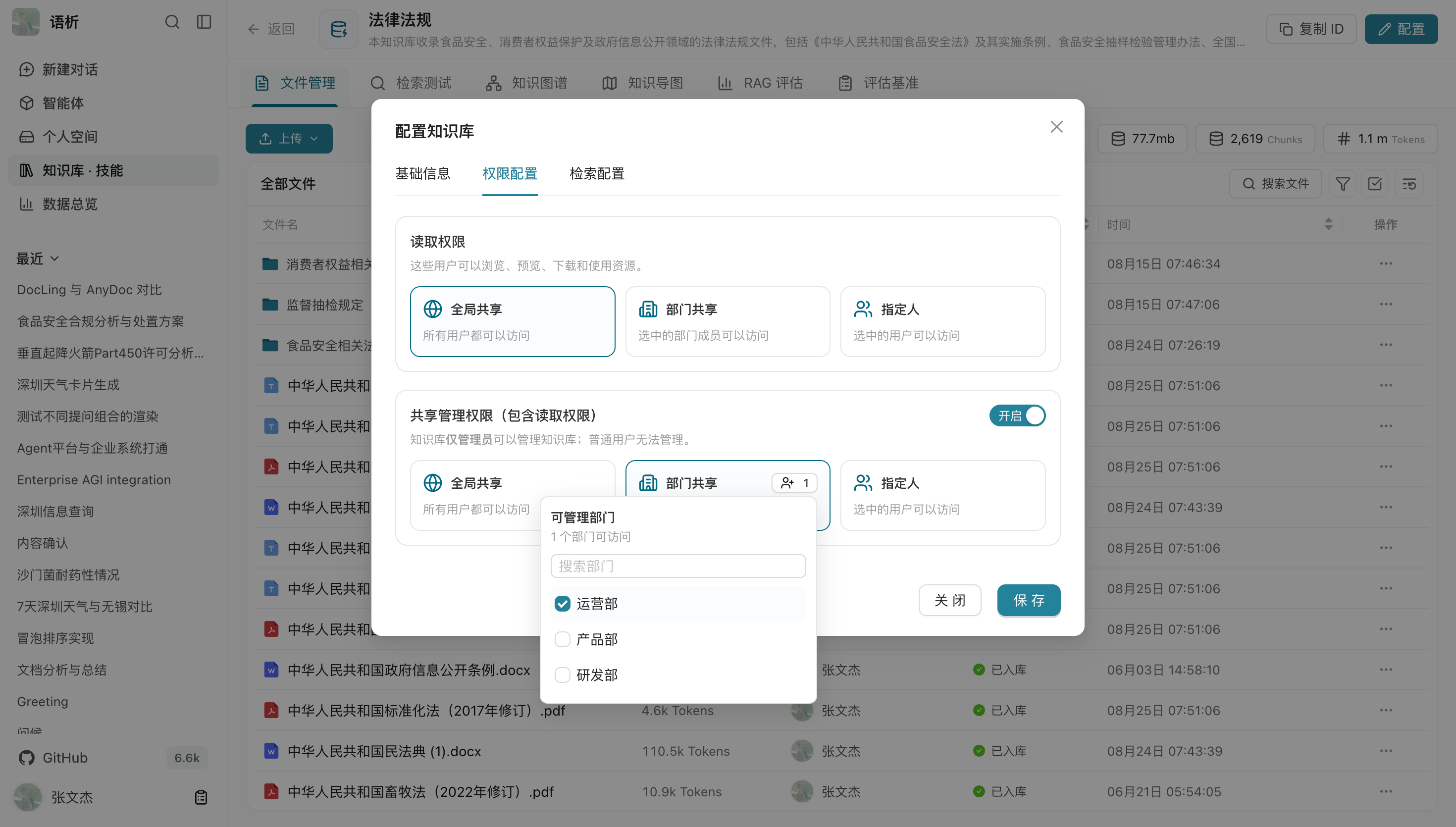
Yuxi (语析) is a multi-tenant knowledge agent platform organizations deploy on their own hardware: document knowledge bases with agentic RAG, entity and relation extraction into a Neo4j graph, LangGraph-powered agent orchestration, MCP and Skills extensions, sandboxed tool execution that produces downloadable file artifacts, and user/department level access control. Agents retrieve from Milvus-backed knowledge bases using vector, BM25 and hybrid search with reranking, can dispatch several sub-agents in parallel, pause for human approval before risky operations, and write reports, tables, HTML pages or code into a persistent workdir the browser can preview. Administrators centralise model provider credentials across vendors such as OpenAI, Anthropic, DeepSeek, Qwen and OpenAI-compatible self-hosted endpoints, publish shared agents, and watch token usage and request trends on a dashboard; retrieval quality can be measured with built-in QA evaluation sets or Langfuse datasets, and login works with local passwords or an enterprise OIDC provider. Deployment is Docker Compose driven: clone the matching release tag, run the init script that writes a .env with JWT, API-key and sandbox secrets, start the stack, then open the web UI on port 5173 while the API listens on 5050. A production compose file with its own env file, TLS reverse-proxy guidance and an overlay that disables the knowledge base stack is documented for real installations. The Cube sandbox backend needs a dedicated Linux/KVM execution node, while a container sandbox profile covers simple local trials. The code is MIT licensed and versioned below 1.0 (latest stable release v0.7.2, with a v0.8.0 candidate used by the quick start), and upgrades between versions require a maintenance window with backup and migration.
Should you self-host Yuxi?
Yuxi scores 63/100 on selfhost.directory (how scoring works) and ranks #44 of 209 in AI Agents. It has 7 529 GitHub stars.
It shipped 2 stable releases in the past year. The latest, v0.7.2, came out on 2 September 2026. New versions land roughly every 2 months.
Setup is advanced: plan for several services and some ongoing maintenance. It is MIT-licensed and written mostly in Python.
Its closest alternative on selfhost.directory is Orca (91/100, 108 815 stars). It scores higher overall, so compare the two before you pick. See Yuxi vs Orca side by side.
Yuxi README
More in RAG
 AGmindAGMind is a self-hosted, open-source installer deploying a private RAG stack on NVIDIA DGX Spark in ~30 minutes via an interactive wizard.
 bishengAn Apache-2.0, self-hosted LLM devops platform for enterprise AI: GenAI workflows, RAG knowledge bases, agents, model management, evaluation, SFT and OCR.
 CasibaseOpen-source personal AI assistant with RAG knowledge bases, MCP tool use and autonomous agent loops; one self-hosted binary with 30+ model providers, SSO and audit logs.
 chromaOpen-source vector database for AI retrieval: dense, sparse, full-text, regex and metadata search. Self-host it with pip, the chroma CLI, or Docker on port 8000.
 ConnapseConnapse is a self-hosted, open-source knowledge backend giving AI agents persistent, searchable memory via hybrid search, MCP server, and storage connectors.
 DocBrainDocBrain is a self-hosted RAG framework with document Q&A, natural language SQL over tables, local vectors, multi-LLM support, and RBAC.
 Docling StudioSelf-hosted web app for visual PDF analysis — configure extraction, inspect bounding boxes, chunk content, and index into OpenSearch or Neo4j.
 fastgptFastGPT is a self-hosted, open-source AI agent platform for building RAG chat apps with visual workflow orchestration, hybrid retrieval and reranking.
 fortemiHost your own AI knowledge base with hybrid search, knowledge graphs, multiple LLM backends, and multimodal ingestion. Docker deployment on regular hardware.
 GaiaNet NodeOpen-source, self-hosted GaiaNet node: pick any Hugging Face LLM, add a RAG knowledge base, serve an OpenAI-compatible API and web chat UI.
 graphitiOpen-source Python framework building temporal knowledge graphs for AI agents: hybrid semantic, keyword and graph search, facts with validity windows, episode provenance.
 KhojSelf-hosted, open-source AI second brain: RAG chat over your notes and the web, custom agents, semantic search and scheduled research emailed to you.
0 comments