
Self-host TG Vault
v2.6.0Telegram file archiver with multi-cloud storage
- Stars
- 275
- CPU
- 1.5 cores (container limit)
- RAM
- 512 MB reservation, 1536 MB limit
- Storage
- 8 GB reserved for chunks, plus space for uploads/thumbnails/previews
- Ports
- 80 (Web frontend), 51947 (Backend API)
- Requires
- PostgreSQL
ghcr.io/hicocos/tg-vault-backend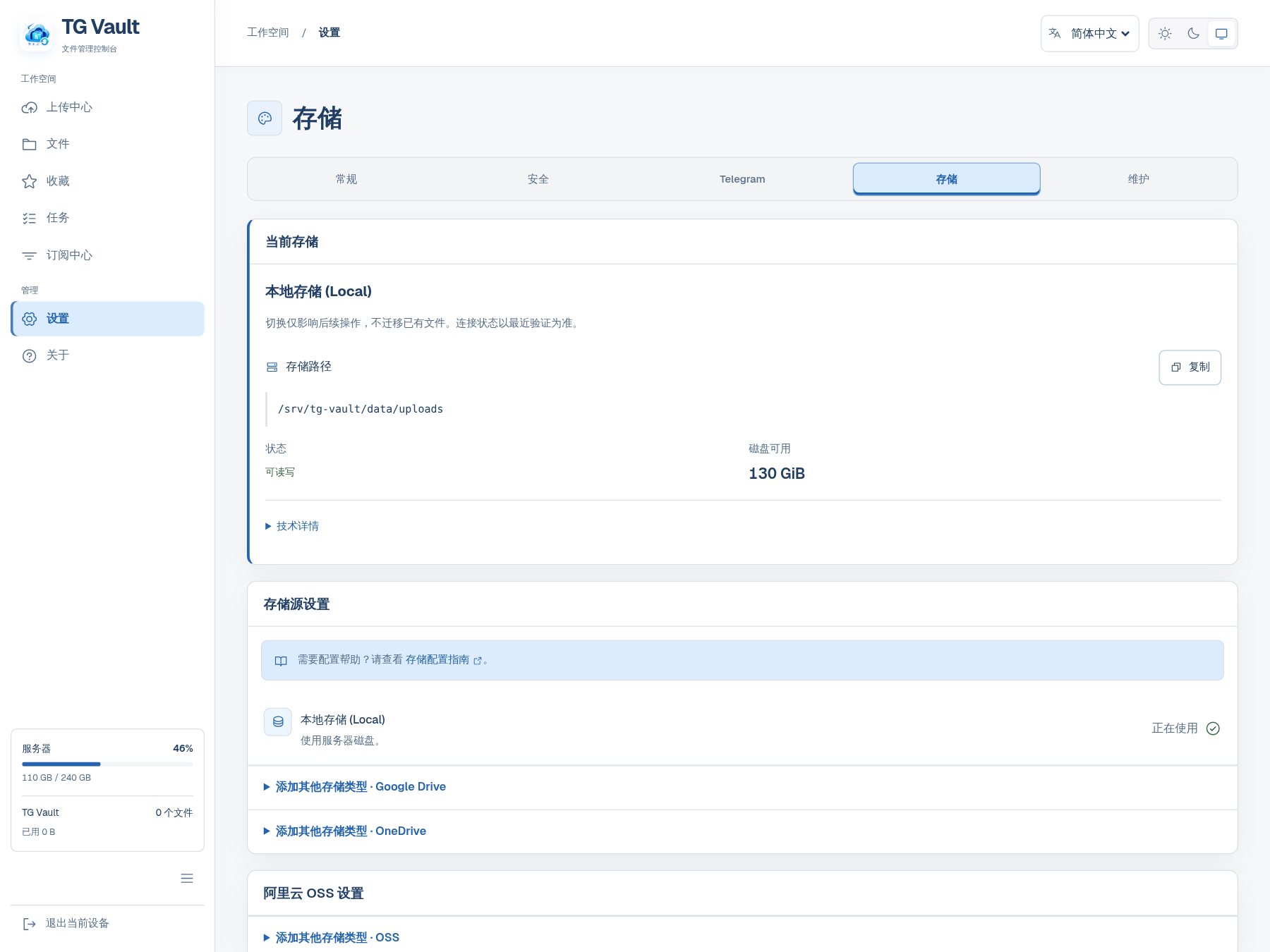
What is TG Vault?
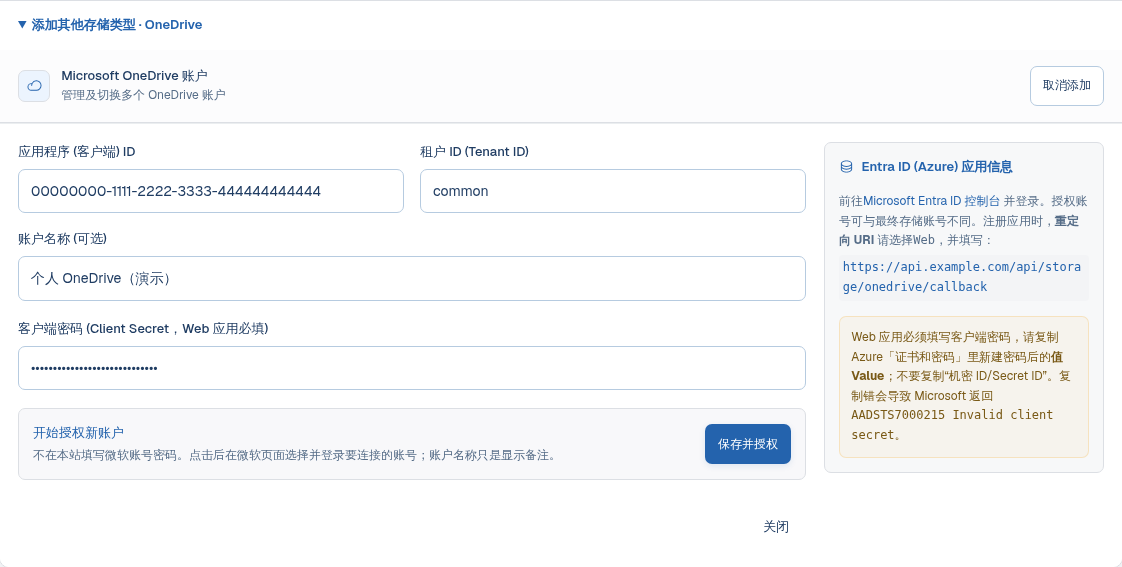
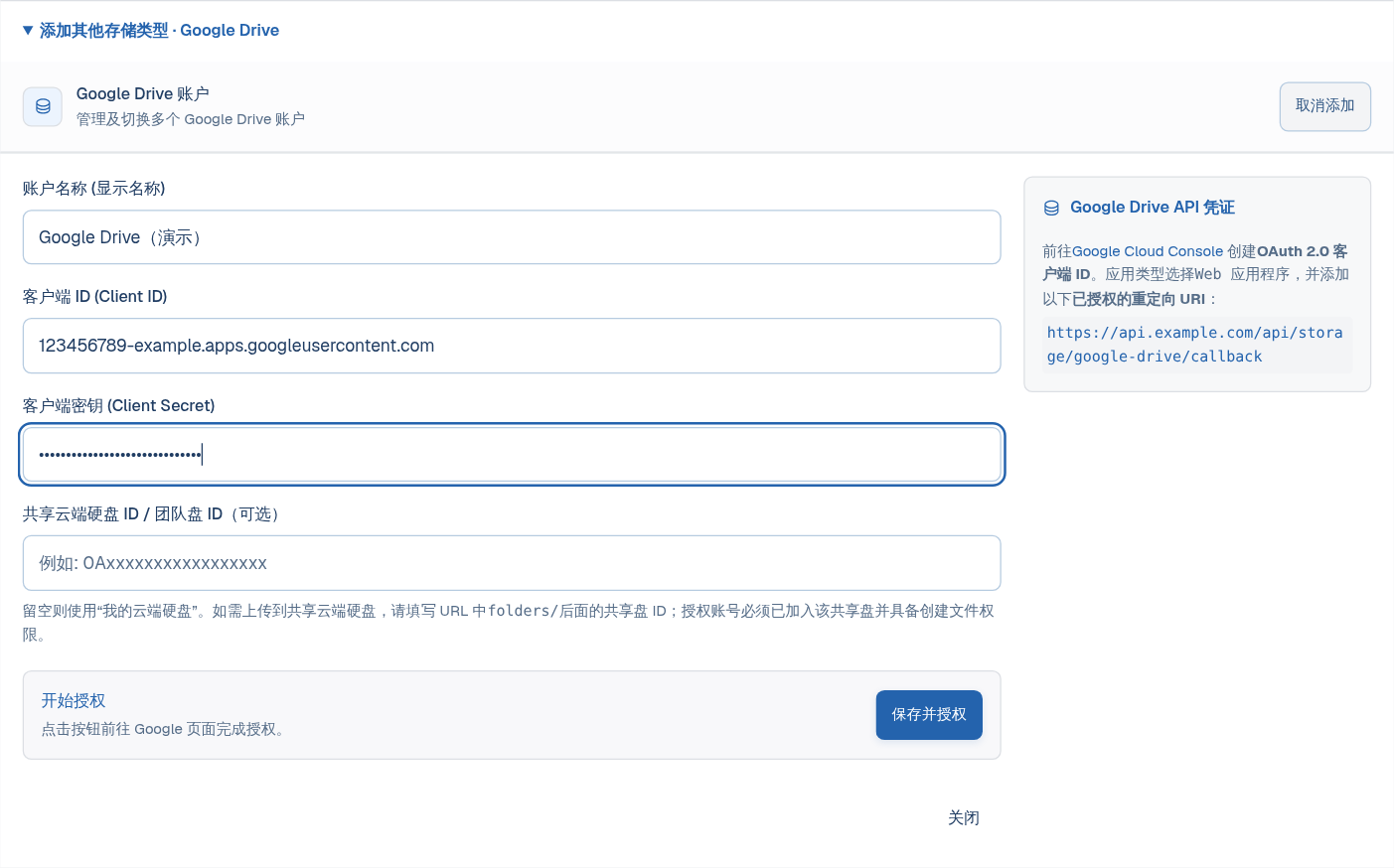
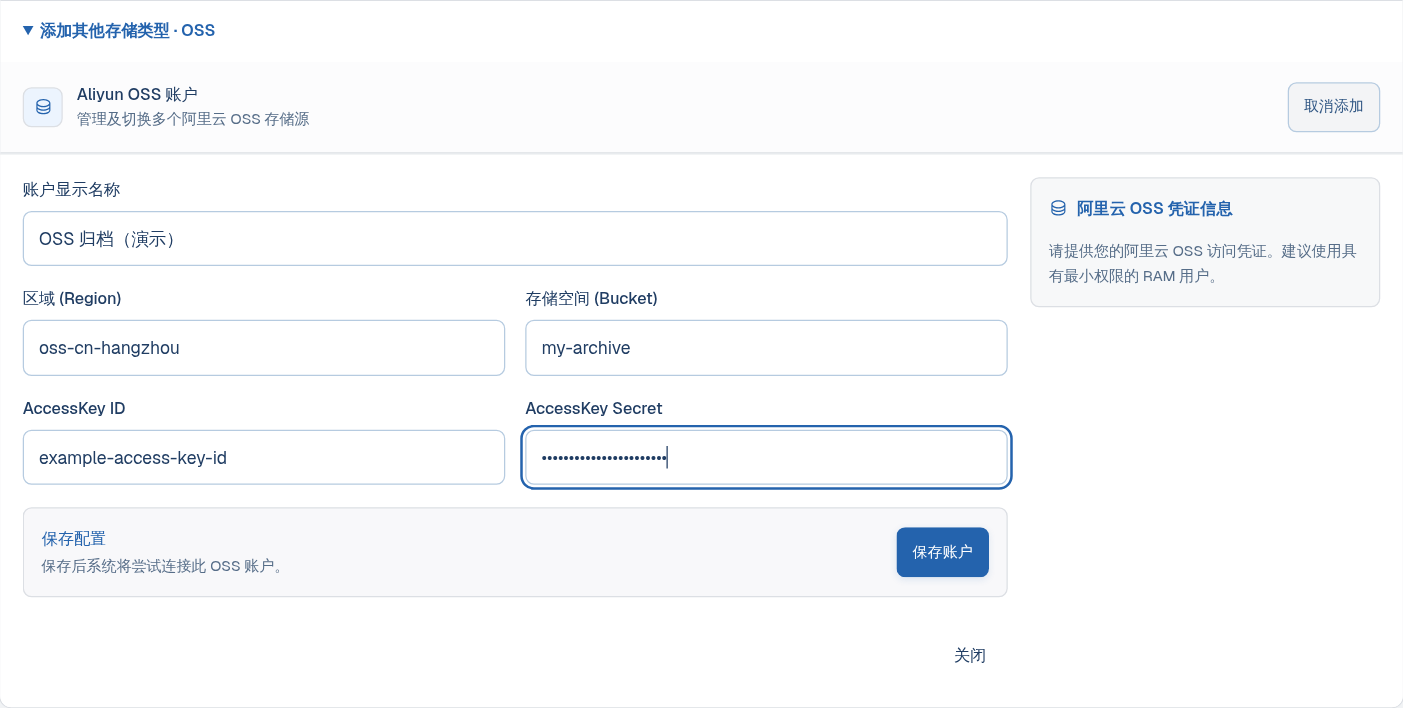
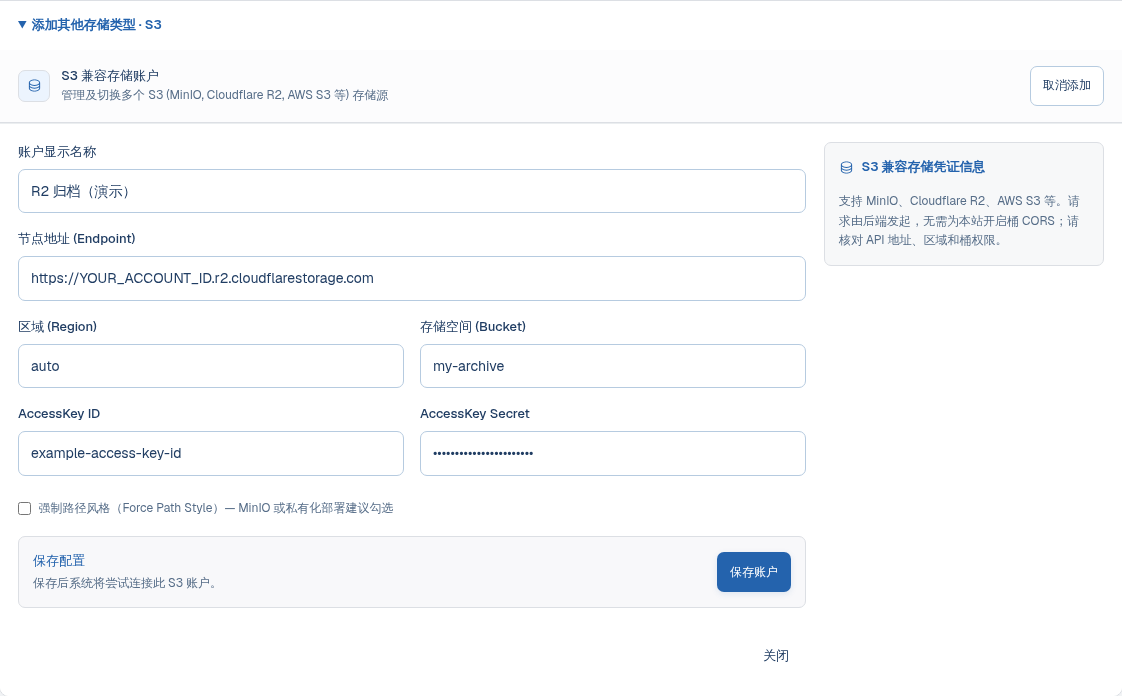
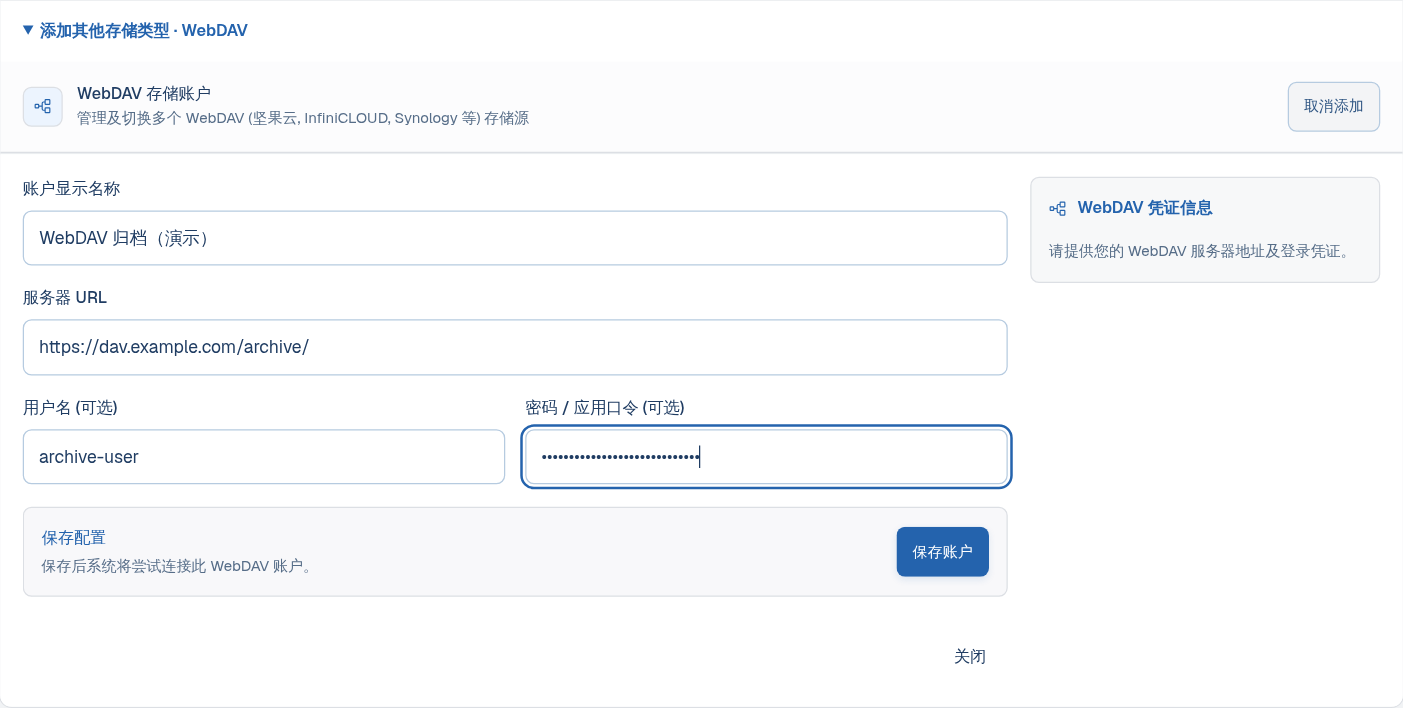
TG Vault is a self-hosted Telegram file archiving and private cloud system. It receives files from Telegram Bot or web uploads, stores them to local disk or multiple cloud storage providers (OneDrive, Google Drive, Aliyun OSS, S3-compatible, WebDAV, OpenList), and provides a web file manager with search, folders, previews, and a unified task center. It supports channel/group historical downloads and subscriptions via a user-account downloader. Deployment uses Docker Compose with an automated install script that generates secrets and starts frontend, backend, and PostgreSQL 16 containers. All sensitive credentials are encrypted at rest. The project is open source under MIT license with active development.
Should you self-host TG Vault?
TG Vault scores 48/100 on selfhost.directory (how scoring works) and ranks #21 of 34 in File Management. It has 275 GitHub stars.
It shipped 10 stable releases in the past year. The latest, v2.6.0, came out on 27 October 2026. New versions land roughly every 2 days.
Setup is advanced: plan for several services and some ongoing maintenance. An official Docker image is available. It is MIT-licensed and written mostly in Typescript.
Its closest alternative on selfhost.directory is AList (83/100, 50 366 stars). It scores higher overall, so compare the two before you pick. See TG Vault vs AList side by side.
Features
- Automated backup and restore
- Channel/group historical download
- Channel subscription sync
- Encrypted credentials storage
- File preview and thumbnailsRequires ffmpeg for video thumbnails
- Health check endpoints
- Multi-storage Support
- Resumable task chains
- Storage target snapshots
- Telegram file archiving
- TOTP two-factor authentication
- Unified task center
- Web-based Telegram Bot configuration
- Web file manager
TG Vault README
More in Cloud Storage
 UguuSelf-hosted, open-source temporary file host where visitors drop, paste or upload files with no account; it offers a JSON/CSV/text upload API and configurable expiry.
 Versity S3 GatewayVersityGW is an open-source, Apache-2.0 S3 object-storage gateway in Go: it turns POSIX filesystems, ScoutFS or Azure Blob into an S3 API, with IAM, WebUI and Helm.
 webdavSelf-hosted, open-source WebDAV server written in Go: basic auth with bcrypt hashes, fine-grained read/create/update/delete rules, built-in TLS, and Docker images.
 Zenko CloudServerZenko CloudServer, an open-source Node.js implementation of the Amazon S3 protocol on the front-end and backend storage capabilities to multiple clouds, including Azure and Google.
 ZPanOpen-source, self-hosted S3-native cloud drive: browser-to-bucket presigned uploads, share links, image hosting, WebDAV mounting, remote downloads and team spaces.
 AListAList is a self-hosted, open-source file list program that aggregates 30+ cloud storages into a single web UI with WebDAV, file previews, and dark mode.
 armadiettoArmadietto is a self-hosted, open-source RemoteStorage server in Node.js for personal cloud storage with modular (S3-backed) and classic (filesystem) variants.
 arozosSelf-hosted, open-source web desktop OS written in Go that turns any PC, Raspberry Pi or old hardware into a NAS with a file manager, media playback and network shares.
 bewCloudbewCloud is an open-source, self-hosted personal cloud written in TypeScript and Deno: files, photos, notes, news, expenses plus CalDAV/CardDAV calendars and contacts.
 BorgitoryA self-hosted web dashboard for BorgBackup that adds scheduling, monitoring, archive browsing, and Rclone-based cloud sync.
 cephSelf-hosted, open-source distributed storage cluster offering S3-compatible object, RBD block and CephFS POSIX file services from commodity hardware.
 CloudreveSelf-hosted, open-source cloud drive with multi-storage backends, WebDAV, share links, online preview and office editing, plus admin tools for multi-user sites.
0 comments