
Self-host ceph
v22.0.0Object, block and file storage on one big cluster
dnf install --assumeyes centos-release-ceph-tentacle- Stars
- 17 210
- CPU
- 1 thread minimum, 3 recommended per HDD OSD; 4 minimum, 6 recommended per NVMe SSD OSD
- RAM
- >= 4 GiB per OSD
- Storage
- 1x storage drive per OSD in most cases
- Ports
- 8443 (ceph-mgr web dashboard with SSL/TLS enabled (default)), 8080 (ceph-mgr web dashboard when SSL is disabled)
- Requires
- LVM2
quay.io/ceph/ceph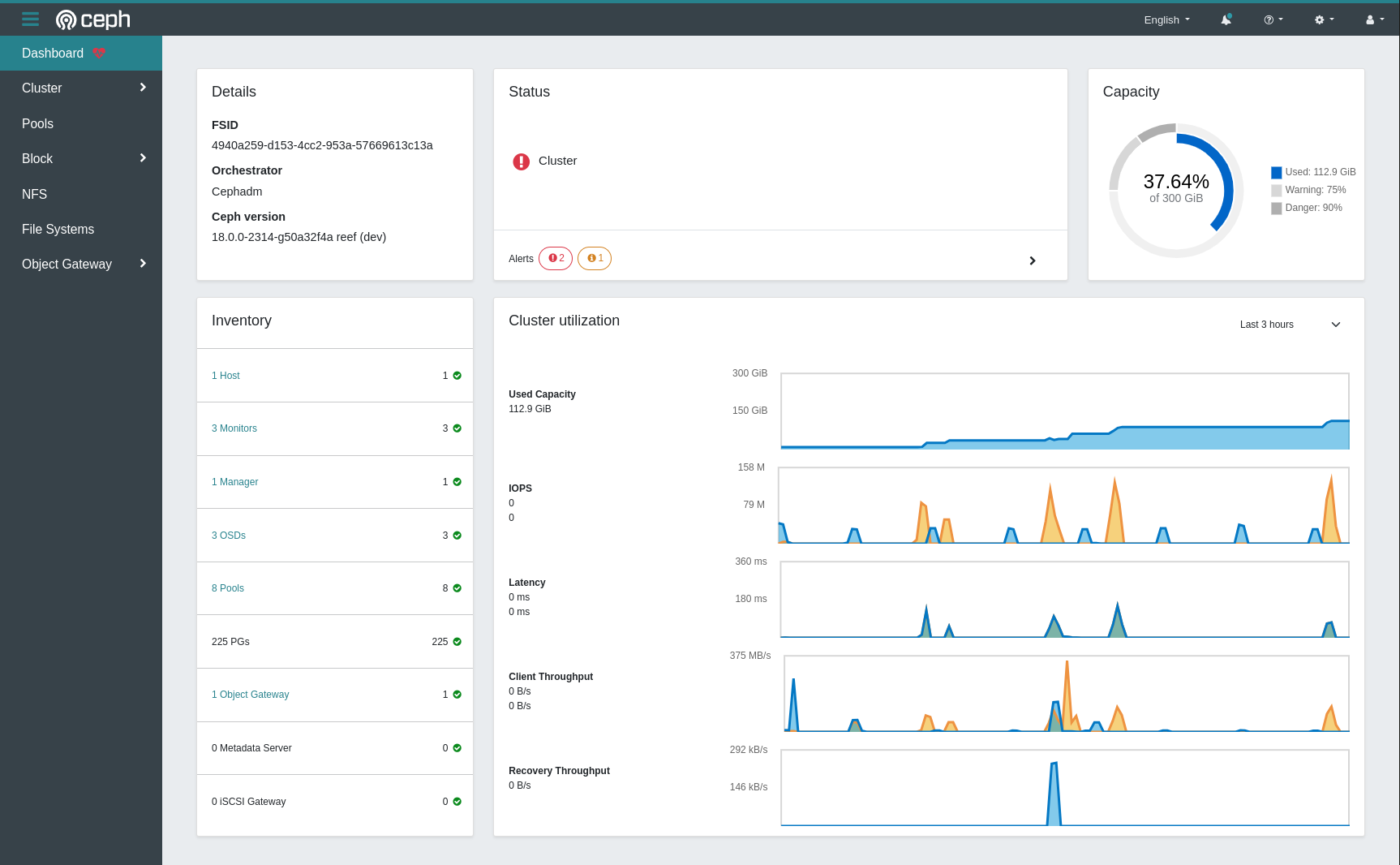
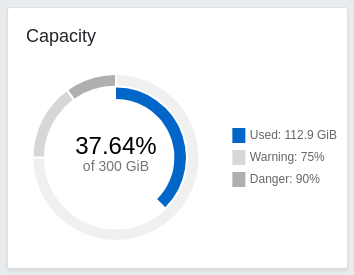
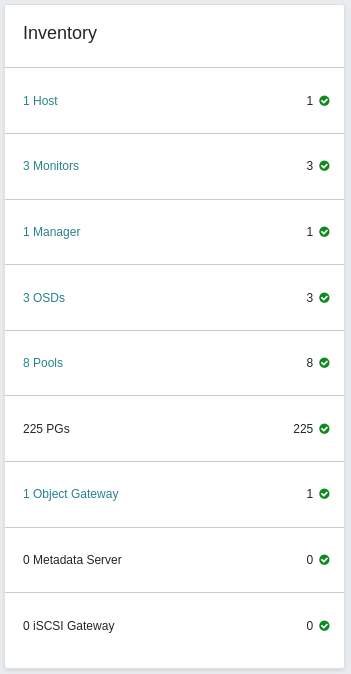
What is ceph?
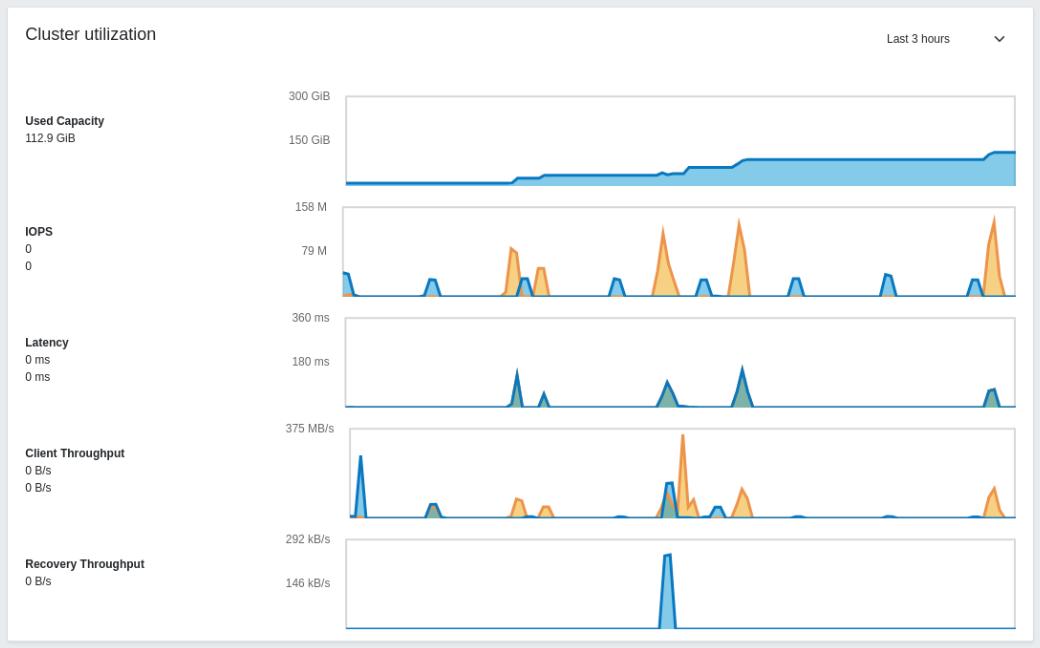
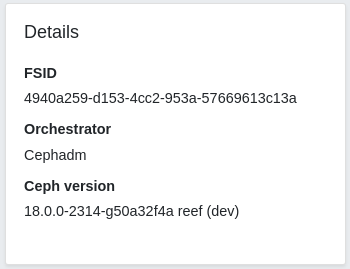
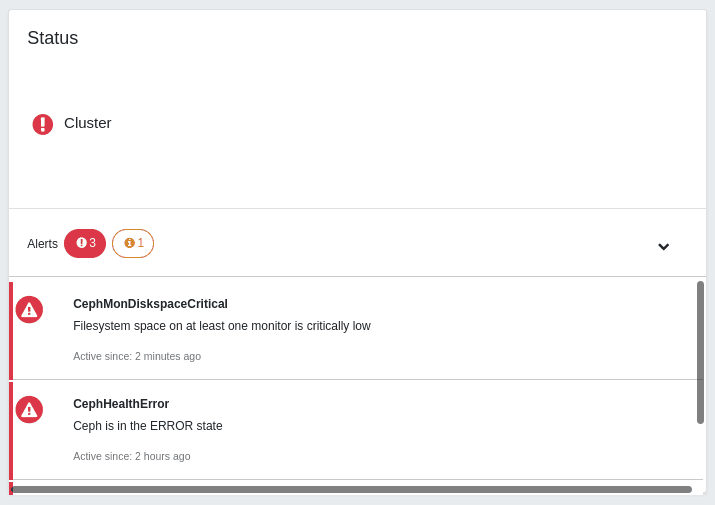
Ceph is a distributed storage platform that serves object, block and file data from a single cluster built out of ordinary servers, aimed at organizations that want enterprise storage features without license fees or vendor lock-in. Its RADOS core places and copies data so the cluster repairs itself when a drive or node drops out, and pools can move from three-way replication to erasure coding profiles such as 4+2 or 6+3 to reclaim raw capacity. Interfaces include the RADOS Gateway with S3 and Swift APIs, RBD block images with snapshots and cross-cluster mirroring, and CephFS, a POSIX file system; NFS, iSCSI and SMB services sit on top, and clusters can be federated into one global namespace. Day-to-day work happens through the ceph CLI, the cephadm orchestrator and a web dashboard that embeds Grafana panels, hooks into Prometheus and Alertmanager, and can delegate sign-in to a SAML 2.0 or OAuth2 identity provider. To run it yourself, install cephadm on a current Linux host, bootstrap with the first machine's IP address, then add hosts and let Ceph consume any unused disks; the daemons run as containers, so no Ceph packages are needed on the hosts. On Kubernetes the docs point to the Rook operator plus the Ceph CSI driver. A one-node setup is for learning, not production, where guidance asks for three or five monitors and as many OSDs as replica copies; series live roughly two years with frequent point releases, and Tentacle 20.2.4 is the current stable line. Most of the code is dual-licensed LGPL 2.1 or 3.0.
ceph alternatives
 leilfsLeilFS is a self-hosted, open-source distributed POSIX file system with high availability, erasure coding, and linear scalability for media, AI, backup, and HPC.Compareleilfs with ceph
 Versity S3 GatewayVersityGW is an open-source, Apache-2.0 S3 object-storage gateway in Go: it turns POSIX filesystems, ScoutFS or Azure Blob into an S3 API, with IAM, WebUI and Helm.CompareVersity S3 Gateway with ceph
 leofsLeoFS is a self-hosted, open-source distributed object storage with S3 API compatibility, multi-datacenter replication, and REST/NFS support for large-scale data lakes.Compareleofs with ceph
 swiftstackOpen-source, self-hosted distributed object storage for unstructured data, with a REST API, S3 compatibility, replication, erasure coding and storage policies.Compareswiftstack with ceph
 RustFSRustFS is an open-source, S3-compatible high-performance object storage system supporting migration and coexistence with other S3-compatible platforms such as MinIO and Ceph.CompareRustFS with ceph
 moosefsSelf-hosted, open-source MooseFS is a petabyte-scale distributed POSIX filesystem and block device with replication, erasure coding, snapshots and quotas.Comparemoosefs with ceph
 DockerRegistrySelf-hosted, open-source (Apache-2.0) container registry implementing the OCI Distribution spec: private image/artifact storage with cloud backends, auth and TLS.CompareDockerRegistry with ceph
 glusterfsGlusterFS is an open-source scale-out network filesystem pooling disks across Linux servers into one namespace, with replication, erasure coding and geo-replication.Compareglusterfs with ceph
Should you self-host ceph?
ceph scores 78/100 on selfhost.directory (how scoring works) and ranks #1 of 7 in Distributed Storage. It has 17 210 GitHub stars, +115 in the last 30 days.
There was no stable release in the past 12 months, so check the repository's recent activity before you rely on it.
Setup is advanced: plan for several services and some ongoing maintenance. An official Docker image is available. It is Other-licensed and written mostly in C++.
Its closest alternative on selfhost.directory is swiftstack (66/100, 2 805 stars). ceph scores higher overall. See ceph vs swiftstack side by side.
Features
- Block devices (RBD)
- Container-based deployment and orchestration (cephadm)
- Erasure Coding
- iSCSI gateway
- Multi-cluster federation
- NFS exports
- POSIX file system (CephFS)
- RBD mirroring
- Replication and self-healing
- S3-compatible object storage
- SMB file shares
- Snapshots and clones
- Unified object, block and file storage
- Web management dashboard
ceph README
See https://ceph.com/ for current information about Ceph.

FAQ
What license is Ceph released under?
Most of it is dual-licensed LGPL 2.1 or 3.0 per the COPYING file. Bundled components use other free licenses (BSD 3-clause, Boost, Apache 2.0) and the docs are CC BY-SA 3.0.
How do I contribute?
Code, docs, testing and bug reports are all welcome. The contribute page explains the workflow and the developer guide covers the details.
Who uses Ceph?
Companies, cloud providers, universities and research institutions worldwide; use cases, case studies and an opt-in public telemetry dashboard show real deployments.
How does Ceph compare with proprietary or cloud storage?
It offers enterprise storage capabilities as free open-source software on hardware of your choosing, with no license fees or lock-in, on premises, in private clouds or next to public cloud.
Should I use replication or erasure coding?
Replicated pools are the simple, fast default. Erasure coding fits more data in less raw capacity (for example 4+2 or 6+3) but costs performance, especially on spinning disks and during recovery.
What is the minimum cluster size?
Testing works with a single monitor, manager and OSD. Production wants at least three monitors for quorum, two managers, and at least as many OSDs as copies per object.
What hardware do I need?
Commodity hardware with no buy-list. Plan for the OSD memory target (4 GiB per OSD by default), separate drives for the OS and OSD data, and at least 10 Gb/s links between hosts.
Does Ceph work with Kubernetes?
Yes. The docs recommend Rook for running Ceph in Kubernetes or attaching to an existing cluster, and the Ceph CSI driver provisions block and file volumes.
Is Ceph production ready?
Yes, organizations from research institutions to cloud providers run it in production. A new stable series ships yearly, each is supported for about 24 months, and point releases arrive every 4-6 weeks.
How do I try Ceph quickly?
Use cephadm to bootstrap a cluster on one host and then grow it host by host. The host needs Python 3, systemd, Podman or Docker, clock sync and LVM2.
What is Ceph?
An open-source distributed storage system giving object, block and file storage from one platform. It runs on ordinary hardware, copies data around the cluster, and recovers on its own when drives or nodes fail.
More in Distributed Storage
 Chia NetworkOpen-source, self-hosted reference client for the Chia blockchain: run a full node, farmer, harvester, wallet, or timelord with a GUI, CLI, and JSON-RPC API.
 CondensationDBAn open-source distributed data system: build apps with its client libraries and run a self-hosted store server, with semilattice merging and end-to-end encryption.
- DockerRegistrySelf-hosted, open-source (Apache-2.0) container registry implementing the OCI Distribution spec: private image/artifact storage with cloud backends, auth and TLS.
 garageOpen-source, self-hosted S3-compatible object store in Rust for small geo-distributed clusters, shipped as a single dependency-free binary needing no external service.
- glusterfsGlusterFS is an open-source scale-out network filesystem pooling disks across Linux servers into one namespace, with replication, erasure coding and geo-replication.
 hadoopOpen-source, self-hosted framework for large-scale data work: HDFS storage, YARN scheduling and MapReduce jobs, scaling from one machine to thousands.
 juicefsSelf-hosted, open-source JuiceFS is a POSIX file system: blocks go to object storage, metadata to Redis, MySQL or SQLite, plus S3, WebDAV and HDFS access.
 kuboKubo is the original open-source Go implementation of IPFS: a self-hosted p2p daemon for content-addressed data, with a CLI, WebUI, HTTP gateway and RPC API.
- leilfsLeilFS is a self-hosted, open-source distributed POSIX file system with high availability, erasure coding, and linear scalability for media, AI, backup, and HPC.
- leofsLeoFS is a self-hosted, open-source distributed object storage with S3 API compatibility, multi-datacenter replication, and REST/NFS support for large-scale data lakes.
- moosefsSelf-hosted, open-source MooseFS is a petabyte-scale distributed POSIX filesystem and block device with replication, erasure coding, snapshots and quotas.
 SeaweedFSSelf-hosted, open-source distributed storage: S3 objects, POSIX files, Iceberg tables and WebDAV/SFTP from one weed binary, with O(1) disk reads.
0 comments