
Self-host Telegram-Archive
v9.5.0Self-hosted Telegram backup with incremental sync
- Stars
- 233
- Port
- 8000 (Web viewer HTTP)
drumsergio/telegram-archive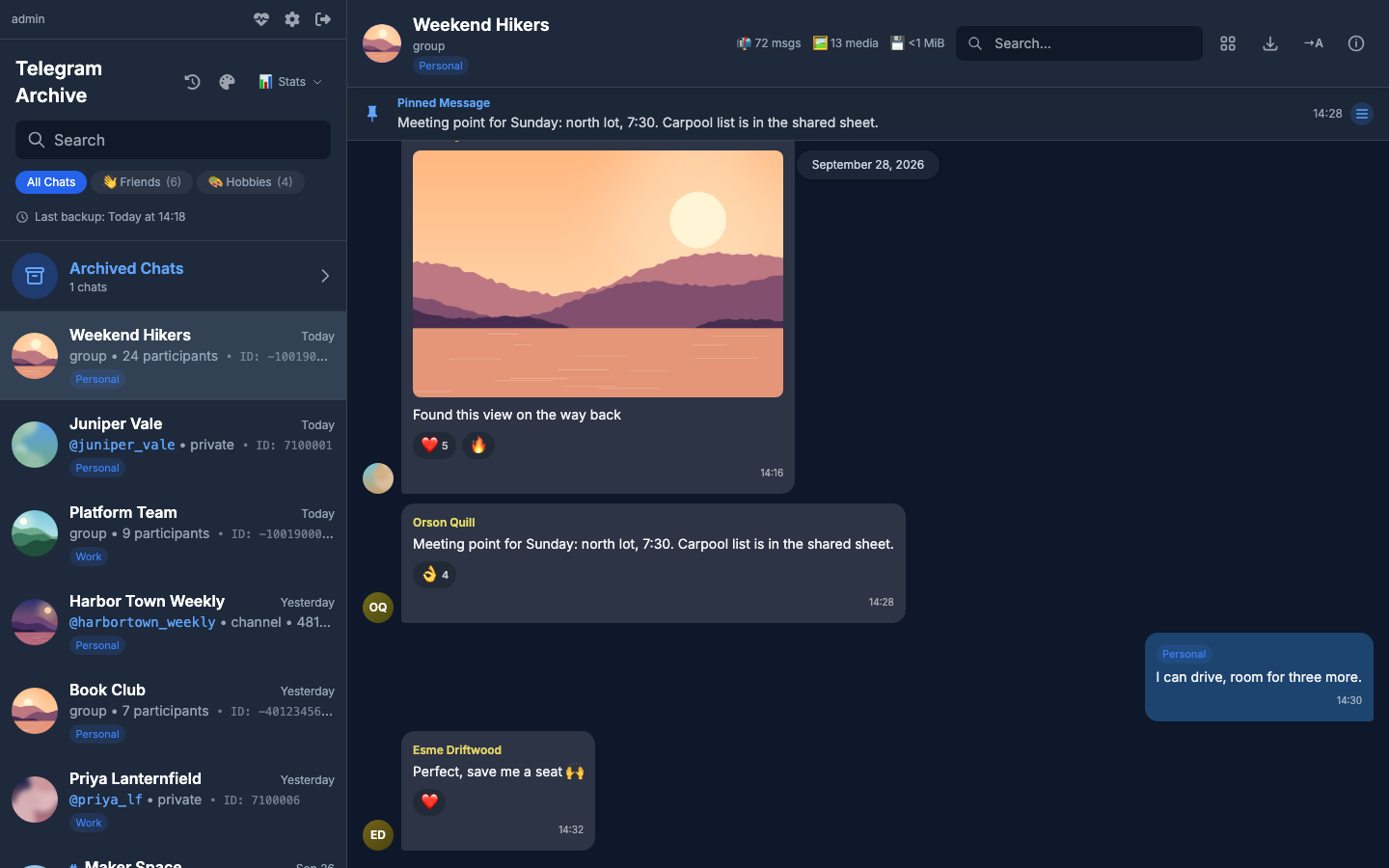

What is Telegram-Archive?
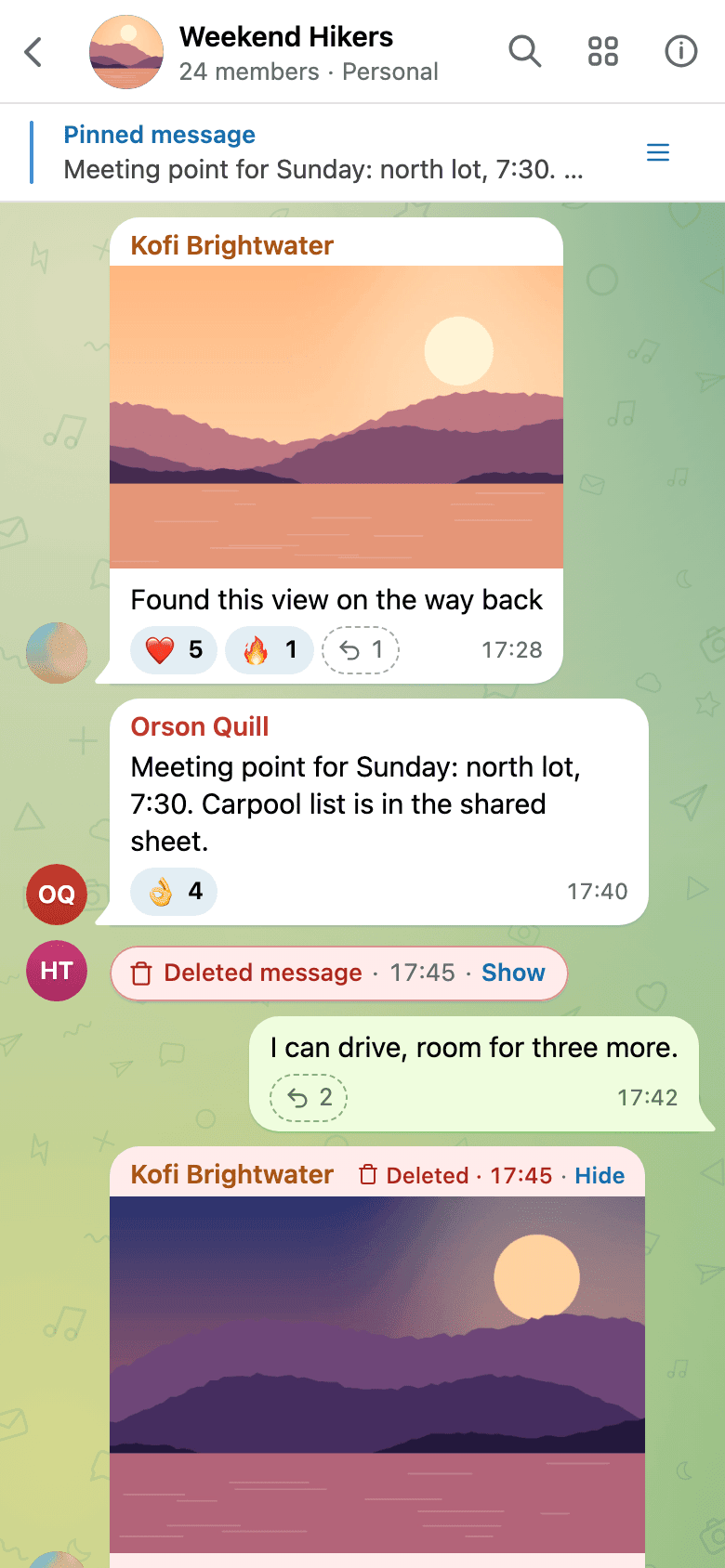
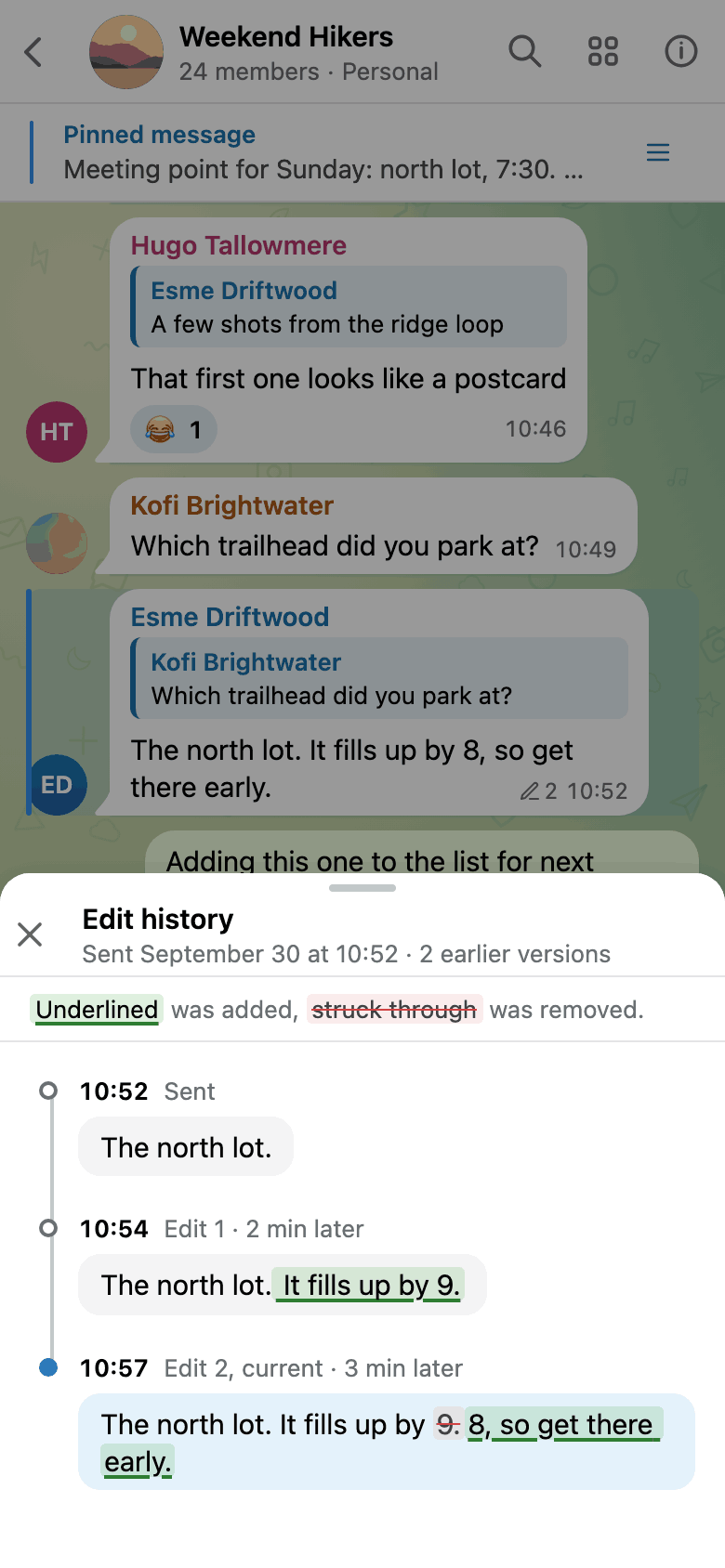
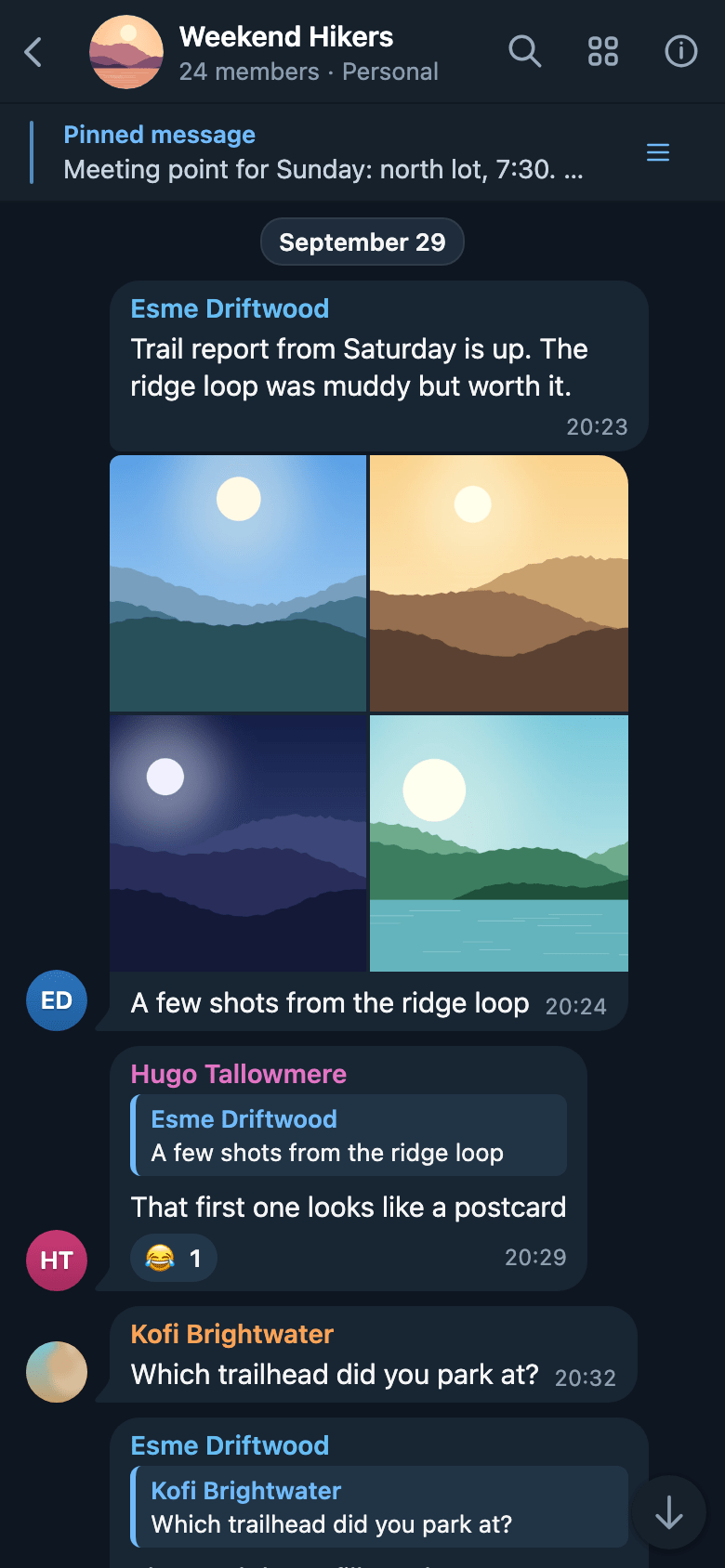
This program saves your Telegram account data to a machine you own. It operates as two Docker containers — one for the backup process and one for the web interface — or can be set up through pip. The backup component connects to Telegram using your API keys, runs a live listener for new messages plus a daily scheduled sweep, and writes everything to SQLite by default or PostgreSQL if you prefer. It retains every message with its formatting, replies, forwards, reactions, pinned items, and polls. Each edit keeps its prior text, and each removed message stays in the archive marked as deleted. Media such as images, video clips, audio notes, stickers, files, and link previews are stored once and shared across conversations. The web interface on port 8000 mimics Telegram with conversations, categories, discussion threads, search, shared files, a feed showing what changed, and earlier profile pictures. It handles multiple accounts in one archive, can import Telegram Desktop exports, offers optional voice transcription through an external server, and provides an event webhook for edits and deletions. Access control has a master login, extra viewer accounts with per-chat permissions, and share links for single conversations. Twelve visual themes are included, one of which matches your system light or dark preference. The interface works on phone browsers. Container images support amd64 and arm64, run as non-root user 1000 with all capabilities dropped.
Should you self-host Telegram-Archive?
Telegram-Archive scores 51/100 on selfhost.directory (how scoring works) and ranks #31 of 46 in Backup. It has 233 GitHub stars.
It shipped 27 stable releases in the past year. The latest, v9.5.0, came out on 28 October 2026. New versions land roughly every 2 days.
Setup is moderate: expect some configuration beyond a single command. An official Docker image is available. It is GPL-3.0-licensed and written mostly in Python.
Its closest alternative on selfhost.directory is Restic (82/100, 36 862 stars). It scores higher overall, so compare the two before you pick. See Telegram-Archive vs Restic side by side.
Features
- Browser notifications
- Edit and deletion history
- Event webhook
- Incremental Telegram backup
- Media deduplication
- Multiple Accounts
- Read-only hardened containers
- Reverse Proxy Authentication
- Telegram Desktop import
- Telegram-like web viewer
- Viewer accounts and share links
- Voice transcriptionRequires external transcription server
- What Changed feed
Telegram-Archive README
More in Backup
 TG VaultSelf-hosted Telegram file archiver that stores files to local disk, OneDrive, Google Drive, S3, WebDAV and more with a web UI and bot for private cloud management.
 TimeMachineSelf-hosted, open-source Docker image that runs Samba to provide a Time Machine-compatible backup target for macOS, with Avahi discovery and configurable storage quotas.
 timenestOpen-source, self-hosted Time Capsule replacement for Raspberry Pi and Linux servers. Gives Macs automatic Bonjour discovery, per-user quotas, and a web dashboard.
 umbrelOSA self-hosted home server OS you flash onto Intel, AMD or Raspberry Pi devices: browser setup, 300+ one-click apps, Files, Photos, backups and an MCP server.
 UniFi-Protect-BackupPython tool to backup unifi event clips in realtime
 unraid-config-guardianSelf-hosted open-source tool that backs up Unraid containers, settings, and plugins — generating templates, compose files, and a restore script for flash drive recovery.
 UrBackupUrBackup is a self-hosted, open-source client/server backup system for Windows, Linux, and macOS combining image and file backups with deduplication and a web interface.
 velldVelld is a self-hosted, open-source database backup tool for PostgreSQL, MySQL, MongoDB, and Redis with automated scheduling, S3 storage, and notifications.
 vm-babysitterSelf-hosted tool that automates incremental backups of QEMU/KVM virtual machines with scheduling, retention, and optional remote mirroring.
 VykarSelf-hosted Rust backup tool with YAML config, multiple storage backends, built-in scheduling, desktop GUI, and WebDAV for browsing snapshots.
 WakeMyPotatoWakeMyPotato is an open-source systemd service that auto-restarts Linux laptops after power outages using rtcwake, with safe RAID shutdown and optional ping checks.
 watchstateSelf-hosted service to sync watch state across Plex, Jellyfin, and Emby. Supports multi-user, webhooks, scheduled tasks, backup, and media health auditing.
0 comments