
Self-host taOS
v1.0.0-beta.56Self-hosted AI agent OS with web desktop and offline memory
- Stars
- 582
- Ports
- 6969 (controller HTTP API + web UI), 6970 (browser-proxy second-origin), 7832 (qmd embedding service), 7838 (LLM gateway agent listener (loopback only))
- Requires
- Ca-certificates, Curl, Git, Libtorrent-rasterbar, Python, SQLCipher, SQLite, Vulkan-tools


What is taOS?
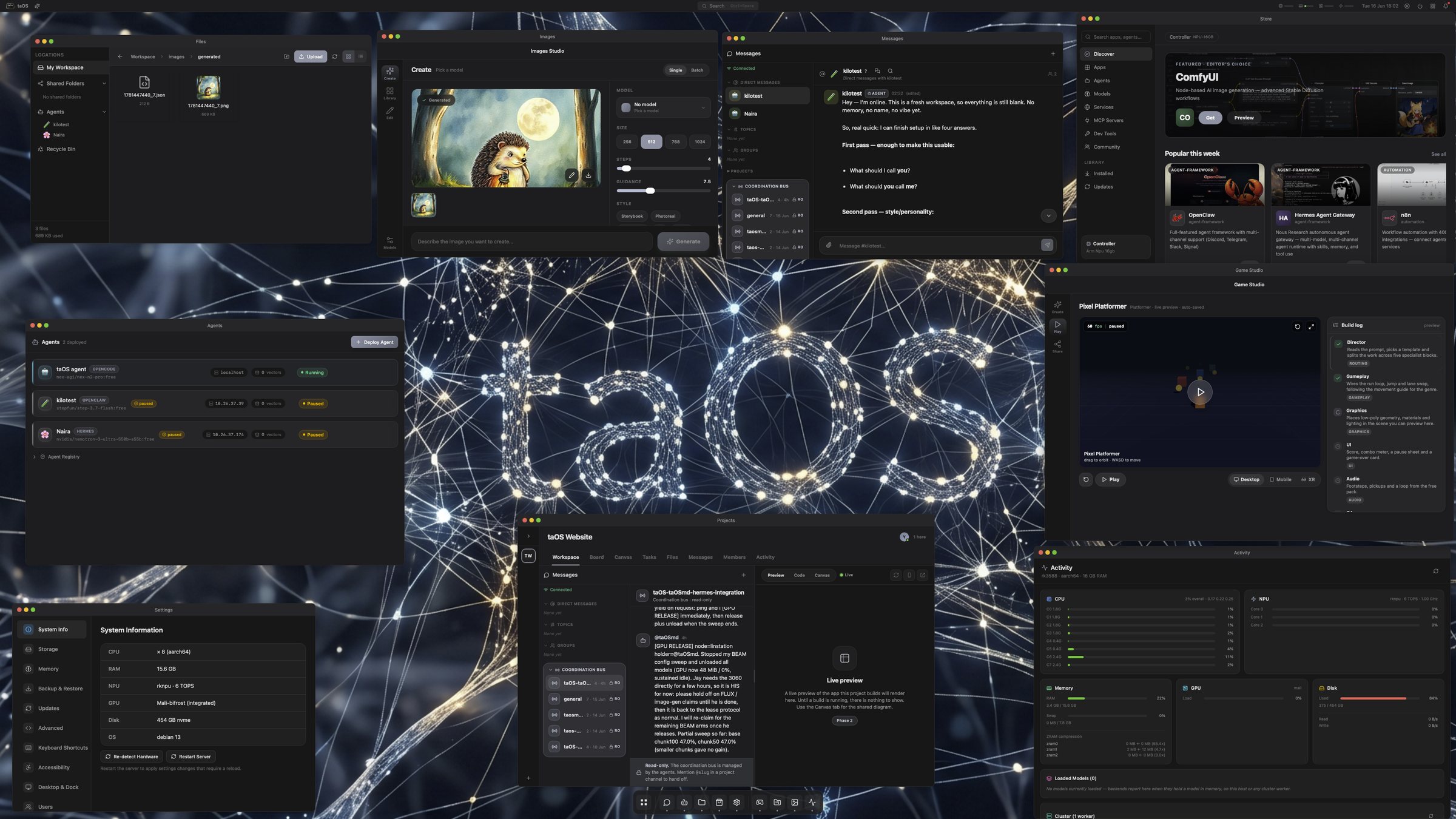
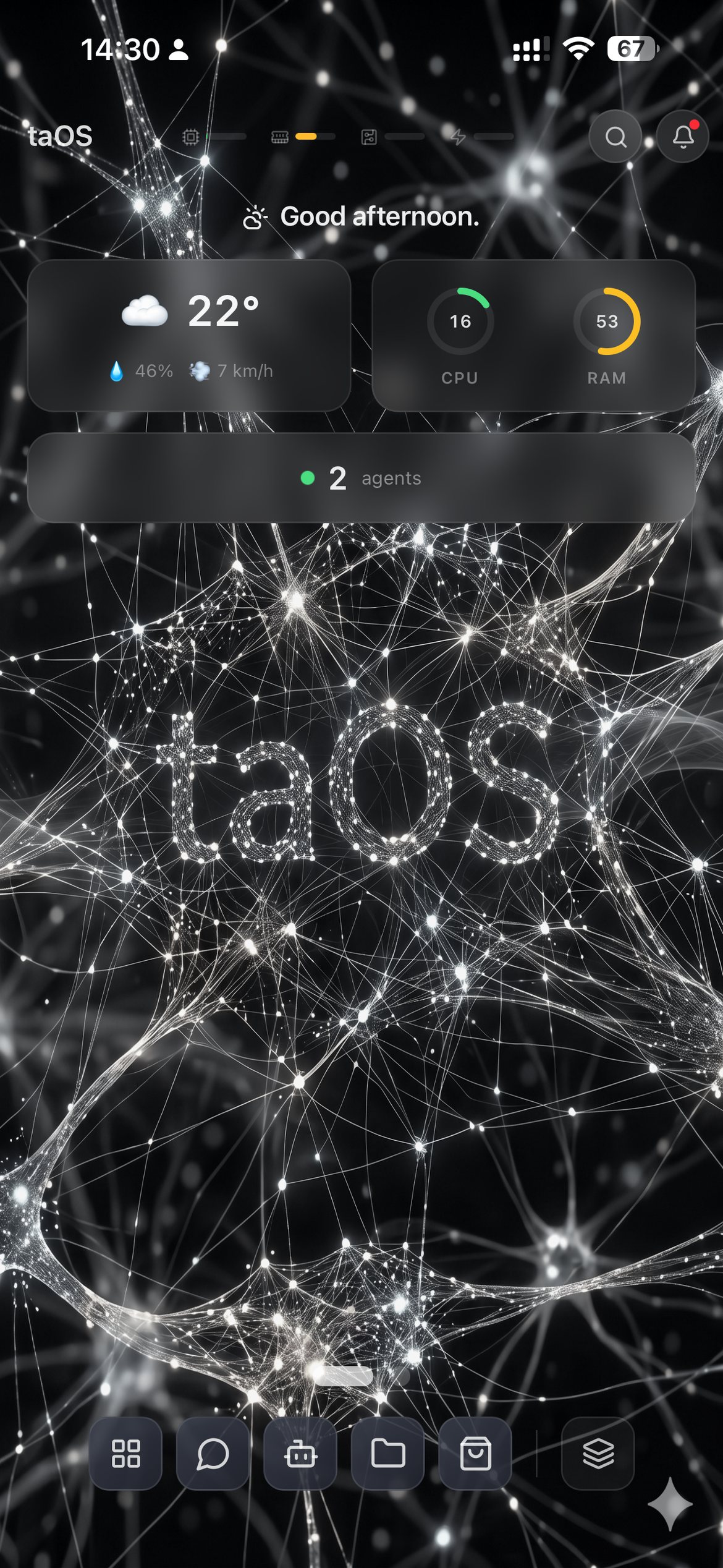
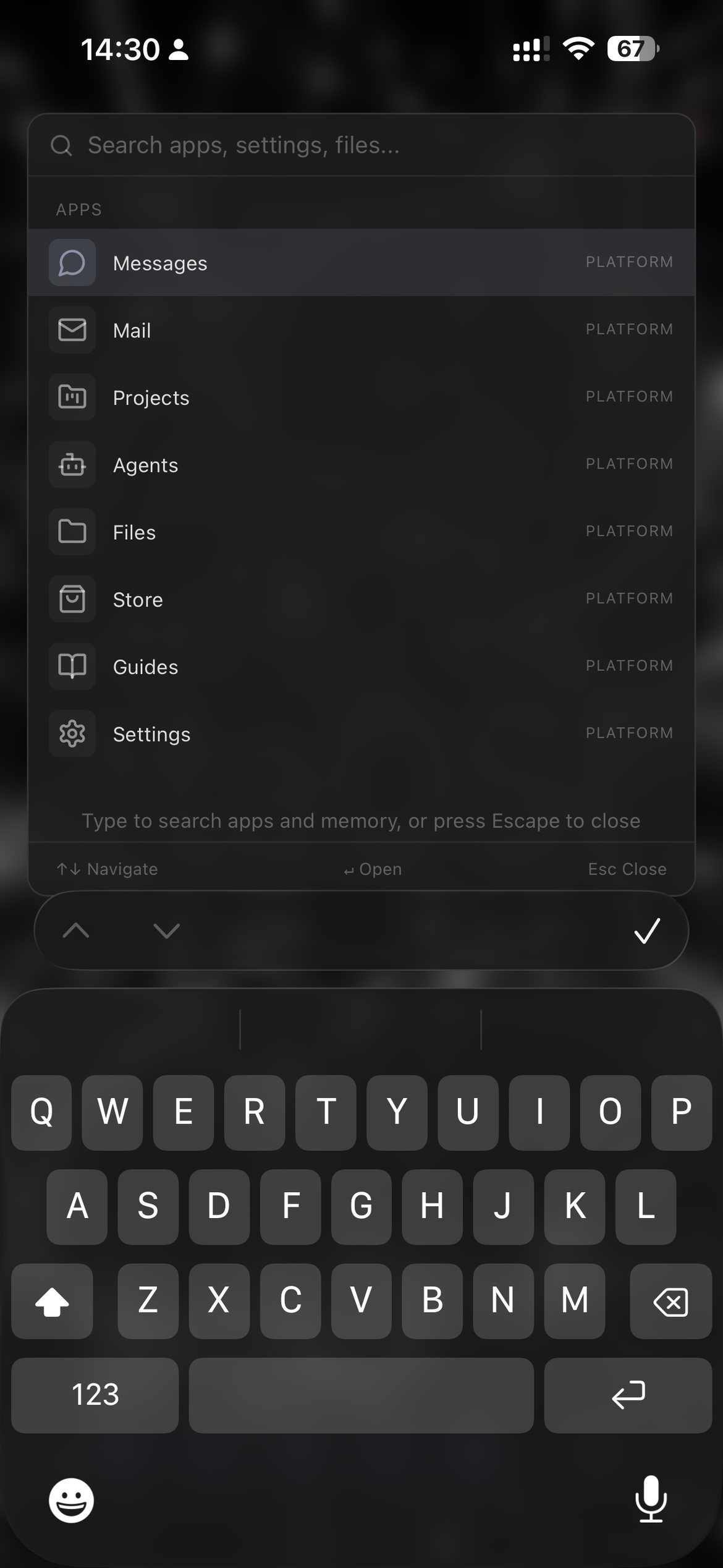
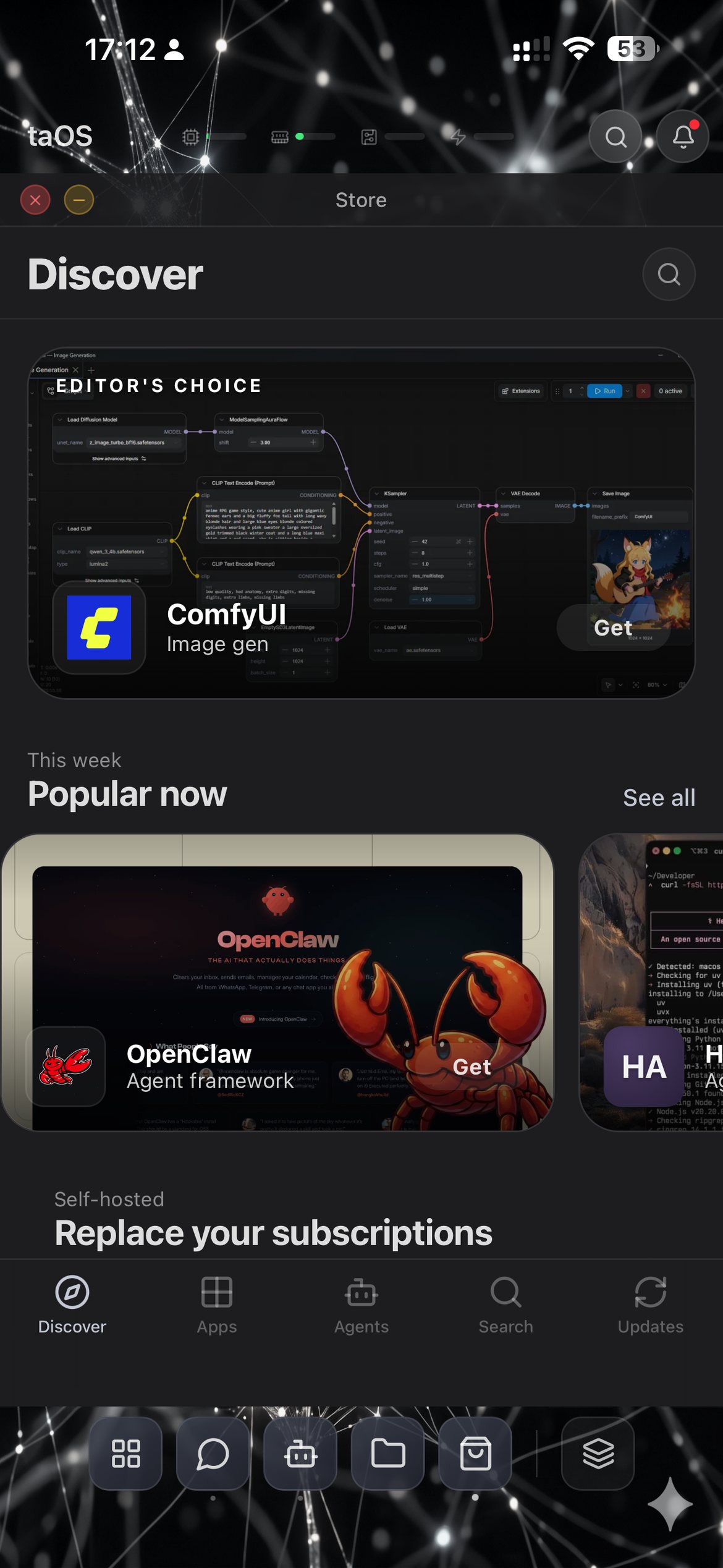
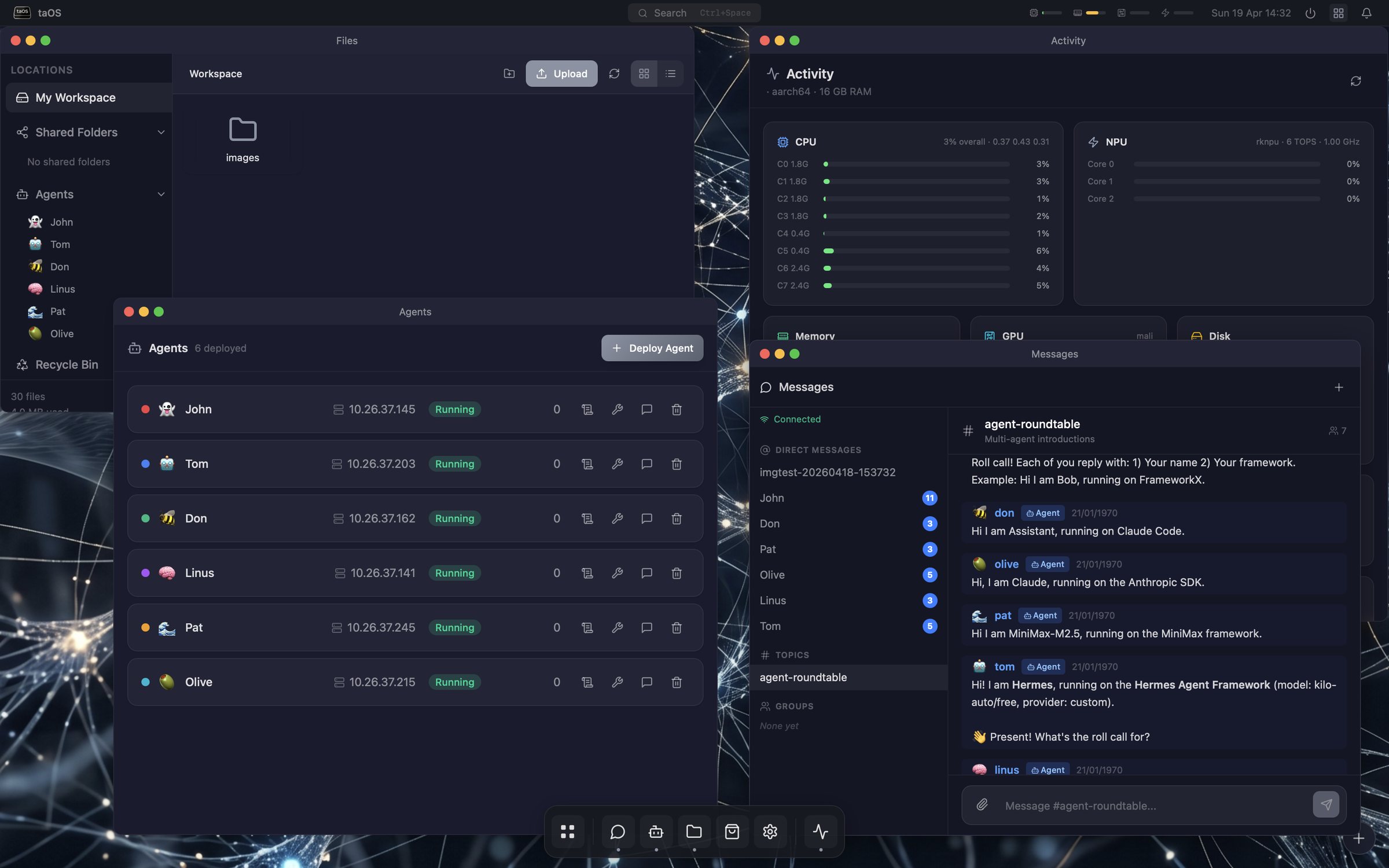
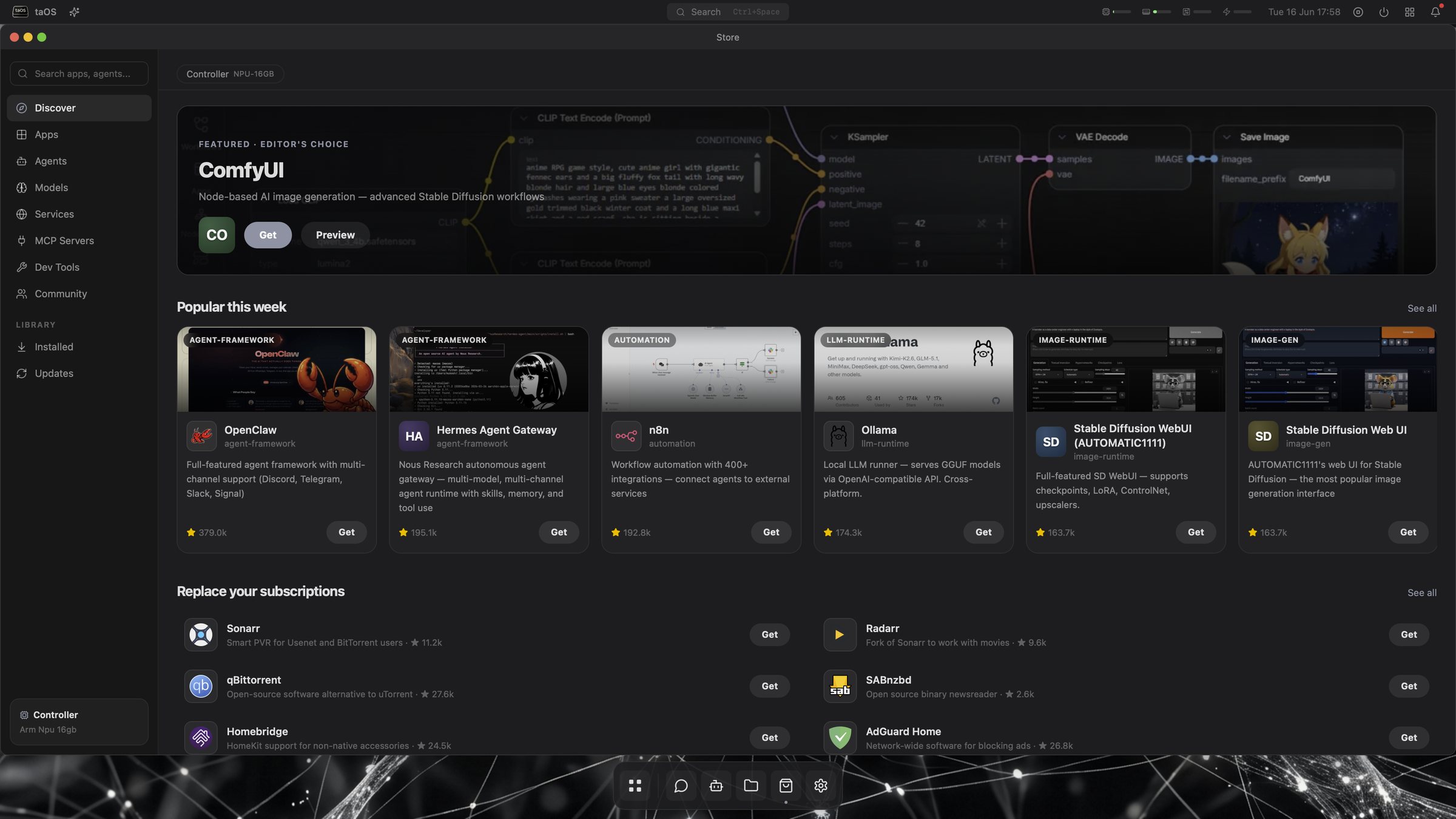
taOS turns your own hardware — from a £60 single-board computer up to a gaming PC — into a personal AI compute cluster. A single install script sets up a browser-based desktop with window manager, dock, and 43 built-in apps. Agents can swap between 17 frameworks while preserving their memory, files, and chat channels. The taOSmd memory layer scores 97% on an end-to-end benchmark. An integrated store delivers 109 apps and 47 MCP plugins with one click. The stack also includes a mail client, Kanban boards, image/video/audio generation, global search, and cluster monitoring. Licensed AGPL-3.0 and currently in beta.
Should you self-host taOS?
taOS scores 49/100 on selfhost.directory (how scoring works) and ranks #104 of 209 in AI Agents. It has 582 GitHub stars.
It shipped 1 stable release in the past year. The latest, bundle-latest, came out on 21 June 2026.
Setup is moderate: expect some configuration beyond a single command. It is AGPL-3.0-licensed and written mostly in Python.
Its closest alternative on selfhost.directory is Orca (91/100, 108 815 stars). It scores higher overall, so compare the two before you pick. See taOS vs Orca side by side.
Features
- Agent Deployment Wizard
- App Store
- Backup & Restore
- Channel Hub
- Cluster Inference
- Global Search
- Image/Video/Audio Generation
- Kanban Projects
- LLM Proxy (LiteLLM)
- Local Model Catalog
- Mail Client
- Multi-framework Agent Chat
- Offline AI Memory (taOSmd)
- Secrets Manager
- Web Desktop Shell
taOS README
More in Self-hosting
 uncompressedSelf-hosted Docker Compose reference for a media server — Jellyfin, *arr, qBittorrent in a Gluetun VPN namespace, Tailscale-only ingress via Traefik, auto-healing.
 vibebinvibebin is a self-hosted platform using Incus/LXC containers to run AI coding agent sandboxes with automatic HTTPS and SSH access on a VPS.
 voxperySelf-hosted community chat platform with text channels, voice calls, screen sharing, and moderation — run it yourself or use the hosted instance.
 WeightTrackerSelf-hosted, open-source mobile-first app for tracking weight, hydration, activity, blood pressure, and medications with charts and Home Assistant integration.
 心潮动态心智系统心潮 is a self-hosted, open-source AI dynamic mind state engine with drives, thoughts, fatigue, sleep, and short-term context. HTTP API and remote MCP with OAuth 2.1.
 A-EyeA self-hosted photo application that runs AI vision models on your own hardware to automatically organize and find pictures without any cloud service.
 aiquilaSelf-hosted AI for Nextcloud with an MCP server, native app, and five provider choices including local models.
 alteroaltero is a self-hosted, open-source Zotero sync server implementing the Web API v3 for libraries, groups, notes, attachments, and full-text search.
 AnyHabitSelf-hosted habit tracker with streak tracking, journals, groups, API tokens, webhooks, Prometheus metrics, and MCP/AI integration for Raspberry Pi and Docker.
 AnyTypeSelf-hosted Docker Compose deployment of the any-sync network powering Anytype — run your own encrypted sync backend with MongoDB, Redis, and Garage S3 storage.
 AppViewLiteA self-hosted, open-source Bluesky appview that indexes the firehose using minimal resources (~2.2 GB/day) with a web interface and experimental API.
 boxwatchrboxwatchr is a self-hosted, open-source email filtering daemon for IMAP mailboxes with rspamd spam scoring, custom rules, and a web dashboard.
0 comments