
Self-host simon
0.3.7Lightweight system monitor with Docker and file browser
- Stars
- 161
- Port
- 30000 (Web interface)
alibahmanyar/simon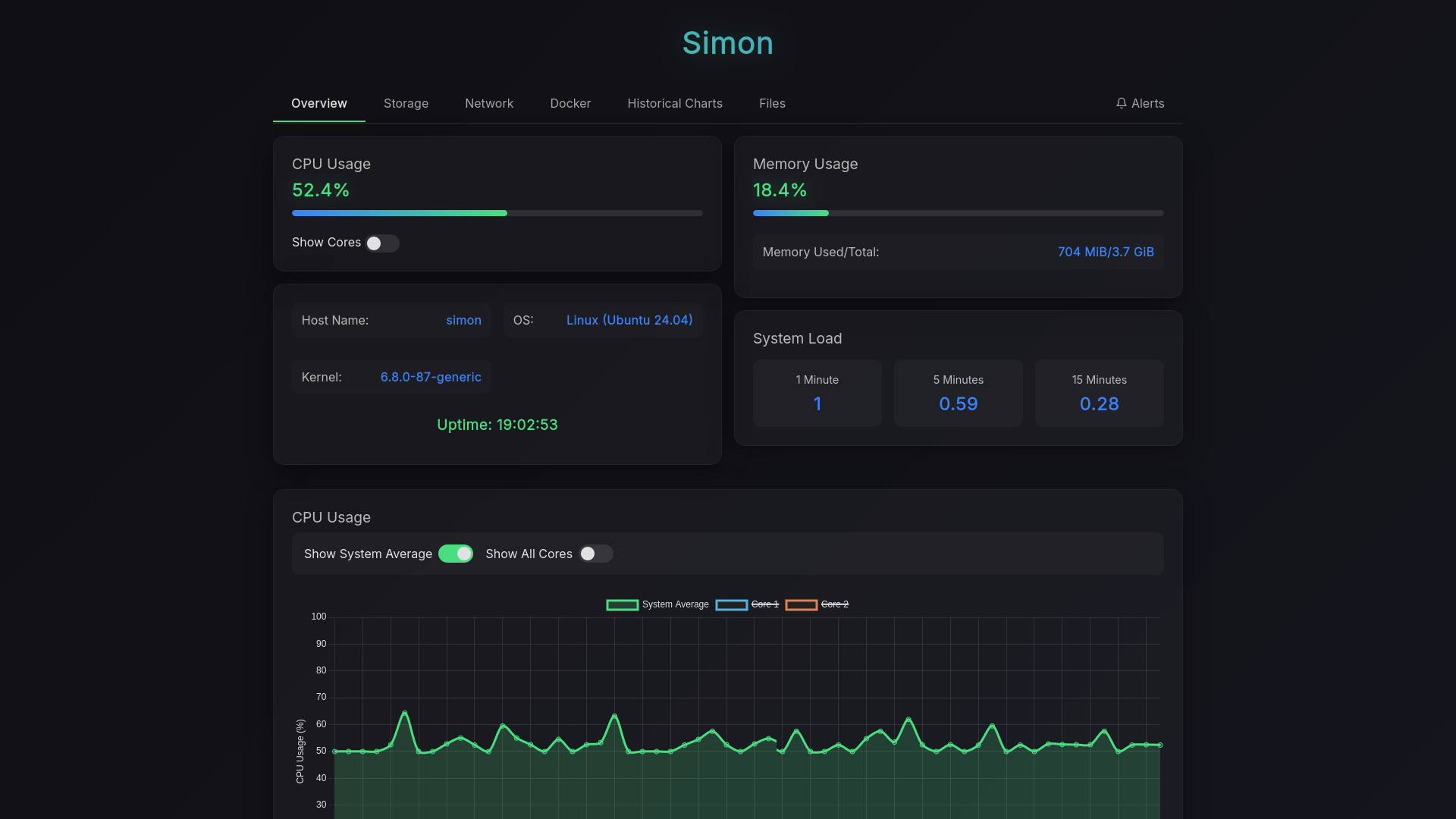
What is simon?
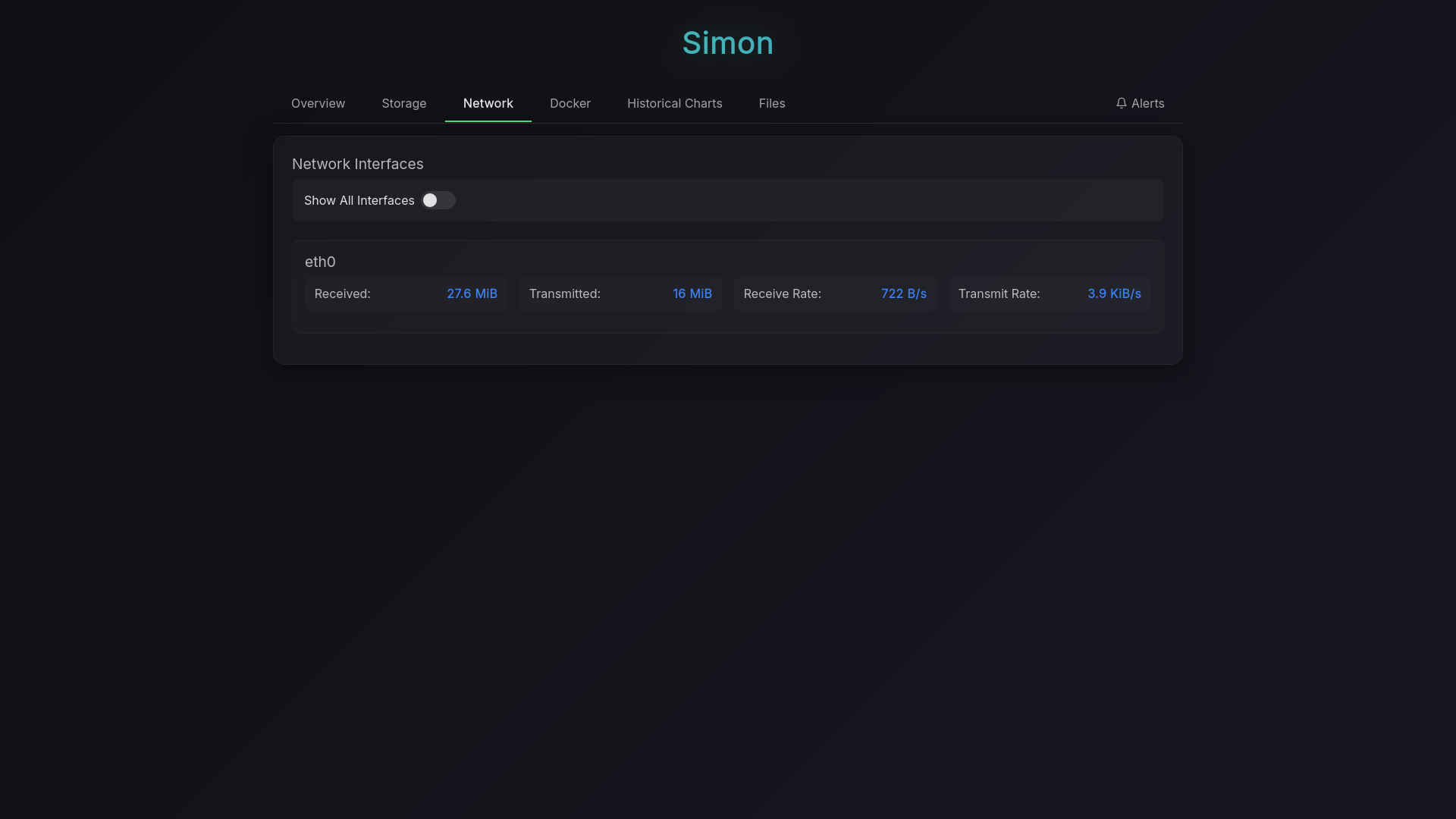
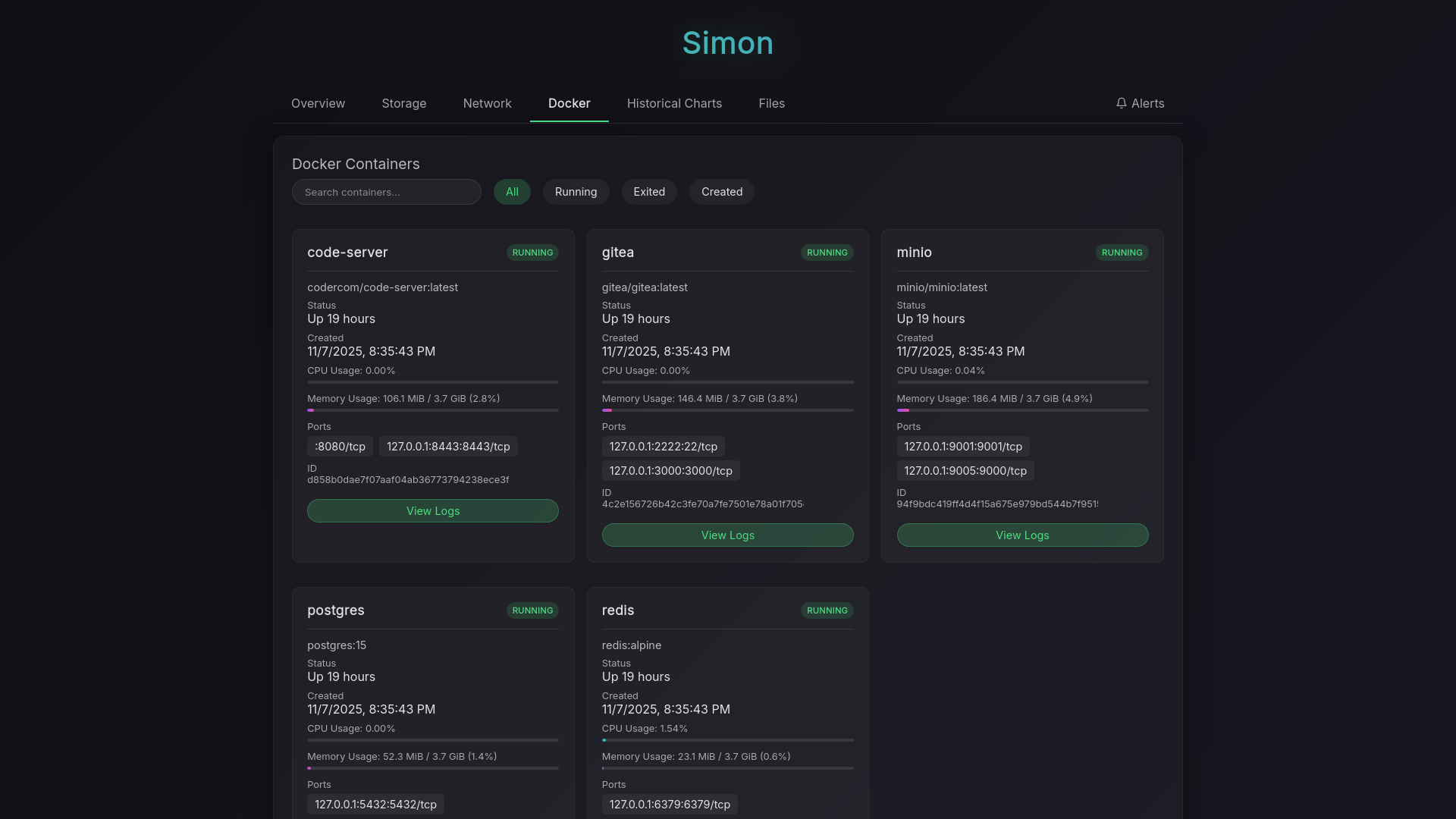
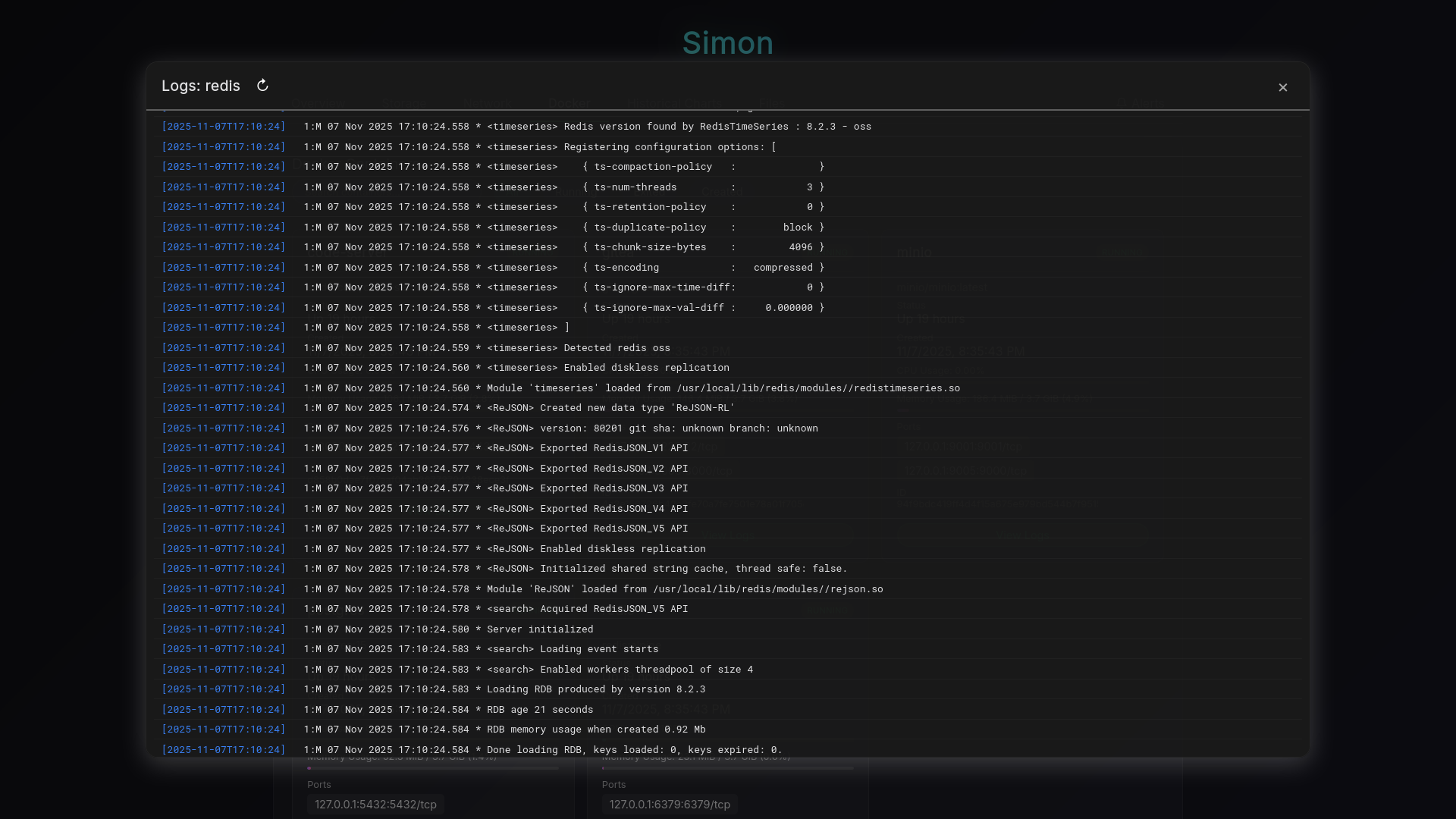
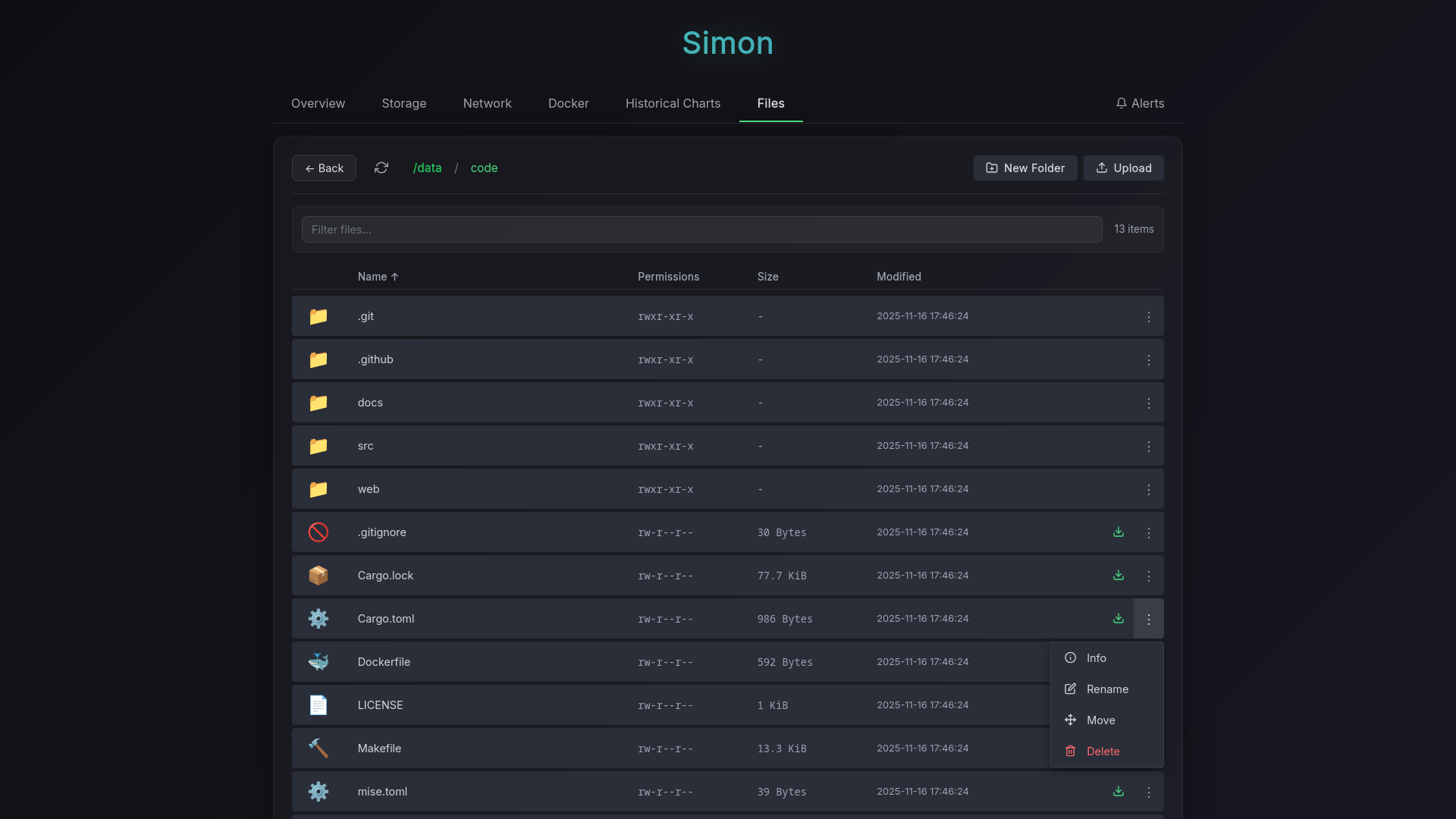
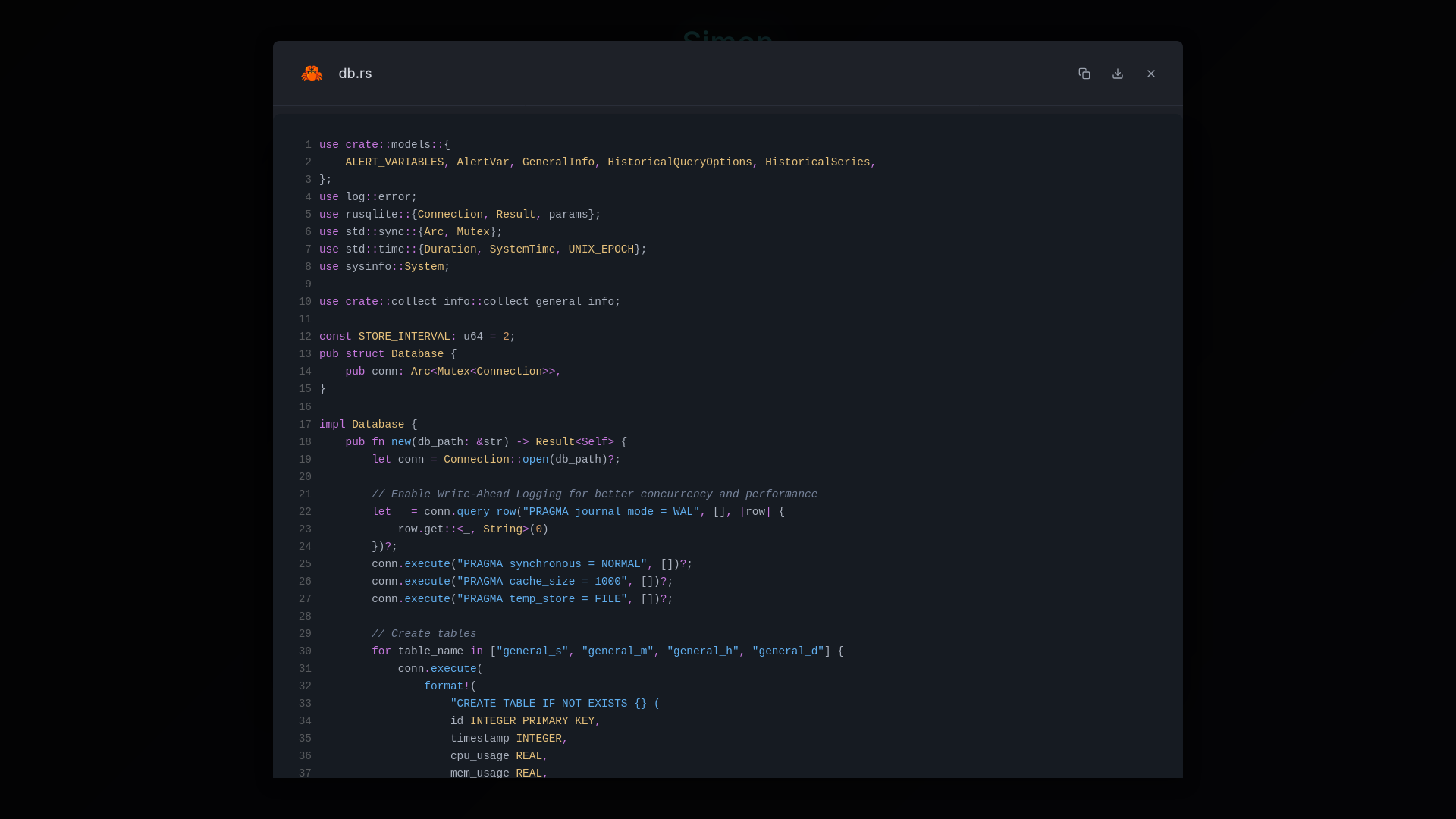
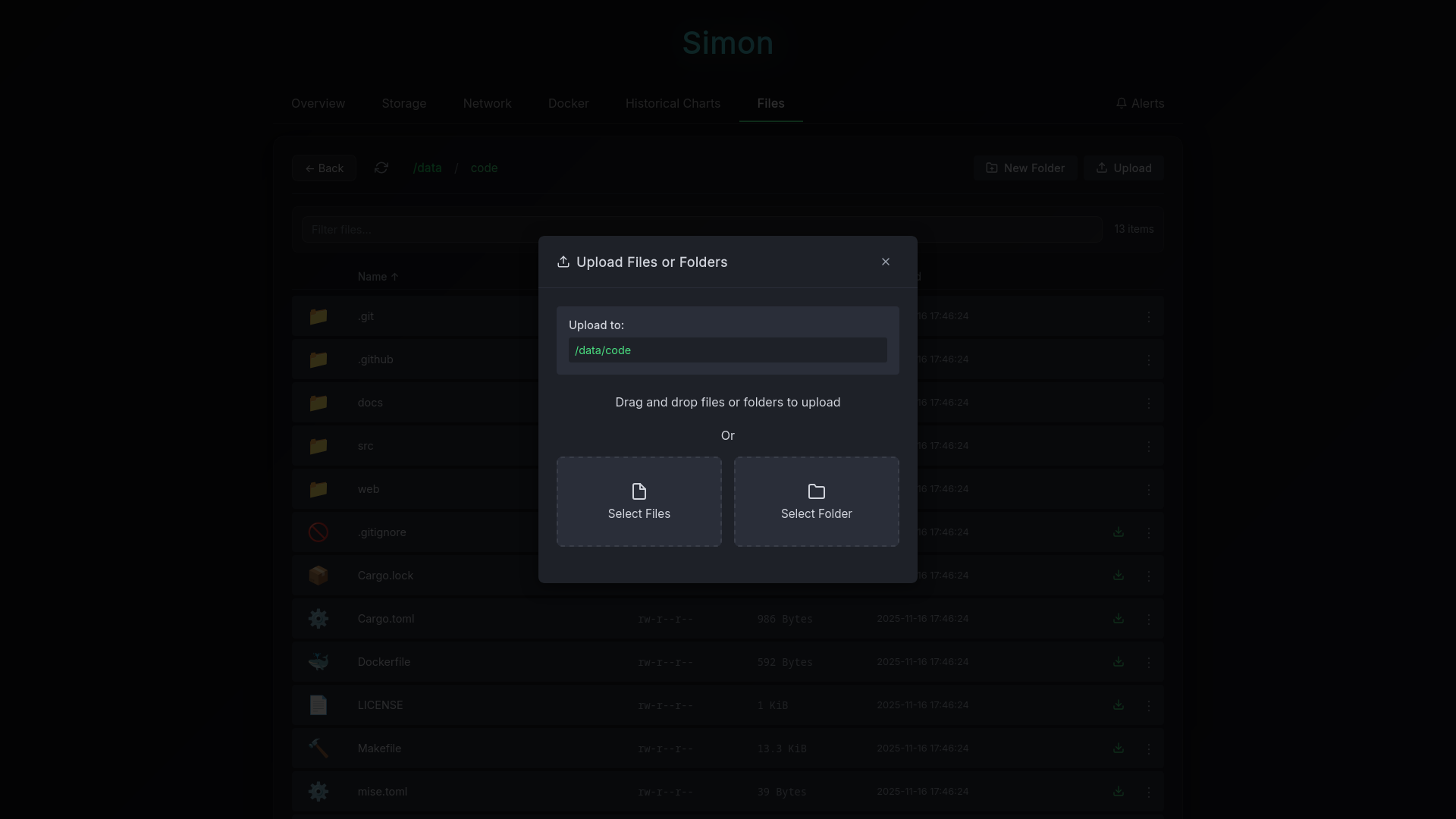
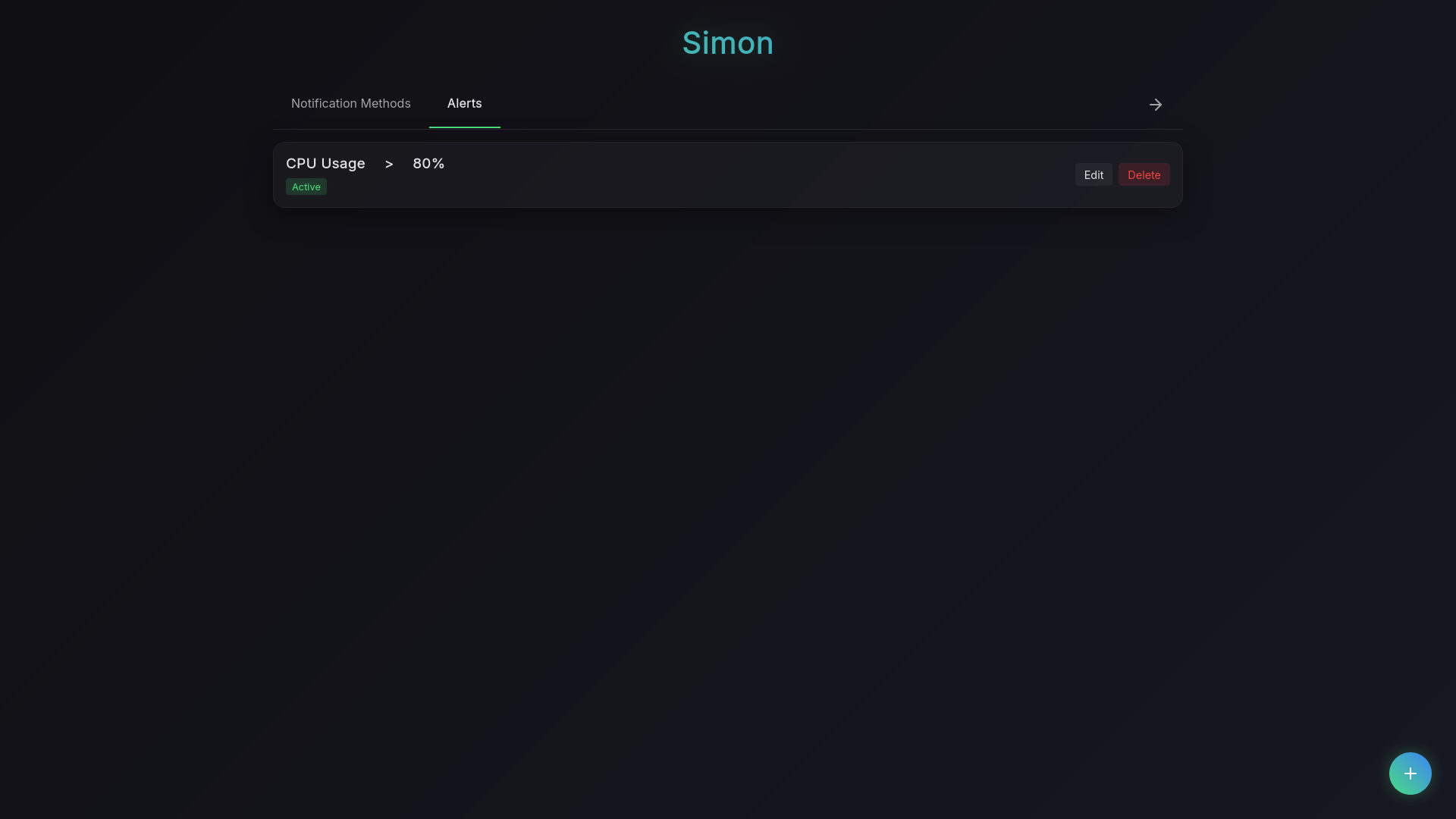
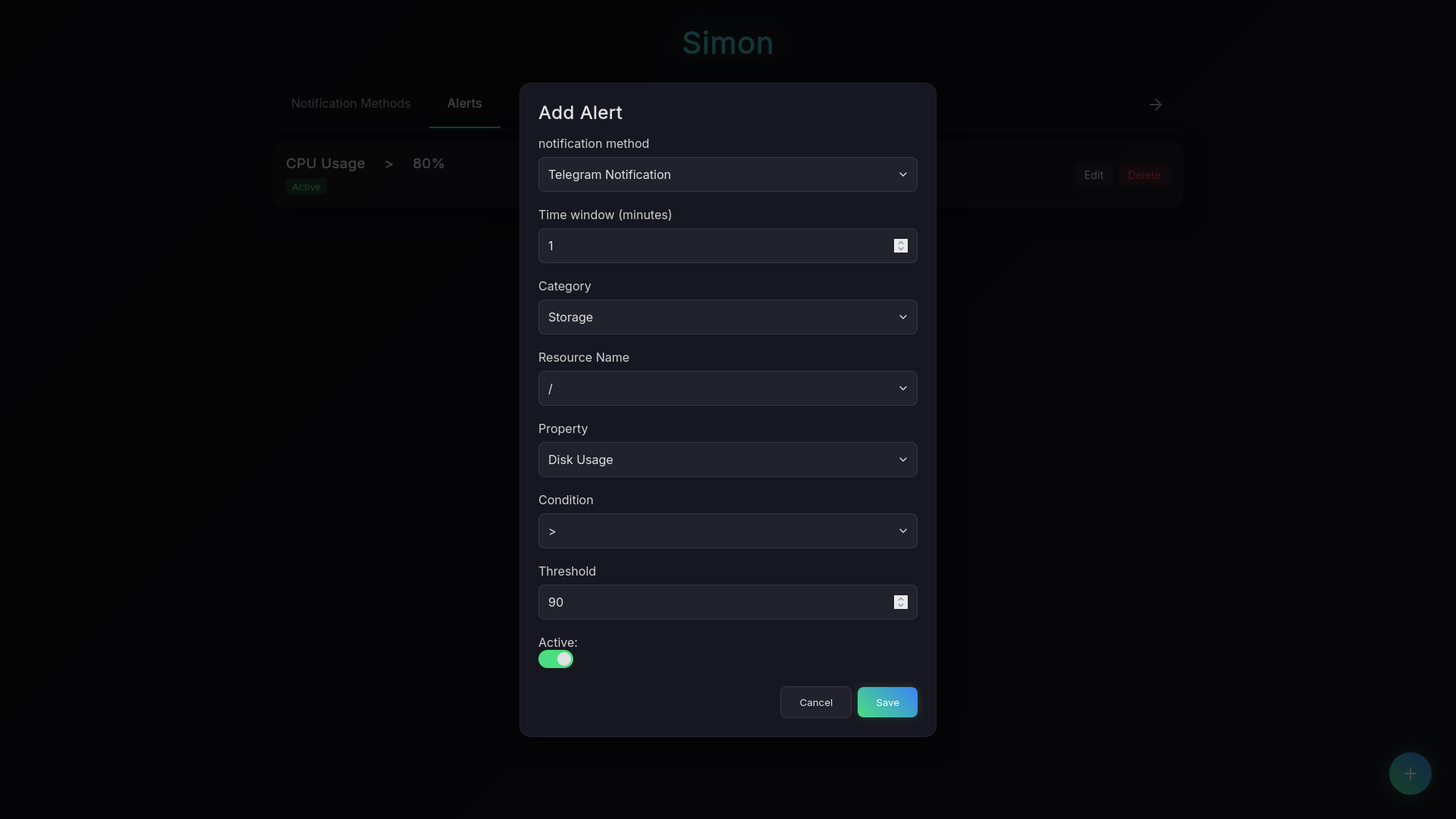
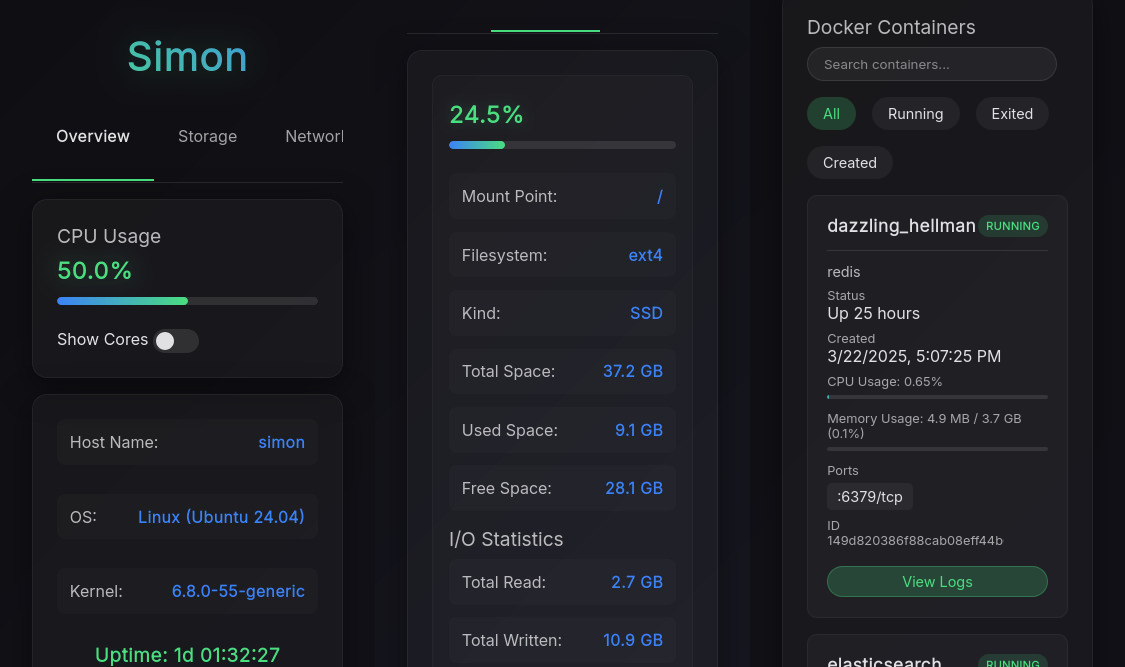
Simon is a lightweight, web-based system monitoring tool built for resource-constrained environments such as embedded Linux devices. Written in Rust as a single dependency-free binary, it delivers real-time tracking of CPU, memory, disk, network, and Docker container metrics with historical charts. A full-featured file browser lets you navigate directories, preview files, upload with drag-and-drop, and download with range request support. The alerting system supports custom thresholds for system resources and sends notifications through Telegram, ntfy, Gotify, Pushover, Pushbullet, Matrix, or custom webhooks. Optional bcrypt password authentication secures the web interface. It operates on multiple operating systems including Linux, Windows, Android, and FreeBSD across several architectures. Deployment options include prebuilt binaries, Docker, and Docker Compose. The default web interface listens on port 30000. The project is MIT-licensed and actively maintained.
Should you self-host simon?
simon scores 46/100 on selfhost.directory (how scoring works) and ranks #73 of 104 in Monitoring & observability. It has 161 GitHub stars.
It shipped 9 stable releases in the past year. The latest, 0.3.7, came out on 18 October 2026. New versions land roughly every 2 weeks.
Setup is easy: most people get it running in one sitting. An official Docker image is available. It is MIT-licensed and written mostly in Rust.
Its closest alternative on selfhost.directory is grafana (90/100, 77 569 stars). It scores higher overall, so compare the two before you pick. See simon vs grafana side by side.
Features
- Alerting with multiple notification channels
- Cross-Platform Support
- Password Authentication
- Real-time system monitoring
- Reverse Proxy Support
- Web-based file browser
simon README
More in Monitoring & observability
 smartctl_exporterSelf-hosted, open-source Prometheus exporter that collects SMART disk health data via smartctl and exposes it as metrics for monitoring storage hardware.
 StatusSelf-hosted, open-source system monitor for small Linux homeservers with web UI showing CPU, memory, storage, network, and host info. Runs on Raspberry Pi.
 tianjiSelf-hosted insight hub combining web analytics service monitoring and server status checks. Apache 2.0 licensed open-source platform for independent developers.
 tirrenoA self-hosted PHP security framework that spots account takeovers, fraud, and logic abuse inside your app using a dashboard, rule engine, and audit trails.
 tracearr-supervisedSelf-hosted, open-source monitoring dashboard for Plex, Jellyfin and Emby with real-time streams, account-sharing detection, trust scores and automations.
 TraceloopOpen-source observability for your GenAI or LLM application, based on OpenTelemetry
 World MonitorSelf-hosted open-source dashboard streaming 460 news feeds from 761 providers onto a live map with 57 layers, correlating geopolitics, markets, shipping, aviation
 ZabbixZabbix is a self-hosted, open-source observability platform for monitoring networks, servers, VMs, and cloud infrastructure with distributed monitoring.
 AlertaSelf-hosted, open-source alert monitoring console that consolidates, de-duplicates and correlates alerts from many sources via an HTTP JSON API.
 app-glancesGlances is a self-hosted, open-source system monitoring tool packaged as a Home Assistant add-on with web dashboard and InfluxDB export.
 crowdsec-web-uiSelf-hosted dashboard for CrowdSec to explore alerts, manage decisions, view metrics, and configure multi-channel notifications.
 elasticsearchOpen-source distributed search engine that handles structured, unstructured, and vector data for real-time search, observability, and AI workloads.
0 comments