
Self-host PhotoMigrator
v4.7.0Photo migration tool for Google Photos, Synology, Immich
- Stars
- 268
- Port
- 6078 (Web Interface (FastAPI/uvicorn))
jaimetur/photomigrator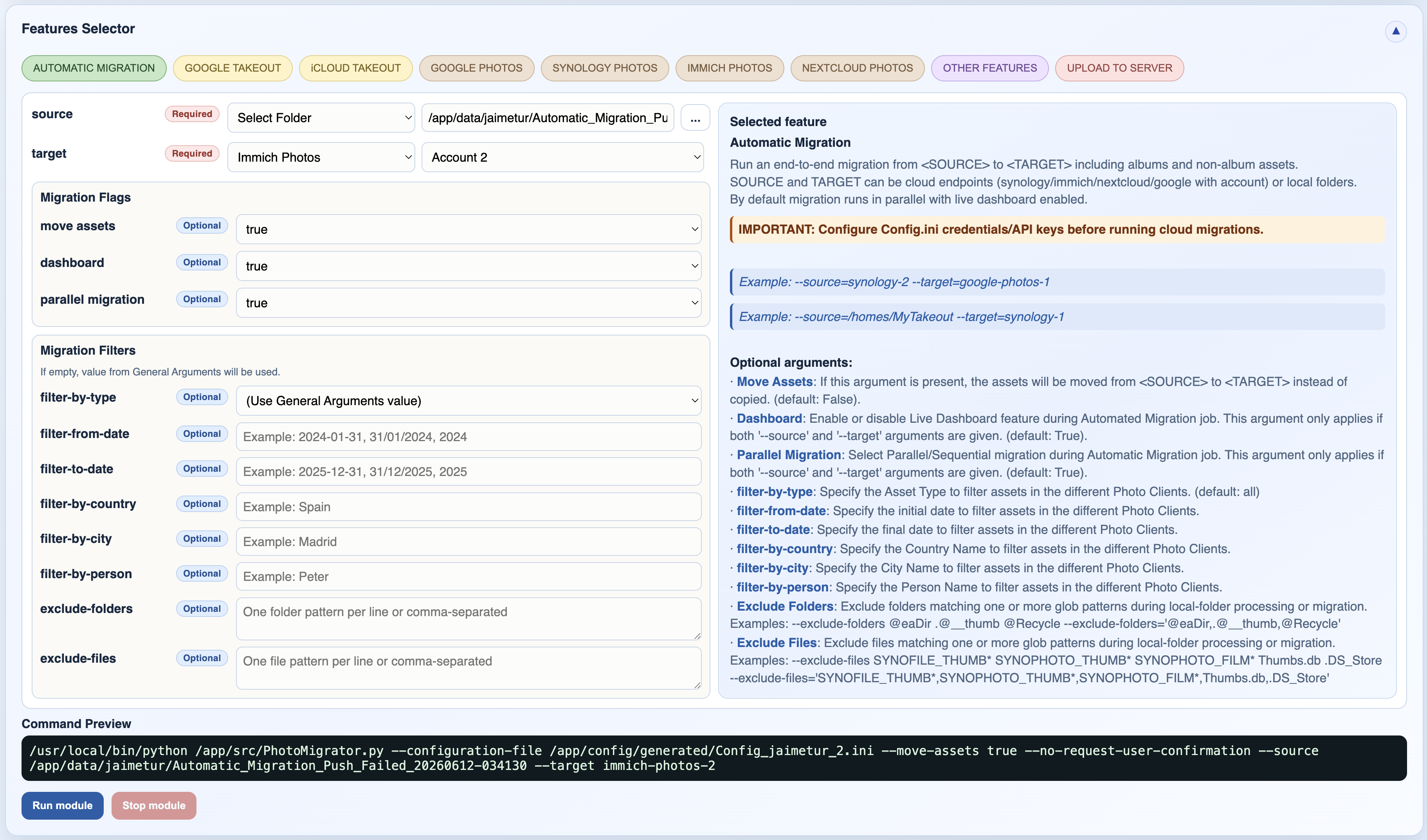
What is PhotoMigrator?
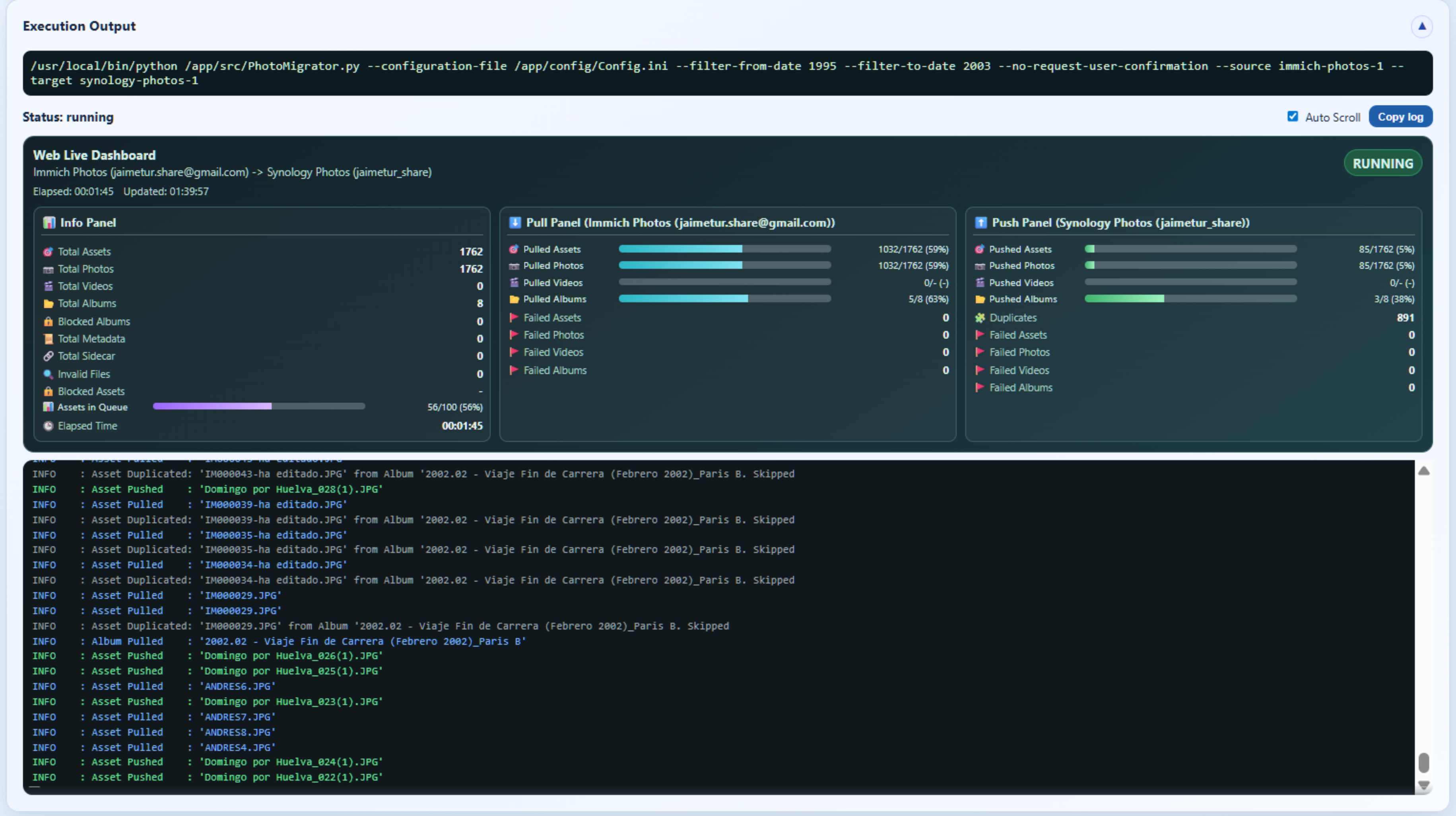
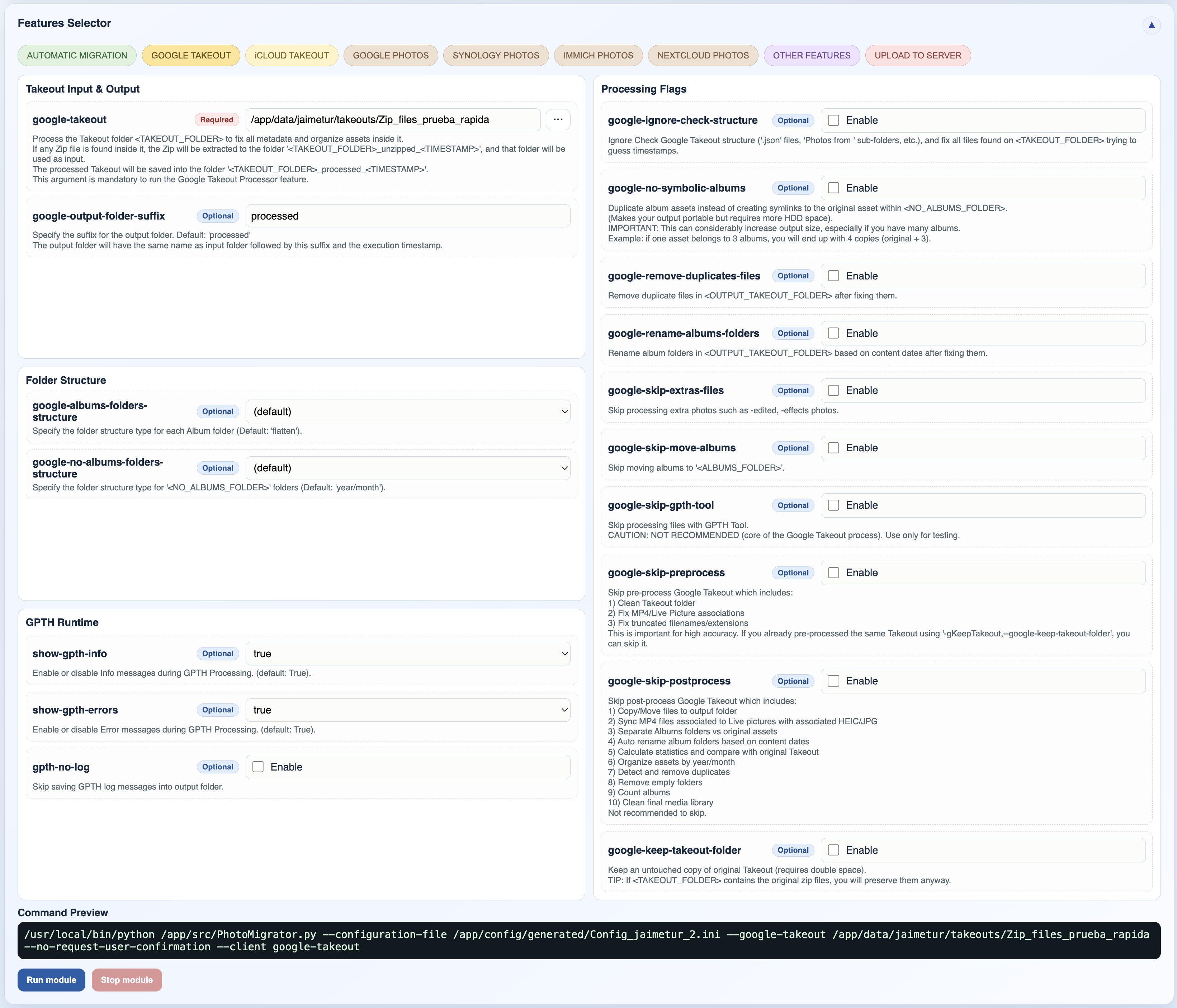
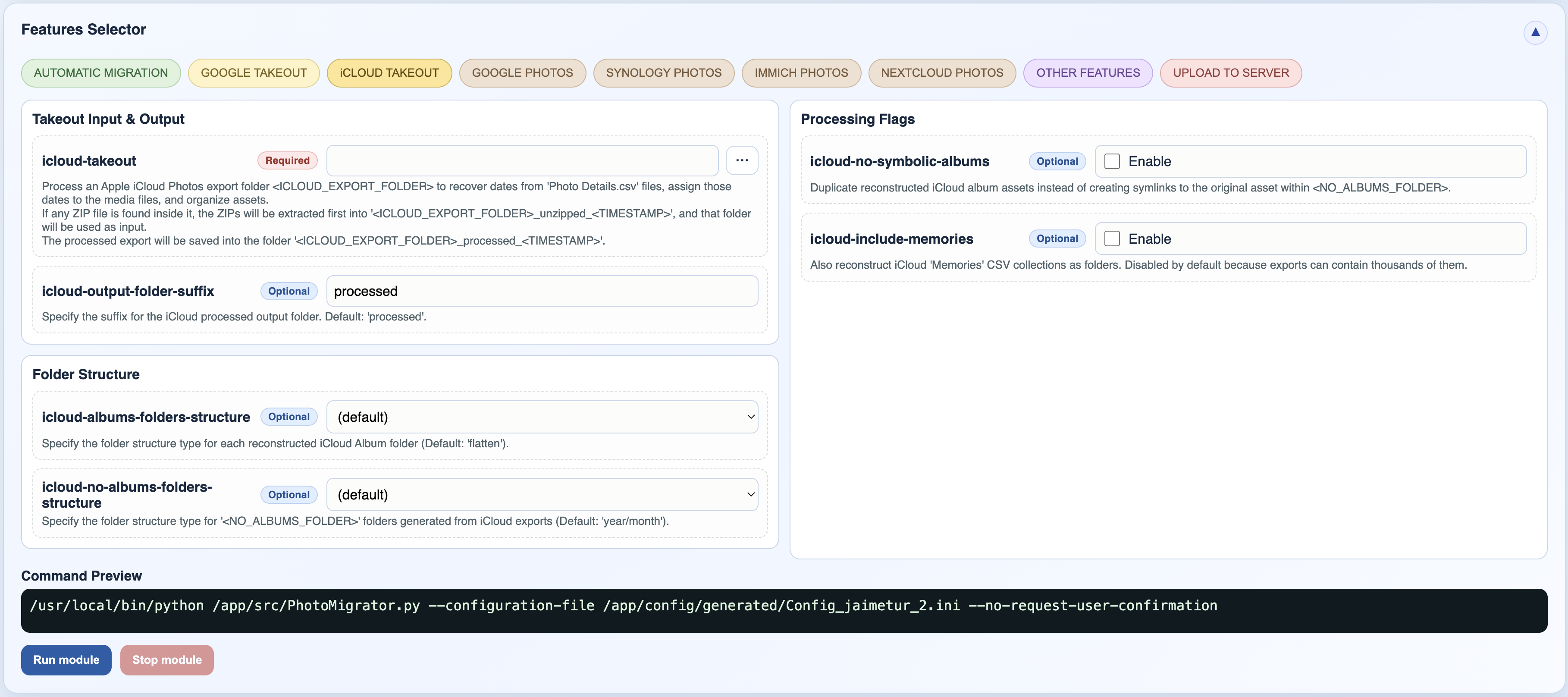
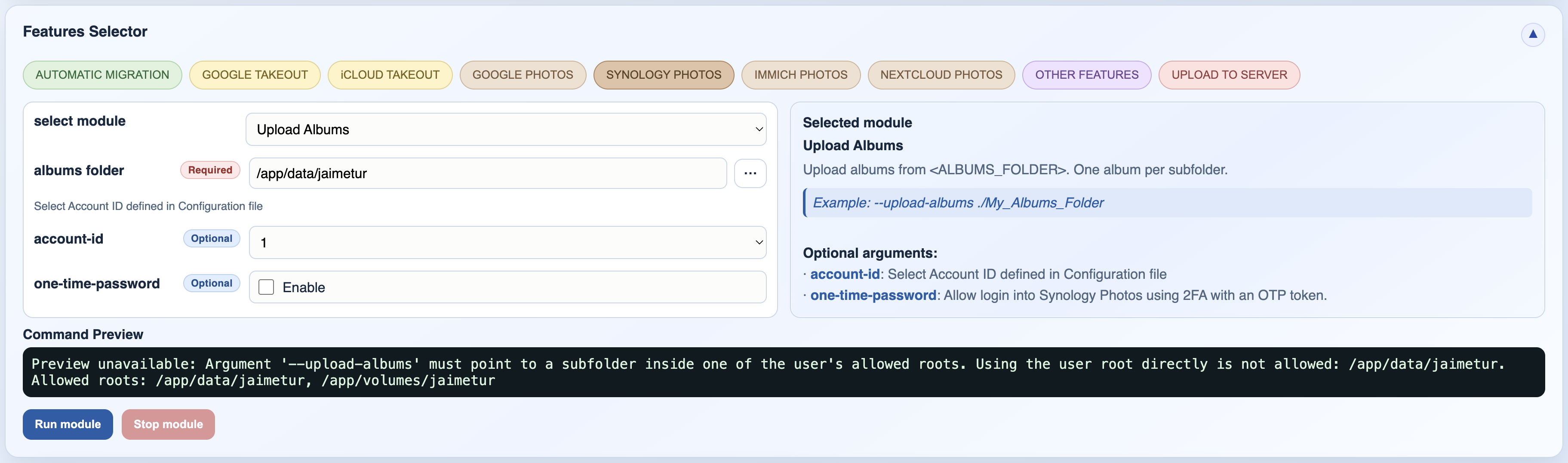
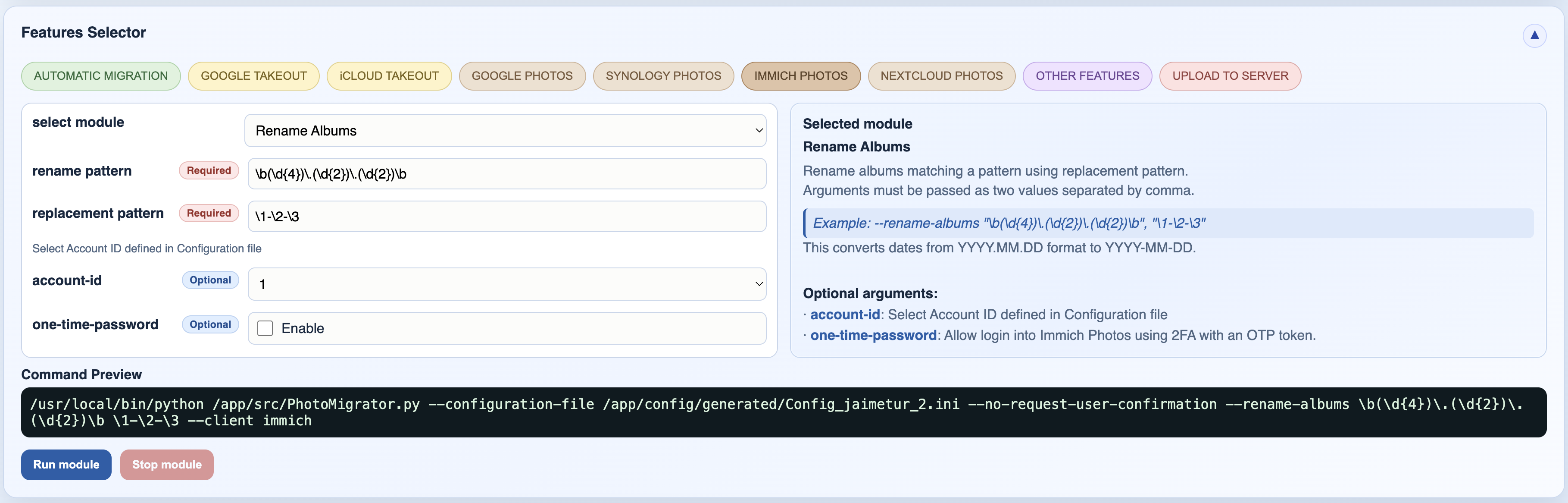
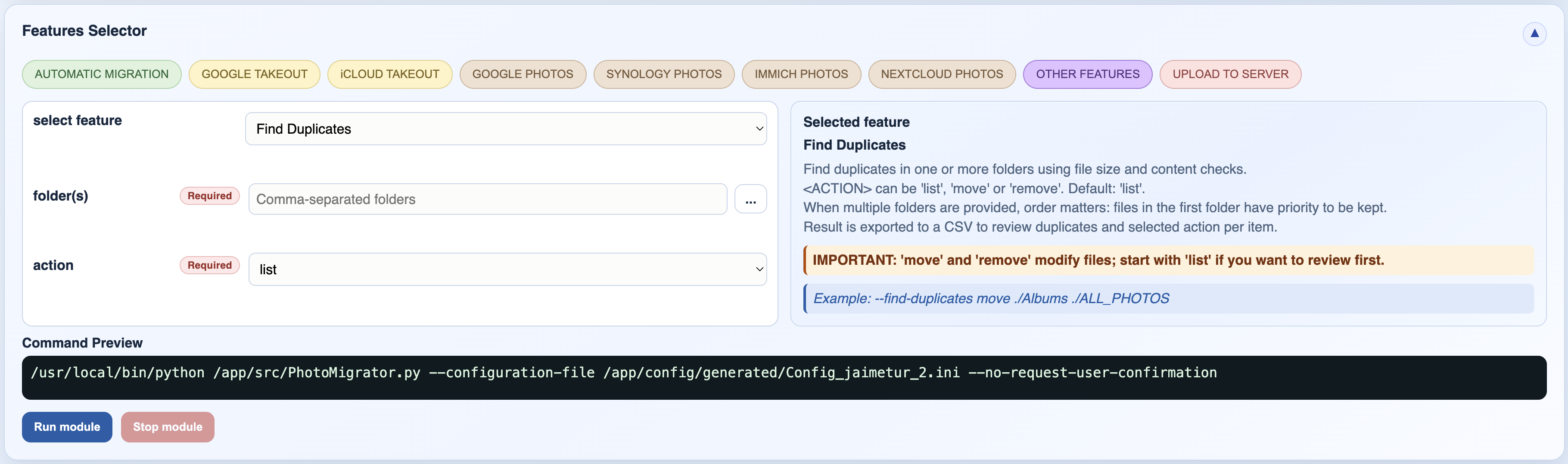
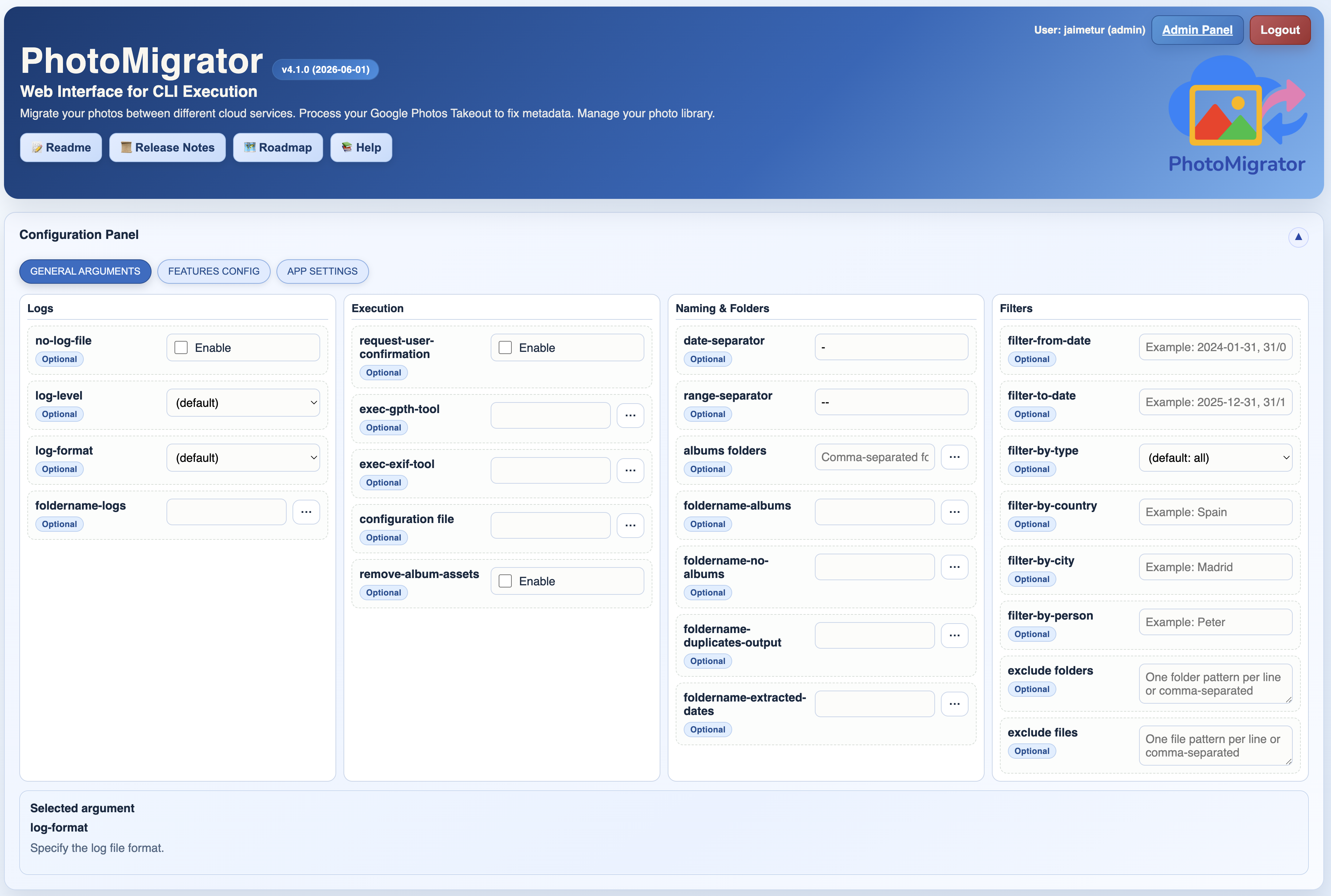
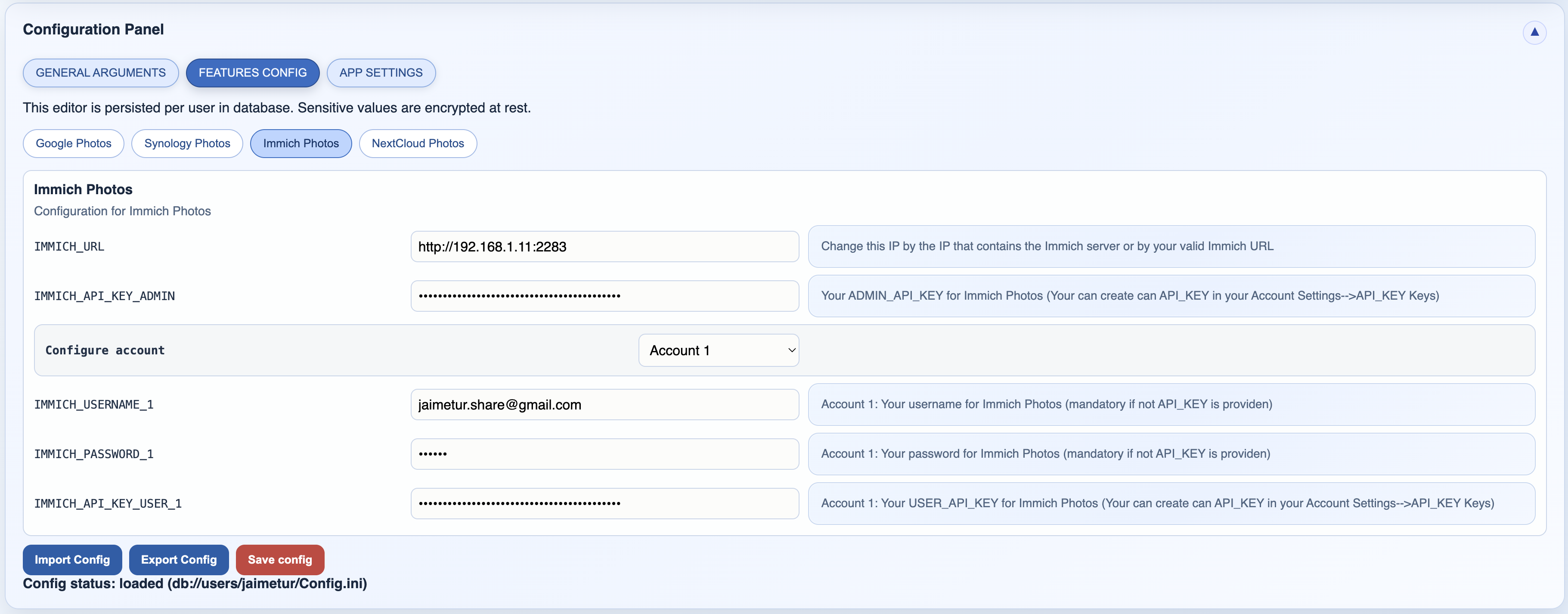
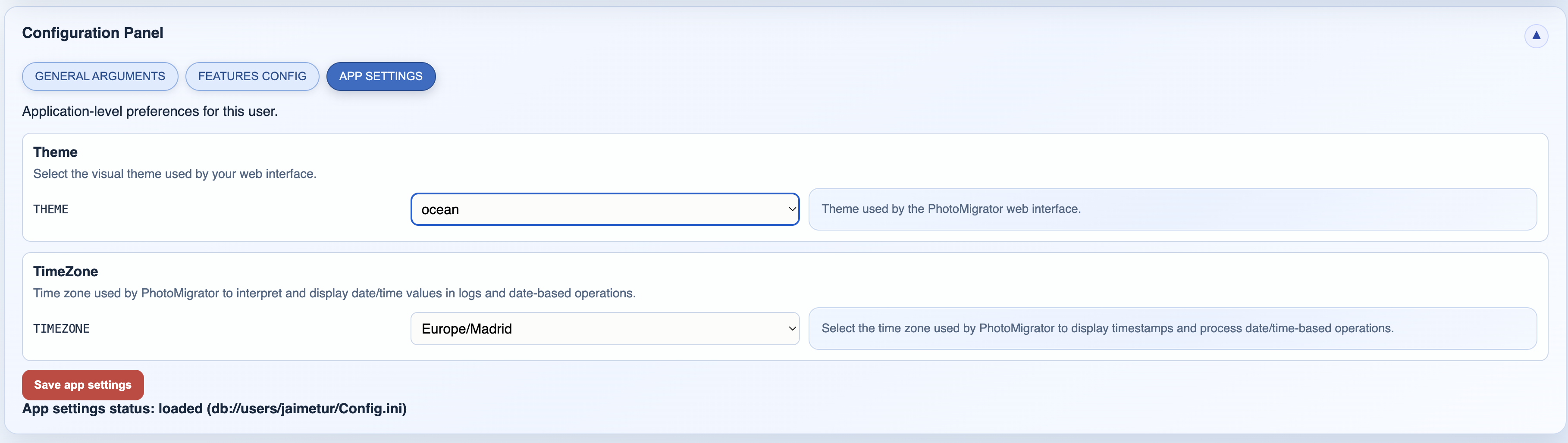
PhotoMigrator is a self-hosted photo migration and management tool that helps users move their photo libraries between different cloud services and local storage. It supports several cloud photo platforms, Google Takeout, and Apple iCloud Takeout. The tool can perform automatic migrations between services, fix and organize Takeout exports by embedding metadata from JSON sidecars into EXIF tags, process iCloud exports to recover original capture dates and rebuild albums, and manage local photo folders. It provides four interfaces: a web UI (FastAPI/uvicorn on port 6078), a desktop GUI (tkinter), a terminal TUI (Textual), and a CLI. Deployment options include Docker Compose, Docker, pre-compiled binaries for Windows/macOS/Linux, and running from source. Configuration is done via a Config.ini file or environment variables. The project is licensed under GPL-3.0 and actively developed.
Should you self-host PhotoMigrator?
PhotoMigrator scores 50/100 on selfhost.directory (how scoring works) and ranks #21 of 41 in Photo Management. It has 268 GitHub stars.
It shipped 19 stable releases in the past year. The latest, v4.7.0, came out on 19 September 2026. New versions land roughly every 7 days.
Setup is moderate: expect some configuration beyond a single command. An official Docker image is available. It is GPL-3.0-licensed and written mostly in Python.
Its closest alternative on selfhost.directory is Ente (81/100, 29 693 stars). It scores higher overall, so compare the two before you pick. See PhotoMigrator vs Ente side by side.
Features
- Automatic Migration
- Cloud Service ManagementGoogle Photos has limited API support (upload/download only)
- Desktop GUI
- Exclusion Filters
- Google Takeout Fixing
- iCloud Takeout Fixing
- Library Organization
- Metadata Fixing
- Multi-Account Support
- Symbolic Links Support
- Terminal TUI
- Web Interface
PhotoMigrator README
More in Backup Management
 plutonOpen-source, self-hosted backup using Restic and Rclone for encrypted incremental backups across 70+ cloud providers with web UI, 3-2-1 replication, and 2FA.
 portabaseSelf-hosted, open-source database backup tool where agents dump PostgreSQL, MySQL, MongoDB and more on a cron, with GFS retention, S3/SFTP storage and restores.
 proxcenter-uiSelf-hosted, open-core platform for managing Proxmox VE clusters and PBS — a VMware vCenter alternative with multi-cluster monitoring, automation, and multi-tenancy.
 ProxMenuxOpen-source menu-driven toolkit for Proxmox VE with self-hosted web dashboard for post-install setup, backup/restore, and health monitoring of homelab infrastructure.
 PVE-UPSSelf-hosted UPS monitor that shuts down Proxmox VE/Backup Server via API tokens. Browser wizard, SNMP/NUT support, no agents or config files.
 restic-rest-serverSelf-hosted HTTP server implementing restic's REST backend API for secure remote backups with authentication, TLS, append-only mode, and Prometheus metrics.
 shieldSHIELD is an open-source, self-hosted backup and restore solution protecting PostgreSQL, MySQL, MongoDB, Redis, Consul, and etcd with encrypted cloud storage.
 St0rSt0r is a self-hosted, open-source web UI enhancing UrBackup with a modern dashboard, multi-customer support, file recovery, and offsite replication — free, MIT-licensed.
 unraid-duplicate-file-handlerSelf-hosted web tool for Unraid that scans drives for duplicate files by relative path, lets you choose copies to keep, then deletes or moves extras with progress.
 unvr-nas-backupA self-hosted Docker container that backs up 24/7 UniFi Protect footage to network storage, turning proprietary video into standard MP4 files organized by camera and date
 UrBackupUrBackup is a self-hosted, open-source client/server backup system for Windows, Linux, and macOS combining image and file backups with deduplication and a web interface.
 VolumeVaultSelf-hosted Laravel app for Docker volume backups with safe restores, scheduled backups, encrypted destinations, and API automation.
0 comments