
Self-host ProxMenux
v1.2.7Menu-driven toolkit for Proxmox VE management and monitoring
- Stars
- 3 241
What is ProxMenux?
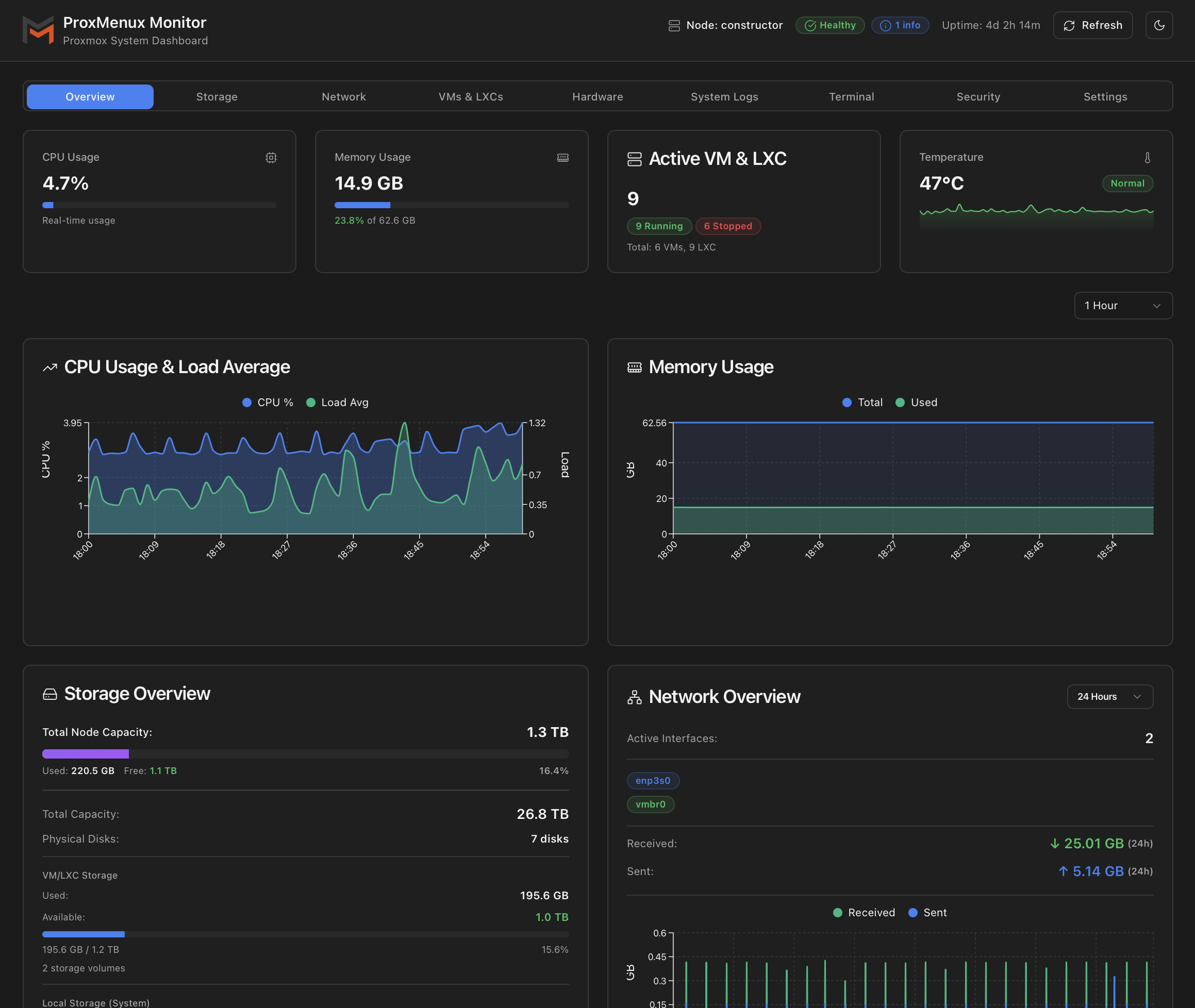
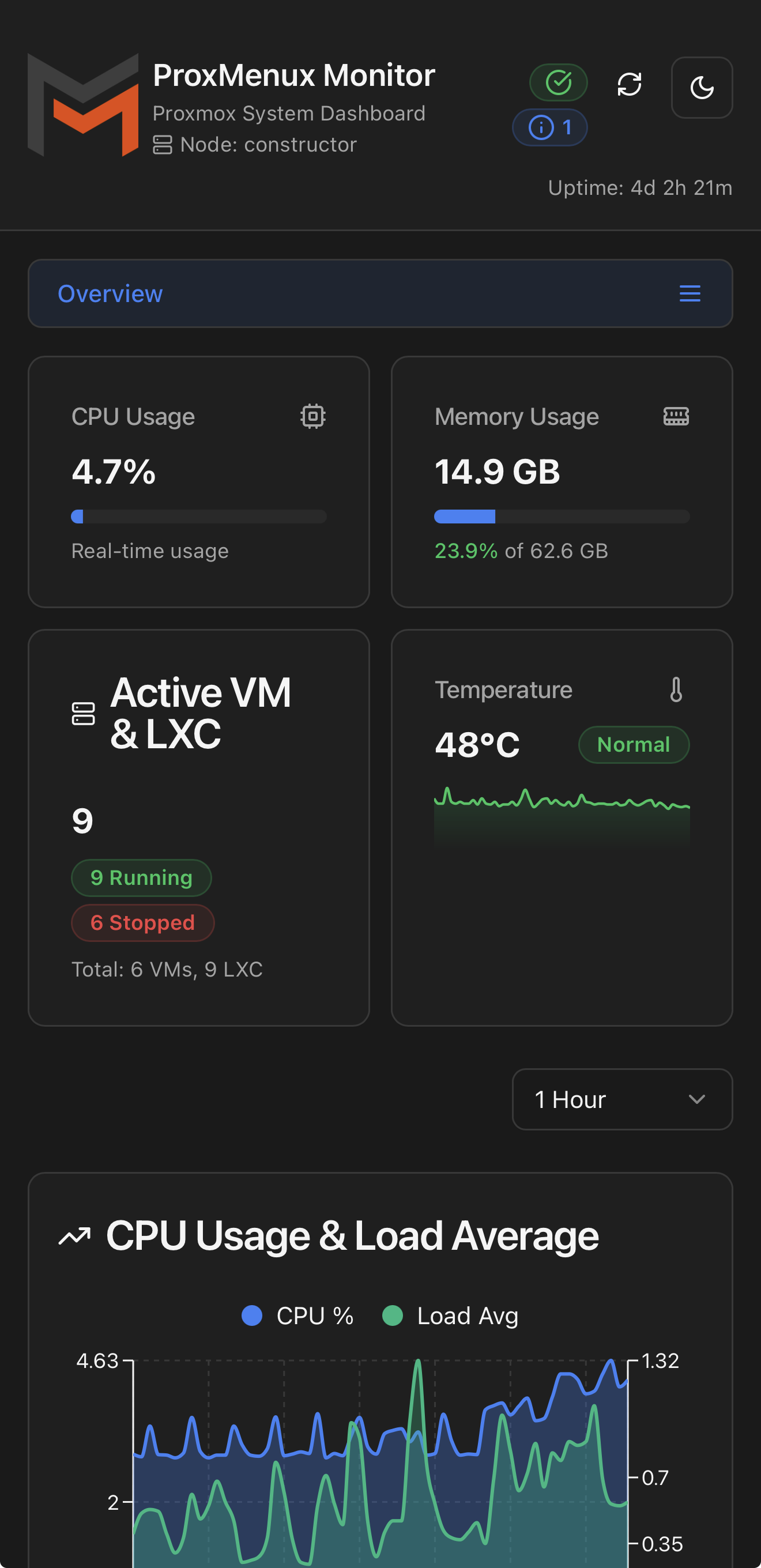
ProxMenux is an open-source tool designed for users who want simplified control over their Proxmox VE infrastructure. It replaces manual wiki lookups and forum troubleshooting by presenting common tasks as numbered menu items. The software covers VM and container creation with preset configurations, GPU passthrough workflows, disk operations including SMART testing, storage registration across multiple protocols, network diagnostic tools, and security hardening utilities. For monitoring, it provides a real-time dashboard showing system resources, virtual machine status indicators, and proactive health scans. Both components install via single bash command directly on the Proxmox server.
Should you self-host ProxMenux?
ProxMenux scores 62/100 on selfhost.directory (how scoring works) and ranks #2 of 15 in Backup Management. It has 3 241 GitHub stars.
It shipped 5 stable releases in the past year. The latest, v1.2.7, came out on 26 October 2026. New versions land roughly every 3 weeks.
Setup is moderate: expect some configuration beyond a single command. It is GPL-3.0-licensed and written mostly in Python.
Its closest alternative on selfhost.directory is fogproject (63/100, 1 689 stars). It scores higher overall, so compare the two before you pick. See ProxMenux vs fogproject side by side.
ProxMenux README
More in Backup Management
 PVE-UPSSelf-hosted UPS monitor that shuts down Proxmox VE/Backup Server via API tokens. Browser wizard, SNMP/NUT support, no agents or config files.
 restic-rest-serverSelf-hosted HTTP server implementing restic's REST backend API for secure remote backups with authentication, TLS, append-only mode, and Prometheus metrics.
 shieldSHIELD is an open-source, self-hosted backup and restore solution protecting PostgreSQL, MySQL, MongoDB, Redis, Consul, and etcd with encrypted cloud storage.
 St0rSt0r is a self-hosted, open-source web UI enhancing UrBackup with a modern dashboard, multi-customer support, file recovery, and offsite replication — free, MIT-licensed.
 unraid-duplicate-file-handlerSelf-hosted web tool for Unraid that scans drives for duplicate files by relative path, lets you choose copies to keep, then deletes or moves extras with progress.
 unvr-nas-backupA self-hosted Docker container that backs up 24/7 UniFi Protect footage to network storage, turning proprietary video into standard MP4 files organized by camera and date
 UrBackupUrBackup is a self-hosted, open-source client/server backup system for Windows, Linux, and macOS combining image and file backups with deduplication and a web interface.
 VolumeVaultSelf-hosted Laravel app for Docker volume backups with safe restores, scheduled backups, encrypted destinations, and API automation.
 VykarSelf-hosted Rust backup tool with YAML config, multiple storage backends, built-in scheduling, desktop GUI, and WebDAV for browsing snapshots.
 WPMgrWPMgr is a self-hosted, open-source WordPress fleet management platform for backups, updates, uptime monitoring, image optimization, and security from one dashboard.
 aeternaAeterna is a self-hosted, open-source dead man's switch that delivers messages and files if you stop checking in. Encrypts data at rest with AES-256-GCM.
 alt-coreAlterante Core is a self-hosted, open-source decentralized filesystem in Java for file discovery, automated backup/replication, and web-based file access.
0 comments