
Self-host MeshLAN
v1.14.10P2P-first virtual LAN with relay fallback
- Stars
- 238
- Ports
- 4242 (Nebula UDP overlay traffic), 8443 (Pairing and admin HTTPS API)
- Requires
- Microsoft Edge WebView2 Runtime, Nebula, Nebula-cert, SQLite (embedded)
What is MeshLAN?
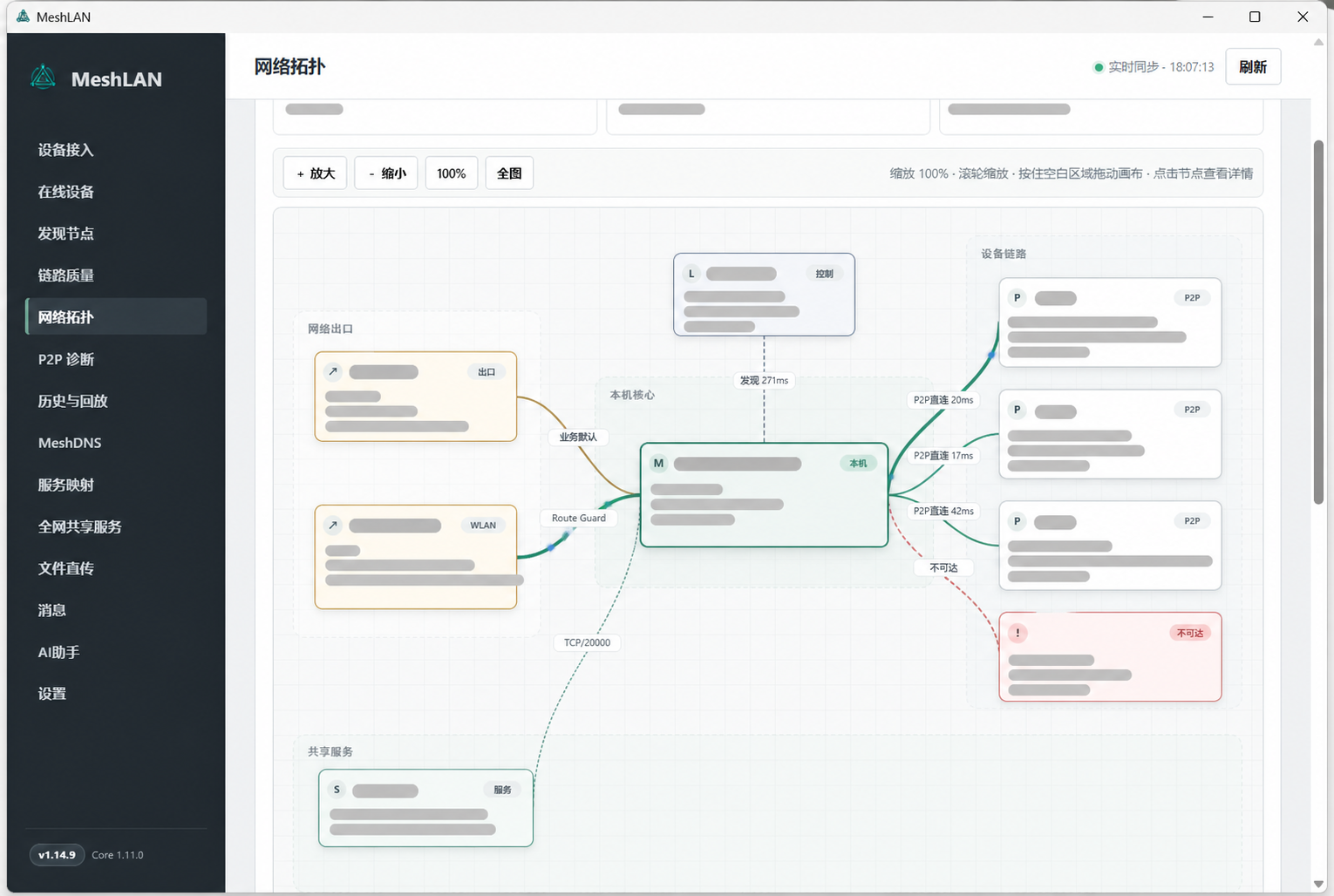
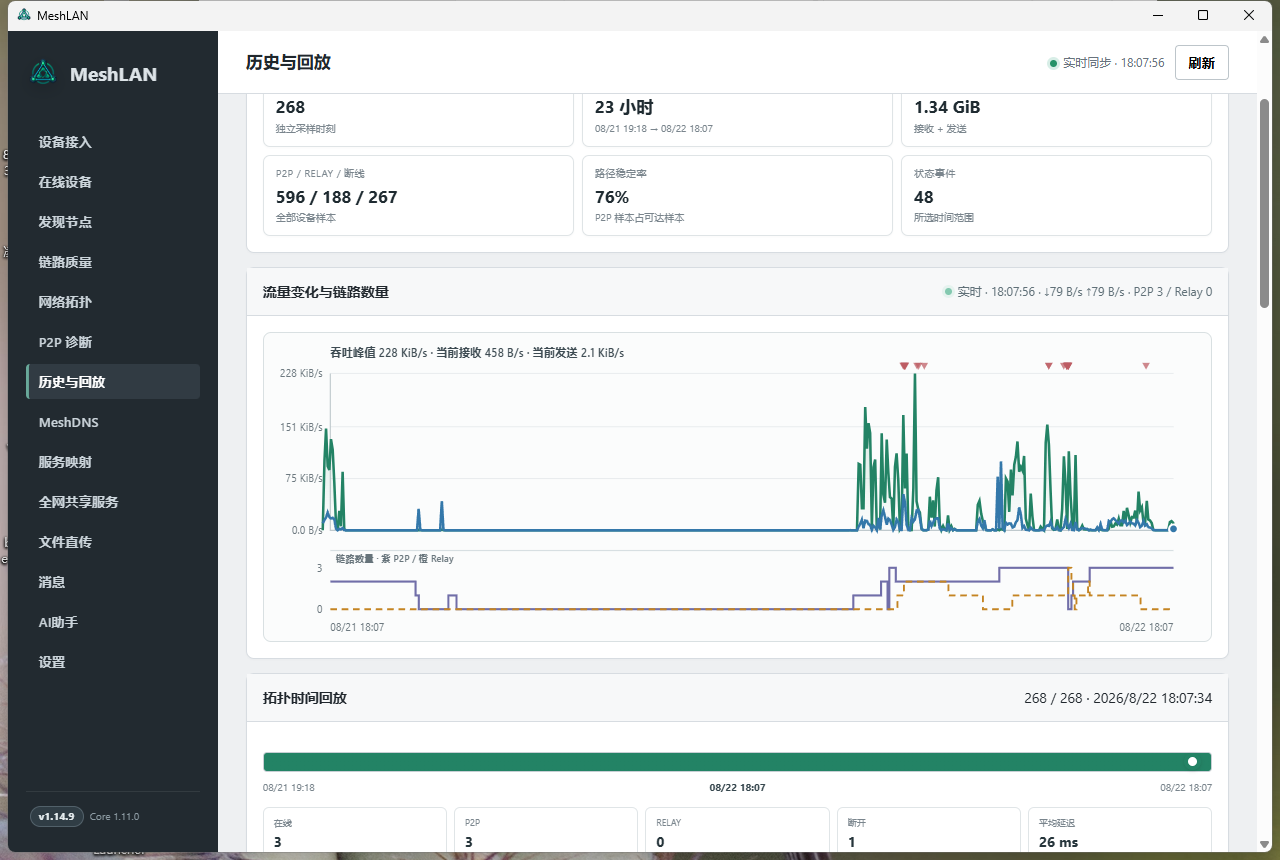
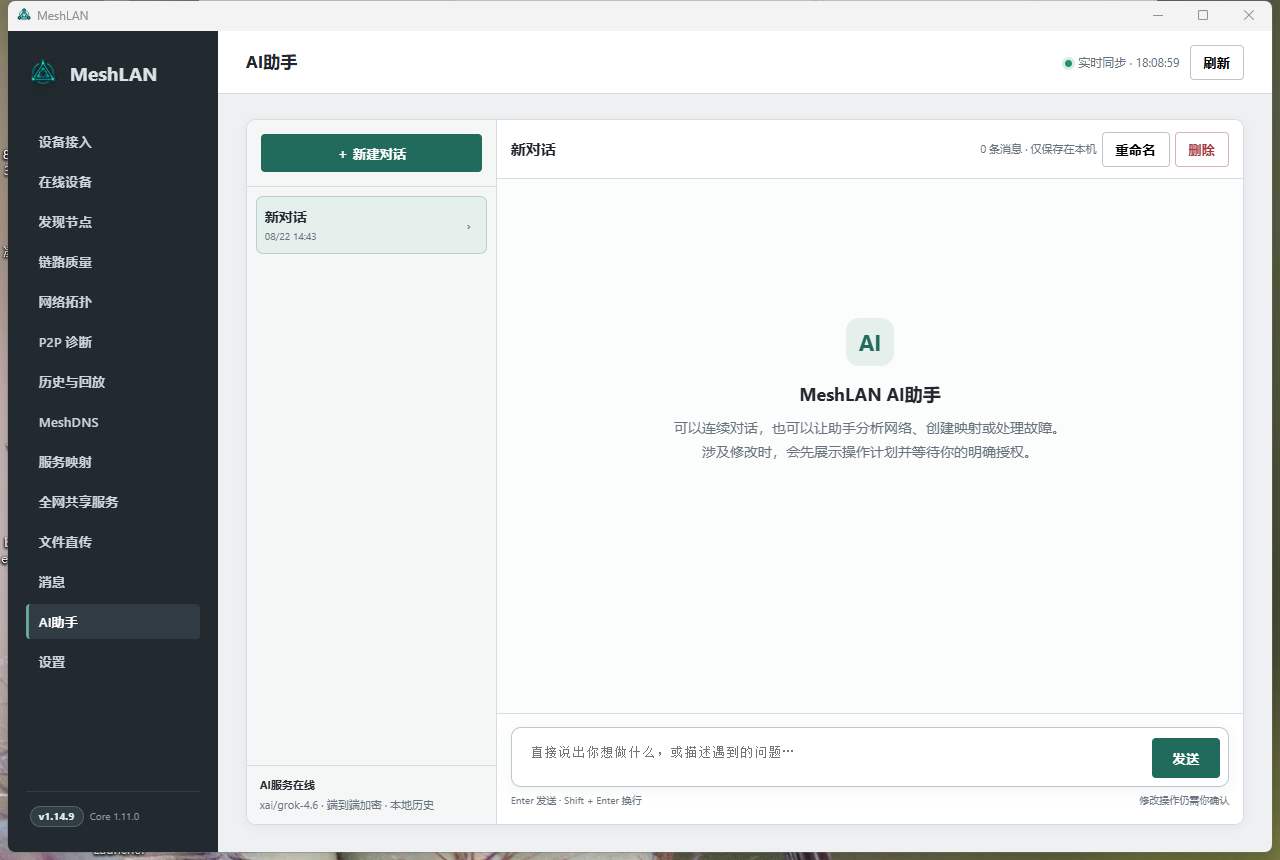
MeshLAN creates a self-hosted virtual LAN using SlackHQ Nebula as its encrypted overlay. Windows users run a native WebView2 client that enrolls against a Linux control server you host. The control plane handles device authorization, certificate issuance, Lighthouse discovery, and optional relay nodes for NAT traversal. Devices receive stable Mesh IPs and can publish localhost TCP/UDP services to the mesh with custom ports, health checks, and access approval workflows. MeshDNS provides human-readable names like alice.mesh and chat.alice.mesh, while an HTTPS gateway serves .mesh HTTP services portlessly. File transfers travel peer-to-peer; the control server only relays metadata. The admin UI offers live topology, historical replay, per-user AI token accounting, and an AI assistant that keeps model keys on the server and requires user confirmation for every mutation. Updates are signed with Ed25519 manifests and verified via SHA-256 with automatic rollback. The project is written in Go 1.26, uses SQLite for local history, and supports Simplified/Traditional Chinese, English, and Japanese. No Docker images are published; deployment is via pre-built binaries and systemd on Linux, and a portable executable on Windows.
Should you self-host MeshLAN?
MeshLAN scores 44/100 on selfhost.directory (how scoring works) and ranks #45 of 56 in VPN. It has 238 GitHub stars.
It shipped 1 stable release in the past year. The latest, v1.14.10, came out on 24 August 2026.
Setup is advanced: plan for several services and some ongoing maintenance. It is MIT-licensed and written mostly in Go.
Its closest alternative on selfhost.directory is Tailscale (84/100, 38 215 stars). It scores higher overall, so compare the two before you pick. See MeshLAN vs Tailscale side by side.
Features
- Access approval
- AI Assistant
- Direct file transfer
- History and replay
- HTTPS gateway
- Live observability
- MeshDNS
- Multi-language interface
- Multi-node control plane
- P2P-first connectivity
- Per-user token accounting
- Relay fallback
- Secure updates
- Service mapping
- Virtual LAN
MeshLAN README
More in Network
 nas-doctorSelf-hosted NAS monitoring with SMART health, Docker, ZFS, UPS tracking, service checks, and Prometheus metrics — runs on Unraid, TrueNAS, Synology, Proxmox, Kubernetes.
 Nova ServerSelf-hosted proxy running Xray, sing-box, AmneziaWG behind one port with trilingual admin panel, multi-user management, Iran bridge tunnels, Telegram bot.
 nsdNSD is an open-source, self-hosted authoritative DNS name server optimized for speed and reliability, used by root servers and TLD registries worldwide.
 NumaSelf-hosted DNS resolver as a single binary with ad blocking, DNSSEC, .numa local domains, and REST API for developer overrides.
 openHop RepeaterSelf-hosted, open-source MeshCore repeater with web dashboard, policy engine, multiple radio backends, and MQTT/LetsMesh/Home Assistant integration.
 OpenSMTPDOpenSMTPD is a free, open-source SMTP server for Linux, BSD, and macOS with TLS and privilege separation.
 proxvn_tunnel_fullProxVN Tunnel is a self-hosted Go tunneling tool exposing local services via HTTPS subdomains, TCP, UDP, and WebDAV — with a free public server and no session limits.
 scanopyNetwork diagrams that update themselves
 SimpleXSimpleXMQ is an open-source, self-hosted message broker implementing the SimpleX Messaging Protocol for private communication without user IDs.
 socks5-proxy-serverA self-hosted SOCKS5 proxy server with optional authentication and a Telegram bot for user management, deployed via Docker Compose with Redis backend.
 traefik-crowdsec-bouncerSelf-hosted HTTP service that integrates CrowdSec decisions with Traefik v2 ForwardAuth middleware to block malicious IPs before they reach your services.
 Traefik-Koptraefik-kop is an open-source agent that reads Docker labels and publishes them to Redis for Traefik, enabling multi-host routing without Swarm or Kubernetes.
0 comments