Self-host Mediarium
v3.8.0All-in-one media manager for movies, shows, music and books
- Stars
- 271
- Ports
- 8264 (Web UI), 58264 (Torrent client (TCP/UDP))
ghcr.io/rdborg/mediarium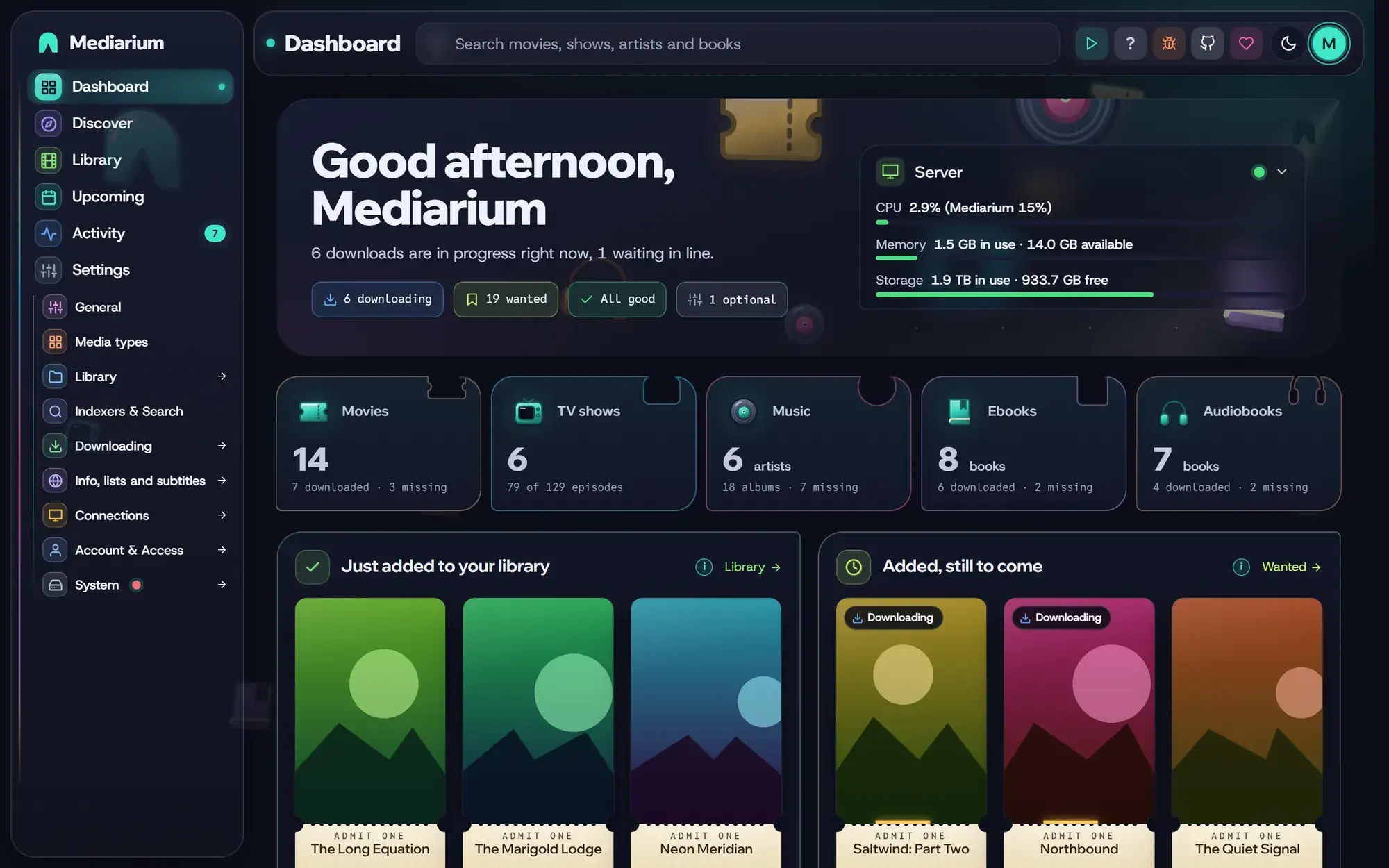
What is Mediarium?
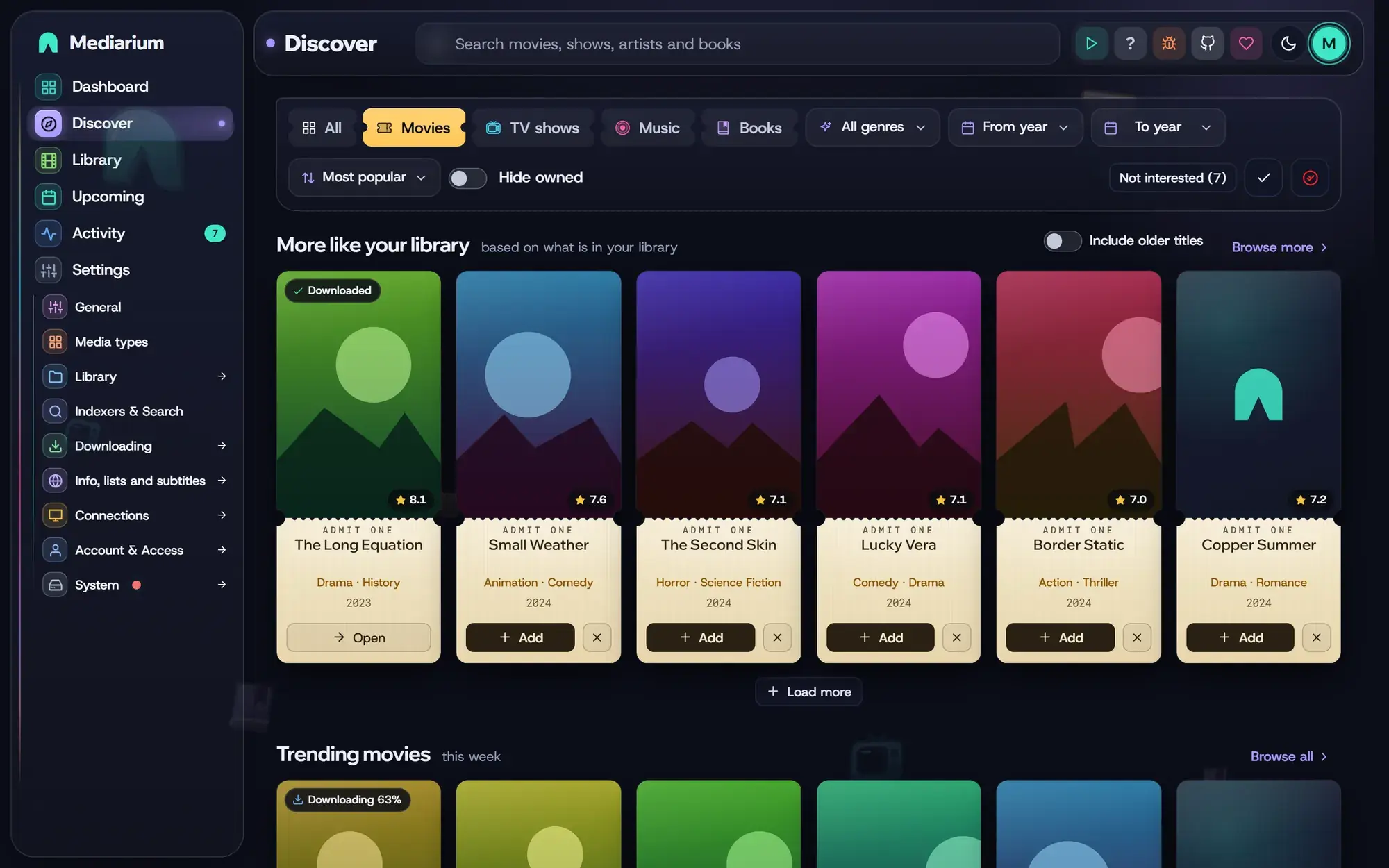
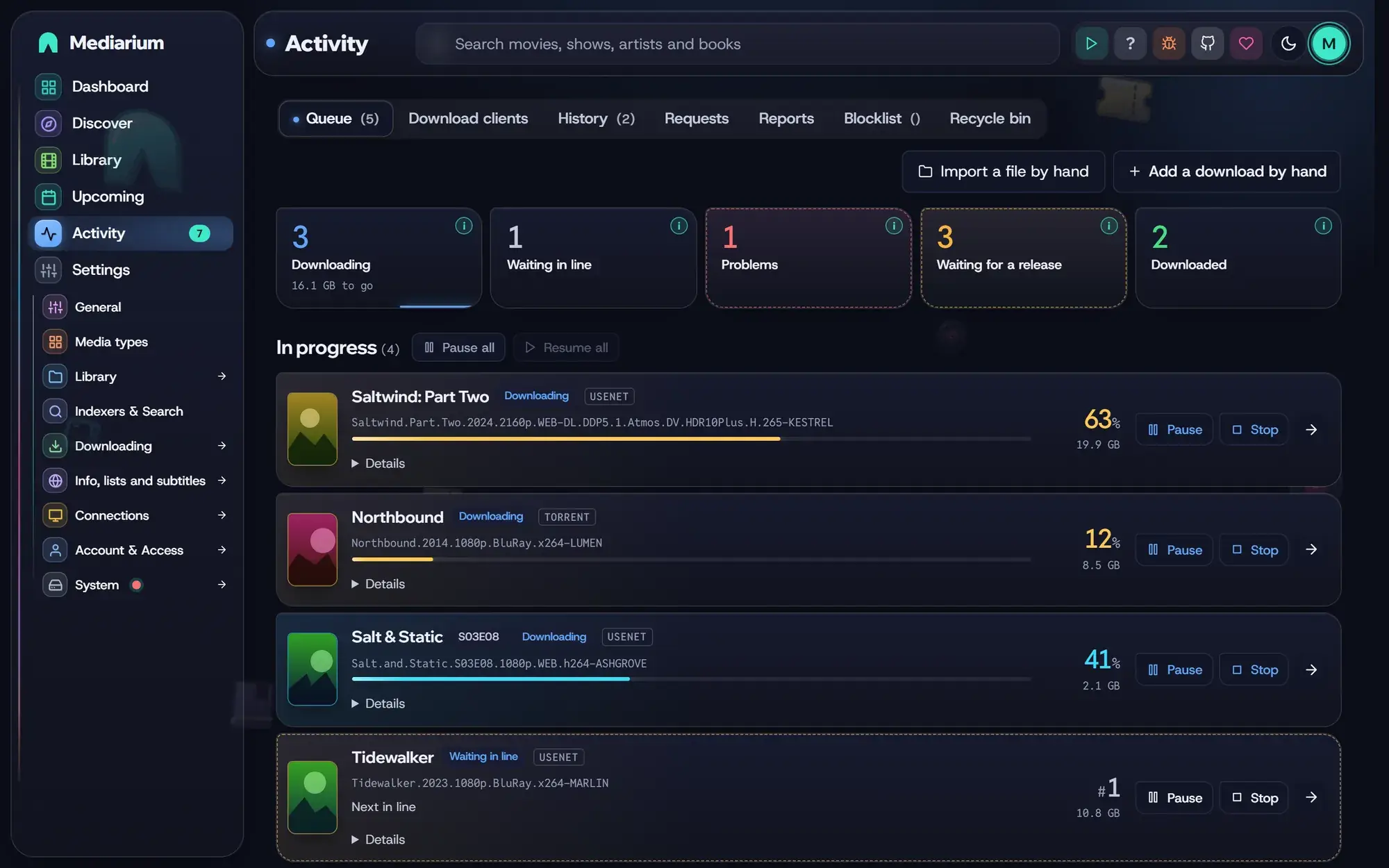
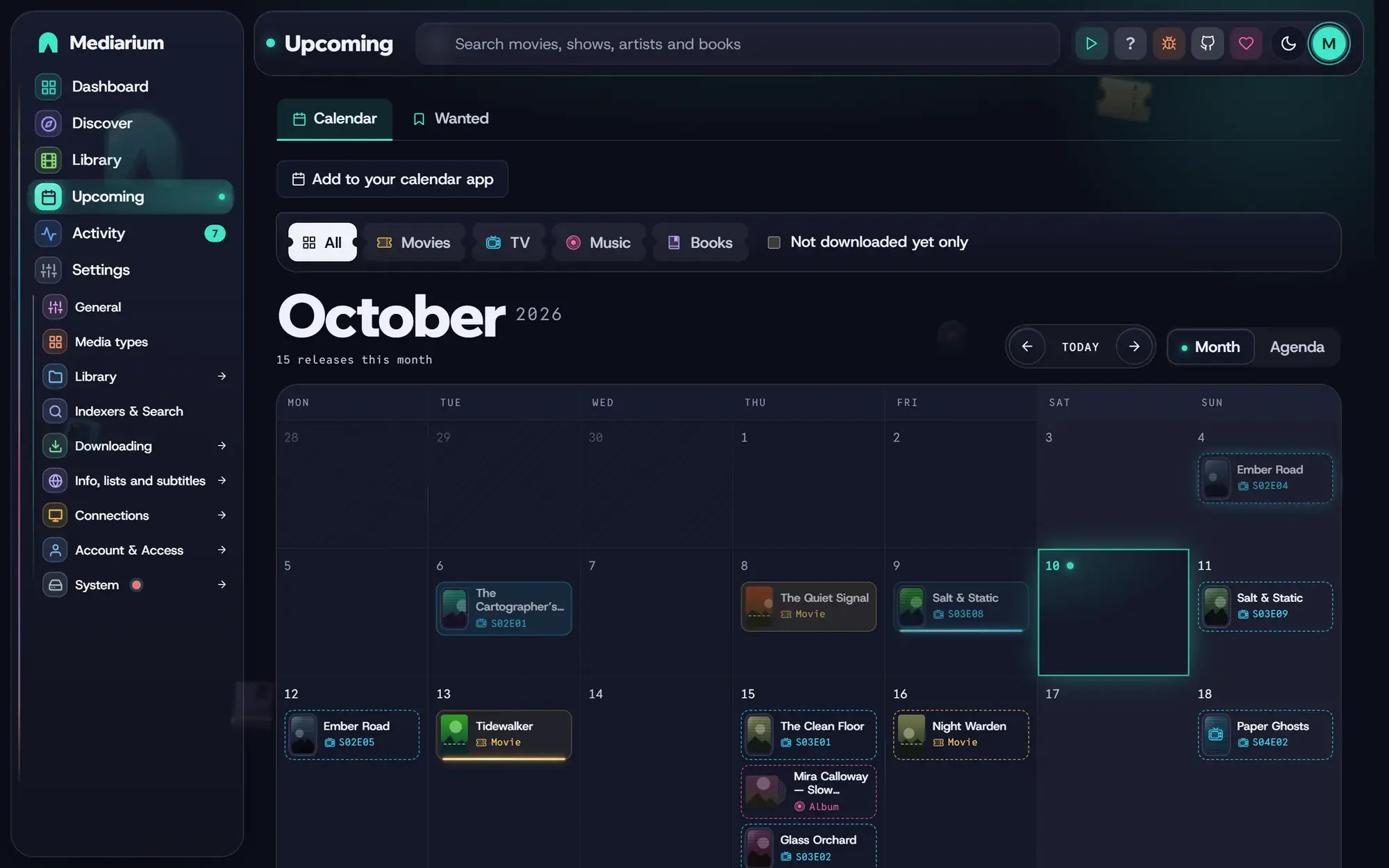
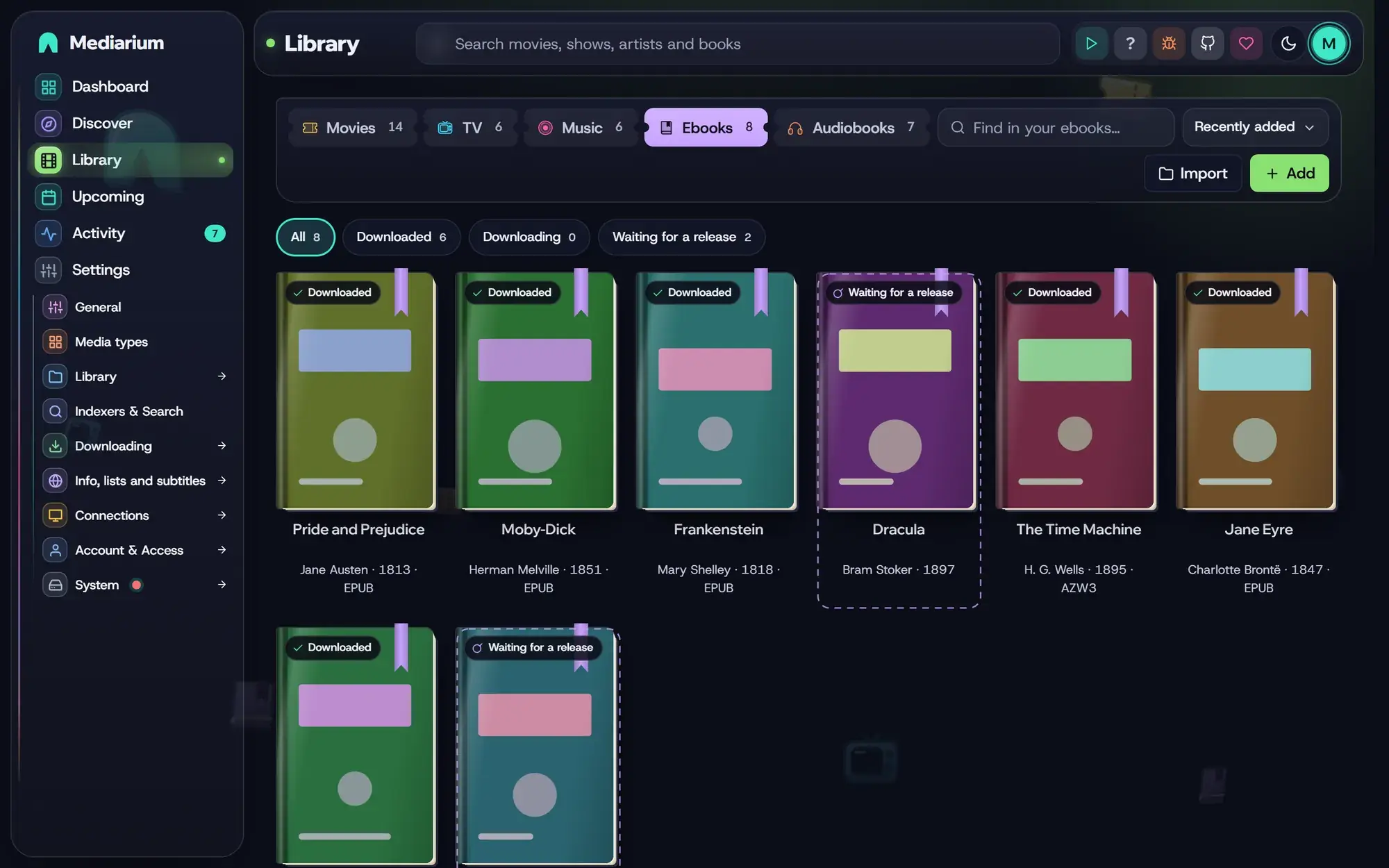
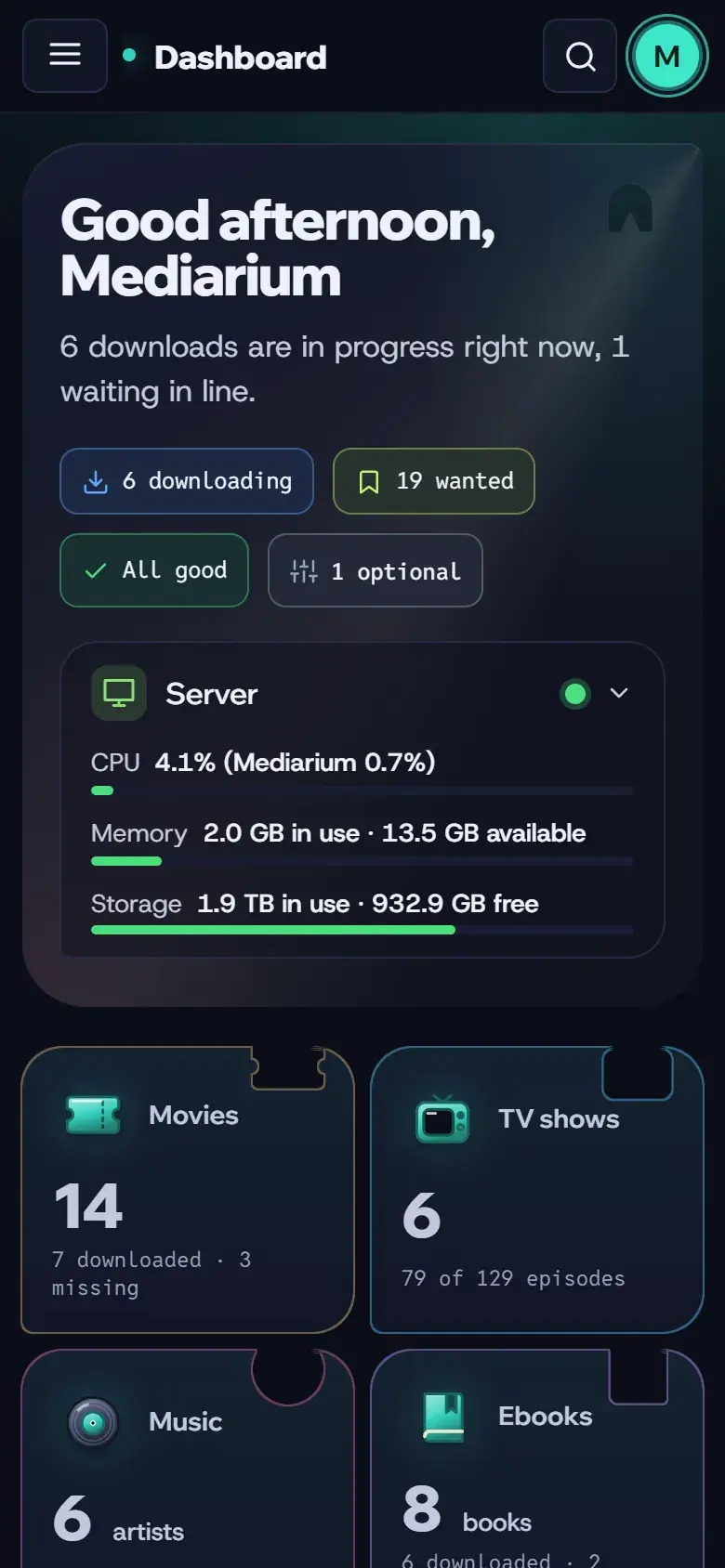
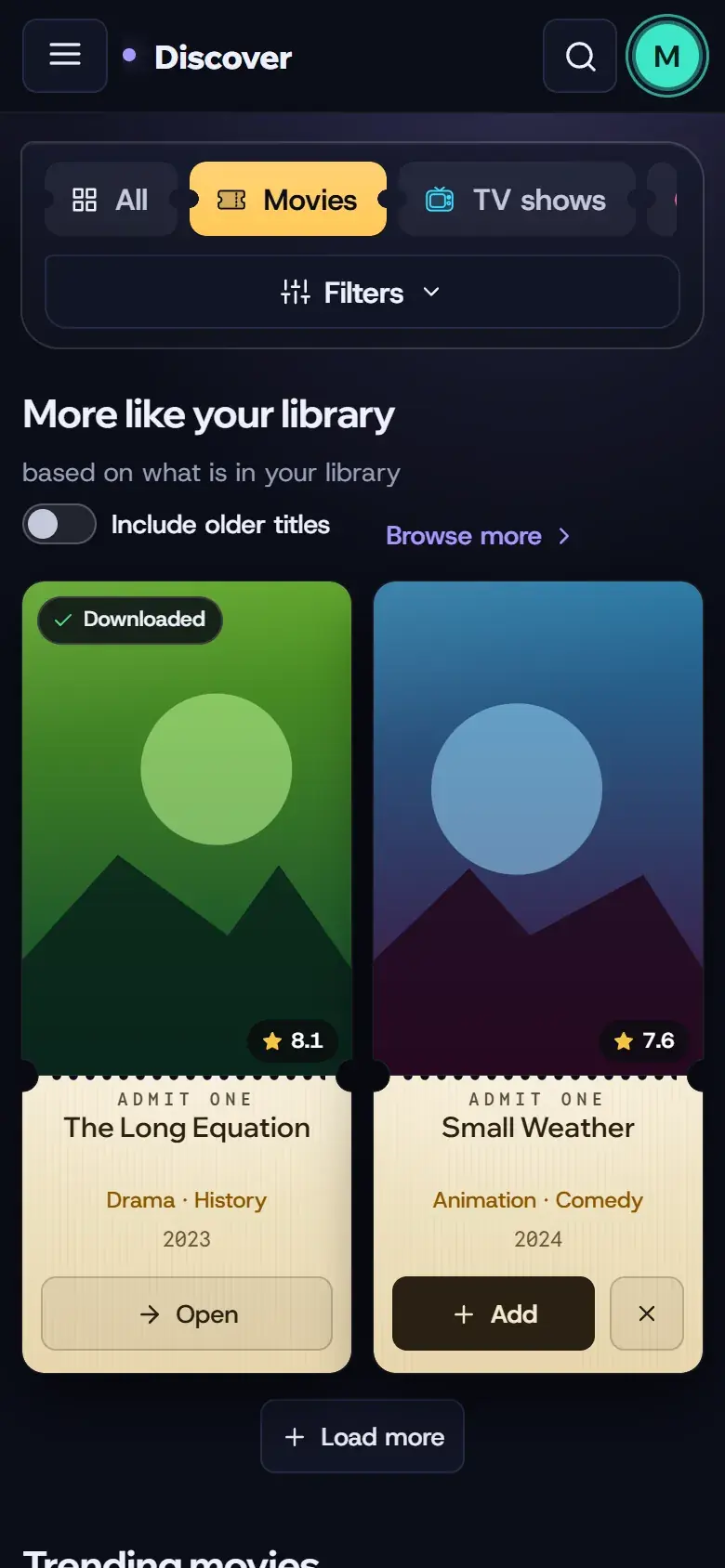
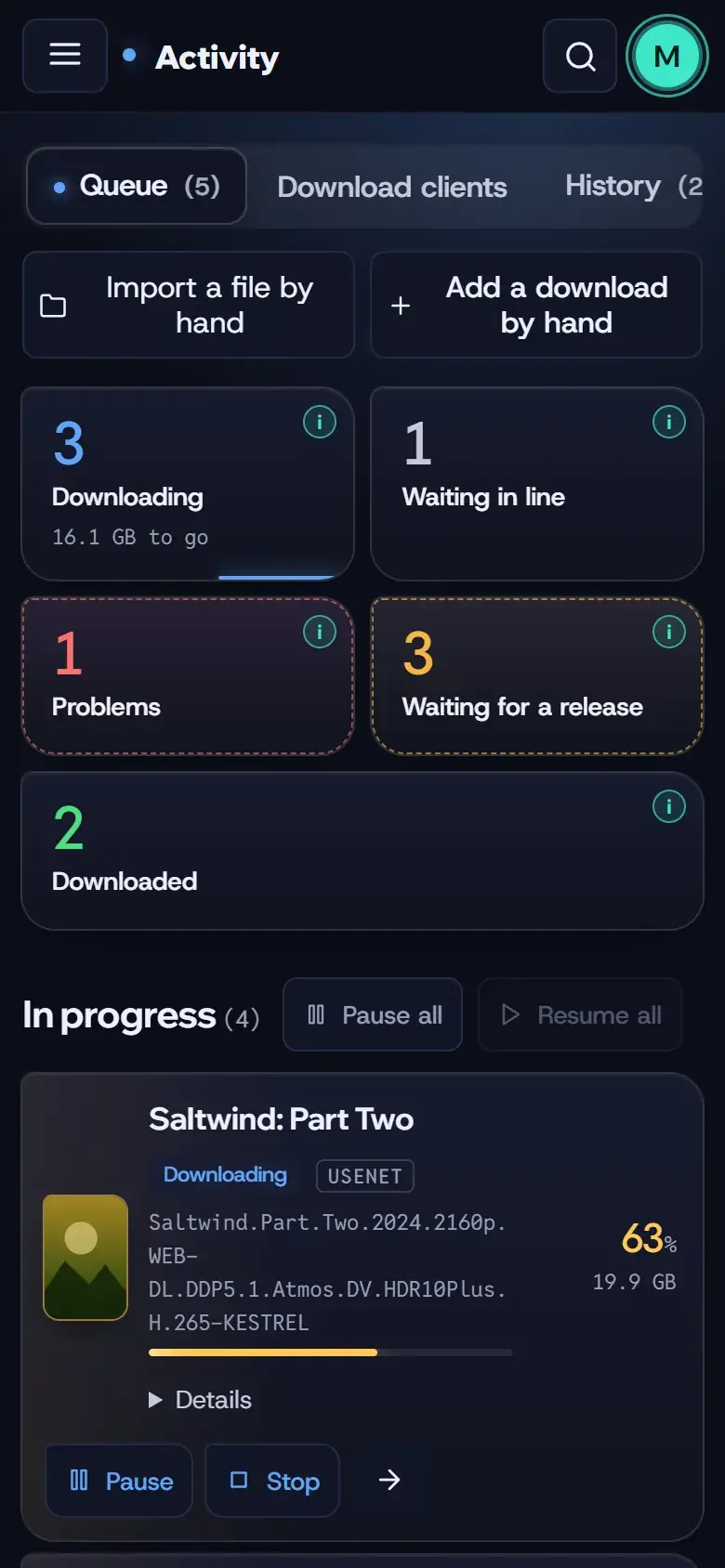
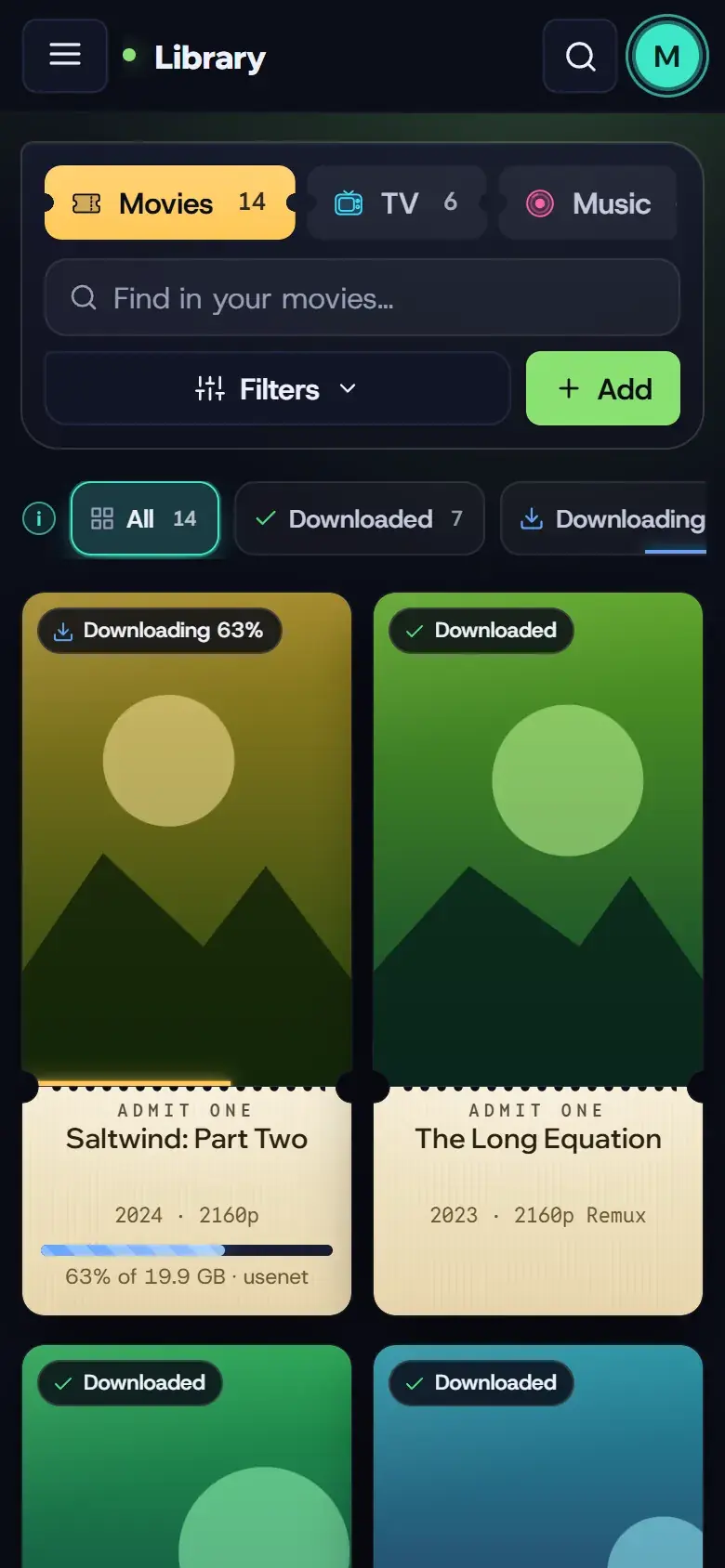
Mediarium combines multiple media management tools into one Docker container. It manages movies, TV shows (including anime and daily shows), music, ebooks and audiobooks with built-in Usenet and torrent downloaders, a WireGuard VPN for torrents, configurable quality tiers with upgrade paths, subtitle fetching from OpenSubtitles and SubDL, family accounts with granular permissions and request workflows, and integration with Plex, Jellyfin, Emby, Silo, Audiobookshelf and Kavita. It imports settings and libraries from existing *arr apps without moving files. The web UI includes a built-in ebook reader and audiobook player that sync progress across devices, a discover section with recommendations, a calendar of upcoming releases, and Prometheus metrics. It runs on any 64-bit Linux system including Synology, Unraid, QNAP, TrueNAS SCALE, Raspberry Pi, and Docker Desktop on Windows/Mac. Licensed under AGPL-3.0 with no paid tiers or ads.
Should you self-host Mediarium?
Mediarium scores 52/100 on selfhost.directory (how scoring works) and ranks #60 of 142 in Media Management. It has 271 GitHub stars.
It shipped 10 stable releases in the past year. The latest, v3.8.0, came out on 27 October 2026. New versions land roughly every 1 days.
Setup is moderate: expect some configuration beyond a single command. An official Docker image is available. It is AGPL-3.0-licensed and written mostly in Go.
Its closest alternative on selfhost.directory is SoulSync (67/100, 2 321 stars). It scores higher overall, so compare the two before you pick. See Mediarium vs SoulSync side by side.
Features
- Built-in ebook reader and audiobook player
- Built-in torrent client
- Built-in Usenet downloader
- Cloud Backups
- Family accounts with permissions
- Import from other apps
- Import lists
- IRC announce
- Media Server Integration
- Notifications
- OPDS and Kobo sync
- Quality profiles with upgrades
- Request portal
- Subtitle fetching
- WireGuard VPN for torrents
Mediarium README
FAQ
Which languages does it speak?
UI in English, Spanish, German, French, Brazilian Portuguese, European Portuguese. Titles/posters in ~30 languages. Server messages in English only.
Can I put it behind a reverse proxy, or under a sub-path?
Yes. Put behind HTTPS, never open port 8264 directly. Can run under sub-path like /mediarium with one setting. Can take sign-in from Authelia or Authentik.
What data does it send anywhere?
Nothing by default. Only contacts services you configure, TMDB for metadata, GitHub for updates (can disable). Optional anonymous daily ping (random ID, version, rough device sizes) if admin consents; totals public at mediarium.app/stats.
How do updates and backups work?
Checks GitHub daily for new versions. Update by pulling new image or Update now button for signed releases. Nightly backup of settings/database; download anytime or send to S3/WebDAV. Media files never included.
How does the VPN work?
Built-in WireGuard client for torrents only. Paste .conf from provider. If VPN stops, torrents wait; optional kill switch blocks them without VPN. No extra container permissions needed.
Does it do subtitles?
Yes, once enabled. Searches OpenSubtitles and SubDL in chosen languages, plus add-ons. Prefers exact-file match and can shift out-of-sync subtitles.
What about music, ebooks and audiobooks?
They work end-to-end once enabled under Media types. Ebooks open in built-in reader, audiobooks in player with progress sync. Music has playlists and synced lyrics. OPDS catalogue and Kobo sync available.
Is there a mobile app?
No separate app. The web UI works on phones and can be added to home screen. Mediarium Books installs as its own PWA. Notifications reach phone from browser. Radarr/Sonarr phone apps (nzb360, LunaSea, Ruddarr) can connect.
Can several people use it?
Yes. Everyone gets their own account with granular permissions: add titles or send requests, pick releases, search, retry, get subtitles, play, and choose media types. Viewer role for read-only. Request limits per day/week and read-only API keys for dashboards.
How much memory and disk space does it need?
Image is ~20 MB; no published minimum. Runs on Raspberry Pi (unpacking slow). Keep settings and media on proper disk, not SD card. Optional Cloudflare helper in -full image takes ~250 MB RAM.
What does it run on?
Anything that runs Docker on 64-bit Linux (Intel/AMD or ARM): regular server, Synology, QNAP, Unraid, TrueNAS SCALE, CasaOS/ZimaOS, OpenMediaVault, Portainer, Raspberry Pi 3/4/5 with 64-bit OS. Windows/Mac via Docker Desktop for testing.
Can I keep my existing library, or move from Radarr and Sonarr?
Yes. Point Mediarium at your folders and it adds what's there without moving files. Settings > System > Move from other apps reads setup from Radarr, Sonarr, Prowlarr, SABnzbd and more.
Does it work with Plex, Jellyfin, Emby, Silo and Kodi?
Plex, Jellyfin, Emby and Silo are told to scan when a download is ready; every title gets a Watch button. Books go to Audiobookshelf and Kavita. Kodi reads NFO and artwork files.
Which Usenet providers and indexers work?
Any Usenet provider with a normal server address and login, and any indexer offering a Newznab API. Torrent sites work via community list or Torznab (Prowlarr, Jackett).
Does it provide any content? Is it legal?
No, Mediarium doesn't host, store, index, upload, stream or provide any media. You add your own indexers and are responsible for what you download.
More in Download Management
 media-rollerSelf-hosted Go server that downloads social media videos via yt-dlp, transcodes to MP4, and includes an iOS Shortcut for one-click saving to Photos.
 Mediary ScoutSelf-hosted AI agent that fetches media into your cloud drives (Quark, 115, GuangYaPan, 123, Tianyi), verifies transfers, and auto-fills missing episodes.
 MedusaOpen-source TV show manager you run yourself: it searches torrent and Usenet providers, grabs episodes via download clients, and organizes them for Kodi, Plex and Emby.
 MeTubeAn open-source, self-hosted web UI for yt-dlp: paste links from YouTube and hundreds of other sites, queue whole playlists, and follow channel subscriptions.
 mouseholeMousehole is a self-hosted service that keeps your MyAnonamouse seedbox IP updated automatically, with a web UI to manage the MAM cookie and trigger manual updates.
 MoviePilotSelf-hosted, open-source NAS media automation that searches private tracker sites, downloads via qBittorrent, renames files and refreshes Plex, Emby or Jellyfin.
 MularrSelf-hosted web UI for aMule with qBittorrent/Torznab APIs for Sonarr/Radarr, Telegram downloads, and retro themes.
 MusicseerrSelf-hosted music request app replacing Lidarr by driving slskd/Usenet, verifying via AcoustID, serving via OpenSubsonic/Jellyfin APIs.
 musikatSelf-hosted open-source music downloader that searches Deezer or Spotify, fetches audio from YouTube, tags files, and saves to Navidrome or local downloads.
 myjdownloaderSelf-hosted open-source web UI for JDownloader that replaces my.jdownloader.org by proxying to JDownloader's local API.
 Mylar3Mylar3 is a self-hosted, open-source automated comic book downloader for NZB/torrents with watchlist monitoring, client integration, renaming and metatagging.
 MyTubeOpen-source and self-hosted: grab videos from yt-dlp's 1000+ sites (YouTube, Bilibili, Twitch included), build collections, watch in-browser, auto-download subscriptions.
0 comments