
Self-host juice-shop
v20.4.0Insecure web app for security trainings, demos and CTFs
docker run --rm -p 127.0.0.1:3000:3000 bkimminich/juice-shop- Stars
- 14 451
- CPU
- 200 millicpu CPU
- RAM
- 256 MB RAM
- Storage
- 300 MB free disk space
- Port
- 3000 (HTTP web server hosting the Juice Shop UI and its REST API)
bkimminich/juice-shop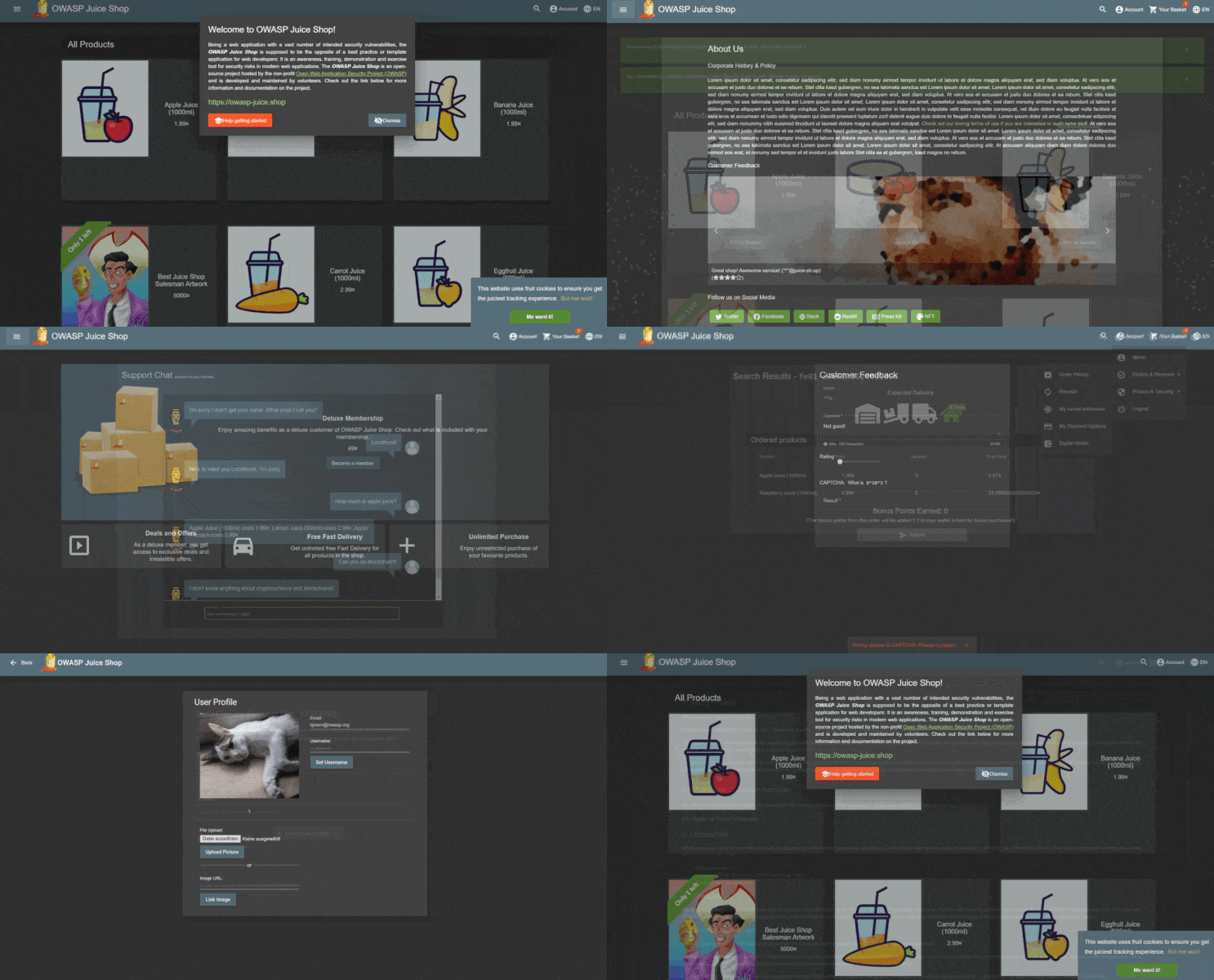
What is juice-shop?
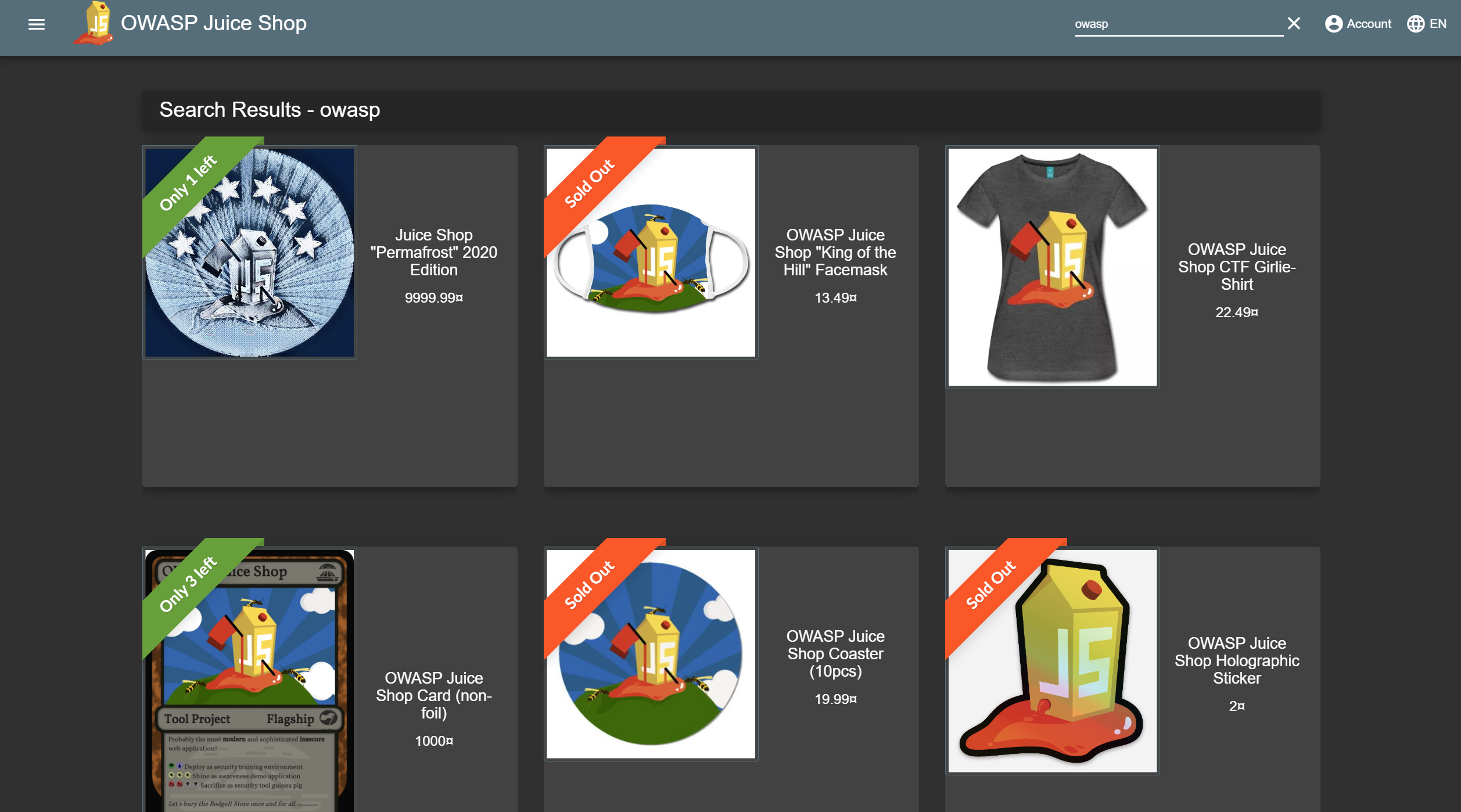
OWASP Juice Shop is an intentionally vulnerable web application used for security training, awareness demos, CTF events and as a guinea-pig target for scanners and pentest proxies. Built on Node.js, Express and Angular, it pretends to be an online juice store whose catalogue, chat, photo wall and payment screens hide flaws spanning the whole OWASP Top Ten plus many mistakes found in real products. Every flaw is a graded hacking challenge; solved ones appear on a score board that also unlocks hints, and newcomers can be walked through several tasks by the built-in Hacking Instructor, while over 20 challenges add a coding challenge where you fix the broken source. Trainers can re-brand the entire application from a YAML config file (name, logo, theme, products, texts), switch on Capture-the-Flag flag codes, receive a POST payload for each solved challenge through a webhook and scrape a Prometheus metrics endpoint with a bundled Grafana dashboard. Run it with the published Docker image on port 3000, from packaged Windows/macOS/Linux archives, from a git clone with npm start, or via the Vagrant box and a Kubernetes manifest. Note the documented limits: one server instance is meant for a single hacker, the database is wiped and repopulated on every start (progress lives in browser storage or a local backup), and some chatbot and Web3 challenges need an external LLM endpoint (local Ollama by default) or an Alchemy Ethereum testnet key. It is MIT licensed and comes with a free companion guide that documents every vulnerability and solution.
juice-shop alternatives
 pwnflowPwnflow is a self-hosted, open-source mind-mapping platform for cybersecurity professionals to visualize and track security testing methodologies with AI assistance.Comparepwnflow with juice-shop
 TRAWLA self-hosted, open-source scraping engine that bypasses JavaScript challenges and CAPTCHAs using an adaptive tier engine with HTTP-first approach and MCP support.CompareTRAWL with juice-shop
 lab-dashSelf-hosted dashboard for managing homelab applications with customizable grid layout, service health checks, and PWA support.Comparelab-dash with juice-shop
 swiftwaveSwiftWave: self-hosted open source PaaS for deploying apps on any server. Alternative to Heroku/Netlify/Render with 1GB RAM min and integrated app store.Compareswiftwave with juice-shop
 HackTricksSelf-hosted cybersecurity knowledge base for pentesting, red team, cloud security. Open-source educational resource by carlospolop with multi-language support.CompareHackTricks with juice-shop
 FideliusSelf-hosted, open-source web app for one-time secret sharing with end-to-end browser encryption. Server never sees plaintext; secrets deleted after one view.CompareFidelius with juice-shop
 web-checkOpen-source, self-hosted OSINT tool that runs 44 checks on any URL - DNS, TLS, headers, ports, CVEs, trackers - through a web UI or plain API.Compareweb-check with juice-shop
 dashwiseAn open-source, self-hosted homelab dashboard with built-in auth and OIDC SSO, widgets, link groups with uptime monitoring, RSS news and Spotlight-style search.Comparedashwise with juice-shop
Should you self-host juice-shop?
juice-shop scores 81/100 on selfhost.directory (how scoring works) and ranks #2 of 78 in Security. It has 14 451 GitHub stars, +375 in the last 30 days.
It shipped 8 stable releases in the past year. The latest, v20.4.0, came out on 8 November 2026. New versions land roughly every 6 weeks.
Setup is easy: most people get it running in one sitting. An official Docker image is available. It is MIT-licensed and written mostly in Typescript.
Its closest alternative on selfhost.directory is CyberChef (83/100, 36 422 stars). It scores higher overall, so compare the two before you pick. See juice-shop vs CyberChef side by side.
Features
- AI chatbot in the support chat
- Capture-the-Flag mode
- Challenge-solved webhook
- Coding challenges
- Deliberately vulnerable web application (OWASP Top Ten)
- Full re-branding via YAML configuration
- Guided tutorials (Hacking Instructor)
- Hacking challenges with score board
- Internationalized UI
- Local backup of hacking progress
- REST API for challenge data
- Self-healing reset on startup
juice-shop README



The most trustworthy online shop out there. (@dschadow) — The best juice shop on the whole internet! (@shehackspurple) — Actually the most bug-free vulnerable application in existence! (@vanderaj) — First you 😂😂then you 😢 (@kramse) — But this doesn't have anything to do with juice. (@coderPatros' wife)
More in Security
 jumpserverSelf-hosted, open-source PAM platform (GPL-3.0) giving IT teams browser access to SSH, RDP, Kubernetes and databases with session recording, RBAC and MFA.
 KanidmSelf-hosted, open-source identity management server in Rust: passkey/WebAuthn login, OAuth2/OIDC SSO, an app portal, read-only LDAPS, RADIUS, SSH keys and Unix auth.
 KasmVNCSelf-hosted, open-source web remote desktop: streams a Linux session to any browser over WebSocket or WebRTC, with DLP controls, multi-user permissions, and a REST API.
 Kerberos AgentSelf-hosted, open-source video surveillance agent for IP cameras with motion detection, recording, and cloud storage. Runs on Raspberry Pi, Docker, Kubernetes.
 keycloakKeycloak is a self-hosted, open-source IAM server that adds authentication and single sign-on to applications using standard protocols.
 keygateSelf-hosted license server for software businesses with Stripe billing, usage metering, floating licenses, and update distribution for desktop apps.
 keyperKeyper is a self-hosted, open-source credential manager encrypting secrets client-side with AES-256-GCM and Argon2id, storing them in your own database.
 knockerKnocker is a self-hosted, open-source SPA gateway for homelabs that opens services on-demand via authenticated knock requests, integrating with Caddy or Firewalld.
 Knock-KnockA self-hosted honeypot that captures live bot attacks across many protocols with a real-time dashboard and threat intel feeds.
 konarrKonarr is a self-hosted, open-source SCA platform for monitoring container dependencies and vulnerabilities using Syft, Grype, and Trivy.
 KrawlKrawl is a self-hosted web honeypot with AI-generated deception pages to detect and track malicious crawlers. Features a real-time dashboard and firewall integration.
 labcaSelf-hosted private Certificate Authority based on Let's Encrypt's Boulder, providing automated HTTPS certificates for internal apps via ACME with a web GUI.
0 comments