
Self-host inertia
v0.7.0Self-hosted continuous deployment CLI and daemon for teams
- Stars
- 153
What is inertia?
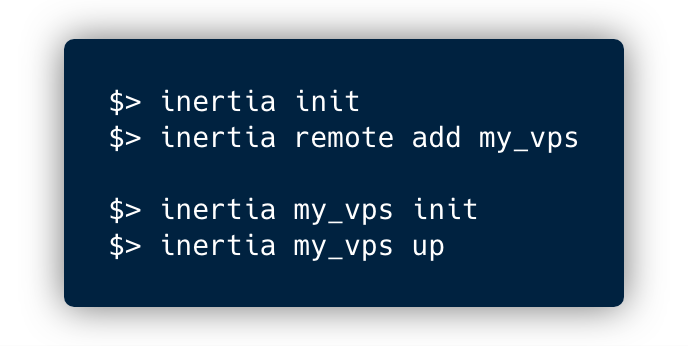
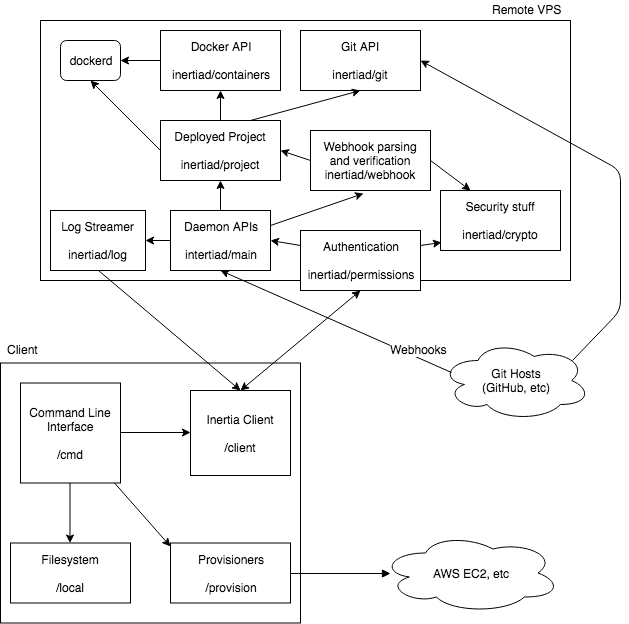
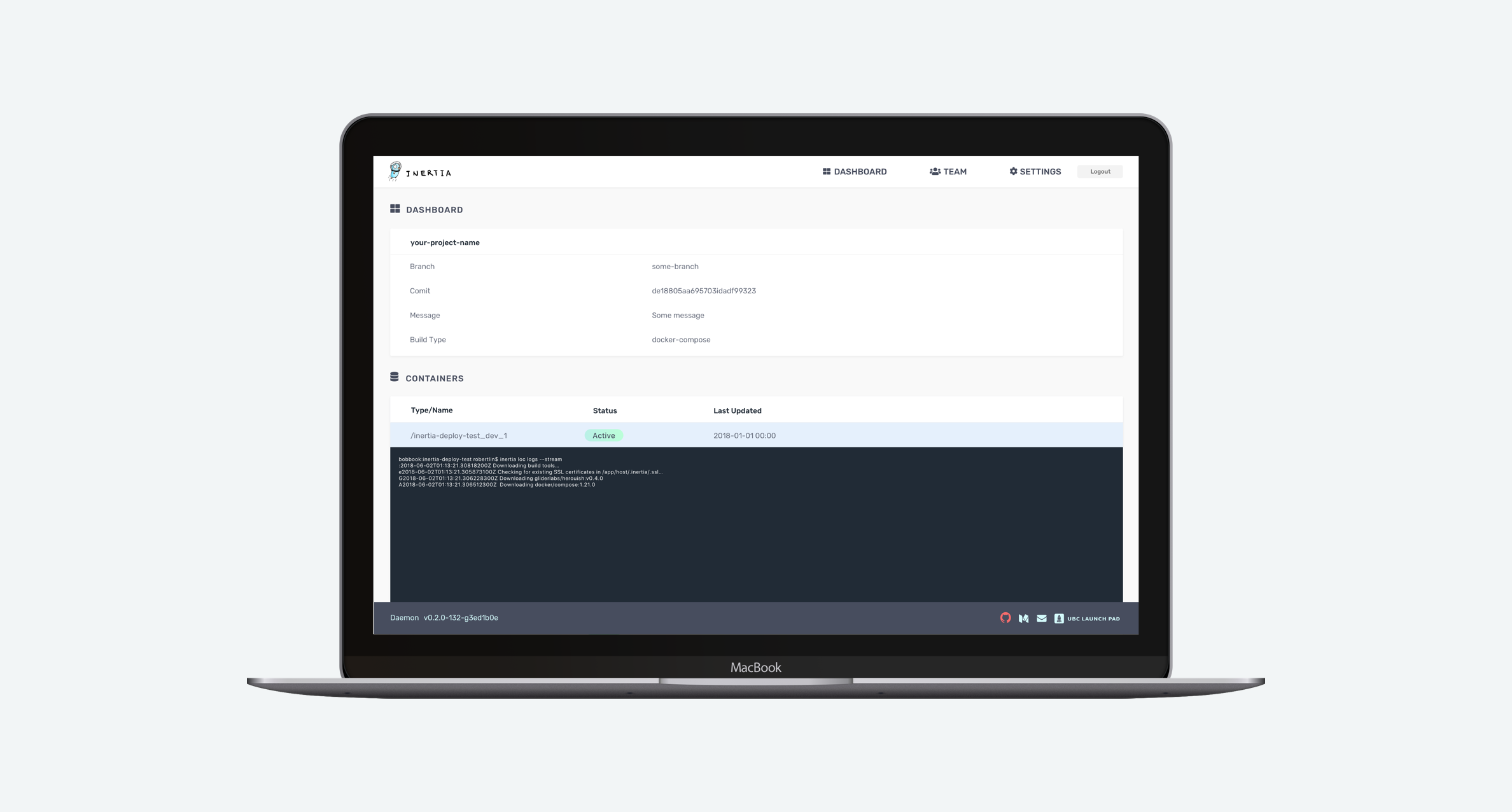
Inertia is a self-hosted continuous deployment platform created by UBC Launch Pad for small teams and projects. It provides a cross-platform command-line interface and a server-side daemon that runs on your own virtual private server. When you push code to GitHub, GitLab, or Bitbucket, the daemon receives webhook events and automatically builds and deploys your Docker or docker-compose applications. The tool works with any Linux VPS provider and includes built-in provisioning for AWS EC2 instances. Features include team access control, two-factor authentication, branch-specific deployments, environment variable management, and a REST API for automation. The daemon operates in Docker and can launch containers alongside itself by connecting to the host Docker socket. Installation options include binary downloads, Homebrew, or building from source with Go. The project uses the MIT license but remains in beta (v0.7.0) with no new releases since 2020.
Should you self-host inertia?
inertia scores 42/100 on selfhost.directory (how scoring works) and ranks #27 of 28 in CI/CD. It has 153 GitHub stars.
There was no stable release in the past 12 months, so check the repository's recent activity before you rely on it.
Setup is advanced: plan for several services and some ongoing maintenance. It is MIT-licensed and written mostly in Go.
Its closest alternative on selfhost.directory is jenkins (82/100, 26 704 stars). It scores higher overall, so compare the two before you pick. See inertia vs jenkins side by side.
Features
- Branch deployment
- Built-in VPS provisioning
- Cloud-agnostic VPS deployment
- Continuous deployment via webhooks
- Cross-platform CLI
- Docker-in-Docker daemon
- Environment variable management
- File transfer for config files
- REST API
- Team access control
- Two-factor authentication
inertia README
More in Deployment
 iVentoySelf-hosted PXE/HTTPBoot server for network OS installation across 110+ systems with BIOS/UEFI/Secure Boot support.
 netboot.xyzSelf-hosted iPXE network boot server offering 60+ OS installers and utilities. Fetches images from upstream mirrors at boot time without requiring local ISO storage.
 nixopusNixopus is a self-hosted, open-source deployment platform with an AI agent that handles the full app lifecycle.
 OCS Inventory NGSelf-hosted IT asset inventory and software deployment with agents for Windows, Linux, macOS, Android. Web console, REST API, SNMP, LDAP/CAS, plugins.
 openrunA self-hosted GitOps platform that deploys web apps to Docker or Kubernetes using declarative config, with built-in SSO, RBAC, and database bindings.
 PatchPandaSelf-hosted tool that monitors GitHub releases for Docker Compose services, shows release notes and breaking changes, groups containers for coordinated updates.
 PipewrightA self-hosted CI/CD platform that unifies build pipelines, server deployment, and container management in a single Go binary.
 ptah-serverSelf-hosted Fair Source PaaS replacing Heroku/Vercel, using Docker Swarm for apps, databases, backups, and SSL. Archived, development paused.
 QuantumRun your own Platform-as-a-Service: deploy GitHub projects, databases, templates, and Compose stacks on a private server with a web UI.
 seelfOpen-source self-hosted PaaS deploying Docker Compose apps with auto HTTPS, subdomains, and a web dashboard — alternative to Heroku, Dokku, Caprover, Coolify.
 Single ServerSelf-hosted, open-source deployment platform turning a Linux box into a git-push-to-production platform with Docker, Kamal, Tailscale, Cloudflare, and GitHub.
 tempsSelf-hosted open-source deployment platform replacing Vercel, Sentry, PostHog with one Rust binary — deploy from git, track errors, monitor uptime, analyze traffic.
0 comments