
Self-host Hoppscotch
2026.10.1 docker-compose up -d- Stars
- 80 829
- CPU
- 2 vCPU
- RAM
- 2GB
- Storage
- 5GB
- Port
- 3000
- Requires
- PostgreSQL
ghcr.io/hoppscotch/hoppscotch
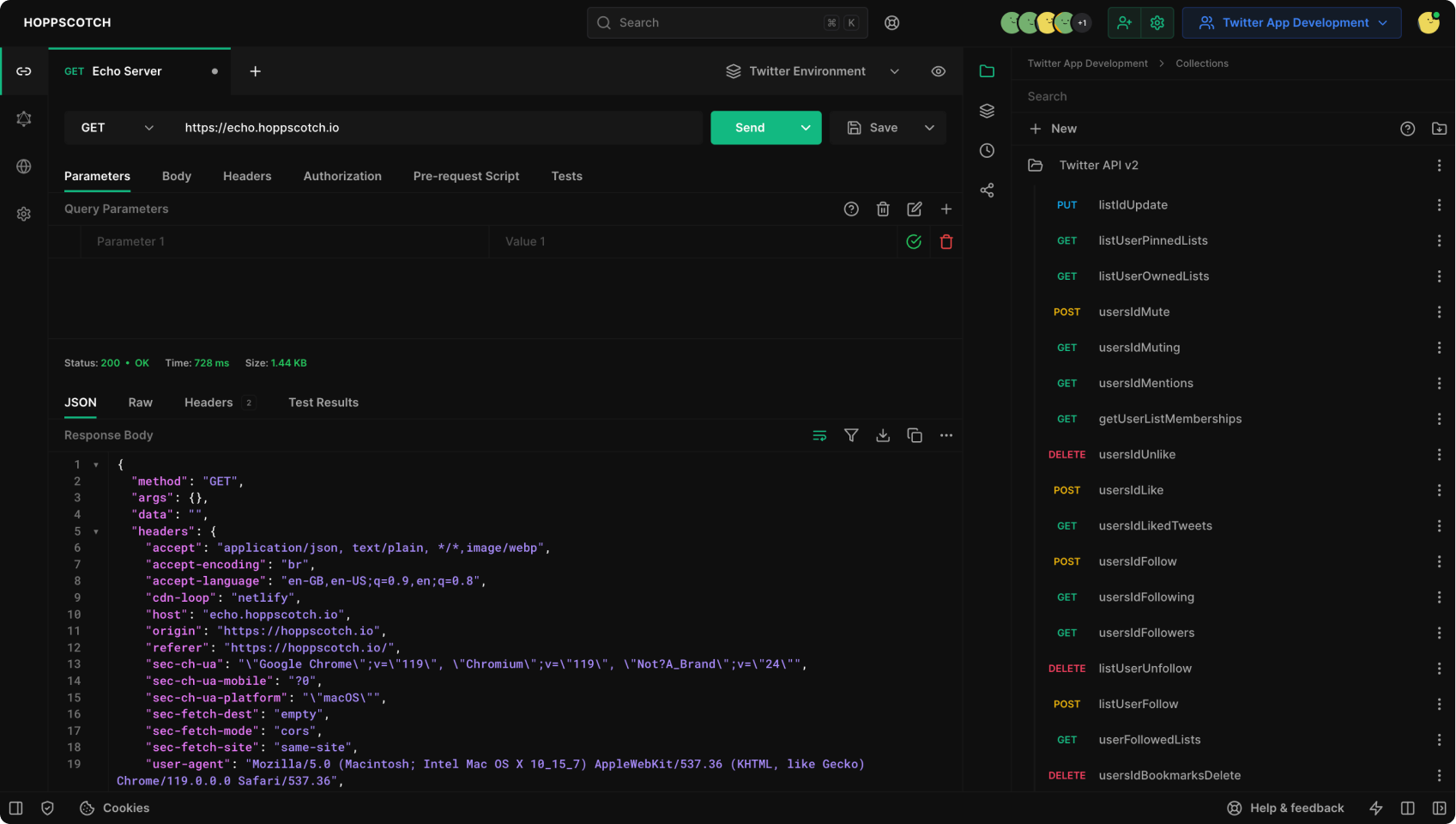
What is Hoppscotch?
Hoppscotch is an open-source API development ecosystem designed to help developers create, test, and manage API requests efficiently. It provides a minimalist, user-friendly interface and supports a wide range of protocols, including REST, GraphQL, WebSocket, Server-Sent Events (SSE), Socket.IO, and MQTT. Hoppscotch is available as a web app, desktop app (macOS, Windows, Linux), and CLI tool, making it versatile for different workflows.
Hoppscotch offers two self-hosted editions:
- Community Edition: Free and open-source, ideal for individuals and small teams. It includes features like workspace management, OAuth authentication, and collections.
- Enterprise Edition: Includes advanced features like SAML-based SSO, audit logs, and priority support, designed for larger teams and organizations.
Hoppscotch is a popular alternative to proprietary tools like Postman and Insomnia, with a strong focus on open-source principles and community-driven development.
Hoppscotch alternatives
 AppwriteThe open-source cloud for agents & devs. Including Auth, Databases, Storage, Functions, Messaging, Hosting, Realtime, WAF and moreCompareAppwrite with Hoppscotch
 proxyscotchSelf-hosted proxy server for Hoppscotch to access localhost/private networks via CORS bypass. Desktop tray app or headless server with Docker.Compareproxyscotch with Hoppscotch
 nocodbSelf-hosted open-source Airtable alternative that turns any database into a no-code platform with spreadsheet-like interface, supporting PostgreSQL, MySQL, and SQLite.Comparenocodb with Hoppscotch
 ToolJetSelf-hosted, open-source low-code platform for internal tools and dashboards: visual builder, 90+ data sources, built-in database, AI app generation and MCP agent access.CompareToolJet with Hoppscotch
 WebHook TesterSelf-hosted, open-source tool for testing and debugging webhooks with customizable responses, WebSocket notifications, and multiple storage backends.CompareWebHook Tester with Hoppscotch
 CockpitCockpit is a self-hosted, open-source headless CMS with GraphQL and REST APIs, flexible content modeling, and multi-language support. Runs on PHP with SQLite or MongoDB.CompareCockpit with Hoppscotch
 swiftwaveSwiftWave: self-hosted open source PaaS for deploying apps on any server. Alternative to Heroku/Netlify/Render with 1GB RAM min and integrated app store.Compareswiftwave with Hoppscotch
 OpenshipSelf-hosted open-source PaaS: hand it a repo, a folder or an artifact and it detects your stack, builds it, then serves it on your domain with free certificates.CompareOpenship with Hoppscotch
All self-hosted alternatives to Insomnia → All self-hosted alternatives to Postman →
Should you self-host Hoppscotch?
Hoppscotch scores 83/100 on selfhost.directory (how scoring works) and ranks #3 of 167 in Developer Tools. It has 80 829 GitHub stars, +229 in the last 30 days.
It shipped 19 stable releases in the past year. The latest, 2026.10.1, came out on 5 November 2026. New versions land roughly every 2 weeks.
Setup is moderate: expect some configuration beyond a single command. An official Docker image is available. It is MIT-licensed and written mostly in Typescript.
Its closest alternative on selfhost.directory is Hoppscotch Community Edition (84/100, 80 829 stars). It scores higher overall, so compare the two before you pick. See Hoppscotch vs Hoppscotch Community Edition side by side.
Features
- Admin Dashboard
- API Testing
- CLI Support
- Collections
- Dark Mode
- Environments
- OAuth Authentication
- OpenAPI Support
- Postman Import
- Realtime API Testing
- SAML SSOAvailable in Enterprise Edition only.
- Workspaces
Hoppscotch README


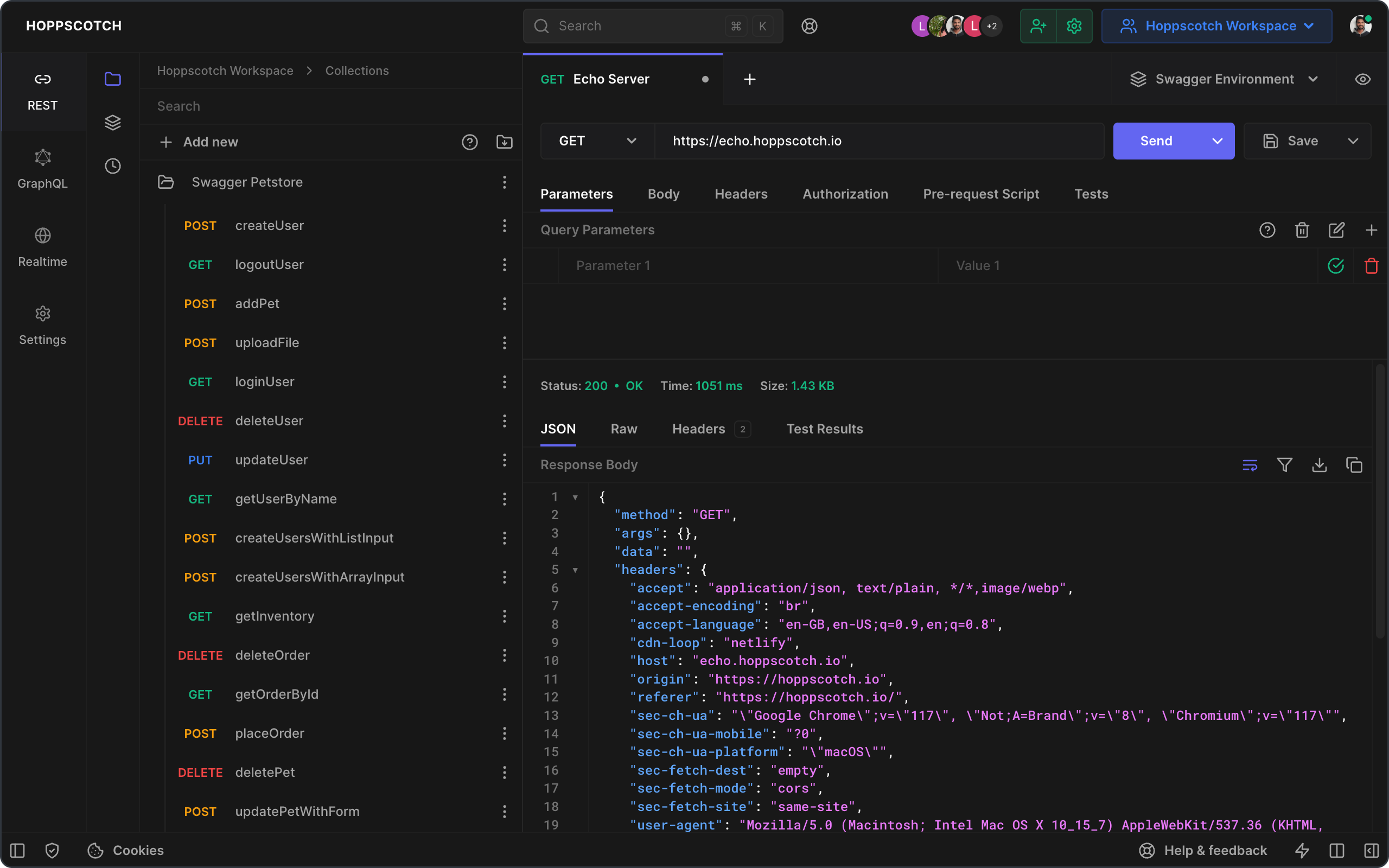
We highly recommend you take a look at the Hoppscotch Documentation to learn more about the app.
❤️ Lightweight: Crafted with minimalistic UI design.
⚡️ Fast: Send requests and get responses in real time.
FAQ
Does Hoppscotch support OAuth and SAML?
Yes, Hoppscotch supports OAuth authentication (GitHub, Google, Microsoft) in the Community Edition. SAML-based SSO is available in the Enterprise Edition.
How do I install Hoppscotch using Docker?
You can install Hoppscotch using Docker Compose. A sample `docker-compose.yml` file is provided in the documentation, which includes Hoppscotch and PostgreSQL services.
What are the system requirements for self-hosting Hoppscotch?
The minimum requirements for self-hosting Hoppscotch are 2 vCPUs, 2GB RAM, and 5GB storage. PostgreSQL 13+ is required as the database.
Is Hoppscotch self-hostable?
Yes, Hoppscotch offers both Community and Enterprise editions for self-hosting. The Community Edition is free and open-source, while the Enterprise Edition includes advanced features like SAML SSO and audit logs.
What is Hoppscotch?
Hoppscotch is an open-source API development ecosystem that helps developers create, test, and manage API requests. It supports REST, GraphQL, WebSocket, SSE, Socket.IO, and MQTT protocols.
More in Developer Tools
 Hoppscotch Community EditionSelf-hosted, open-source API development ecosystem for testing REST, GraphQL, WebSocket, and MQTT APIs — a lightweight Postman alternative with PWA and desktop apps.
 HorizonHorizon is a self-hosted, open-source Rust game server for large-scale multiplayer with plugin architecture, WebSocket networking, and real-time game object replication.
 hot-updaterSelf-hosted OTA update server for React Native apps. Deploy on major cloud platforms or your own Docker setup. Includes bundle diffing, web console, and rollback support.
 houndOpen-source source code search engine: a Go backend indexes every configured repository and a React UI runs regex queries against a trigram index.
 ht-mcpRust MCP server for headless terminal sessions. Self-hosted, open-source, single binary with no external dependencies. Integrates with Memex and Claude Code.
 HTML共有くんHTML共有くん is a self-hosted, open-source dashboard that collects AI-generated HTML pages and makes them mobile-readable, deployed to your own AWS account.
 httpbinSelf-hosted, open-source HTTP request & response service for testing clients: inspect requests, emit status codes, cookies, redirects and formats.
 httplaceholderHttPlaceholder is a self-hosted, open-source HTTP stub server for mocking web services with YAML stubs, REST API, web UI, and multiple storage backends.
 hubgrep_searchHubGrep is a self-hosted, open-source search engine that queries multiple code-hosting platforms simultaneously, treating all services equally.
 hyvor-relaySelf-hosted, open-source email API replacing SES, Mailgun, SendGrid with full infrastructure control, SMTP delivery, webhooks, multi-tenancy, and DNS automation.
 iClawSelf-hosted AI workspace with ChatGPT-style UI for OpenClaw, isolated projects, Docker sandboxing, and encrypted chat sharing.
 ifconfig.ioSelf-hosted, open-source what-is-my-IP service written in Go: curl endpoints return your IP, reverse DNS, port and headers as text, JSON or XML, built for raw speed.
0 comments