
Self-host hoardy-web
tool-v0.25.0Passive browser extension for personal web archiving
- Stars
- 143
- Port
- 3210 (hoardy-web serve and hoardy-web-sas HTTP archiving/replay server)
- Requires
- Python


What is hoardy-web?
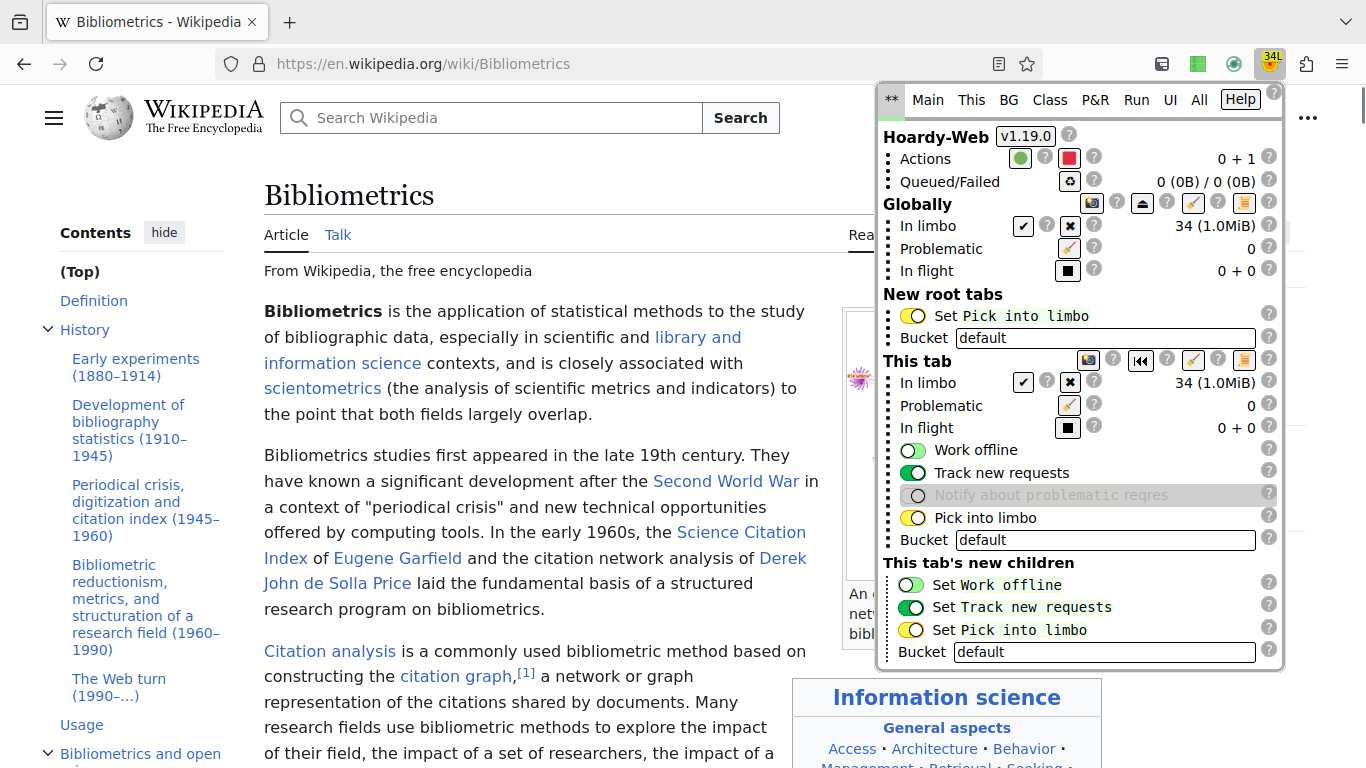
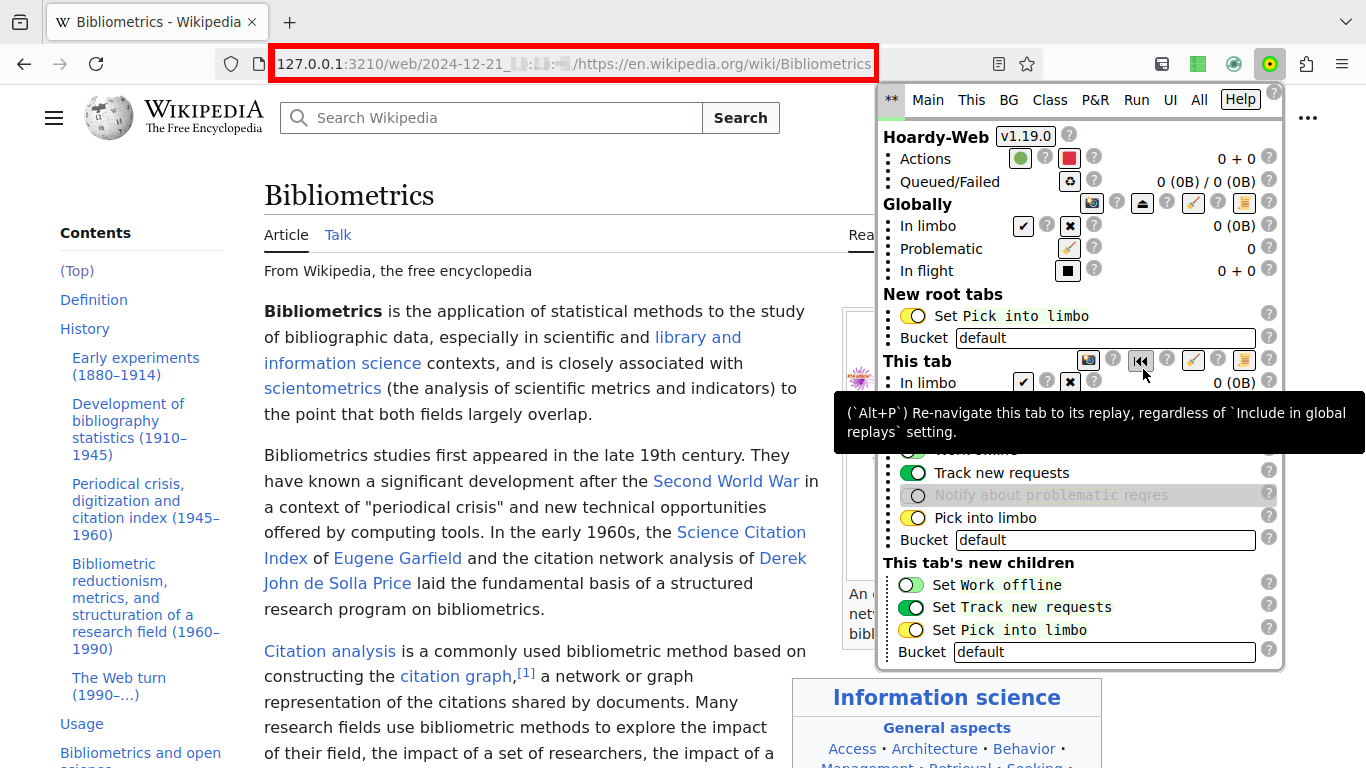
Hoardy-Web is a suite of tools for passively capturing and archiving your complete web browsing history — not just URLs but full HTTP request/response pairs including POST data, headers, and DOM snapshots after JavaScript execution. The browser extension (Firefox/Chromium) collects data in the background and can store it locally, export via fake downloads, or submit to a self-hosted archiving server. Two server components are provided: hoardy-web-sas (a minimal ~300-line Python HTTP archiving server) and hoardy-web serve (a full-featured archival+replay server with search, mirroring, and Wayback-style URL routing). The hoardy-web CLI tool can inspect, search, convert, mirror, and replay archives in WRR, mitmproxy, and HAR formats. All components are GPL-3.0-or-later licensed. The extension supports Firefox, Tor Browser, LibreWolf, and Firefox-based Android browsers (Fenix, Fennec, Mull); Chromium support exists but has limitations around media capture and debugger detachment. No user authentication or cloud dependency — everything runs on your hardware.
Should you self-host hoardy-web?
hoardy-web scores 39/100 on selfhost.directory (how scoring works) and ranks #12 of 12 in Archiving & Preservation. It has 143 GitHub stars.
It shipped 12 stable releases in the past year. The latest, tool-v0.25.0, came out on 14 September 2026. New versions land roughly every 2 weeks.
Setup is moderate: expect some configuration beyond a single command. It is GPL-3.0-licensed and written mostly in JavaScript.
Its closest alternative on selfhost.directory is ArchiveBox (79/100, 28 895 stars). It scores higher overall, so compare the two before you pick. See hoardy-web vs ArchiveBox side by side.
Features
- Limbo mode
hoardy-web README
More in Archiving & Preservation
 KarakeepOpen-source, self-hosted app for saving links, notes, images and PDFs, with LLM auto-tagging, semantic search, offline mobile reading, and page archives.
 LinkAceA self-hosted, open-source bookmark manager that archives links, monitors them for breakage, and offers tags, lists, multi-user SSO and a REST API.
 LinkWardenOpen-source, self-hosted bookmark manager that keeps a screenshot, PDF and HTML copy of every saved page, with reader annotations and shared team collections.
 mail-archiverMail-Archiver is a web application for archiving, searching, and exporting emails from multiple accounts. Featuring folder sync, attachment support, mailbox migration and a dashboard.
 Open ArchiverAn open-source platform for legally compliant email archiving.
 PapraThe minimalistic document archiving platform.
 perkeepPerkeep is an open-source, self-hosted personal storage system for keeping, syncing and sharing content, with search, a web UI, FUSE mounts and cloud blob backends.
 PilerSelf-hosted open-source email archiving for compliance, search, and storage reduction. Built-in SMTP, deduplication, encryption, LDAP/SSO auth.
 ReadeckSelf-hosted, open-source bookmark and read-it-later app that keeps full article text and images offline, with labels, highlights, full-text search and EPUB/OPDS export.
 reminiscenceA self-hosted, open-source Django bookmark manager that archives web pages as HTML, PDF or full-page PNG, with auto tagging, search, annotations and multi-user sharing.
 ResticOpen-source, self-hosted CLI backup tool: encrypted, deduplicated snapshots to local disks, SFTP, a REST server or cloud storage, as a single binary or Docker image.
 spacedriveAn open-source, self-hosted file manager that unifies local drives, NAS, servers and cloud buckets into one searchable, indexed filesystem across your devices.
0 comments