
Self-host Forge
0.1.0Visual platform for building and shipping AI agents
- Stars
- 175
- Ports
- 8000 (API server), 3000 (Web console)


What is Forge?
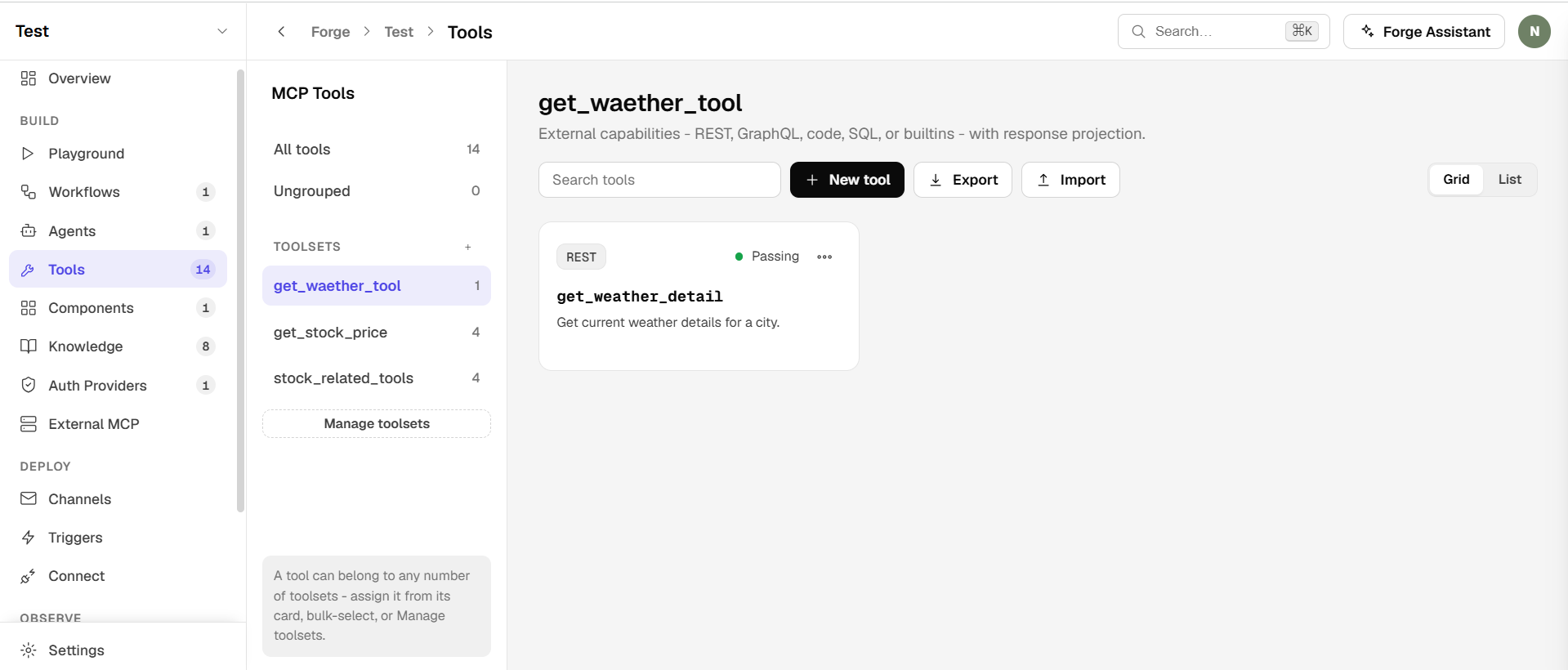
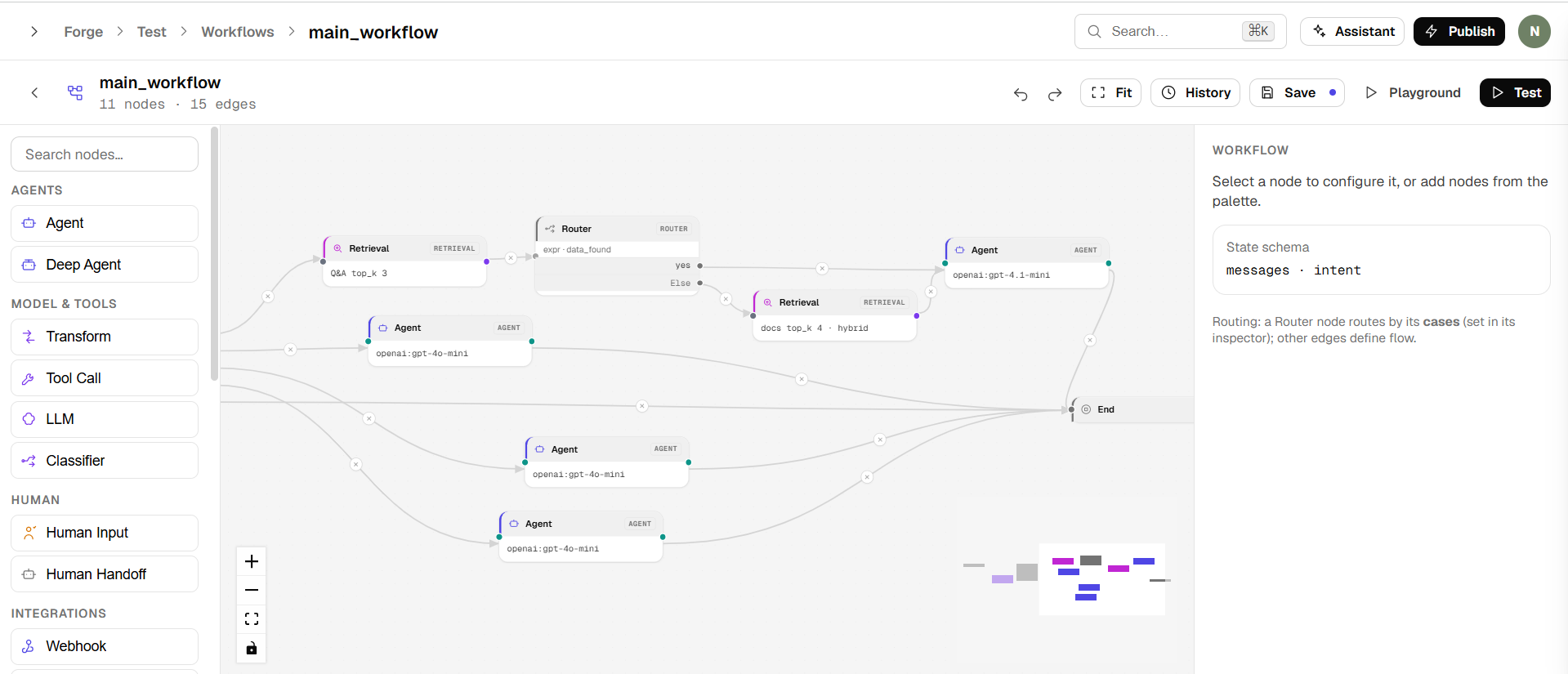
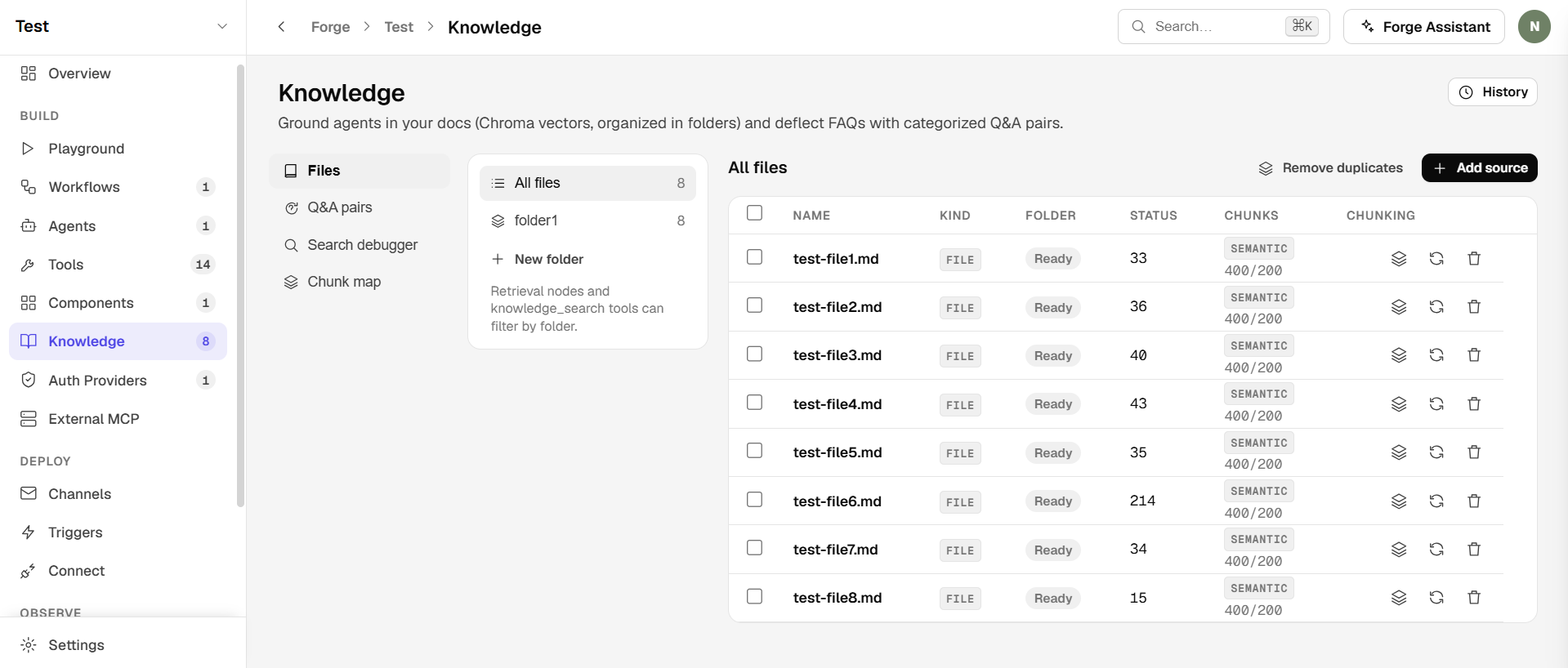
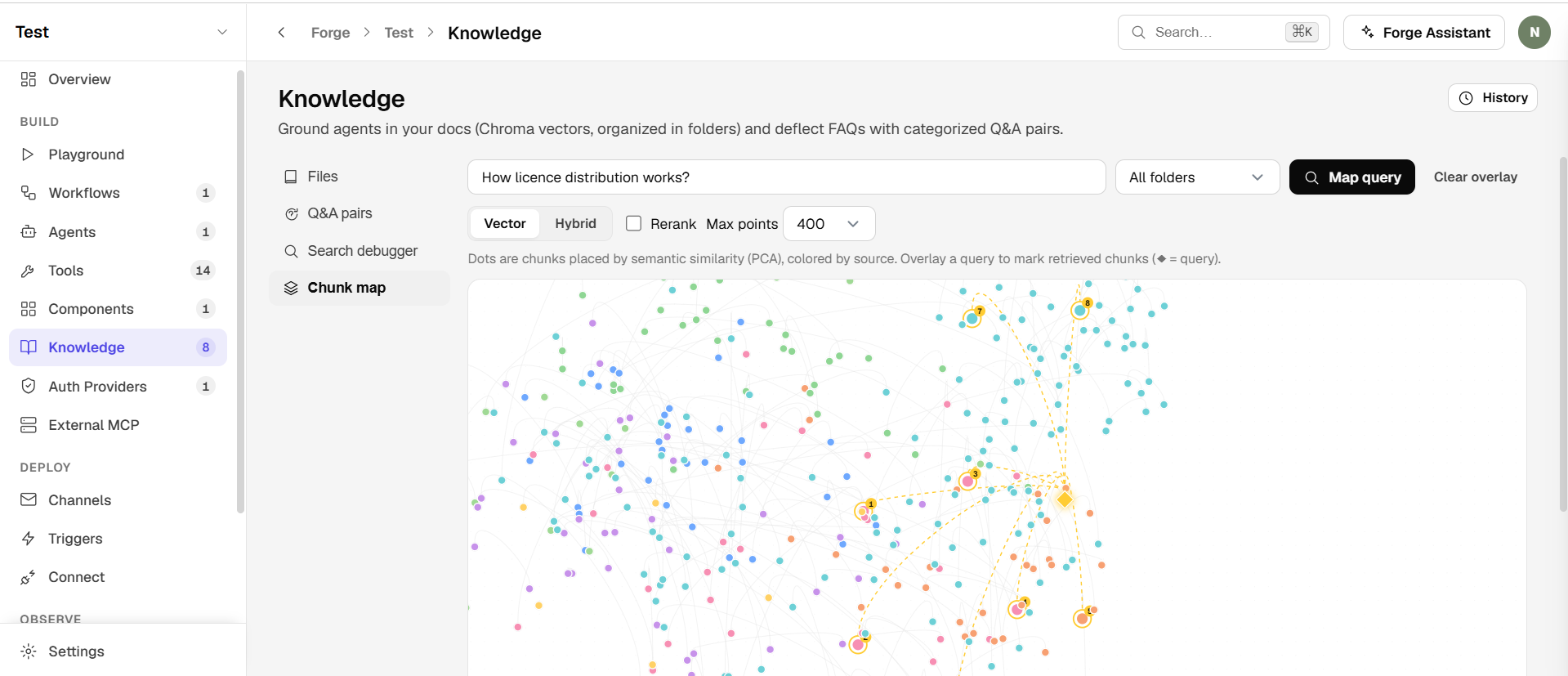
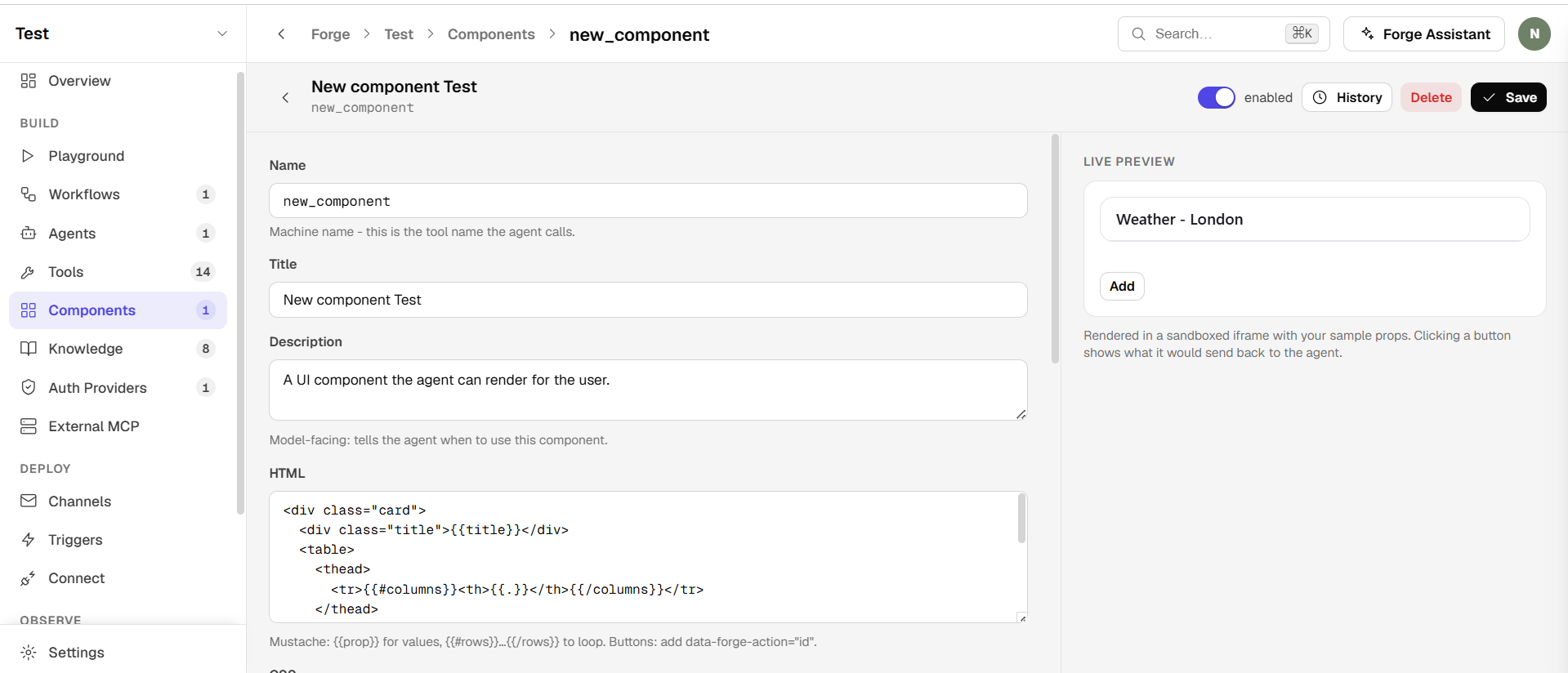
Forge lets you create AI agents and workflows visually on a canvas without writing framework code. You connect agents, tools, knowledge bases, and logic nodes, then deploy the result to an API, MCP server, email, or embeddable chat widget. The platform includes a visual agent builder with support for deep agents that can spawn sub-agents, a workflow builder with typed edges and a live playground, knowledge management with RAG and a search debugger, and generative UI components that render in sandboxed iframes. Observability is built in with span waterfalls showing latency, tokens, and cost per run. For local development it runs on SQLite and embedded Chroma with no external services; production swaps to Postgres with pgvector and Redis via config. Authentication supports built-in accounts, OAuth2, API keys, and MCP OAuth 2.1. The project is MIT-licensed with no proprietary dependencies.
Should you self-host Forge?
Forge scores 43/100 on selfhost.directory (how scoring works) and ranks #153 of 209 in AI Agents. It has 175 GitHub stars.
There was no stable release in the past 12 months, so check the repository's recent activity before you rely on it.
Setup is advanced: plan for several services and some ongoing maintenance. It is MIT-licensed and written mostly in Python.
Its closest alternative on selfhost.directory is Orca (91/100, 108 739 stars). It scores higher overall, so compare the two before you pick. See Forge vs Orca side by side.
Features
- Auth Providers
- Email channel
- Embeddable web widget
- Evaluations
- Generative UI Components
- Guardrails & Egress
- Human in the Loop
- Import / Export
- Knowledge & RAG
- MCP Server
- Observability & Traces
- Run API
- Triggers
- Visual Agent Builder
- Visual Workflow Builder
Forge README
More in Workflow Automation
 Form.ioSelf-hosted, open-source form and API platform with drag-and-drop builder, REST APIs, MongoDB backend, and enterprise features like PDF generation and RBAC.
 formsflowaiformsflow.ai is a self-hosted, open-source low-code platform combining Form.io, Camunda, Keycloak, and Redash for forms, BPMN/DMN workflows, identity, and analytics.
 Friday StudioFriday Studio is a self-hosted AI workflow platform turning natural language into repeatable YAML automations with MCP tools, skills, and cron/webhook triggers.
 gaiaOpen-source personal AI assistant that proactively manages email, calendar, tasks, and workflows across 50+ integrations with self-hosting support via Docker Compose.
 giselleGiselle is a self-hosted, open-source AI agent studio for building visual workflows with drag-and-drop, supporting multiple LLM providers and GitHub integration.
 hatchetAn open-source durable task queue and workflow engine for teams shipping apps: self-hosted via Docker, Compose or Helm, with Postgres-backed state and a live dashboard.
 hermes-studioEkko Studio unites chat agents and 14 coding CLIs in one self-hosted web console with group chat, visual workflows, profiles, voice, and device sync.
 hexabotHexabot is a self-hosted AI workflow automation platform for building agentic workflows across channels with a visual editor, YAML, memory, RAG, and RBAC.
 heymHeym is a self-hosted platform for building and running agentic AI workflows with a visual canvas, human-in-the-loop, RAG, MCP, and full observability.
 HuginnSelf-hosted, open-source automation server where agents watch websites, RSS, mail and webhooks, then act on events and post to Slack, Telegram and other services.
 illa-builderSelf-hosted open-source low-code platform for internal tools: dashboards, CRUD apps, admin panels, with database/API connectors and scheduled or webhook automation.
 inngestWorkflow orchestration platform for self-hosted durable step functions and AI workflows. Language SDKs for TypeScript, Python, Go automatically retry failed steps.
0 comments