
Self-host facet
v1.25.0AI-powered photo scoring and culling gallery
- Stars
- 323
- CPU
- Any (x86_64/ARM64)
- RAM
- 8 GB minimum, 12 GB recommended for CPU profiles
- Storage
- Depends on photo library size; model caches 3-24 GB
- Port
- 5000 (Web gallery viewer)
- Requires
- Node.js, Python
ghcr.io/ncoevoet/facet:latest




What is facet?
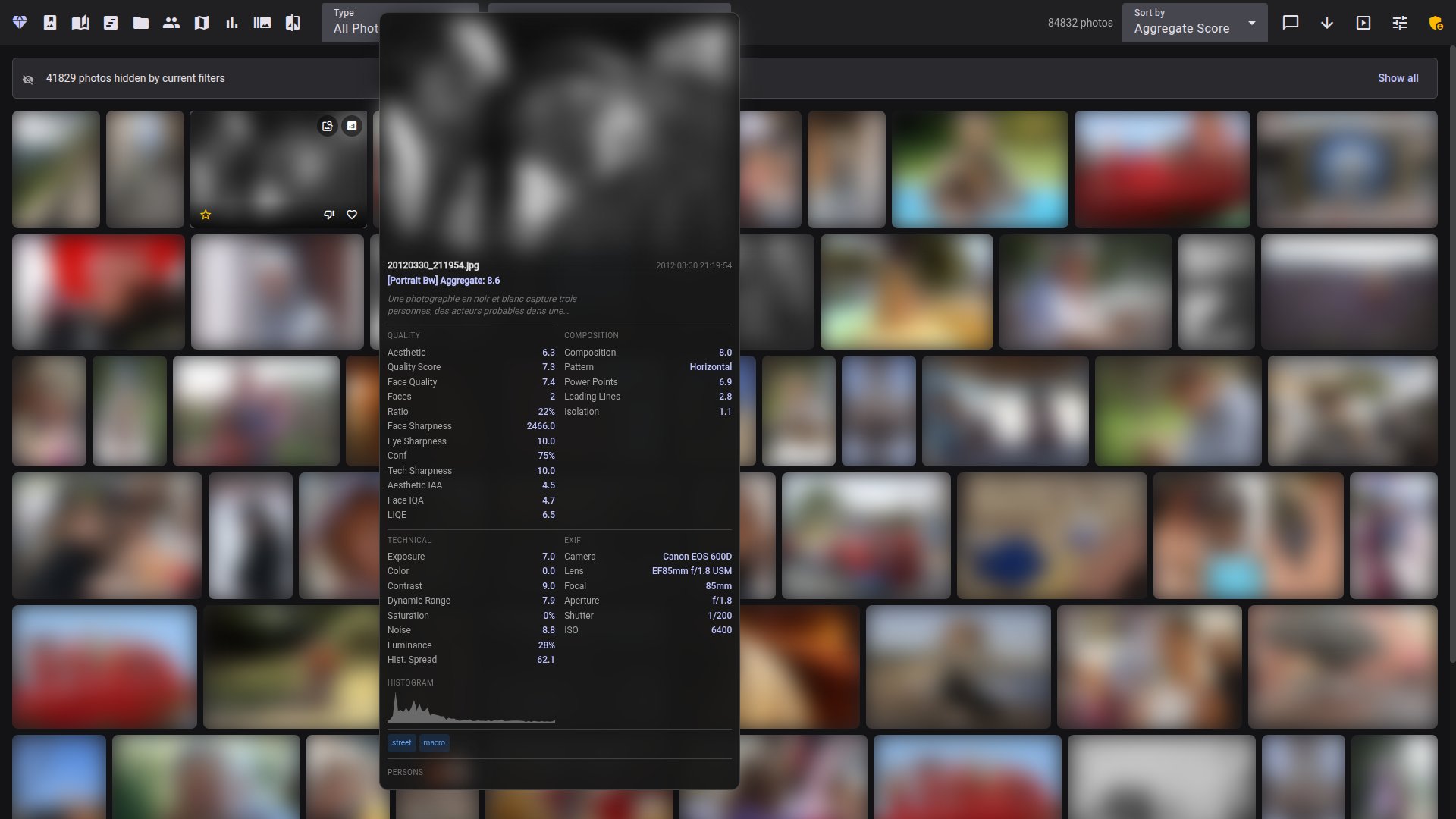
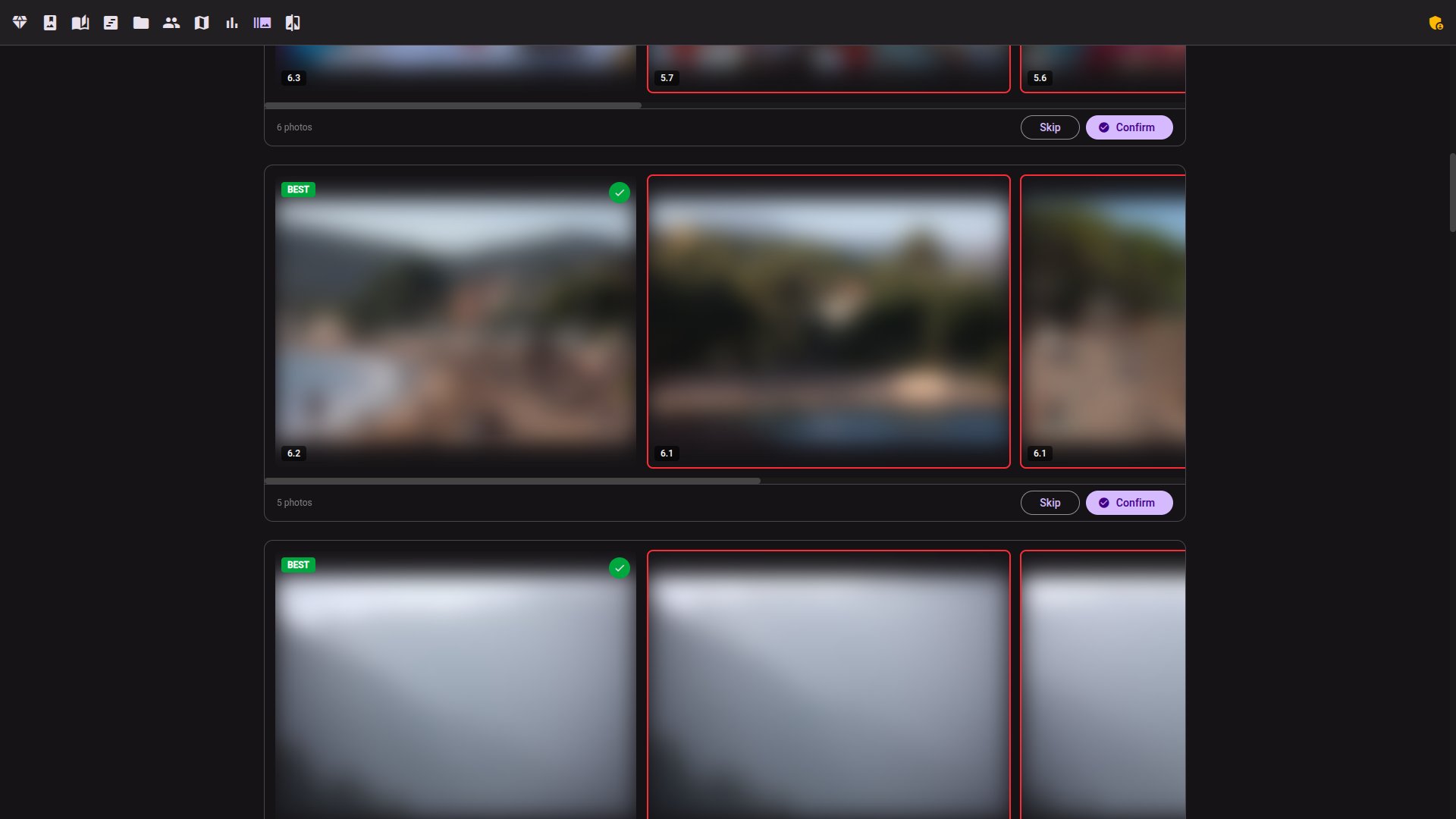
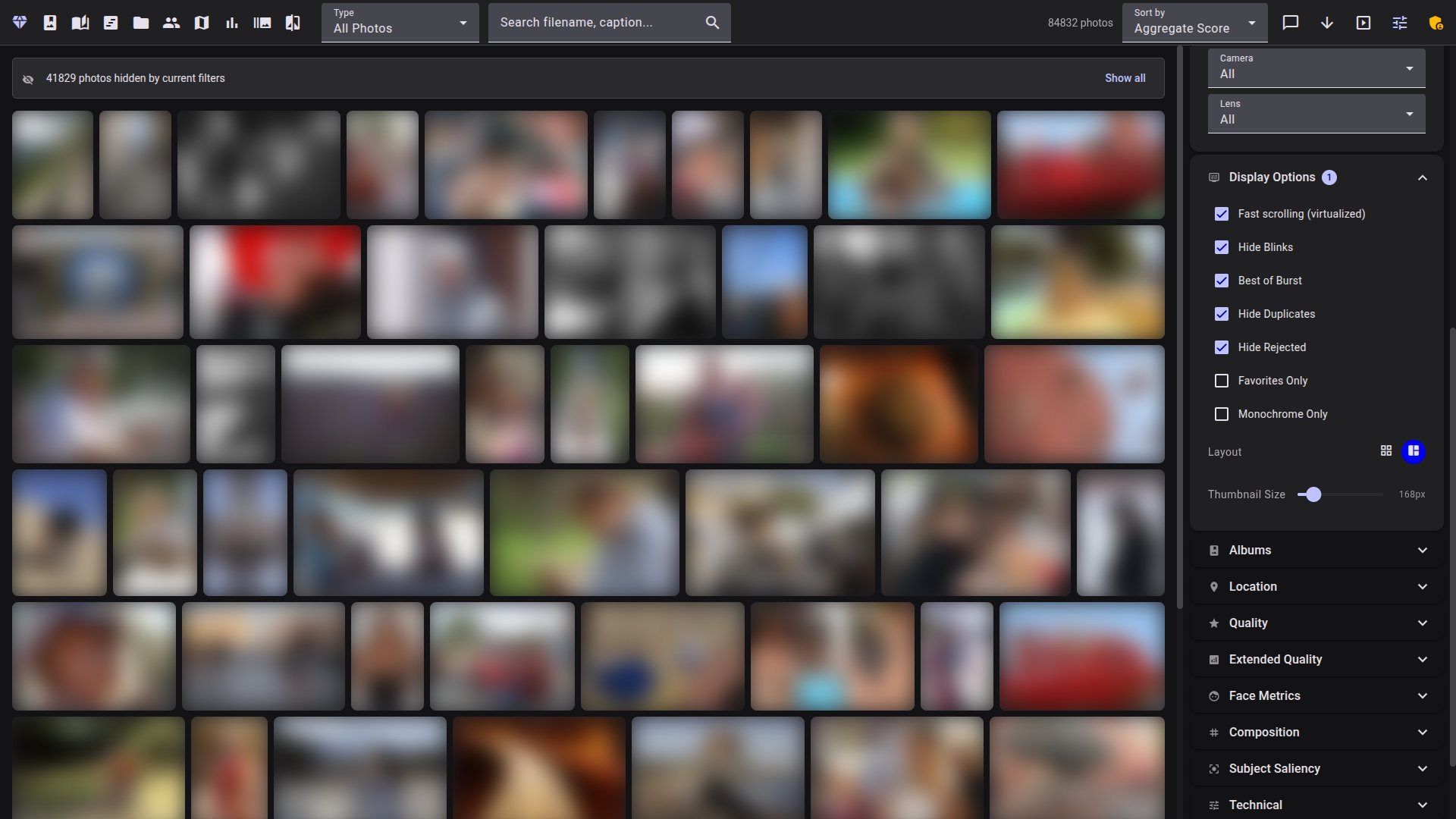
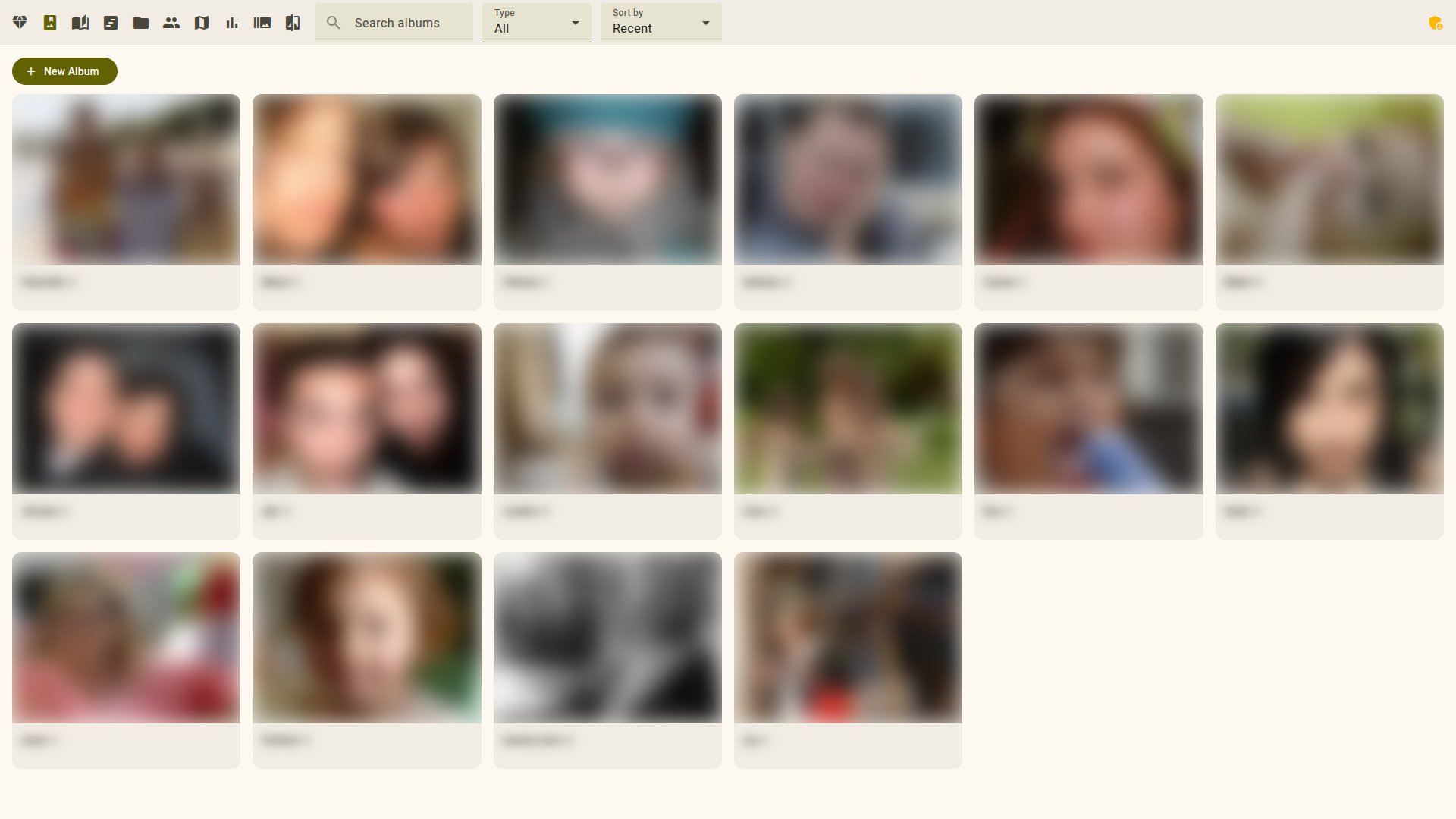
Facet is a self-hosted photo analysis and culling engine that scores images across nine quality dimensions including aesthetic quality, composition, face quality, and technical sharpness. It provides a web-based gallery for browsing, filtering, and searching photos using natural language queries. Key features include burst detection and auto-culling, face recognition with blink detection, semantic search, timeline and map views, themed capsules (slideshows), album management, star ratings, and AI-powered critique. It works with Lightroom, darktable, and digiKam through XMP sidecars, supports phone auto-upload via WebDAV, and offers an MCP endpoint for AI agents. Facet runs on CPU or GPU (NVIDIA/Apple Silicon) via Docker or native Python installation. The code is MIT licensed, though some default models have non-commercial licenses.
Should you self-host facet?
facet scores 50/100 on selfhost.directory (how scoring works) and ranks #21 of 41 in Photo Management. It has 323 GitHub stars.
It shipped 24 stable releases in the past year. The latest, v1.25.0, came out on 27 October 2026. New versions land roughly every 2 days.
Setup is moderate: expect some configuration beyond a single command. An official Docker image is available. It is Other-licensed and written mostly in Python.
Its closest alternative on selfhost.directory is Ente (81/100, 29 702 stars). It scores higher overall, so compare the two before you pick. See facet vs Ente side by side.
Features
- AI Photo Scoring
- AI Tags & Content Categories
- Album Management
- Album Sharing & Client Proofing
- Burst Detection & Auto-Culling
- Face Recognition
- MCP endpoint for AI agents
- Multi-User Mode
- Phone Auto-Upload (WebDAV)
- Photo Frame / Kiosk Endpoint
- Semantic Search
- Star Ratings & Favorites
- Web Gallery
- XMP Metadata Interop
facet README
More in Photo Management
 family-bookFamily Book is a self-hosted, open-source family tree and archive that lets you own your family's photos, stories, and relationships in a SQLite database.
 GerberaOpen-source, self-hosted UPnP/DLNA media server that streams your music, photos and videos to any compatible device, with a web UI to manage the library.
 HomeGallerySelf-hosted open-source web gallery for photos and videos on your own disks: tagging, face recognition, similar-image search, PWA mobile support and Chromecast.
 homepageSelf-hosted family photo cloud with AI search. Stores original-quality media on your hardware; mobile apps connect over home network. Server free (MIT), phone apps $1.99.
 icloudOpen-source, self-hosted Docker iCloud client that keeps a local copy of iCloud Drive and Photos, with scheduled sync, 2FA re-auth and an optional web dashboard.
 icloud-dockerSelf-hosted Docker iCloud client that keeps a local copy of your Drive files and Photos up to date; open-source, with filters, alerts and an optional web dashboard.
 ImageScrubberImage Scrubber is a self-hosted, open-source web tool that removes EXIF metadata and blurs faces in protest photos, running entirely in the browser with no server needed.
 Imagin RAWA fast, lightweight macOS app for RAW photo browsing and culling that replaces Adobe Bridge with native performance.
 imagor-studioSelf-hosted photo gallery with built-in layered editing, template system, and on-demand URL transformations. Virtual scrolling handles huge libraries.
 Immich-AutoAlbumsSelf-hosted Python tool that creates Immich albums from external library folders, with filtering, sharing, and scheduled Docker runs.
 Immich AutoTagImmich AutoTag is a self-hosted, open-source rule engine that auto-creates albums, assigns tags, and fixes dates in your Immich library via a config file.
 Immich DropSelf-hosted, open-source web app that collects photos and videos from guests through public invite links and uploads them straight into your Immich server.
0 comments