
Self-host cupdate
v0.25.0Container image update and vulnerability monitor
- Stars
- 312
- Port
- 8080 (HTTP API and web UI)
ghcr.io/alexgustafsson/cupdate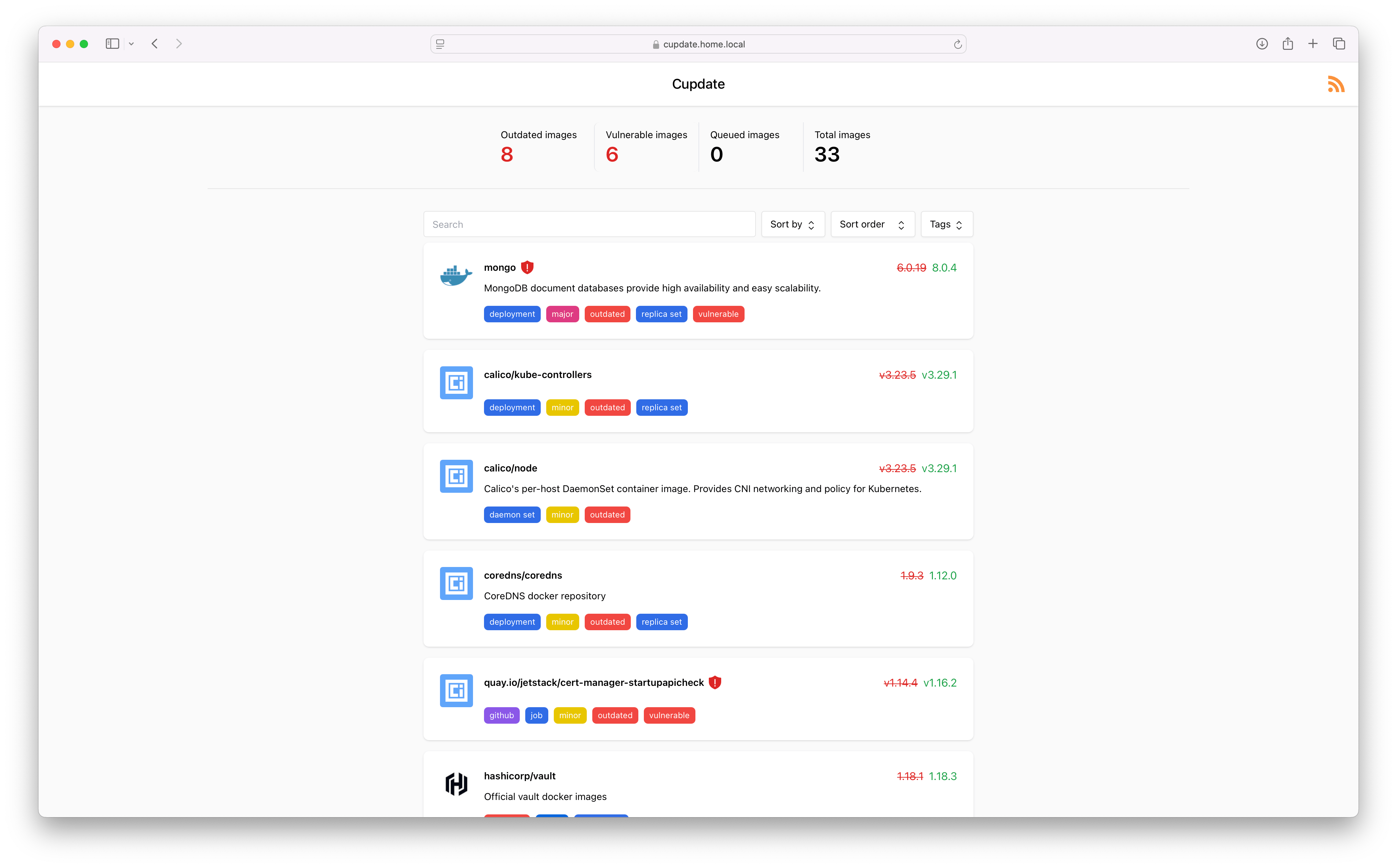
What is cupdate?
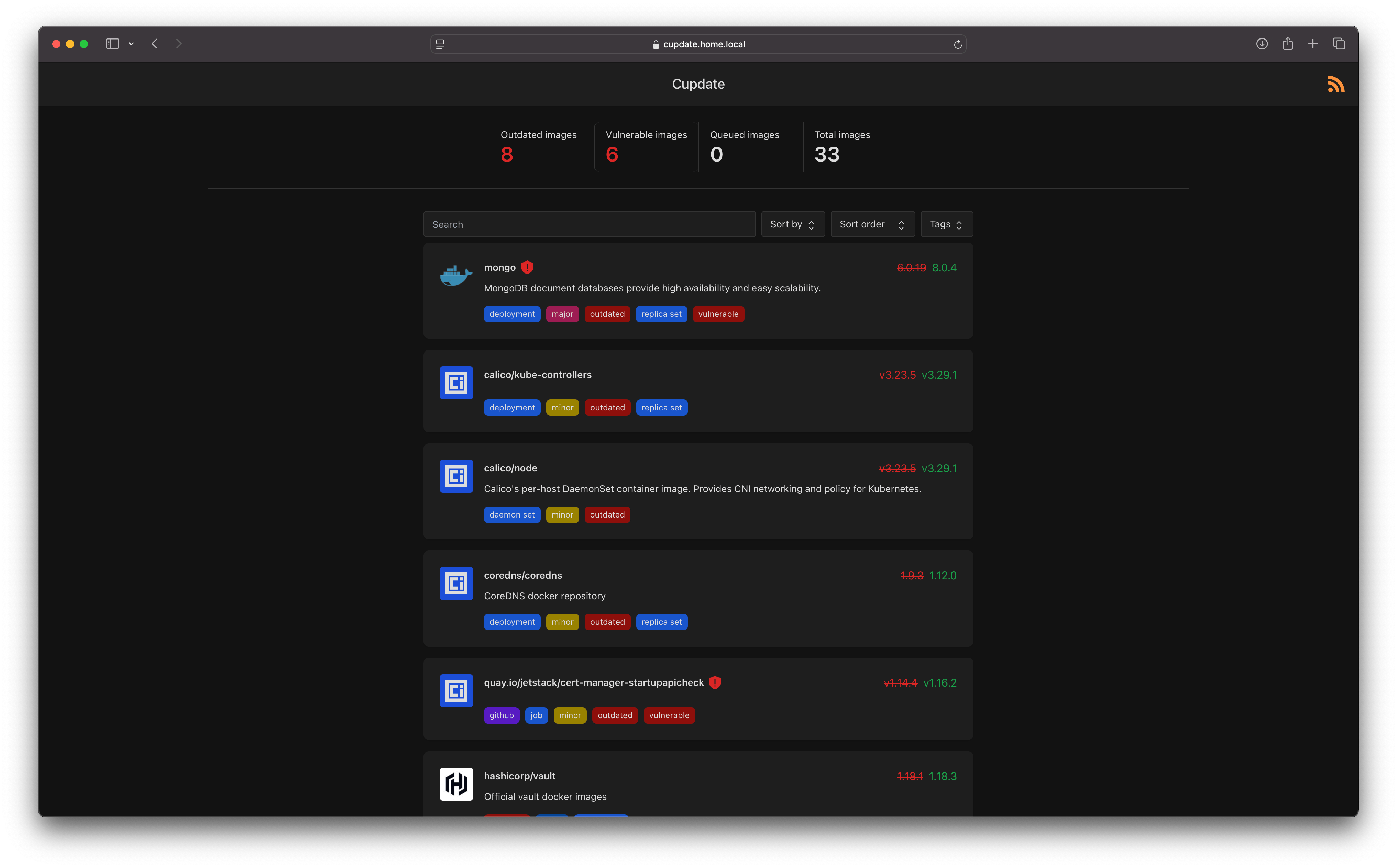
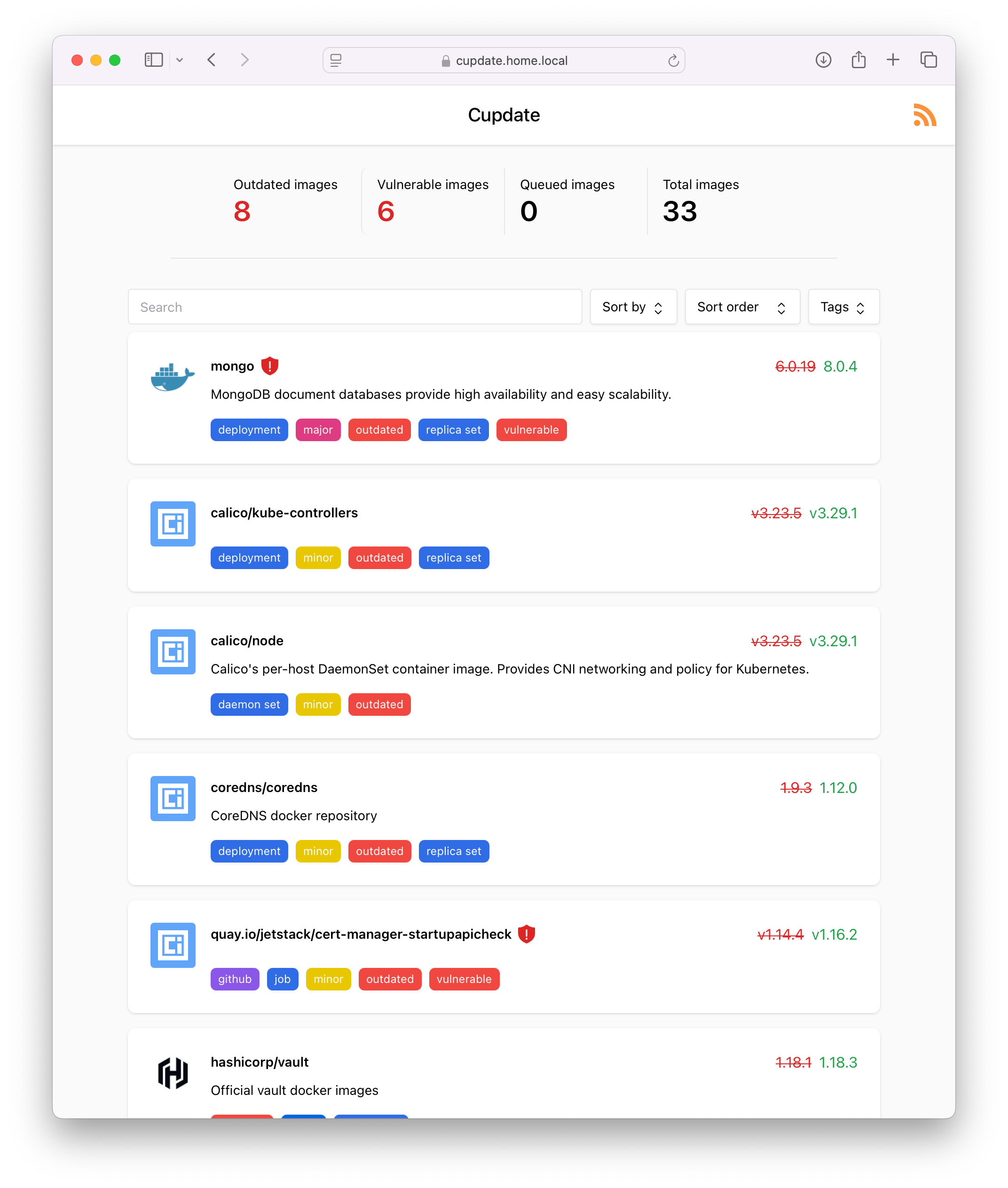
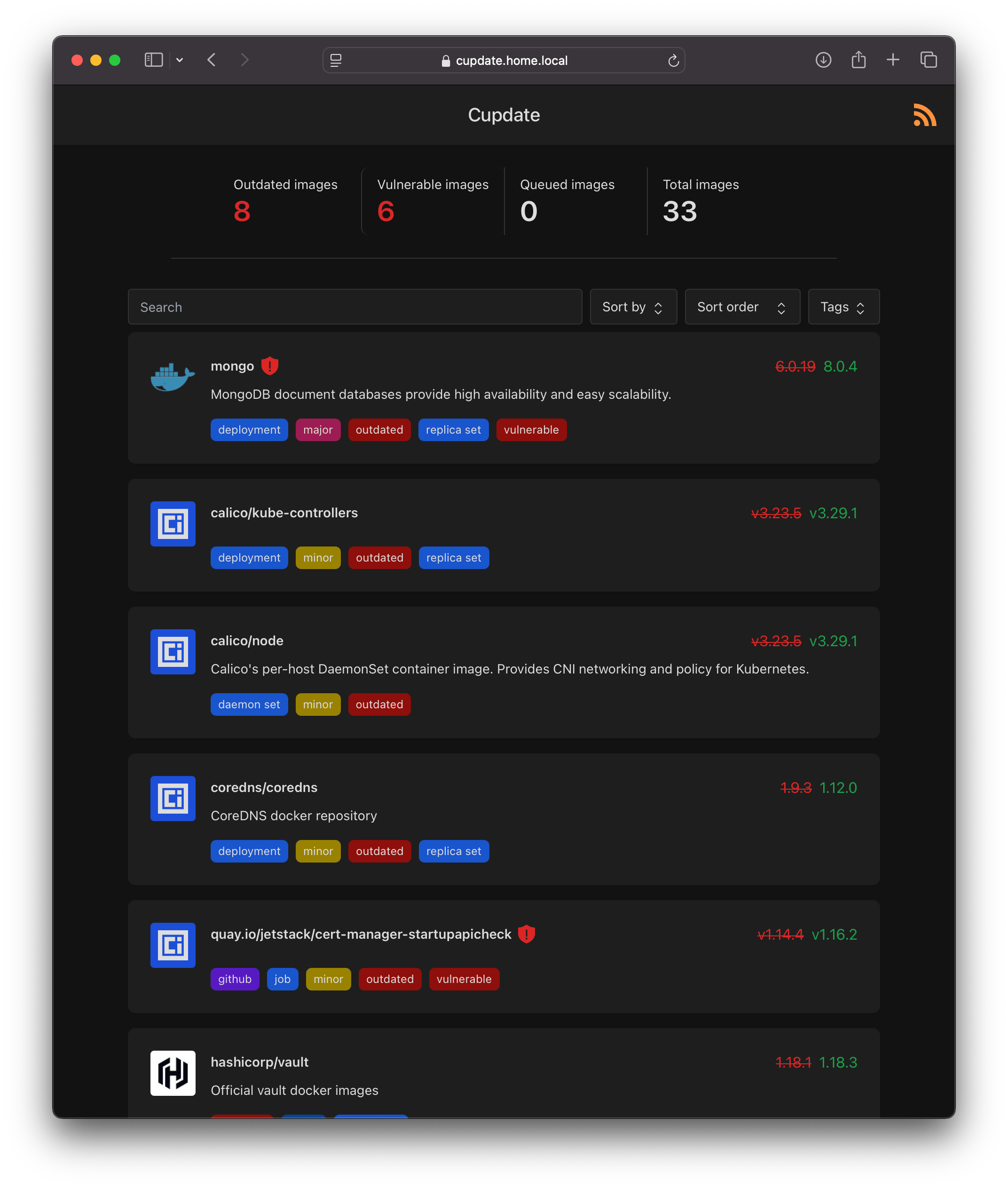
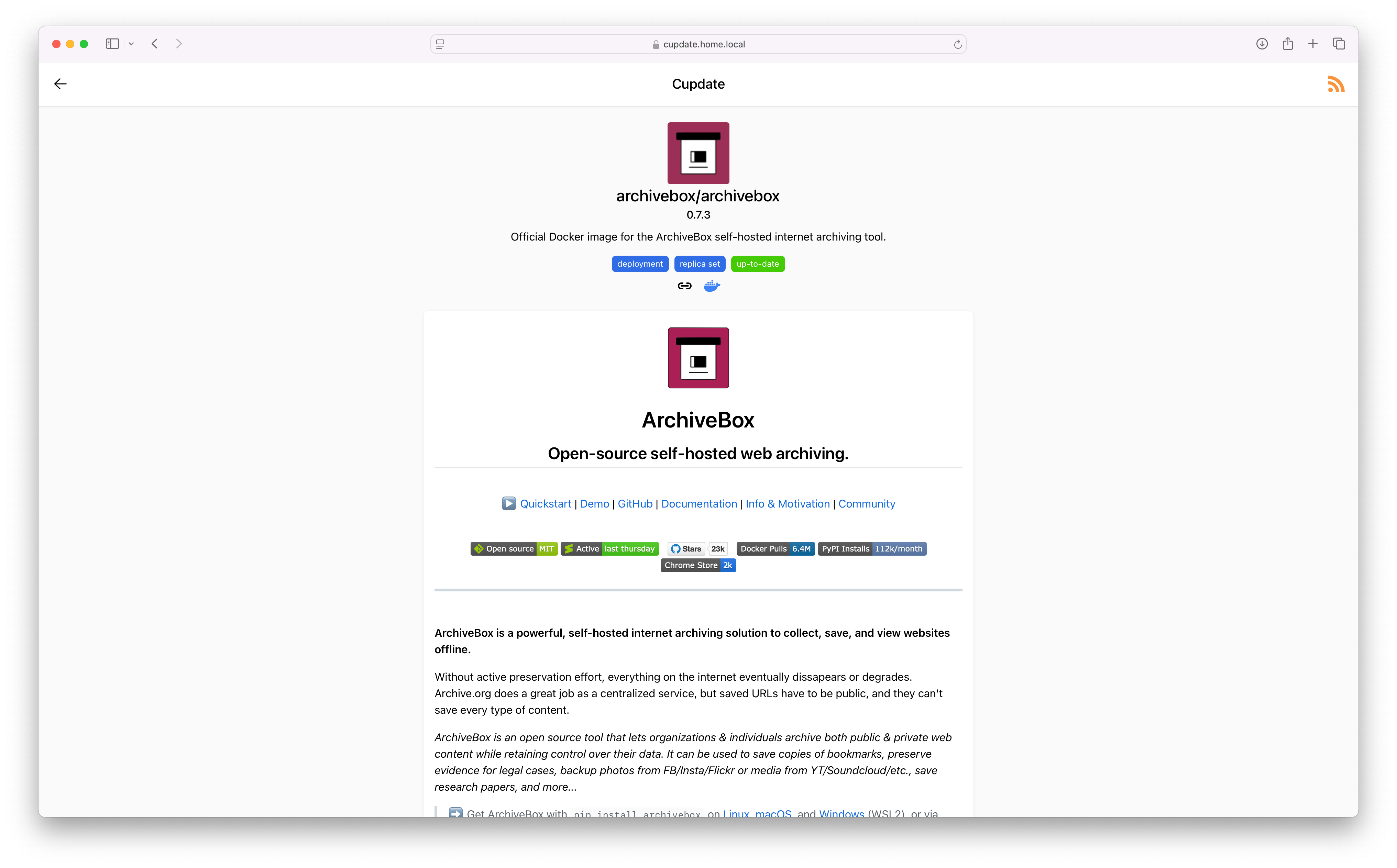
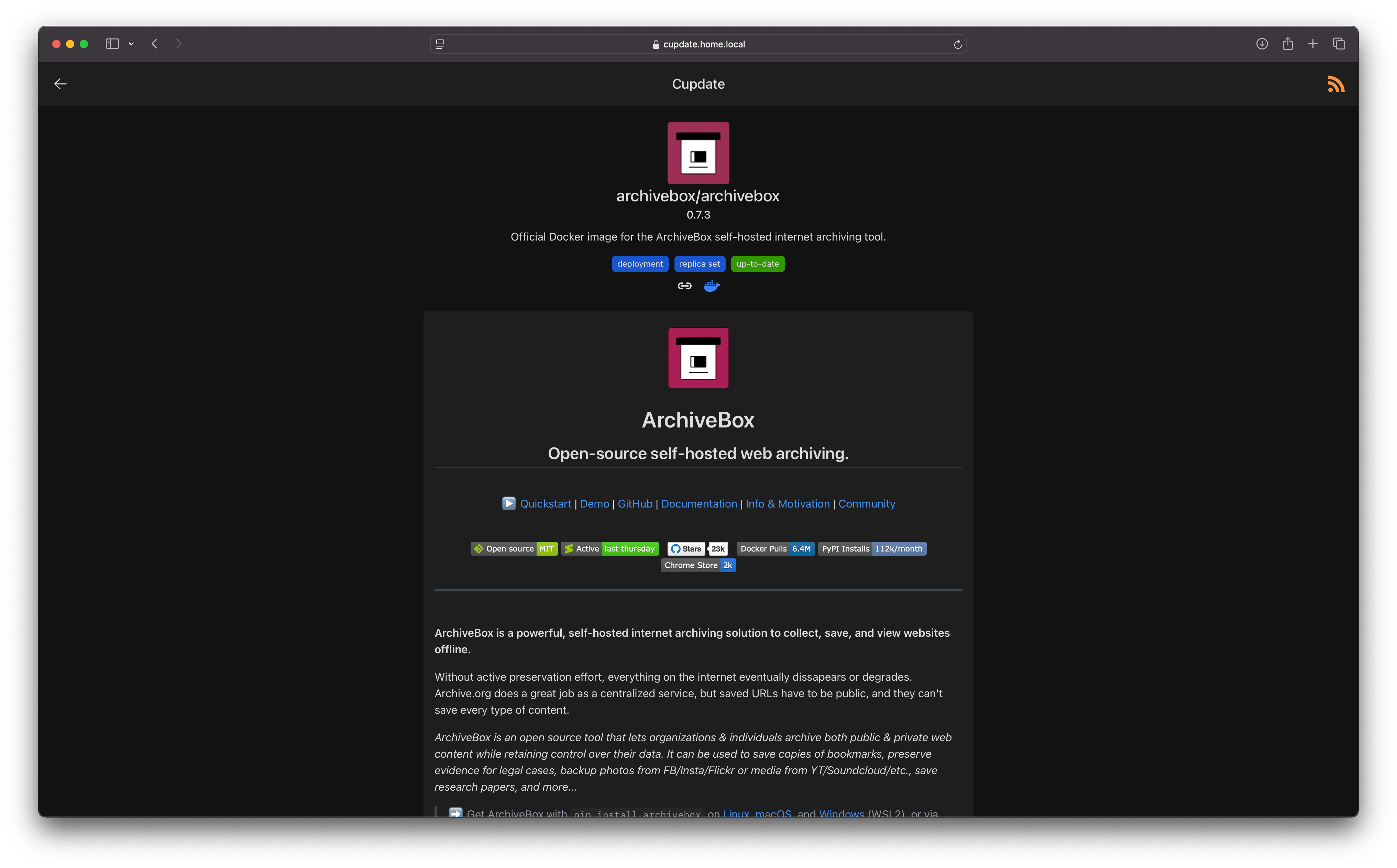
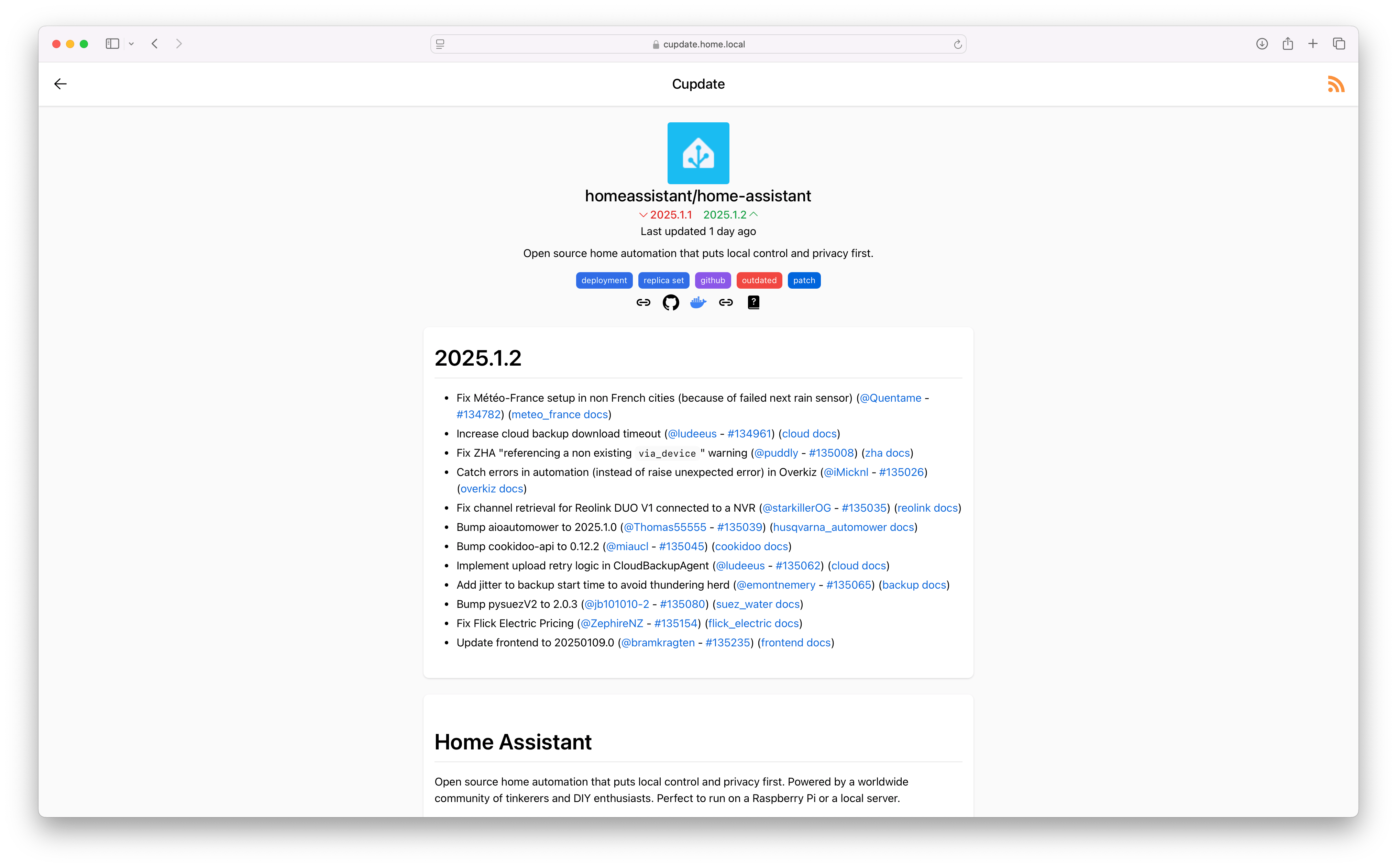
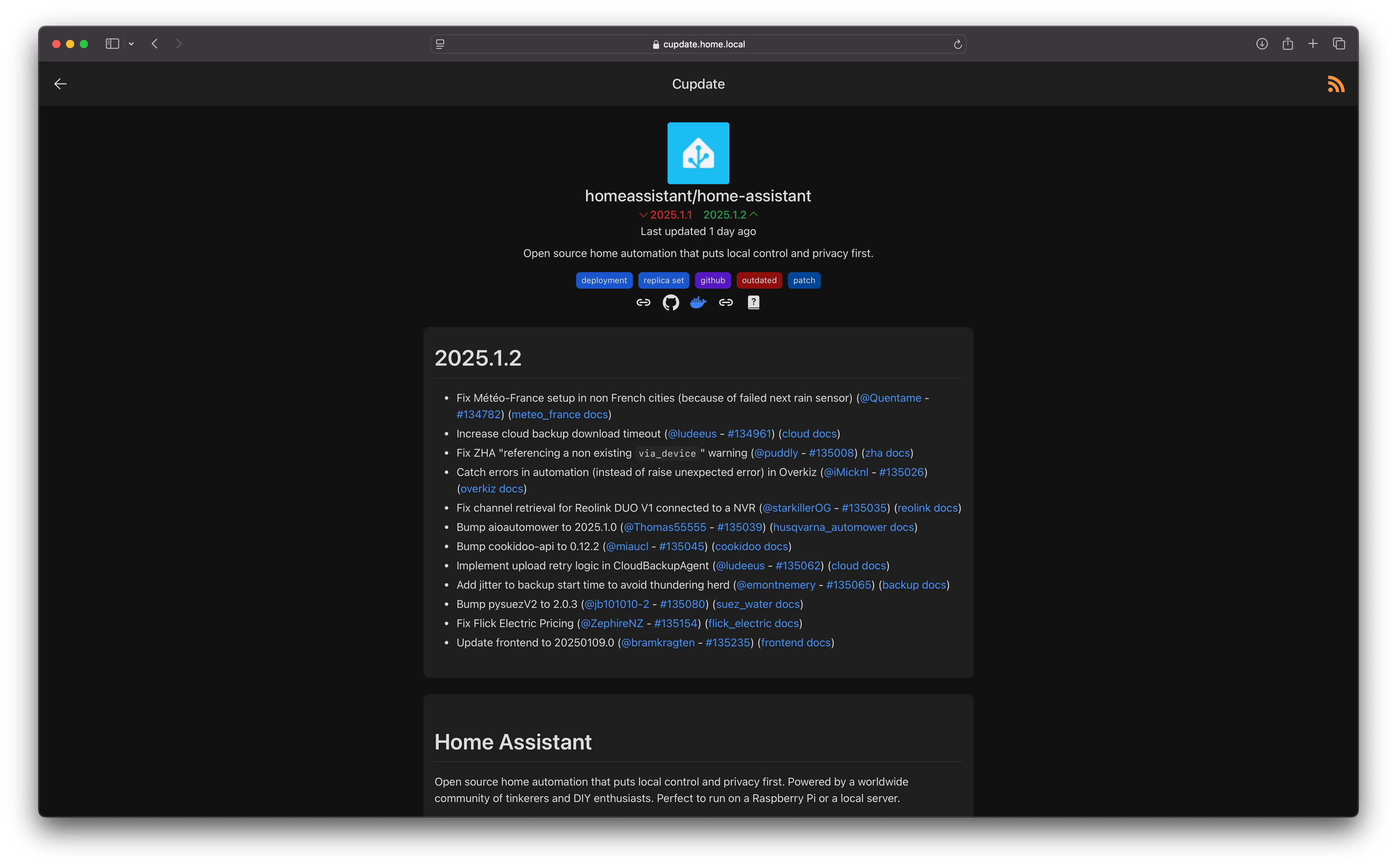
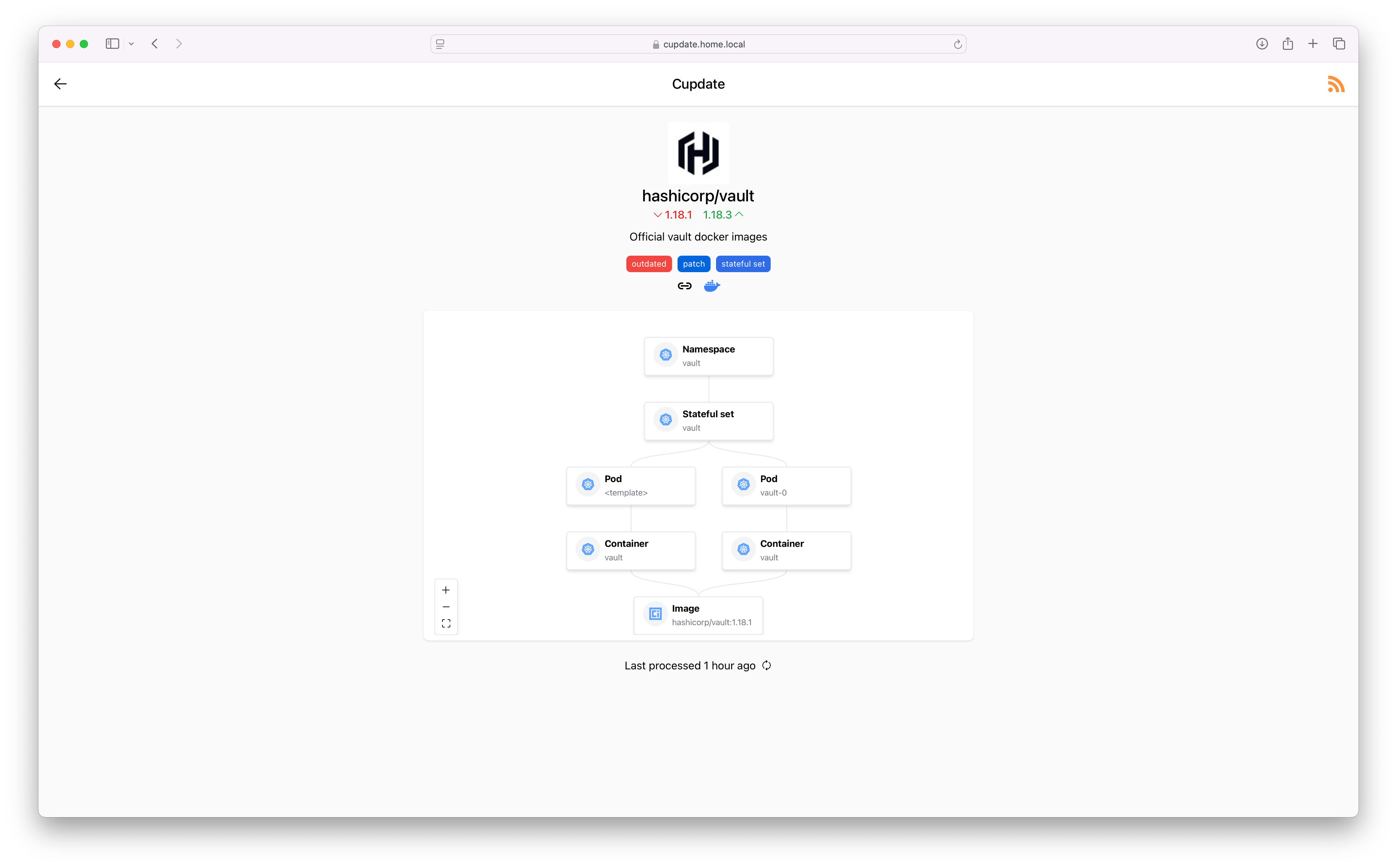
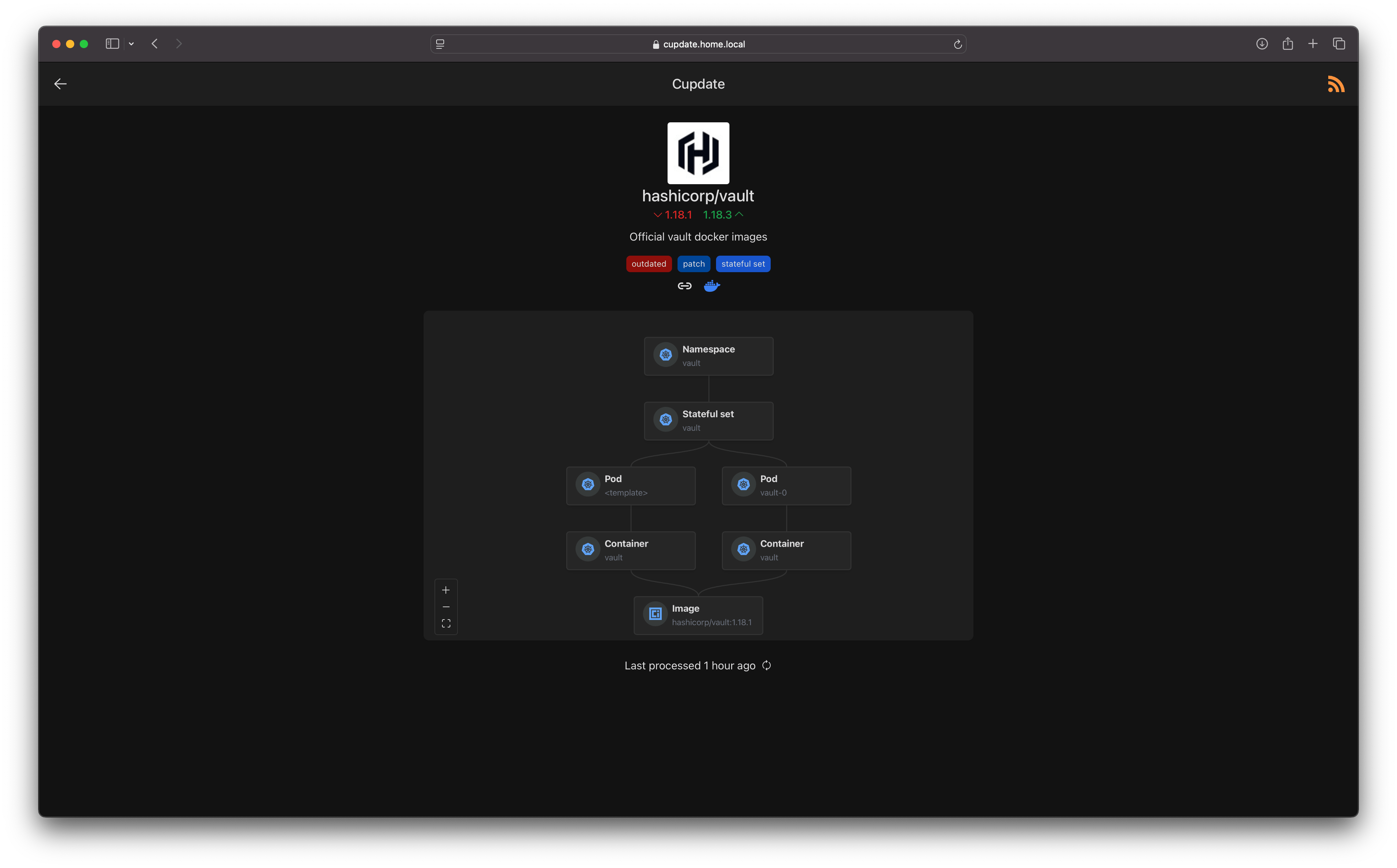
Cupdate is a lightweight, zero-configuration service designed to help operators keep their container images secure and up-to-date. It automatically discovers images in use across Kubernetes clusters, Docker hosts, or Podman (via Docker-compatible socket) and checks for newer versions and vulnerabilities from sources like Docker Scout, Clair, GitHub Advisories, and OSV. Results are presented in a web dashboard with light and dark modes, and are also accessible via REST API and RSS feeds. Cupdate runs as a single container with minimal resource usage, storing state in SQLite and cache in BoltDB. It supports a wide range of OCI registries and can be deployed via Kubernetes manifests, Docker Compose, or a static image list. The project is MIT-licensed and actively maintained.
Should you self-host cupdate?
cupdate scores 48/100 on selfhost.directory (how scoring works) and ranks #25 of 44 in Container Management. It has 312 GitHub stars.
It shipped 10 stable releases in the past year. The latest, v0.25.0, came out on 18 October 2026. New versions land roughly every 3 weeks.
Setup is moderate: expect some configuration beyond a single command. An official Docker image is available. It is MIT-licensed and written mostly in Go.
Its closest alternative on selfhost.directory is Portainer (77/100, 38 736 stars). It scores higher overall, so compare the two before you pick. See cupdate vs Portainer side by side.
Features
- Custom Logos
- Dependency Graph
- Grafana data source
- Label-based Configuration
- Multi-Registry Support
- OpenTelemetry tracing
- Prometheus Metrics
- REST API
- RSS Feed
- Static image list modeBeta
- Version update detection
- Vulnerability Scanning
- Web UI
cupdate README
More in Container Management
 cyber-container-platformSelf-hosted, open-source container manager with cyberpunk UI, real-time monitoring, built-in terminal, and JWT auth — a lightweight Docker Desktop alternative.
 DaoFlowOpen-source, self-hosted Agentic DevOps for AI agents and humans to safely deploy, inspect, and rollback Docker Compose apps on VPS or bare metal.
 DebNASDebNAS turns a minimal Debian 12/13 install into a home NAS with Cockpit UI, Portainer, VMs, SMB, RAID, and security hardening via one script.
 DeployrrDeployrr is a self-hosted CLI tool automating 160+ Docker apps for homelabs with reverse proxy, security, and authentication.
 DockDashDockDash is a self-hosted, open-source Docker dashboard with semantic-version-aware update monitoring showing actual version upgrades and changelogs.
 docker-controller-botSelf-hosted Telegram bot to manage Docker containers and Compose projects from chat with multi-host support, scheduling, and per-container update policies.
 DockerDiscordControlA self-hosted open-source Discord bot and web dashboard for managing Docker containers remotely — control, monitor, and automate from chat.
 Docker EngineMoby is an open-source framework from Docker providing a modular toolkit for building specialized container systems.
 docker-registry-uiSelf-hosted web UI for Docker registries with Trivy scanning, bulk cleanup, and multi-registry management.
 Docker-SentinelSelf-hosted, open-source container update orchestrator in Go replacing Watchtower with per-container policies, snapshots, rollback, and 11 notification providers.
 docker-socket-proxyHAProxy-based Docker Socket proxy that restricts service API access via environment variables, blocking dangerous operations and allowing essential endpoints by default.
 dockhandDockhand is a self-hosted Docker management platform with real-time container monitoring, Compose orchestration, Git deployments, and SSO. Free for homelabs under BSL 1.1
0 comments