
Self-host Zulip
13.2Team chat organized into topic-based threads
docker compose up zulip --wait- Stars
- 26 230
- RAM
- At least 2 GB RAM
- Ports
- 443 (Incoming HTTPS access for the web app (configurable to another port)), 80 (Optional incoming HTTP; requests are redirected to HTTPS)
- Requires
- Memcached, PostgreSQL, Redis
ghcr.io/zulip/zulip-server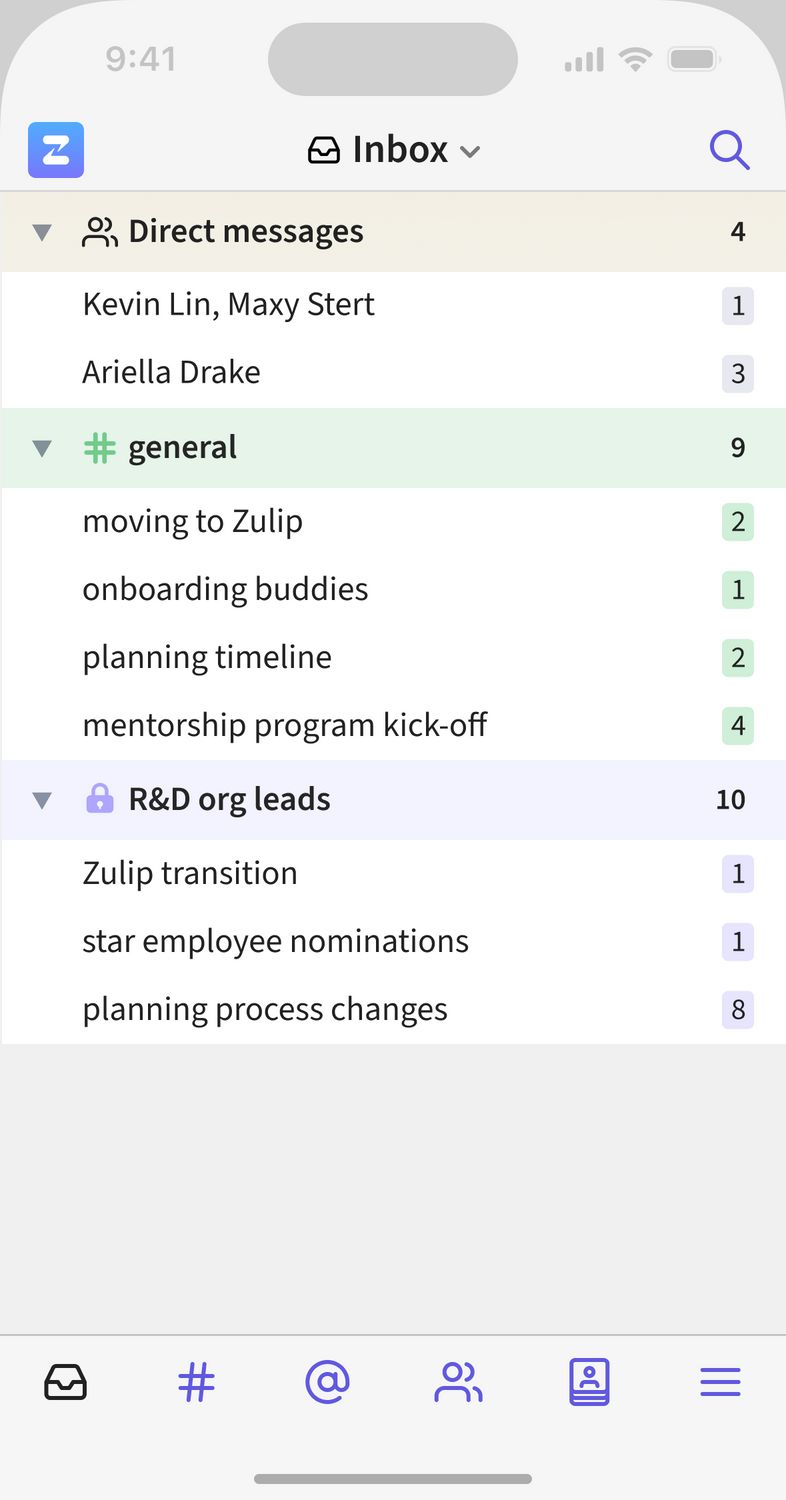
What is Zulip?
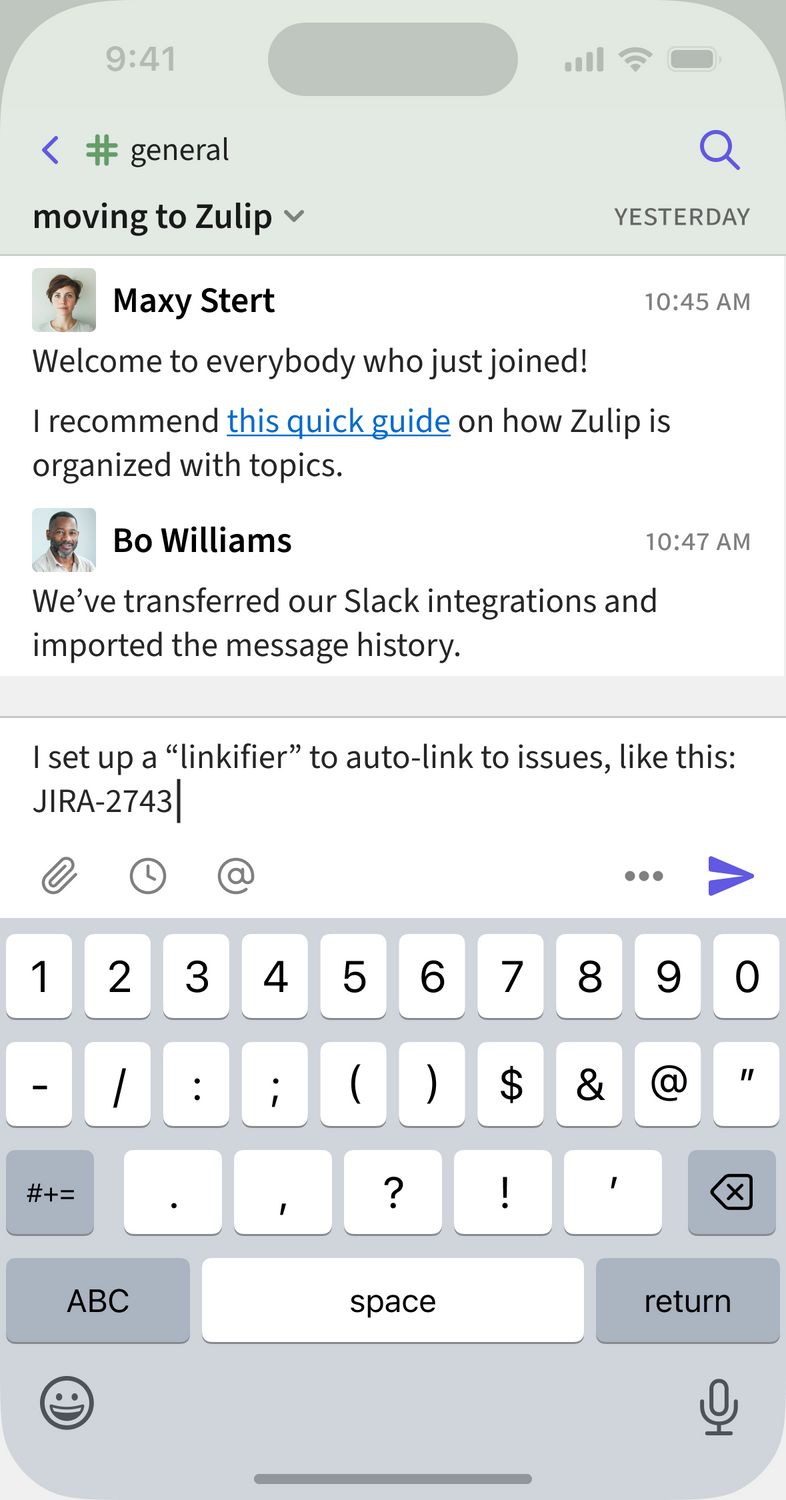
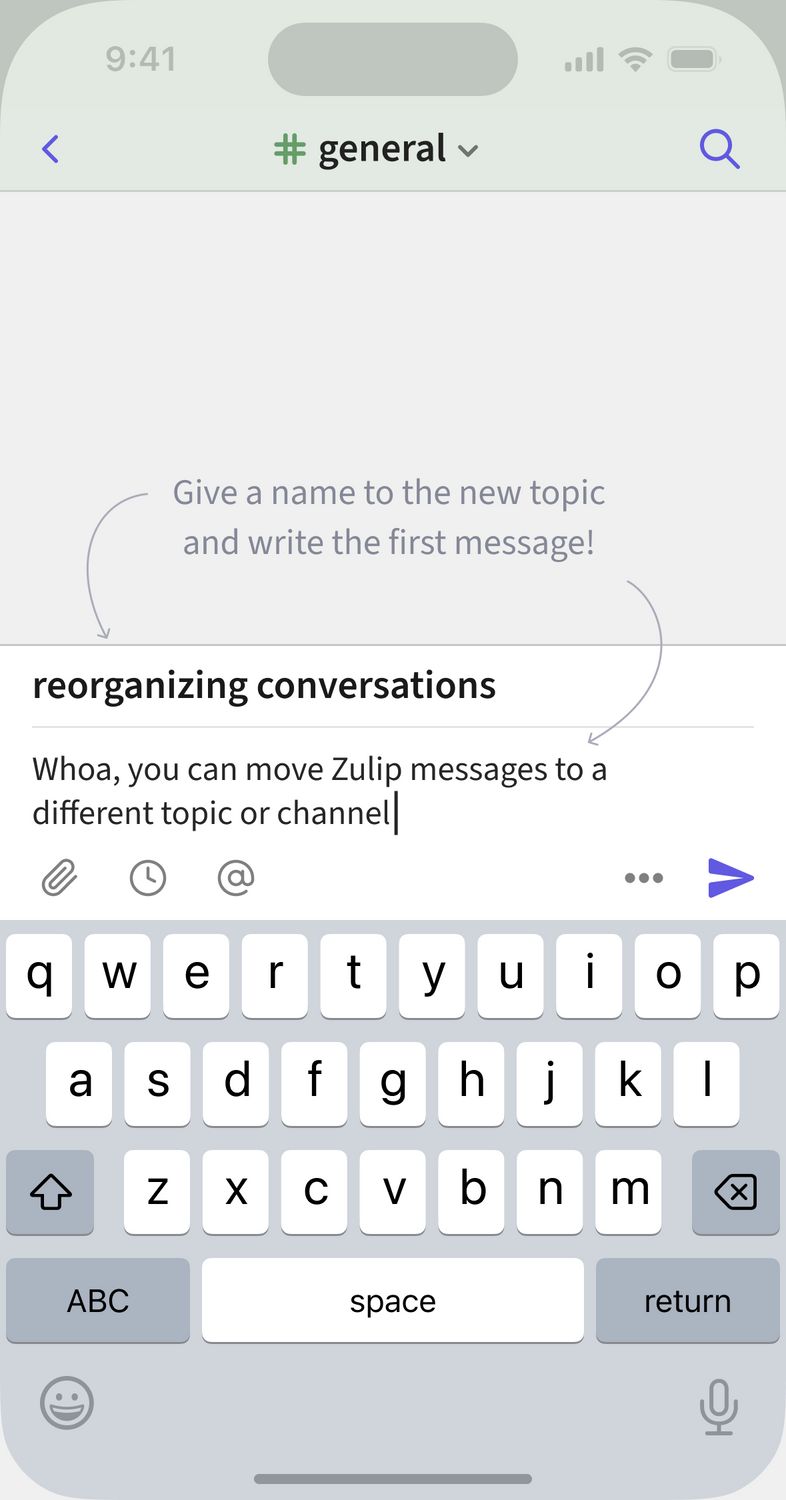
Zulip is a team chat server built around topic-based threads: each message belongs to a channel and a named topic, so discussions read more like email than like a fast-moving chat stream. It targets distributed teams, and the same software serves small groups, universities, open-source communities and large organizations that need both live and asynchronous conversations. Core capabilities include public and private channels, direct messages, message history search, file uploads, polls and collaborative to-do lists, custom emoji, scheduled messages and reminders, configurable notification settings, voice and video calls through a selectable provider, and user roles with fine-grained permissions including guest accounts. It ships web, desktop, iOS/Android and terminal clients, a documented REST API, custom and incoming webhooks, 130+ native integrations, and it can import history from Slack, Mattermost and Rocket.Chat. Authentication is configurable through /etc/zulip/settings.py: built-in email and password by default, plus OAuth social logins, SAML, OpenID Connect, Microsoft Entra ID, LDAP/Active Directory, JWT and Apache-based SSO. To run it yourself you provision a fresh Ubuntu or Debian machine, download the server tarball, execute scripts/setup/install with your email and hostname (optionally with --certbot for TLS), and open the one-time organization creation link it prints; alternatively use the official ghcr.io/zulip/zulip-server image with Docker Compose or the Helm chart on Kubernetes. The installer sets up nginx, PostgreSQL, Redis, RabbitMQ and memcached alongside it, and a domain name, TLS certificate and outgoing SMTP credentials are expected. The self-hosted software is Apache-2.0 licensed and its free tier includes the full feature set, while paid self-hosted tiers (Basic, Business, Enterprise) add unlimited mobile push notifications, support and help with SSO or LDAP provisioning; free servers get push notifications for up to 10 users unless they qualify for the community plan.
Zulip alternatives
 Rocket.ChatSelf-hosted, open-source chat platform for teams and citizens: channels, threads, voice and video, end-to-end encryption, LDAP/SSO, and Matrix federation.CompareRocket.Chat with Zulip
 StoatSelf-hosted, open-source deployment of the Stoat group chat platform: back-end, web client, file server, voice and image proxies run as one Docker Compose stack.CompareStoat with Zulip
 mattermostMattermost is a self-hosted collaboration platform with channels, threads, file sharing, voice calls and playbooks for DevSecOps, IT service desk and incident response.Comparemattermost with Zulip
 DiscourseDiscourse is a self-hosted, open-source community forum platform with built-in real-time chat, theming, and plugins. Powers 22,000+ communities with full data ownership.CompareDiscourse with Zulip
 sama-serverSelf-hosted open-source chat server providing real-time messaging, horizontal clustering, push alerts, and multi-device sync for teams and developers.Comparesama-server with Zulip
 VoceChatVoceChat is a superlight rust written social server. Easy integration to your site/app.CompareVoceChat with Zulip
 cinnyOpen-source Matrix client (AGPL-3.0) for self-hosted federated chat with end-to-end encryption, served as a static web app via Docker or tarball.Comparecinny with Zulip
 TinodeA self-hosted, open-source instant messaging platform: Go server plus Android, iOS, web and command-line clients, group chat, WebRTC calls and chatbots.CompareTinode with Zulip
All self-hosted alternatives to Microsoft Teams → All self-hosted alternatives to Slack →
Should you self-host Zulip?
Zulip scores 82/100 on selfhost.directory (how scoring works) and ranks #1 of 110 in Chat. It has 26 230 GitHub stars, +203 in the last 30 days.
It shipped 10 stable releases in the past year. The latest, 13.2, came out on 13 November 2026. New versions land roughly every 6 weeks.
Setup is moderate: expect some configuration beyond a single command. An official Docker image is available. It is Apache-2.0-licensed and written mostly in Python.
Its closest alternative on selfhost.directory is Rocket.Chat (83/100, 46 534 stars). It scores higher overall, so compare the two before you pick. See Zulip vs Rocket.Chat side by side.
Features
- Channels
- Custom Emoji
- Desktop App
- Direct Messages
- Email notifications
- File sharingCloud storage limits: 5 GB total (Free), 5 GB/user (Standard), 25 GB/user (Plus)
- Localization
- Message searchCloud Free plan: 10,000 messages of search history
- Native integrations
- Polls and to-do lists
- REST API
- Terminal client
- Topic-based threading
- Voice and video calls
- Webhooks
Zulip README
Zulip is an open-source organized team chat app with unique topic-based threading that combines the best of email and chat to make remote work productive and delightful. Fortune 500 companies, leading open source projects, and thousands of other organizations use Zulip every day. Zulip is the only modern team chat app that is designed for both live and asynchronous conversations.
Zulip is built by a distributed community of developers from all around the world, with 99+ people who have each contributed 100+ commits. With over 1,500 contributors merging over 500 commits a month, Zulip is the largest and fastest growing open source team chat project.
More in Chat
 zusamZusam is a self-hosted, open-source platform for private group forums with media sharing, link previews, and a responsive mobile-friendly interface.
 AChatSelf-hosted, local-first AI chat platform for teams: shared conversations, roles, billing, moderation and plugins, on Node.js with PostgreSQL and Redis.
 AddarrAddarr is a self-hosted Telegram bot to add series to Sonarr and movies to Radarr, plus control Transmission and Sabnzbd download speeds via inline keyboard.
 agent-second-brainSelf-hosted voice-first assistant capturing Telegram notes into an Obsidian vault via a persistent Claude Code session — runs on your VPS for ~$25/month.
 aiquilaSelf-hosted AI for Nextcloud with an MCP server, native app, and five provider choices including local models.
 Antigravity-DeckSelf-hosted web dashboard for Antigravity AI IDE — manage conversations, workspaces, cascades with full history, live control, and Cloudflare Tunnel remote access.
 apexApex is a self-hosted AI platform routing conversations across multiple models with persistent memory, extensible skills, and mTLS auth — all in a single Python file.
 apimeSelf-hosted, open-source WhatsApp REST API gateway in Go with multi-instance dashboard, webhooks, and Node.js SDK.
 BackspaceSelf-hosted Discord alternative with spaces, roles, voice/video, 4K screen sharing, and server federation. Deploys via interactive Docker installer.
 botdarrA self-hosted chat bot that connects Discord, Slack, Telegram, and Matrix to Radarr, Sonarr, and Lidarr for media management without a UI.
 botmuxBotMux is a self-hosted command center for managing multiple Telegram bots with reverse proxy, LLM routing, Slack bridges, and analytics in a single Go binary.
 bullxSelf-hosted AI agent platform with a Company Brain that learns from conversations. Agents run in isolated containers. Integrates with Slack, Teams, and other chat tools.
0 comments