
Self-host Tinode
v0.25.3Open-source instant messaging platform with a Go backend
docker run --name mysql --network tinode-net --restart always --env MYSQL_ALLOW_EMPTY_PASSWORD=yes -d mysql:5.7- Stars
- 13 562
- Port
- 6060 (Server HTTP/WebSocket endpoint and bundled web app)
tinode/tinode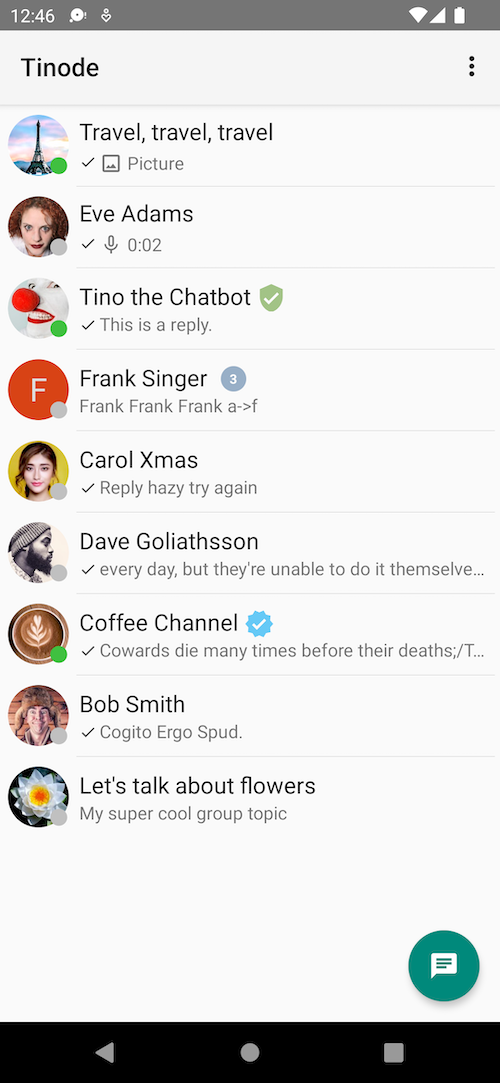


What is Tinode?
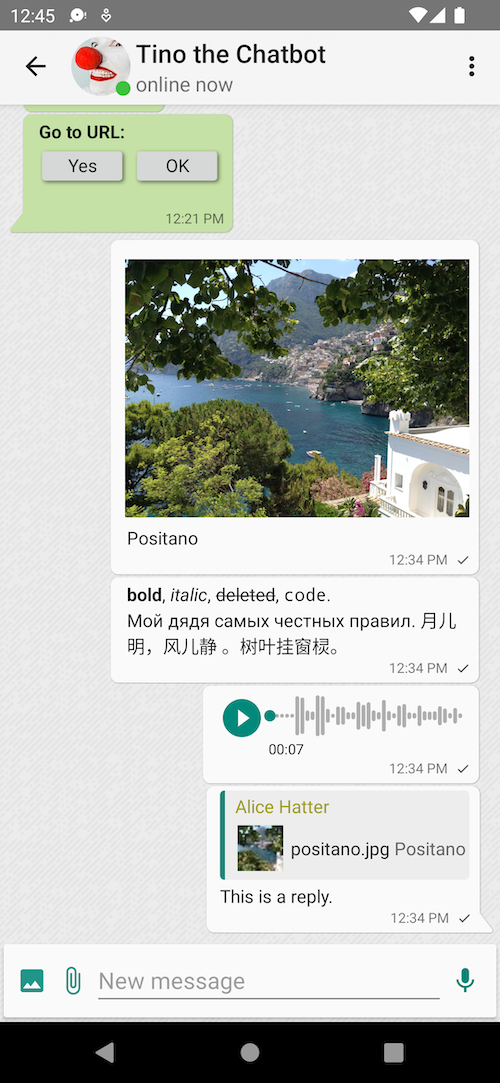
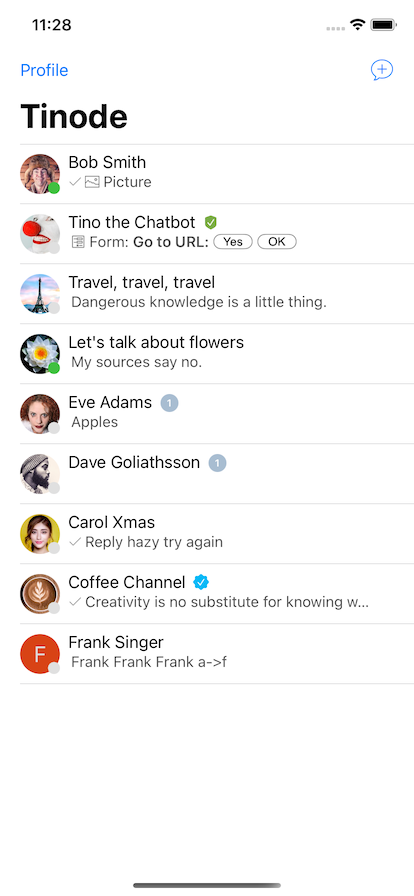
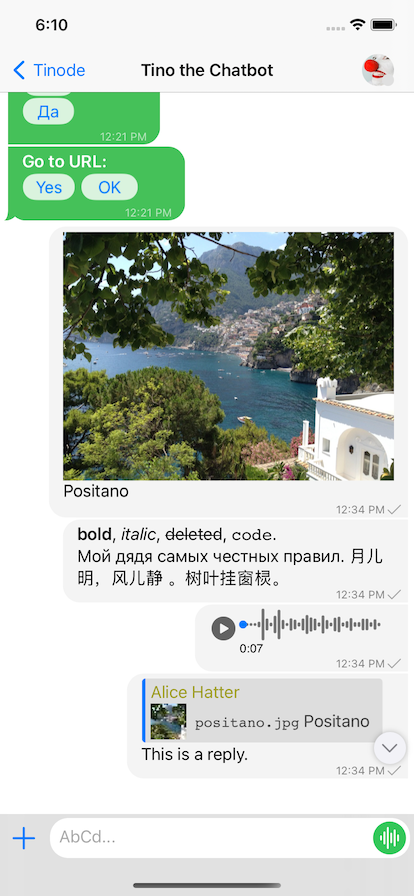
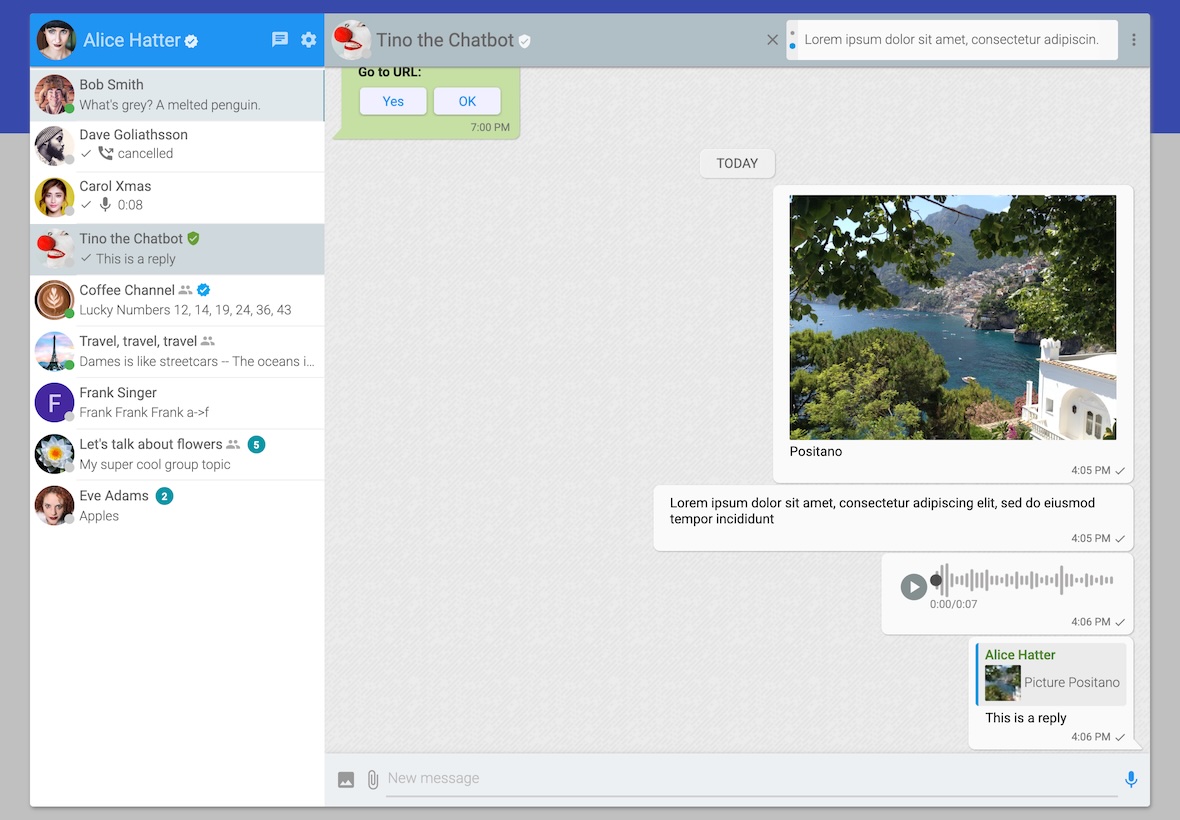
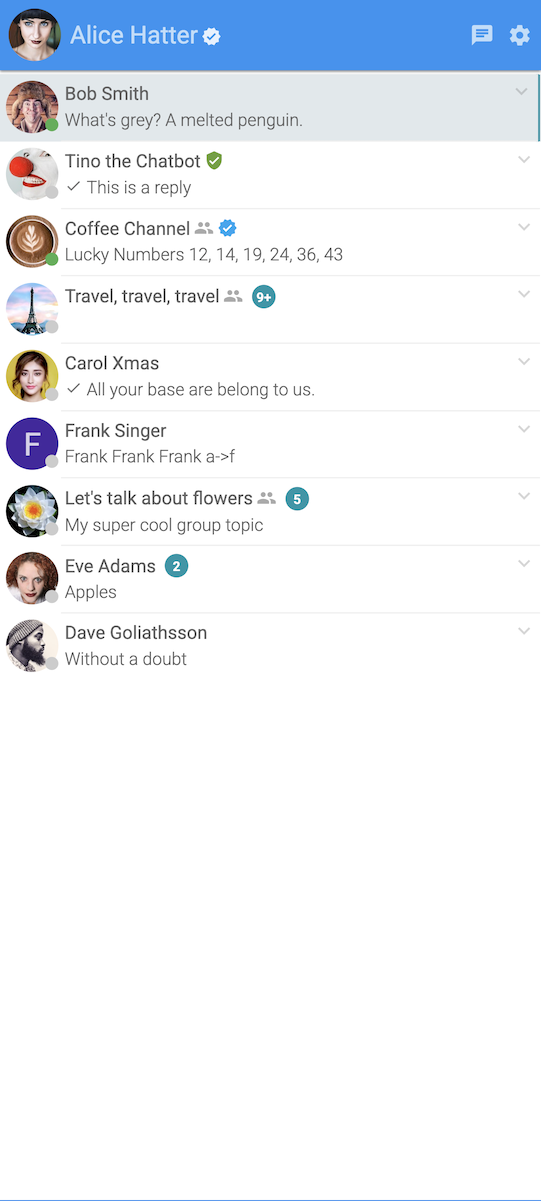
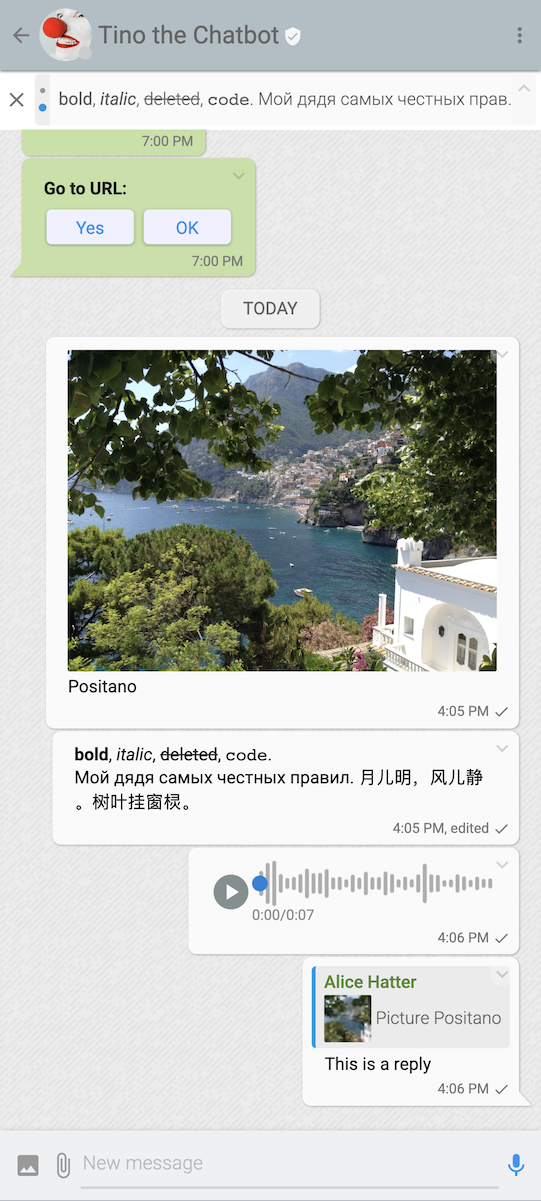
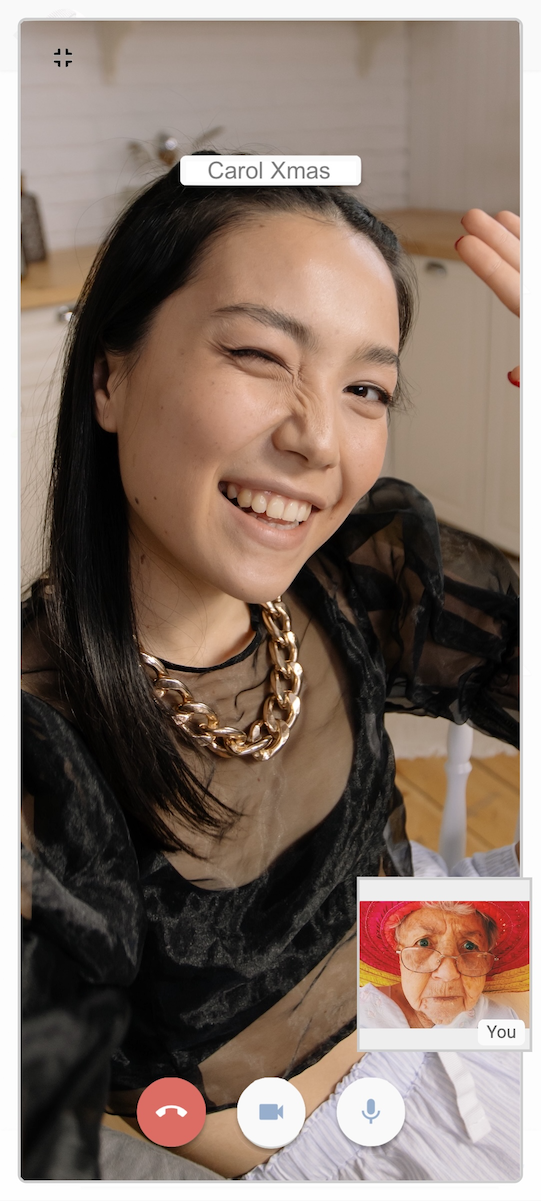
Tinode is a full instant messaging stack: a server written in Go, with native apps written in Java and Swift, a React-based web client, and a scriptable Python command line tool. Chats cover one-on-one and group topics, read-only channels, voice and video calls, voice messages, markdown-styled rich messages with inline images and attachments, message editing, pinning, bookmarks, delivery/read and typing notifications, and user discovery. On the server side it offers granular permissions, anonymous users, plugins for moderation or chatbots, media kept on the local disk or in Amazon S3, and sharded clustering with failover; data lives in MySQL, PostgreSQL, MongoDB or the deprecated RethinkDB adapter. Self-hosting means unpacking a release binary built for your database and platform, initializing the schema with init-db, then starting the tinode server on port 6060, or launching a tinode/* container; TLS, SMTP verification, TURN/STUN for calls and push delivery are configured by you. The maintainers call it beta-quality software, and federation plus end-to-end encryption are still on the plan rather than shipped. A free self-installation tier coexists with paid support tiers and a managed cloud offering.
Tinode alternatives
 Twake ChatOpen-source Matrix chat client with E2EE, native apps for Android/iOS/Linux, and a self-hostable web version via Docker.CompareTwake Chat with Tinode
 ChatGPT Next WebSelf-hosted, open-source AI chat UI for OpenAI, Claude, Gemini, DeepSeek and many other providers, with Docker, Vercel and native desktop/mobile clients.CompareChatGPT Next Web with Tinode
 gramsrvgramsrv is a self-hosted, open-source MTProto server in Go for running a Telegram-compatible backend with real clients. Supports monolith and microservice architectures.Comparegramsrv with Tinode
 mattermostMattermost is a self-hosted collaboration platform with channels, threads, file sharing, voice calls and playbooks for DevSecOps, IT service desk and incident response.Comparemattermost with Tinode
 vocechat-server-rustVoceChat is a superlight rust written social server. Easy integration to your site/app.Comparevocechat-server-rust with Tinode
 fluxerSelf-hosted, open-source instant messaging and VoIP platform with channels, voice and video calls, search and an admin dashboard, plus web, desktop and mobile clients.Comparefluxer with Tinode
 MindRoomSelf-hosted AI agent platform with persistent memory, 100+ tool integrations, and Matrix-based chat. Run locally or on your servers with local or cloud models per agent.CompareMindRoom with Tinode
 MqviSelf-hosted, open-source communication platform with end-to-end encryption for voice, video, and messaging — a Discord alternative you can run on your own server.CompareMqvi with Tinode
All self-hosted alternatives to Telegram → All self-hosted alternatives to WhatsApp → All self-hosted alternatives to XMPP →
Should you self-host Tinode?
Tinode scores 67/100 on selfhost.directory (how scoring works) and ranks #5 of 13 in Instant Messaging. It has 13 562 GitHub stars, +33 in the last 30 days.
It shipped 4 stable releases in the past year. The latest, v0.25.3, came out on 4 July 2026. New versions land roughly every 2 months.
Setup is advanced: plan for several services and some ongoing maintenance. An official Docker image is available. It is GPL-3.0-licensed and written mostly in Go.
Its closest alternative on selfhost.directory is Rocket.Chat (81/100, 46 386 stars). It scores higher overall, so compare the two before you pick. See Tinode vs Rocket.Chat side by side.
Features
- Anonymous users
- Broadcast channels
- Clustering with failoverFailover is experimental; at least three nodes recommended
- Command-line administration
- Granular Permissions
- gRPC API bindings
- Message Editing
- Multi-device Sync
- One-on-one and group chat
- Pinned Chats and Messages
- Plugin System
- Read receipts and typing notifications
- Rich Message Formatting
- User search and discovery
- Voice and video callsICE servers not provided out of the box
Tinode README
 Instant messaging full stack. Backend in pure Go (license GPL 3.0), clients for Android (Java), iOS (Swift), and web (ReactJS), as well as gRPC client support for C++, C#, Go, Java, Node, PHP, Python, Ruby, Objective-C, etc (all clients licensed under Apache 2.0). Wire transport is JSON over websocket (long polling is also available) or protobuf with gRPC.
This is beta-quality software: feature-complete and stable but probably with a few bugs or missing features. Follow instructions to install and run or use one of the cloud services below. Read API documentation.
FAQ
How to fix PostgreSQL initialization failing with 'missing database' error?
PostgreSQL always requires an existing database to connect to, so if you change the user from the default, create either the Tinode database or an empty database named after that user before first run.
What is the proper way to format gRPC {pub content}?
gRPC carries the content field as a byte array while clients expect valid JSON, so plain text must be quoted, e.g. "\"Hello world\"".
What is the difference between a group topic and a channel?
A channel is a special group topic: normal group topics cap subscribers (128 by default) and let each be managed individually, while channels add unlimited read-only readers who cannot post, are not tracked by presence, and do not see who wrote each message.
Once the number of network connections reaches about 1000 per node, all kinds of problems start. Is this a bug?
Probably not: Linux caps the number of open file descriptors per process, usually at 1024, so the failures come from hitting an OS limit rather than from Tinode.
How to create a root user?
From version 0.18 grant root with the tinode-db initializer (for example -auth=ROOT with a user ID and basic scheme, or the simpler -make_root flag from 0.21); on 0.17 and older you must run a database query directly.
How do I make my installation private?
Restrict registrations to an email domain you control by listing it in the account validation config, so you receive the verification emails at a catch-all mailbox; the REST authenticator is the alternative for larger user bases.
How to add new users?
Users self-register from the web, Android or iOS apps; accounts can be created with the tn-cli command-line tool, or created automatically at first login from an external database through the REST authenticator.
How to setup push notifications with Google FCM?
Create a Firebase project, download the service-account credentials, point the server's push configuration at them, and update the web client's Firebase config; iOS and Android clients need their own Firebase files and must be recompiled.
How to setup push notifications with Tinode Push Gateway?
Register at console.tinode.co to obtain a TNPG token, then configure the server with that token.
What are the options for enabling push notifications?
Either the hosted Tinode Push Gateway, which needs minimal setup, or Google FCM directly, which requires you to build and ship your own mobile apps.
Where can I find server logs when running in Docker?
The log lives at /var/log/tinode.log inside the container; exec into the container to tail it, copy it out with docker cp after the container stopped, or map a host directory onto /var/log to keep logs on the host.
More in Instant Messaging
 TuwunelOpen-source, self-hosted Matrix homeserver in Rust with RocksDB storage, federation, a built-in OAuth 2.0/OIDC server, LDAP login, Element Call and admin APIs.
- Twake ChatOpen-source Matrix chat client with E2EE, native apps for Android/iOS/Linux, and a self-hostable web version via Docker.
- vocechat-server-rustVoceChat is a superlight rust written social server. Easy integration to your site/app.
 WebCordSelf-hosted Docker container running the WebCord Discord client streamed to your browser via Selkies. Supports GPU acceleration, multi-arch, and optional basic auth.
 wireOpen-source end-to-end encrypted messenger for teams: calls, file sharing, SSO. The self-hosted wire-server runs on Kubernetes under GPL-3.0.
 ZulipSelf-hosted, open-source team chat where every message lives in a named topic thread, with web, desktop, mobile and terminal apps, SSO options and a REST API.
 avhost/docker-matrixSelf-hosted Docker image for running a Matrix Synapse homeserver with integrated Coturn TURN/STUN server for federated chat and VoIP.
 campfireA self-hosted, open-source group chat app from 37signals with rooms, DMs, @mentions, search and a bot API, run in a single Docker container.
 chatChat is a self-hosted, open-source decentralized messaging app that runs in the browser with end-to-end encryption, P2P file sharing, and voice/video calls.
 ChattoChatto is an open-source, self-hosted team chat server: one compact binary, no separate database, with rooms, threads, attachments, search, calls and SSO.
 CliraClira is a self-hosted, open-source AI executive assistant managing email, calendar, and messaging with human approval for every action.
 Converse.jsOpen-source, browser-based XMPP/Jabber chat client: self-hosted via CDN or dist files and embedded as fullpage, overlay, or widget-style chat with OMEMO encryption.
0 comments