
Self-host ZhikunCode
v1.0.0Open-source AI coding assistant with browser UI and agents
- Stars
- 532
- RAM
- 4GB+
- Ports
- 8080 (HTTP web UI and API), 8000 (Python analysis service (optional, internal))
- Requires
- LLM API Provider
What is ZhikunCode?
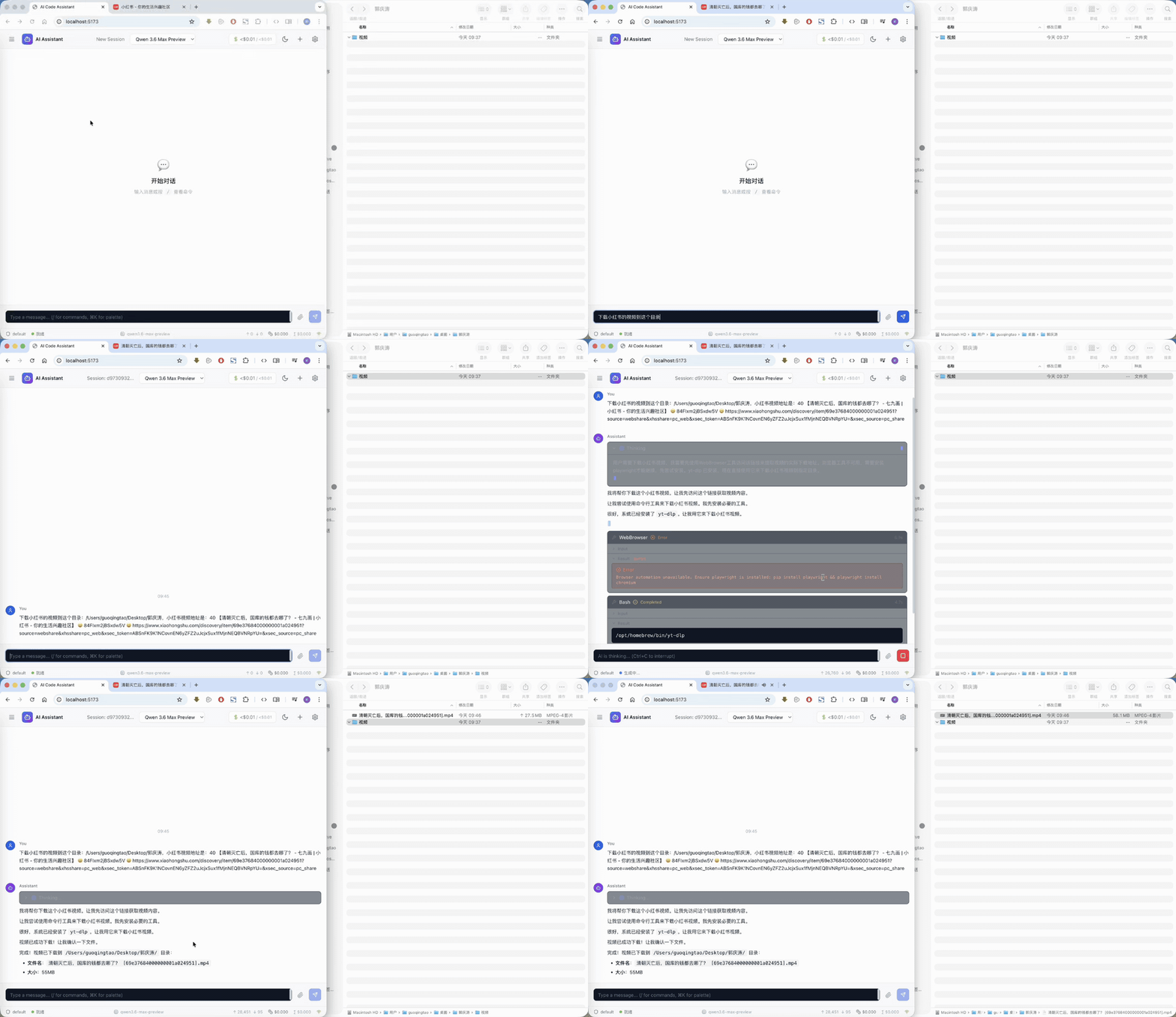
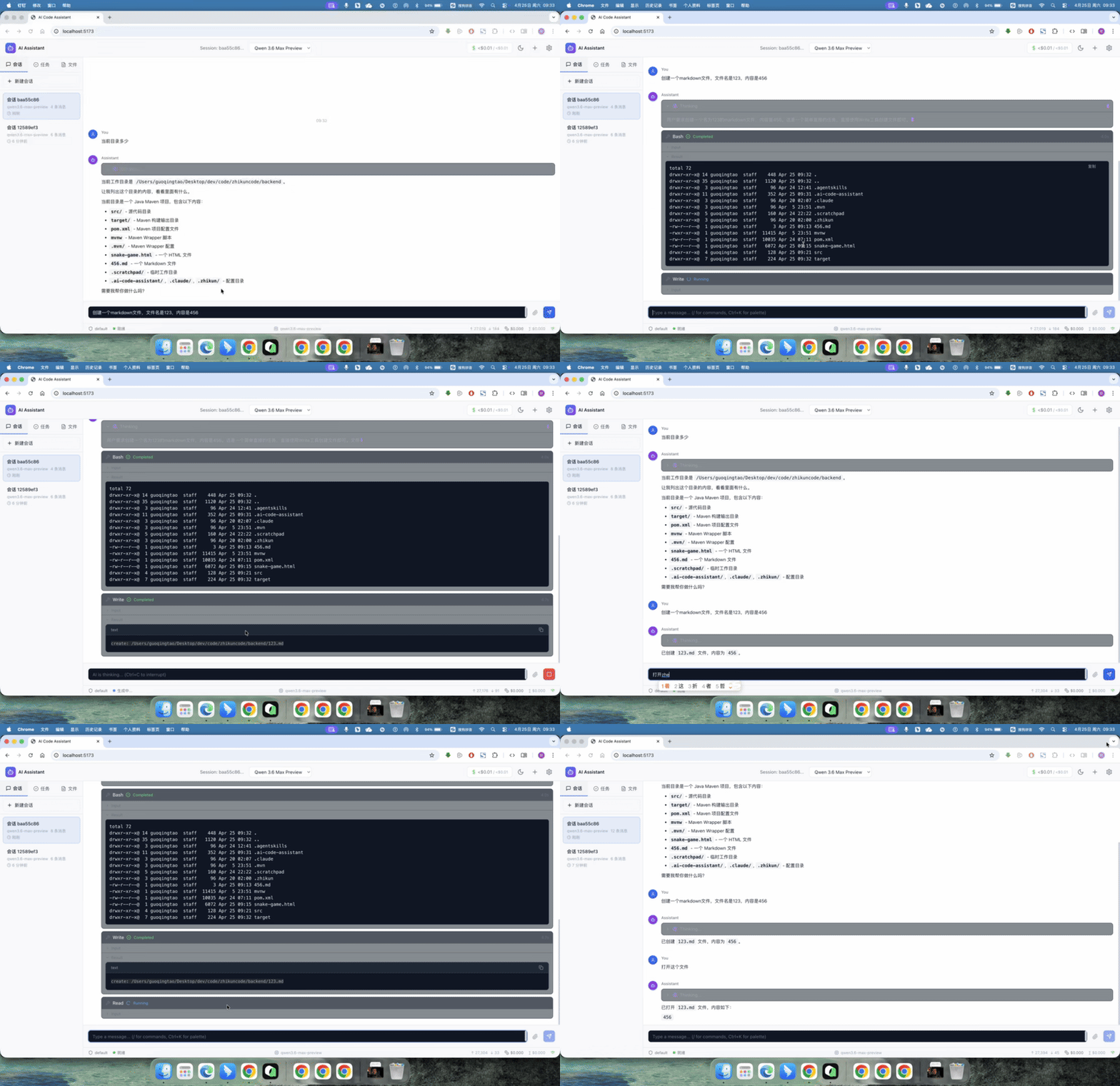
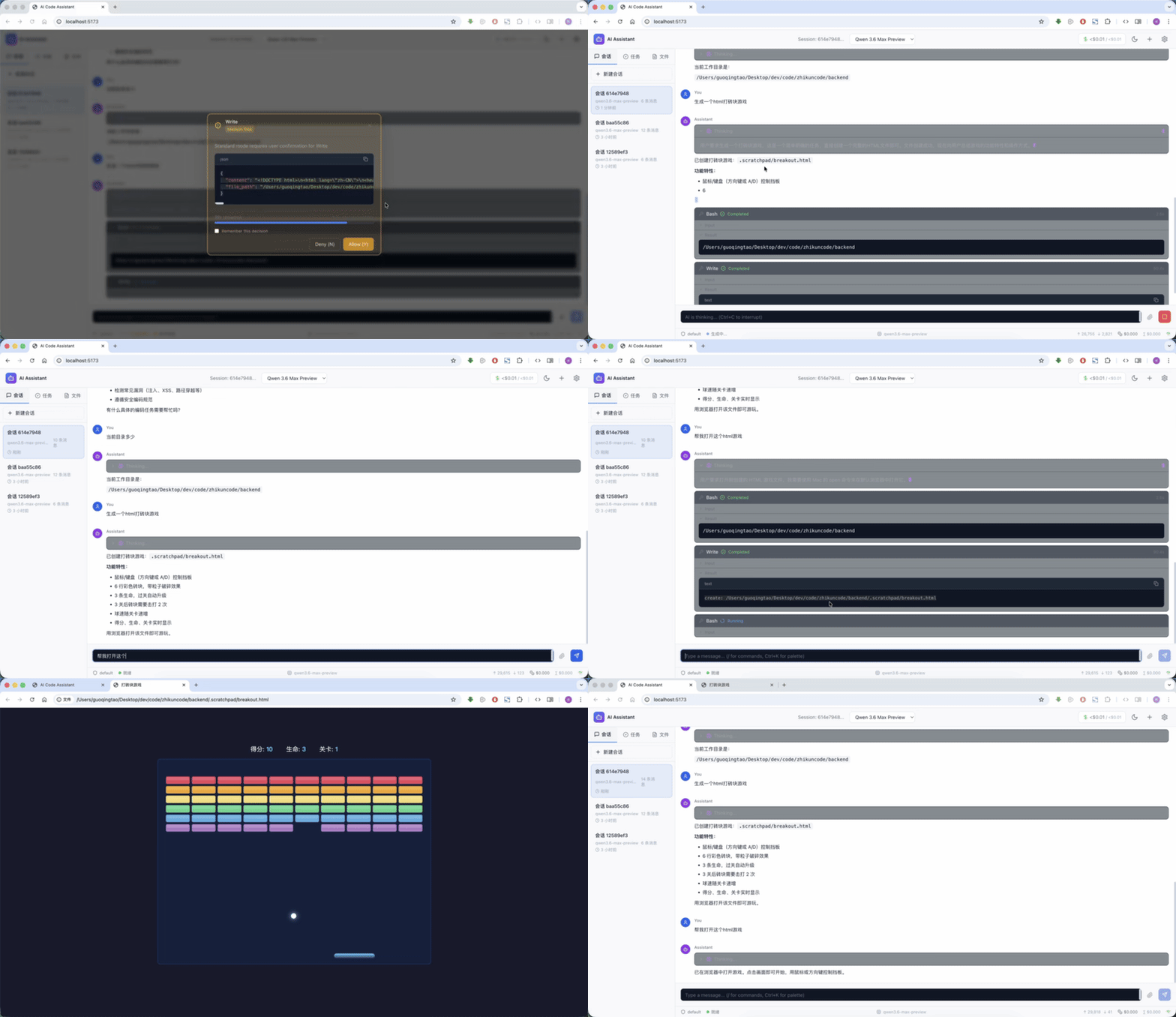
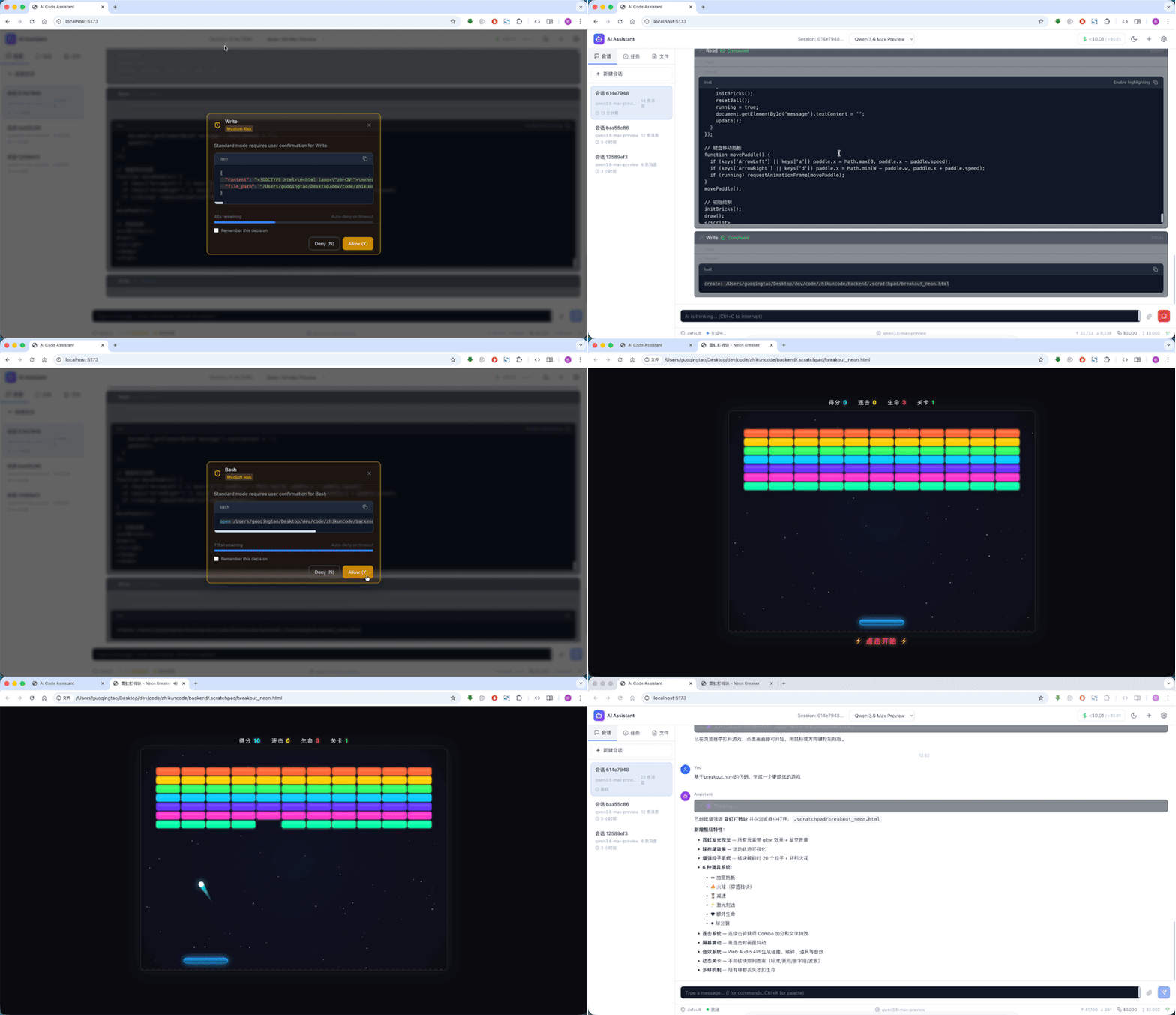
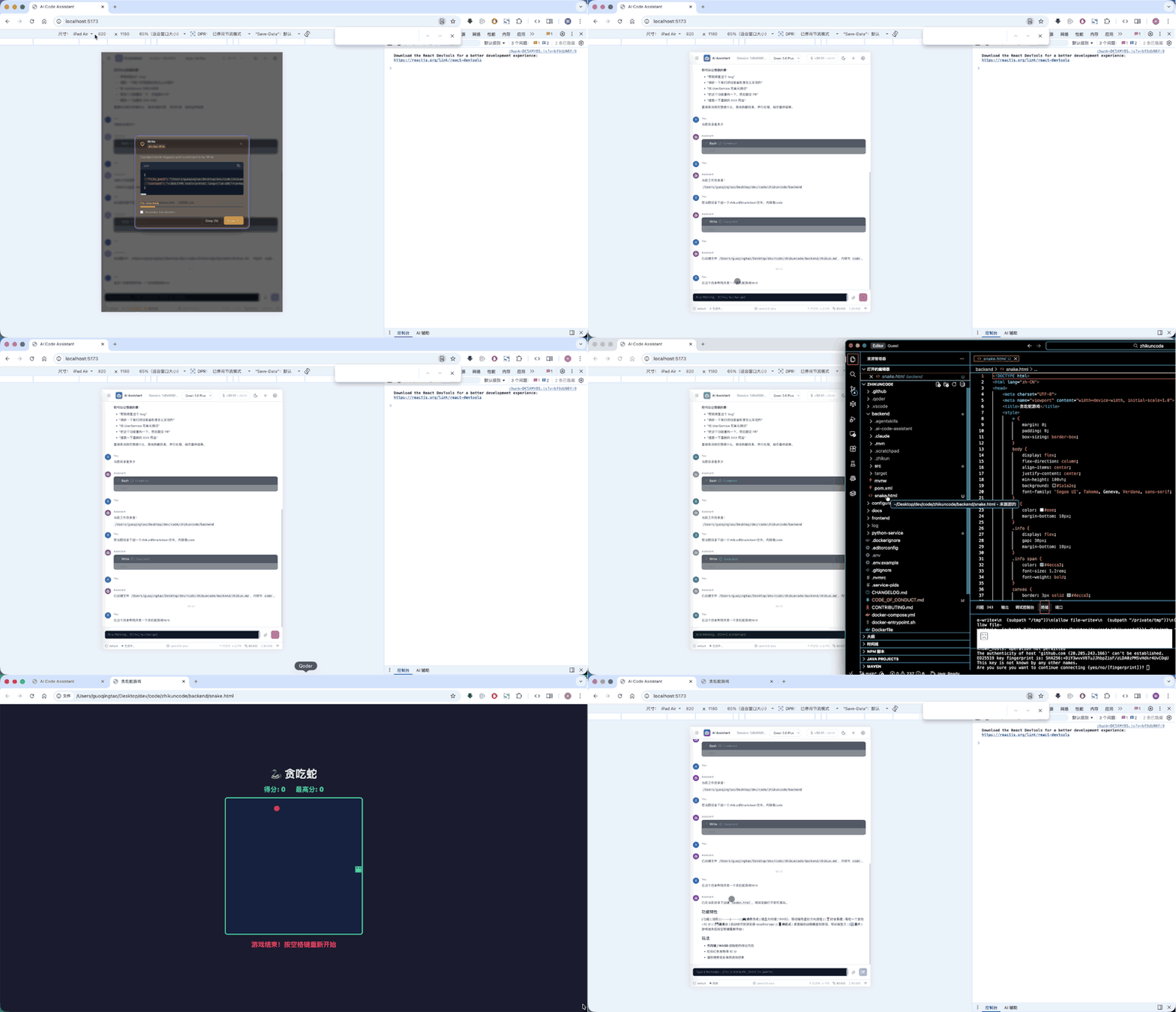
ZhikunCode is a self-hosted AI coding platform that provides a complete browser-based development environment. It features a three-tier architecture with Java Spring Boot backend, React TypeScript frontend, and Python FastAPI analysis service. Users can delegate tasks to multiple specialized agents that run in parallel, with background task support and real-time activity tracking. The platform includes 40+ built-in tools for file operations, terminal, search, and browser automation, plus MCP protocol support for dynamic tool extension. Security is built-in with an 8-layer Bash sandbox, unified authorization gateway, and tool execution gateway. It natively connects to Chinese LLM providers (Qwen/DashScope, DeepSeek, Moonshot/Kimi, Zhipu GLM, MiniMax) without requiring external network access. Deployment is via Docker Compose with persistent SQLite storage for sessions and memories. The project is MIT licensed and actively developed.
Should you self-host ZhikunCode?
ZhikunCode scores 51/100 on selfhost.directory (how scoring works) and ranks #33 of 120 in AI Assistant. It has 532 GitHub stars.
It shipped 1 stable release in the past year. The latest, v1.0.0, came out on 21 April 2026.
Setup is moderate: expect some configuration beyond a single command. It is MIT-licensed and written mostly in Java.
Its closest alternative on selfhost.directory is openhands (87/100, 92 086 stars). It scores higher overall, so compare the two before you pick. See ZhikunCode vs openhands side by side.
Features
- 8-layer security sandbox
- Background tasks
- Browser-based Web UI
- Cross-session memory
- MCP protocol support
- Multi-Agent Collaboration
- Multimodal image chat
- Native Chinese LLM support
- Plugin System
- Project and session trust boundaries
- Runtime verification framework
- Skill System
- Smart context management
- Voice interaction (ASR/TTS)
ZhikunCode README
FAQ
What if port 8080 is already in use?
Change ZHIKUN_PORT in .env (e.g., ZHIKUN_PORT=9090), then docker compose down && docker compose up -d.
How to troubleshoot Docker deployment issues?
Check docker ps -a, docker logs zhikuncode, docker inspect health. Common issues: missing API key, incomplete image build (run docker compose up --build), insufficient memory (adjust deploy.resources.limits.memory in docker-compose.yml).
Why Java + React + Python three-tier architecture?
Java 21/Spring Boot for strong typing, enterprise ecosystem, WebSocket, virtual threads; React 18/TypeScript for componentization, type safety, Vite, TailwindCSS; Python FastAPI for mature code analysis/AST ecosystem, async performance, isolation from main backend.
How to contribute code?
Fork repo, create feature branch, commit, create PR. See CONTRIBUTING.md. Dev environment needs JDK 21, Node.js 22+, Python 3.11-3.12, Maven 3.9+.
Does it conflict with VS Code extensions like Copilot or Cline?
No conflict. ZhikunCode is an independent web app that doesn't depend on any IDE or require plugins.
Does it support offline/air-gapped deployment?
Yes, fully offline with Ollama for local models, or use Chinese LLMs with domestic network access only.
Where is data stored and is it secure?
Session data in SQLite database in Docker volume zhikun-data, project code via volume mount, API keys only in .env and container env vars. No telemetry runs.
What are the Docker deployment requirements?
Docker 20.10+, Docker Compose V2, 4GB+ RAM, and network access to LLM API endpoints.
Which LLMs are supported?
All OpenAI API-compatible models including Qwen/DashScope, DeepSeek, Moonshot/Kimi, Zhipu GLM, MiniMax, OpenAI, Anthropic Claude, and local models via Ollama/vLLM.
More in AI Assistant
 ZimaOS-BlueZimaOS Blue is an open-source, self-hosted AI agent runtime in Go that runs locally on any device with voice, browser automation, deep research, and 20+ IM integrations.
 zolaSelf-hosted open-source AI chat for OpenAI, Mistral, Claude, Gemini, and local Ollama models. BYOK, file uploads, dark mode, Supabase auth.
 Zosma CoworkOpen-source AI work platform with multi-agent pipeline, local models via Ollama, full data privacy, desktop app, and Docker deployment with fleet mode.
 心潮动态心智系统心潮 is a self-hosted, open-source AI dynamic mind state engine with drives, thoughts, fatigue, sleep, and short-term context. HTTP API and remote MCP with OAuth 2.1.
 actual-mcp-serverOpen-source MCP server connecting AI assistants to self-hosted Actual Budget with 84 tools for transactions, budgets, and bank sync. Runs via Docker, npm, or stdio.
 aegis_avataAEGIS is a self-hosted, open-source personal intelligence dashboard with Live2D avatar, Gemini voice briefings, and Notion, Google Calendar, YouTube Music integrations.
 agentboxagentbox is a self-hosted browser workspace that runs AI coding agents in Docker on your server, providing chat, terminal, file management, and Git from any device.
 AgenticSeekSelf-hosted, open-source alternative to Manus AI: a voice-enabled agent that browses the web, writes and runs code, and plans tasks on local LLMs.
 agent-second-brainSelf-hosted voice-first assistant capturing Telegram notes into an Obsidian vault via a persistent Claude Code session — runs on your VPS for ~$25/month.
 Agent ZeroSelf-hosted, open-source AI agent framework: the agent works in its own Linux container with an annotatable browser, office documents, per-project memory and plugins.
 AgenvoySelf-hosted AI agent running locally, auto-generates tools, shares via MCP with Claude Code and Codex, keeps data private.
 agxagx is a self-hosted, open-source desktop app for SQL analytics with AI-assisted queries and ClickHouse backend. Runs natively via Tauri or as a web interface via Docker.
0 comments