
Self-host ubnt-update
TLS stream proxy for Ubiquiti firmware updates
- Stars
- 22
- CPU
- 0.25 cores (reserved), 0.75 cores (limit)
- RAM
- 256M (reserved), 512M (limit)
- Port
- 443 (TLS stream proxy for Ubiquiti firmware update domains)
What is ubnt-update?
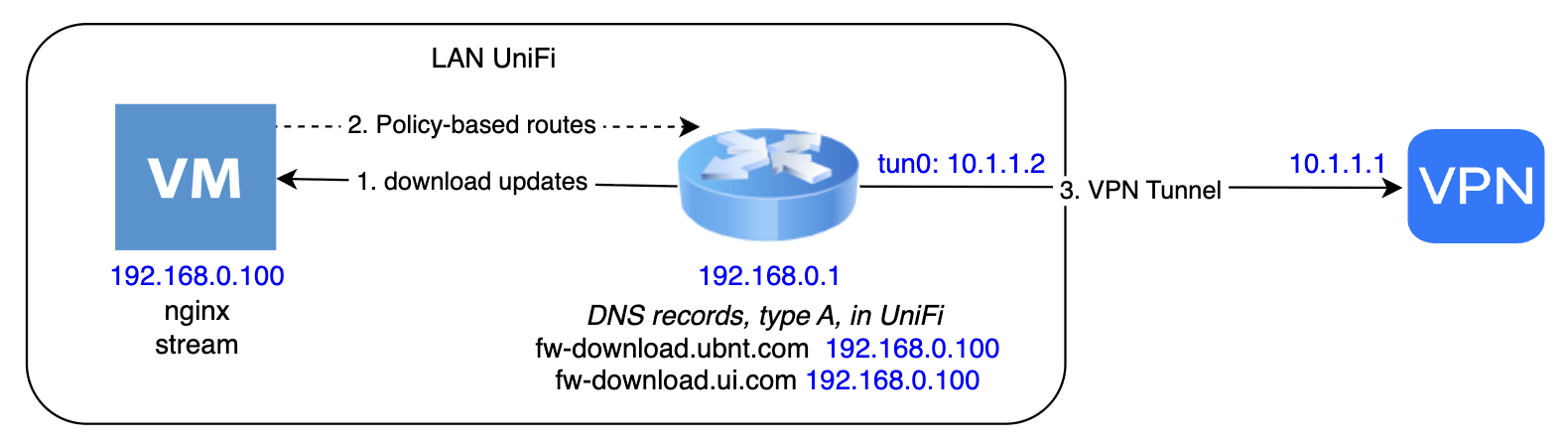
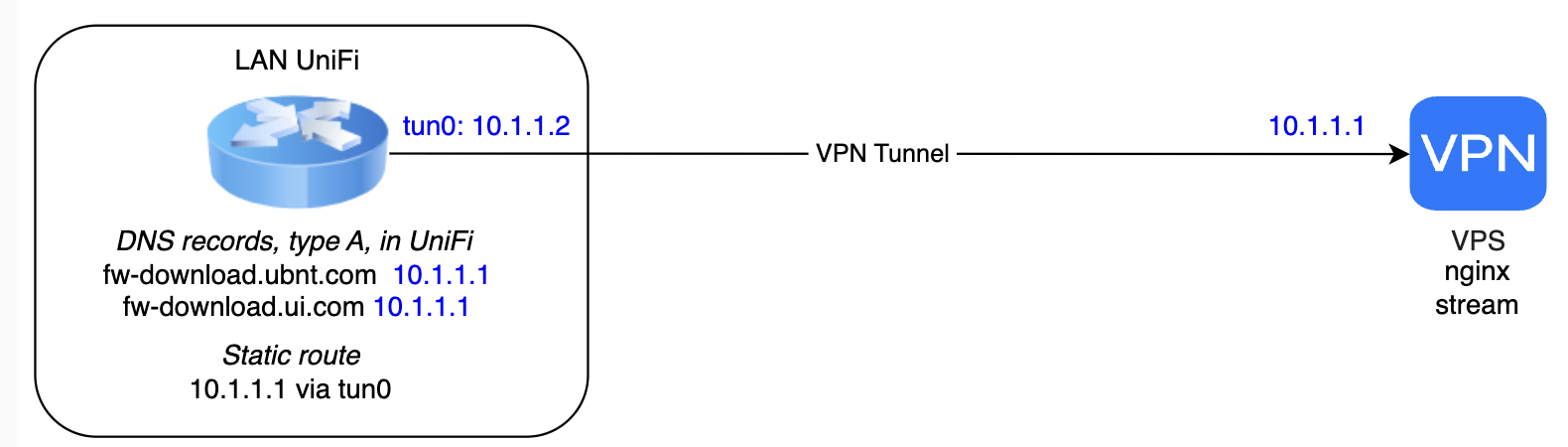
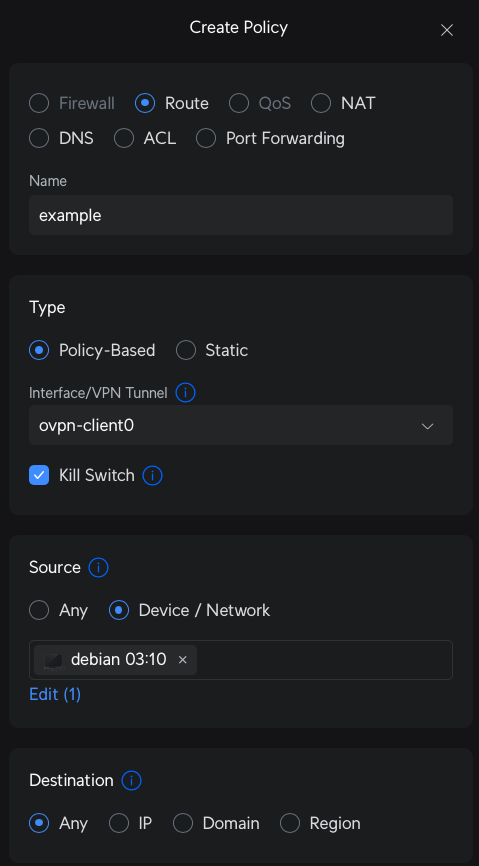
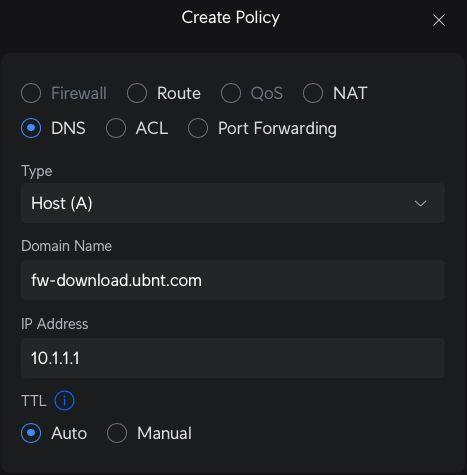
ubnt-update is a self-hosted solution for updating Ubiquiti/UniFi network devices when the official firmware update servers (hosted on Amazon) are unreachable due to geo-blocking or sanctions. It provides nginx stream proxy configurations that terminate TLS connections to Ubiquiti update domains (fw-download.ubnt.com, fw-download.ui.com, etc.) and forward them through a VPN tunnel to a VPS or server located outside the restricted region. Three deployment methods are documented: (1) a local VM with nginx and a VPN tunnel, (2) a VPS with nginx and a VPN tunnel, (3) a VPS using Docker Compose with the provided nginx configuration. The project includes multiple nginx stream configuration variants covering different sets of Ubiquiti domains (firmware downloads, beta/early access, and full update domains). It runs as a Docker container (nginx:1.28.0-alpine-slim) exposing port 443, or as a manual nginx installation on Debian/Ubuntu. The software is open-source under the MIT license.
Should you self-host ubnt-update?
ubnt-update scores 31/100 on selfhost.directory (how scoring works) and ranks #31 of 31 in Networking. It has 22 GitHub stars.
There was no stable release in the past 12 months, so check the repository's recent activity before you rely on it.
Setup is advanced: plan for several services and some ongoing maintenance. It is MIT-licensed.
Its closest alternative on selfhost.directory is headscale (82/100, 45 140 stars). It scores higher overall, so compare the two before you pick. See ubnt-update vs headscale side by side.
Features
- DNS override via UniFi Policy Table
- Docker Compose Deployment
- Manual nginx deployment
- Multiple domain configurations
- Resource Limits
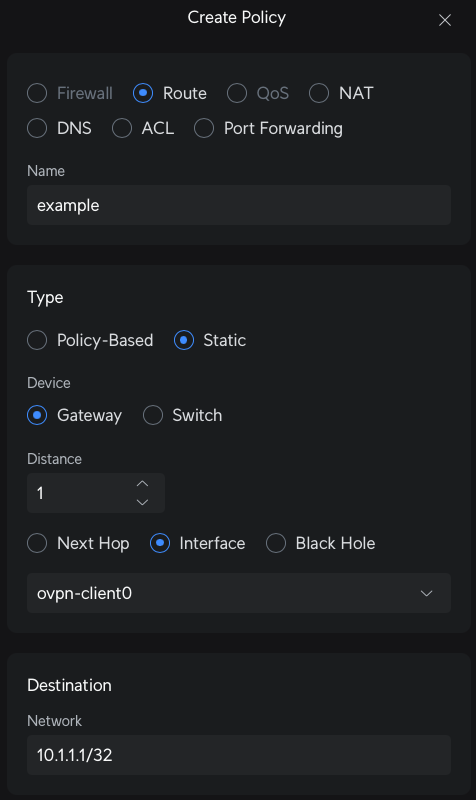
- Static route configuration
- TLS stream proxy
- VPN tunnel integration
ubnt-update README
More in Network Management
 UniFi-API-BrowserSelf-hosted, open-source PHP tool to browse UniFi Controller API data: multiple classic or API-key controllers, site switching, JSON/PHP output.
 UniFi Docker ContainerSelf-hosted Docker container for UniFi Network Application to manage Ubiquiti devices. Open-source Apache-2.0 with multi-arch support.
 unifi-gatewaySelf-hosted Python daemon emulating a Ubiquiti UGW3 gateway so non-Ubiquiti routers appear in UniFi Controller with full network topology.
 Unifi-Network-ApplicationSelf-hosted Docker deployment scripts and compose files for UniFi Network Application with MongoDB, supporting generic systems, DietPi, and CasaOS.
 unifi-toolkitSelf-hosted, open-source toolkit for managing and monitoring UniFi networks with real-time dashboards, device tracking, threat monitoring, and firewall lockdowns.
 unifi-voucher-siteSelf-hosted web app for creating and managing UniFi guest vouchers with OIDC, REST API, thermal printing, email, and kiosk mode.
 WakupatorWakupator is a self-hosted Linux daemon that wakes up LAN machines via Wake-on-LAN when detecting traffic to spoofed IPs, reducing energy waste for home servers.
 WGDashboardSelf-hosted open-source dashboard to manage WireGuard and AmneziaWG VPN servers with web UI, peer management, QR codes, and 2FA.
 wifi-card📶 Print a QR code for connecting to your WiFi (wificard.io)
 wireguard-uiSelf-hosted, open-source web UI for administering a WireGuard VPN: manage peers, hand out configs via QR code, file, email or Telegram, and tweak server settings.
 ZeroTierOpen-source networking daemon for encrypted peer-to-peer virtual L2 networks; the node and its network controller can be self-hosted on Linux, Docker, Windows or macOS.
 zerotier-edgeZerotier-Edge is a lightweight, single-binary web UI for self-hosted ZeroTier controllers, needing no Docker or database.
0 comments