
Self-host Tiramisu
v1.11.8BitTorrent engine with FUSE virtual filesystem for streaming
- Stars
- 149
- CPU
- linux/amd64 with AVX2 strongly recommended (Intel Haswell/AMD Excavator or later); linux/arm64 (NEON mandatory)
- RAM
- 4 GB RAM recommended (Raspberry Pi 4 baseline)
- Storage
- SSD recommended for warmup cache (reference Pi deployment uses 32 GB)
- Ports
- 8090 (GoStorm API, JSON torrent management), 9080 (Control Panel, Metrics, Dashboard, Webhook, Scheduler, Library API)
- Requires
- Plex or Jellyfin, Samba, SQLite
mrrobotogit/tiramisu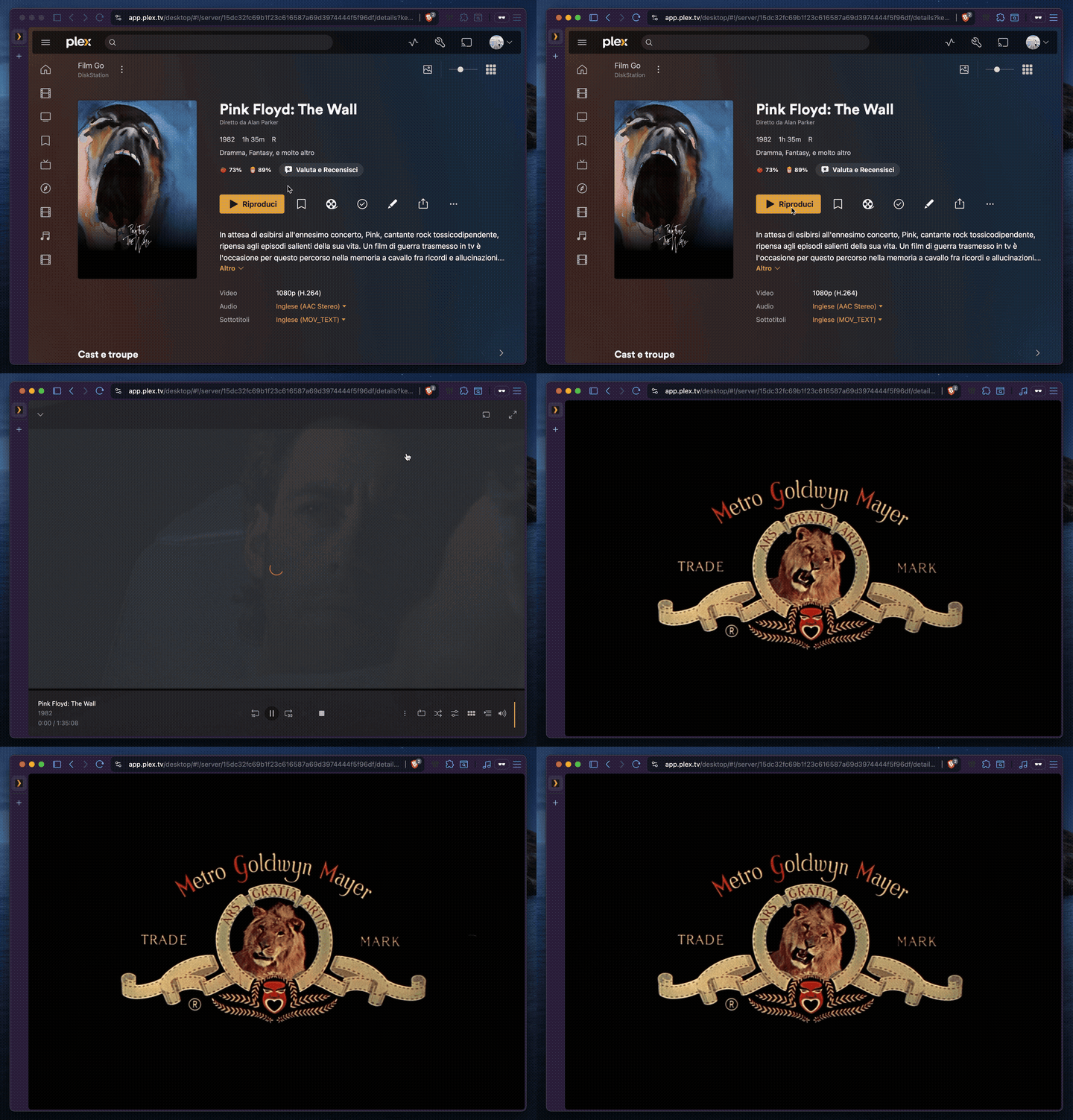

What is Tiramisu?
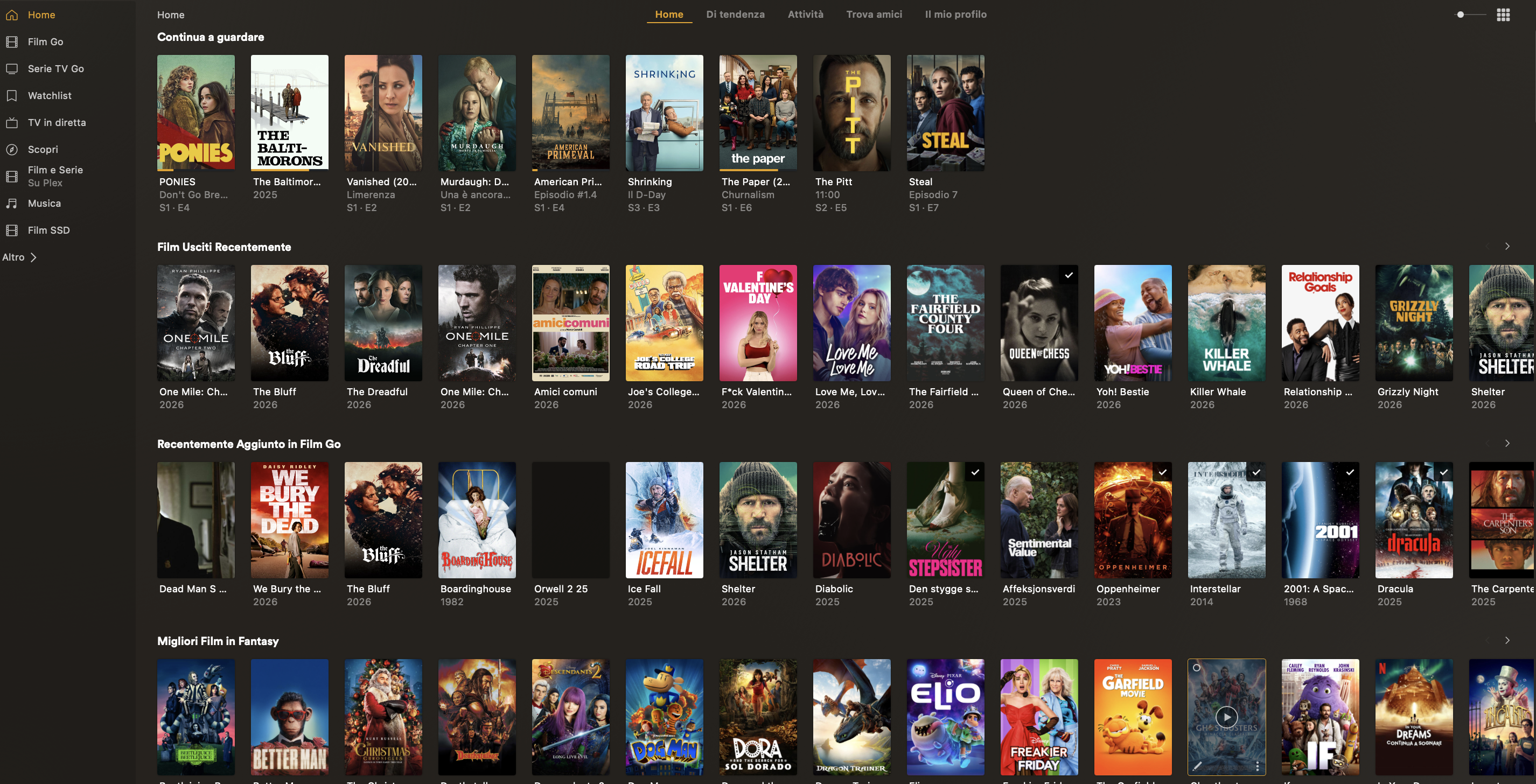
This application runs on your own hardware and turns BitTorrent swarms into a virtual filesystem. Every torrent shows up as a standard .mkv file that Plex, Jellyfin, or any network-aware player can open and seek through, but no complete copy ever lands on disk. Reads pull bytes from peers through an in-memory channel directly to the player, so 4K HDR Dolby Vision starts in roughly a tenth of a second on a Pi 4.
The streaming core is a heavily modified fork of TorrServer Matrix and anacrolix/torrent, both rewritten for streaming correctness. Because the engine and the FUSE layer share one process, there is no network hop between them.
A native Go scheduler keeps the library fresh. It polls TMDB for new and popular titles, hunts the best torrent via Prowlarr (Torrentio as backup), and drops virtual stubs in a Plex-friendly folder tree. TV series follow a fullpack-first method with episode tracking. Audio content such as music and audiobooks uses the same mount, identified by MusicBrainz or ASIN keys stored in a SQLite registry.
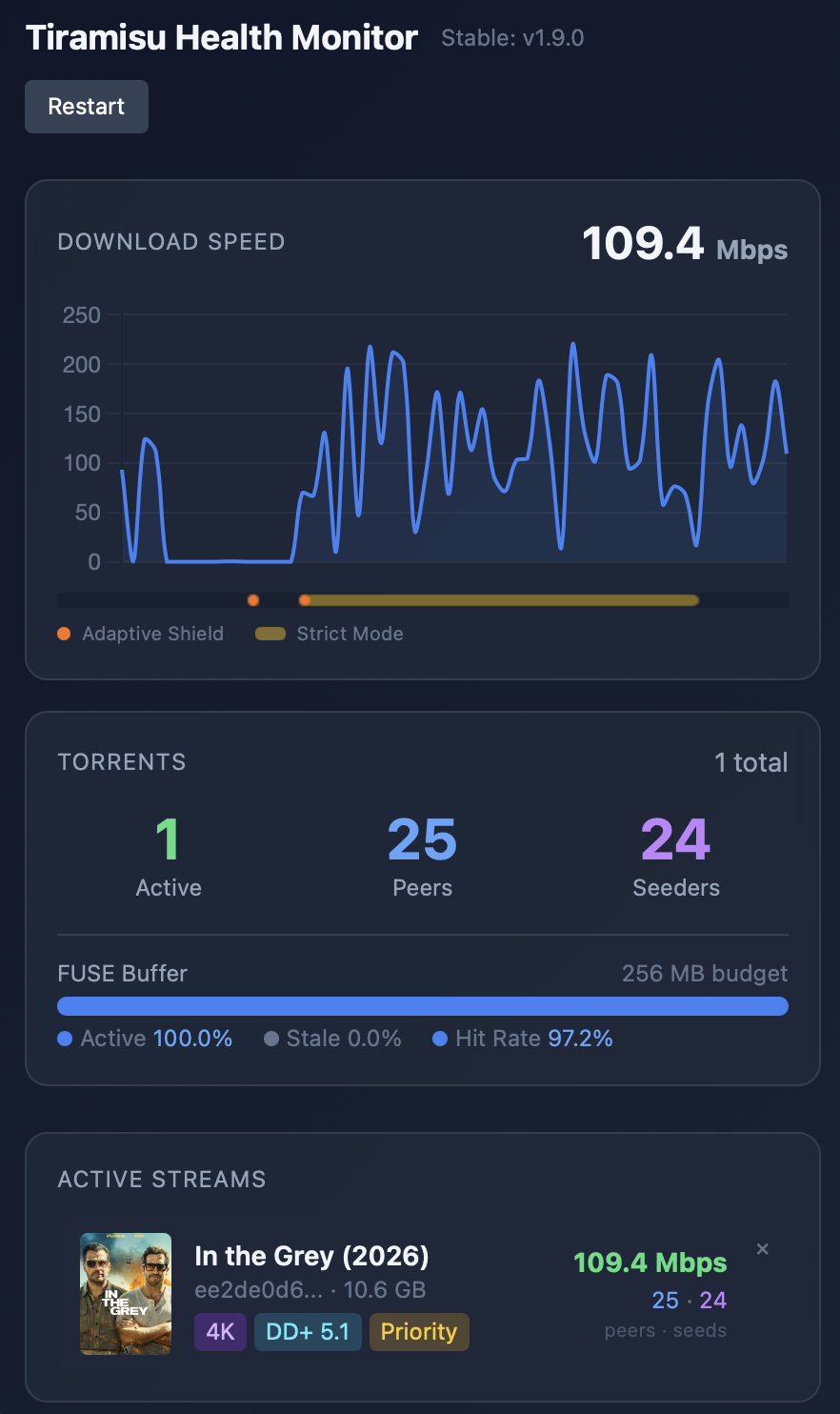
A browser Control Panel on port 9080 adjusts every setting live; a Dashboard on the same port graphs speed, shows the active stream with quality tags, and reports system health. Plex and Jellyfin webhooks trigger Priority Mode for aggressive piece fetching. Behind WireGuard, a NAT-PMP helper asks the VPN gateway for an inbound port and installs iptables rules on the fly. An optional blocklist drops known bad peers.
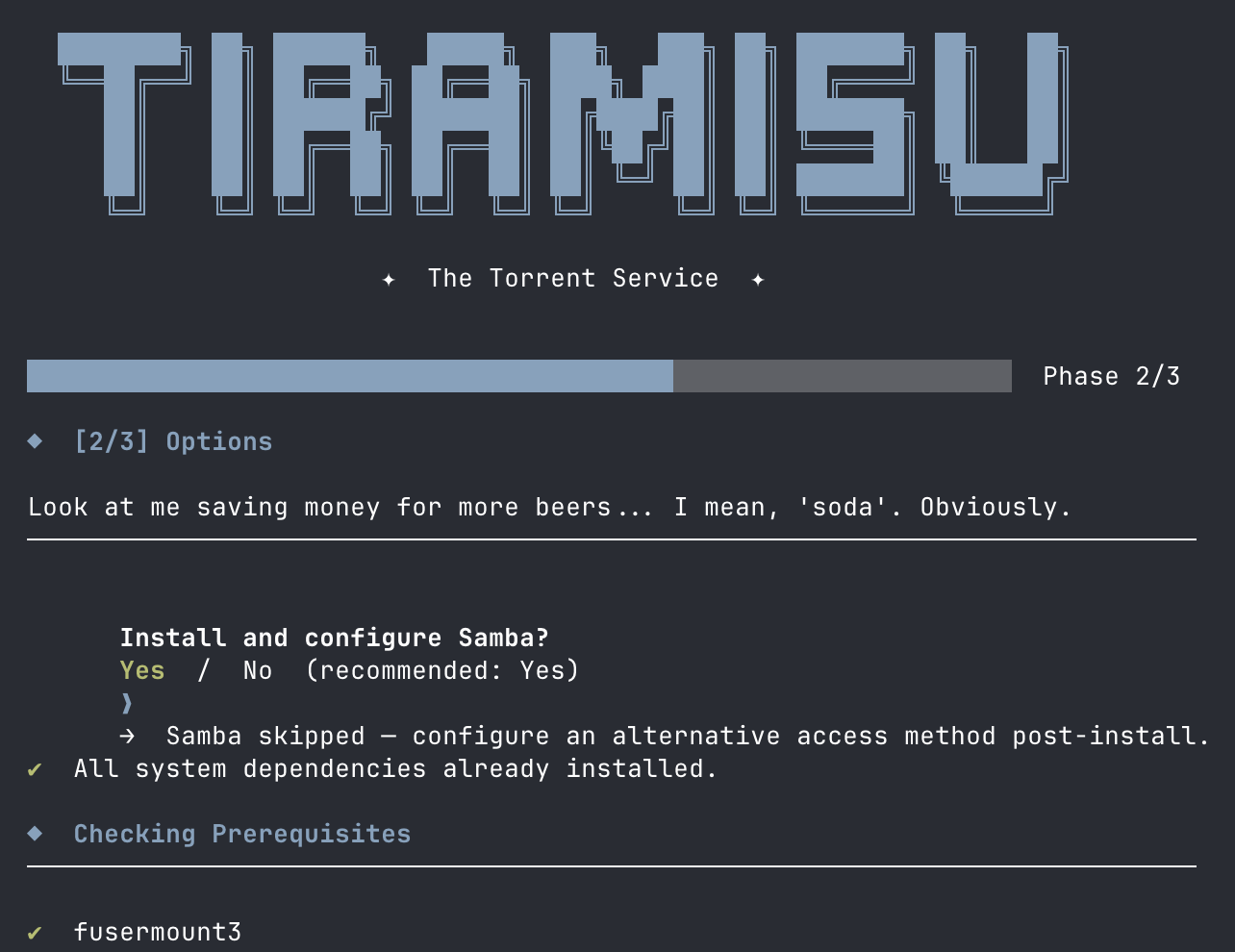
Scripts or AI agents can manage the library through an HTTP API at /api/library or an MCP endpoint at /mcp. Deploy with Docker (needs /dev/fuse plus SYS_ADMIN/NET_ADMIN), an interactive installer that sets up deps, systemd, and the binary, or a manual build (Go 1.26+, CGO, libfuse3-dev). Tested baseline: Pi 4 with 4 GB RAM; on x86_64, AVX2 is strongly advised for SHA1 speed. License: GPL-3.0.
Should you self-host Tiramisu?
Tiramisu scores 47/100 on selfhost.directory (how scoring works) and ranks #40 of 54 in Media Streaming. It has 149 GitHub stars.
It shipped 10 stable releases in the past year. The latest, v1.11.8, came out on 17 October 2026. New versions land roughly every 1 days.
Setup is advanced: plan for several services and some ongoing maintenance. An official Docker image is available. It is Other-licensed and written mostly in Go.
Its closest alternative on selfhost.directory is Invidious (81/100, 25 799 stars). It scores higher overall, so compare the two before you pick. See Tiramisu vs Invidious side by side.
Features
- 4K HDR Dolby Vision Support
- Adaptive Chunk Size
- Adaptive Shield
- Automatic Library Sync
- Control Panel
- FUSE Virtual Filesystem
- Health Monitor Dashboard
- IP blocklistOptional and off by default
- Live BitTorrent Streaming
- Music and Audiobook Support
- NAT-PMP for WireGuard
- PEXChurn
- Plex/Jellyfin Webhooks
- Plex Watchlist Integration
- TailHedge
Tiramisu README
FAQ
Is my data private?
Everything runs on your own hardware. No account or third-party API key is required for the core engine (TMDB, Prowlarr, and Plex/Jellyfin integrations are optional and use your own credentials).
Is this legal?
Tiramisu is a general-purpose BitTorrent engine and streaming filesystem. It does not host, index, or distribute any copyrighted content itself; what you do with it is your responsibility, same as with any BitTorrent client.
Does it work with Sonarr, Radarr, or other *Arr tools?
Not directly. Tiramisu has its own built-in sync engine that talks to TMDB, Prowlarr, and Torrentio to discover and add titles automatically, so it does not need the *Arr suite to function.
What hardware do I need?
A Raspberry Pi 4 (4 GB RAM) is the tested minimum baseline and comfortably handles 4K HDR streaming. Any linux/amd64 or linux/arm64 machine works: NAS, VPS, mini-PC, or any always-on Linux box.
Do I need to seed or keep uploading?
Tiramisu participates in the swarm while a file is open, but retention drops automatically once playback stops. No long-term seeding is required or expected.
Does Tiramisu store or download the files?
No persistent copy of the media is kept. Byte ranges pass through RAM and an optional bounded SSD cache (first/last few MB of each file) and are never written to disk as complete files. There is no storage quota.
How is this different from Real-Debrid or other debrid services?
Debrid services are third-party paid subscriptions that cache torrents on someone else's servers. Tiramisu runs entirely on your own hardware with no subscription, no third-party server, and no monthly fee — the BitTorrent swarm itself is the source.
What is Tiramisu?
Tiramisu is a self-hosted BitTorrent engine with a built-in FUSE virtual filesystem that presents torrents as normal, seekable .mkv files to Plex or Jellyfin, streaming bytes live from the swarm as they are read with no download step or temp files.
More in Media Streaming
 TorrinTorrin is a self-hosted, open-source debrid service turning magnet links, NZB files, and hoster links into instant HTTPS streams for Stremio, Kodi, WebDAV, and browsers.
 TunarrSelf-hosted, open-source IPTV server that turns your Plex, Jellyfin, Emby or folder collections into round-the-clock custom channels with EPG guide and M3U output.
 uncompressedSelf-hosted Docker Compose reference for a media server — Jellyfin, *arr, qBittorrent in a Gluetun VPN namespace, Tailscale-only ingress via Traefik, auto-healing.
 Universal Media ServerA free, self-hosted media server for DLNA, UPnP and HTTP/S streaming, with a browser web interface, device transcoding and TMDB/MusicBrainz metadata.
 viewscreenViewscreen is a self-hosted, open-source video streaming server with built-in torrent client, automatic HTTPS via Let's Encrypt, and video transcoding to MP4.
 viewtubeSelf-hosted YouTube frontend for ad-free viewing with subscriptions, playlists, comments, SponsorBlock, and push notifications.
 ViniPlaySelf-hosted IPTV player turning M3U/EPG into a polished streaming UI with multi-user, TV guide, multi-view, Chromecast, DVR, and GPU transcoding.
 VocardOpen-source Discord music bot powered by Lavalink that plays YouTube, SoundCloud, Spotify and Twitch, with playlists, lyrics and a self-hosted Docker install.
 WebtorSelf-hosted torrent streaming server with direct downloads, video/audio playback, ZIP archives, personal library, Stremio addon, and AI subtitles in one Docker image.
 XenonXenon is a self-hosted dashboard turning any spare screen into a PC control center with system stats, media controls, a Stream Deck-style key grid, and voice AI.
 xplexxplex is a self-hosted, open-source multi-streaming server for broadcasting to Twitch, YouTube, Facebook, and custom RTMP platforms simultaneously.
 xTeVeSelf-hosted M3U proxy that merges IPTV playlists with EPG data to enable DVR functionality for media server applications.
0 comments