
Self-host Passky-Server
v9.0.0Open-source password manager with zero-knowledge encryption
- Stars
- 241
- Port
- 80 (HTTP server inside container)
rabbitcompany/passky-server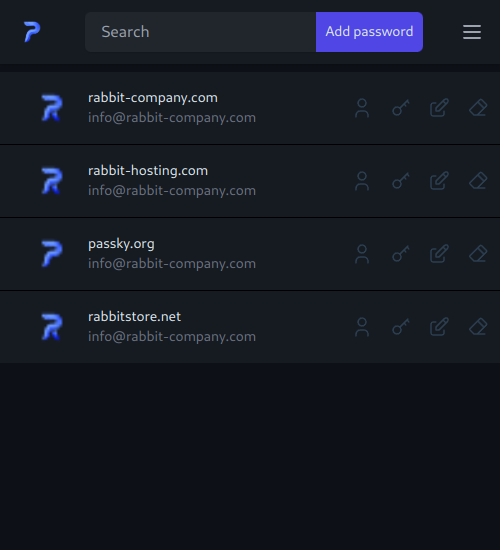
What is Passky-Server?
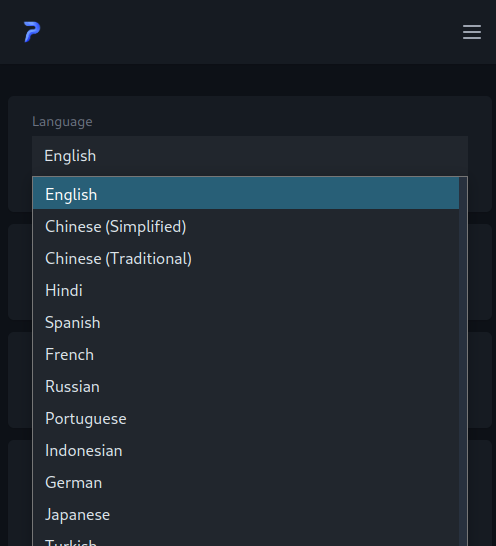
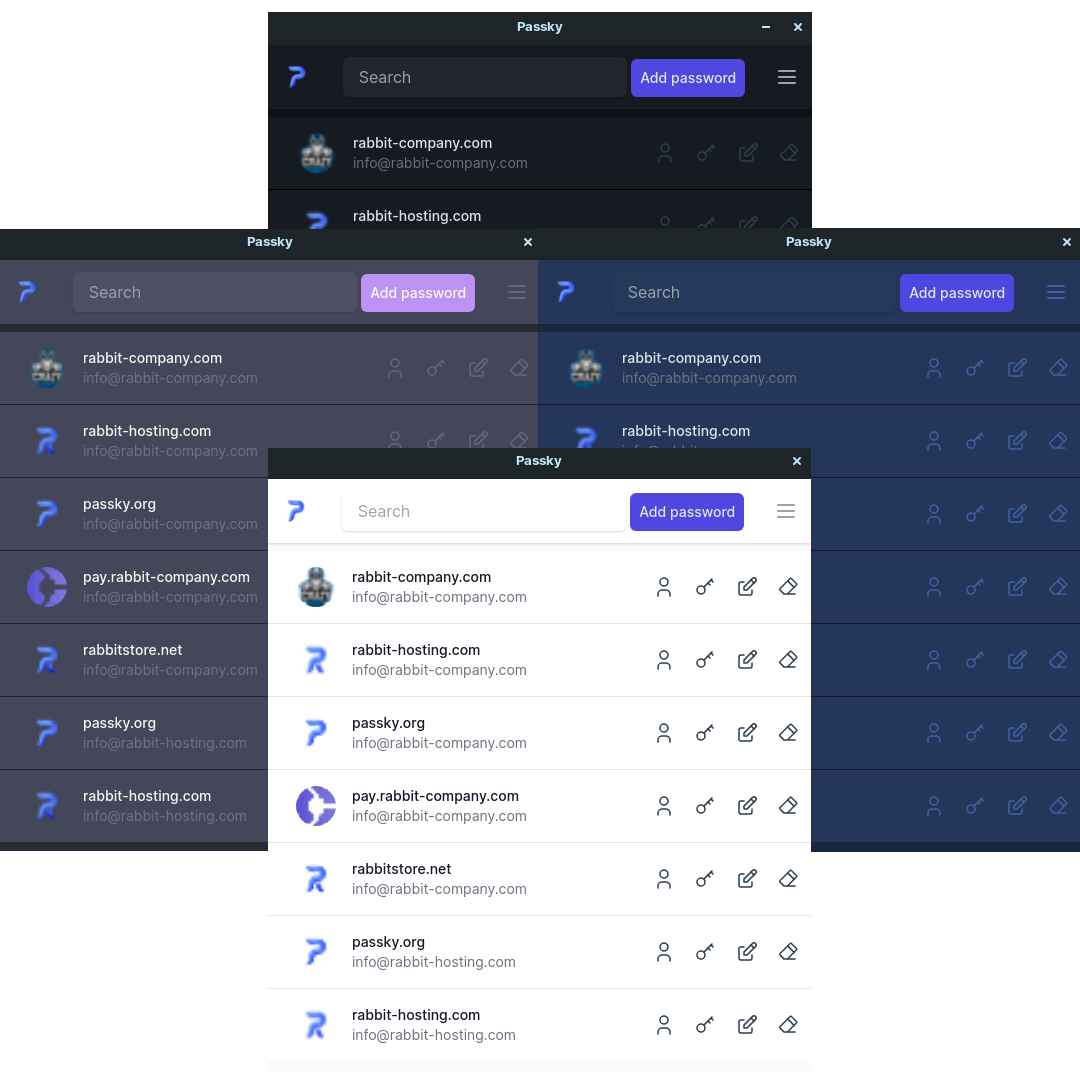
Passky Server is the backend component of Passky, a simple, modern, lightweight, open-source password manager. It uses zero-knowledge encryption with XChaCha20 for data encryption and Argon2id for master password hashing. The server runs on Bun and supports SQLite, MySQL, MariaDB, or PostgreSQL for data storage, with optional Redis for token persistence. It can be self-hosted via Docker Compose (recommended) or Umbrel one-click install. The free plan allows up to 100 passwords per account, while the premium plan ($2/month) offers unlimited passwords. Features include software and hardware 2FA (TOTP and YubiKey), import/export from other password managers, multiple themes, and 25 languages. An admin panel is available for server management. The project is licensed under EUPL-1.2 (releases up to 8.1.8 were GPL-3.0).
Should you self-host Passky-Server?
Passky-Server scores 49/100 on selfhost.directory (how scoring works) and ranks #12 of 28 in Password Managers. It has 241 GitHub stars.
It shipped 1 stable release in the past year. The latest, v9.0.0, came out on 21 October 2026.
Setup is moderate: expect some configuration beyond a single command. An official Docker image is available. It is EUPL-1.2-licensed and written mostly in Typescript.
Its closest alternative on selfhost.directory is AliasVault (68/100, 3 321 stars). It scores higher overall, so compare the two before you pick. See Passky-Server vs AliasVault side by side.
Features
- Admin Panel
- Argon2id password hashing
- Email username recovery
- Export to other password managers
- Hardware 2FA (YubiKey)
- Health check endpoint
- Import from other password managers
- Multi-language Support
- Multiple Database Backends
- Prometheus Metrics
- Rate Limiting
- Two-factor authentication (TOTP)
- Zero-Knowledge Encryption
Passky-Server README
More in Password Managers
 passwd-pageSelf-hosted, open-source zero-knowledge secret sharing tool with burn-after-read, file sharing, CLI, and MCP server for AI agents.
 passwordcockpitSelf-hosted open-source password manager for teams with folder permissions, LDAP, PIN encryption. Runs via Docker Compose with MariaDB.
 privateglue-publicPrivateGlue is a self-hosted, open-source web app linking devices, Markdown notes, and encrypted credentials for freelancers and homelabbers.
 pwmPWM is a self-hosted, open-source password self-service app for LDAP directories. Users reset passwords, unlock accounts, and manage credentials via web UI.
 quickblaze-encryptQuickBlaze Encrypt is a self-hosted, open-source PHP app for sending secrets via one-time view links that self-destruct after being read once.
 scrt.linkscrt.link is a self-hosted, open-source service for sharing passwords and files via end-to-end encrypted, ephemeral links that self-destruct after viewing.
 shaarkShaark is a self-hosted, open-source platform for web links, markdown posts, passwords, and photos with tagging, search, RSS, dark mode, and PWA.
 shareA self-hosted, open-source tool for sending passwords, notes, code, and big files through one-time encrypted links that vanish after use — no accounts needed.
 share-a-secretAn open-source, self-hosted tool for sharing sensitive data through encrypted links that expire after use.
 sharepwdSelf-hosted zero-knowledge secret sharing with client-side AES-256-GCM encryption, burn-after-reading, encrypted file sharing, CLI, and 5-layer anti-bot protection.
 ShhhShhh is a self-hosted, open-source Flask app for creating encrypted secrets that auto-delete after viewing or expiring, keeping sensitive data out of emails and chats.
 sysPasssysPass is a self-hosted, open-source PHP password manager with AES-256 encryption, 2FA, LDAP/AD integration, and JSON-RPC API for business and personal use.
0 comments