
Self-host laranode
v1.2.5Open-source hosting control panel for VPS management
- Stars
- 756
- CPU
- 1 vCPU
- RAM
- 2GB RAM
- Storage
- 10GB Disk Space
- Ports
- 80 (HTTP web interface), 443 (HTTPS web interface (with SSL)), 8080 (WebSocket server for live stats (Laravel Reverb)), 2222 (SSH access for hosting accounts)

What is laranode?
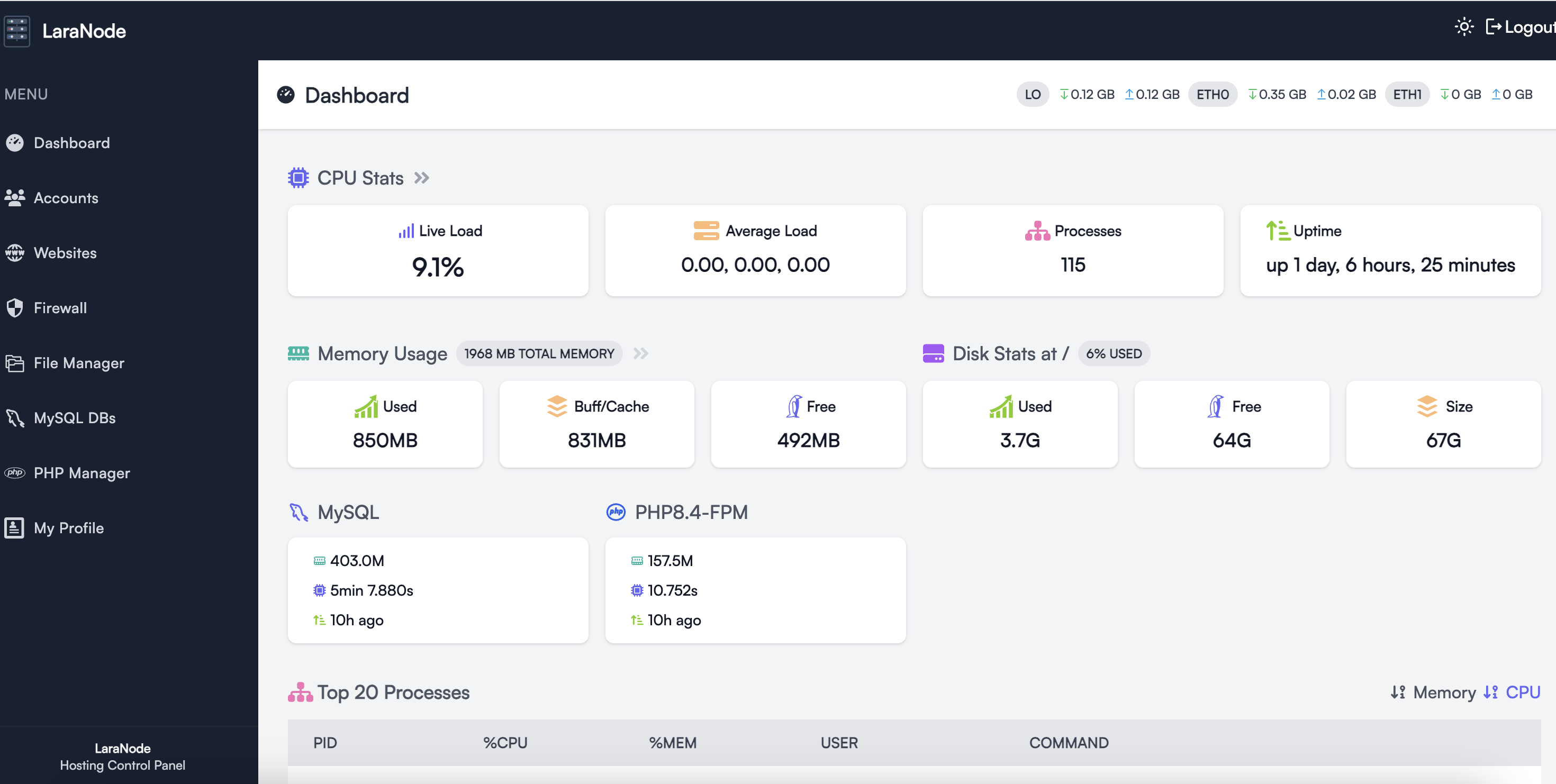
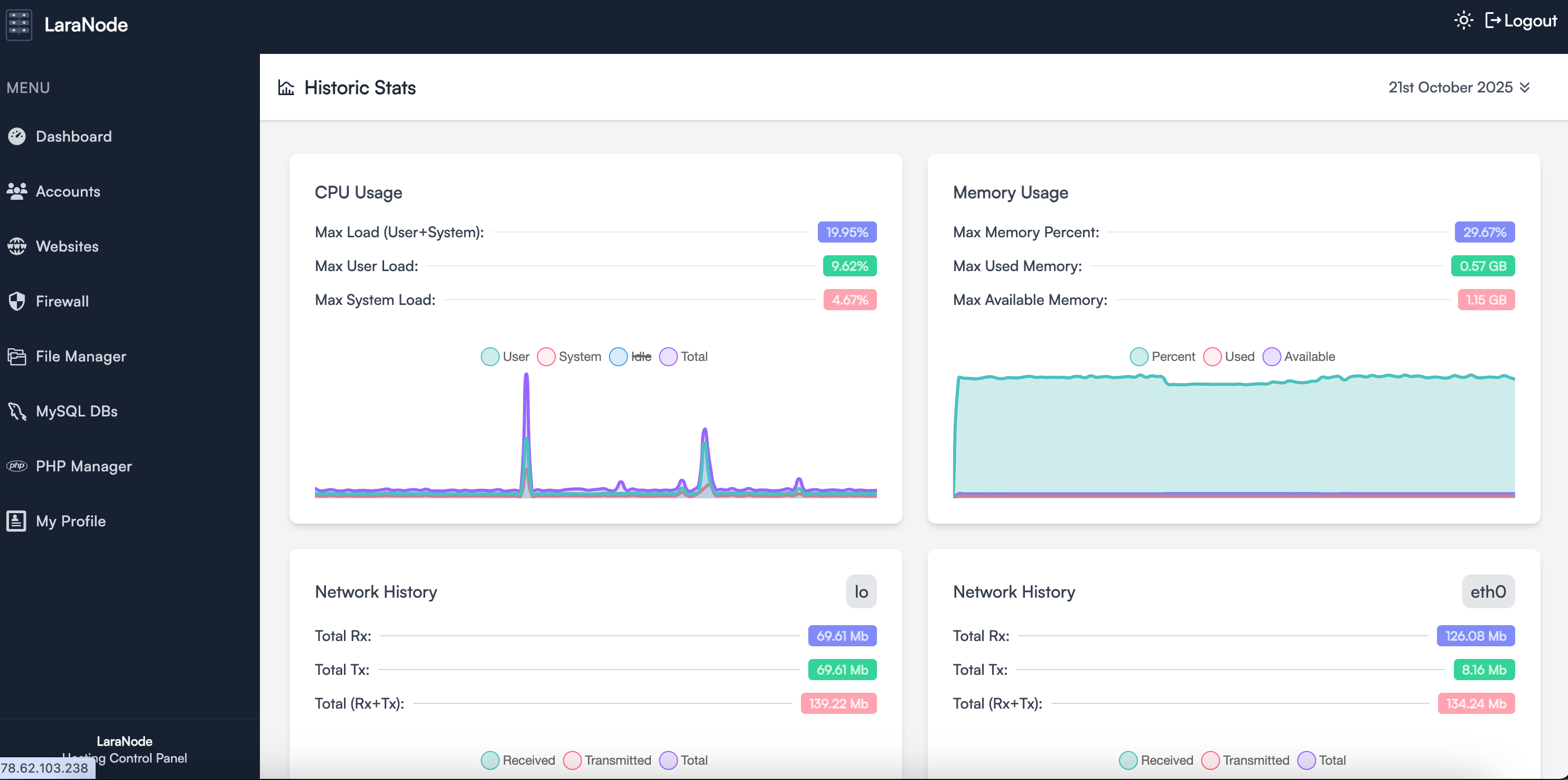
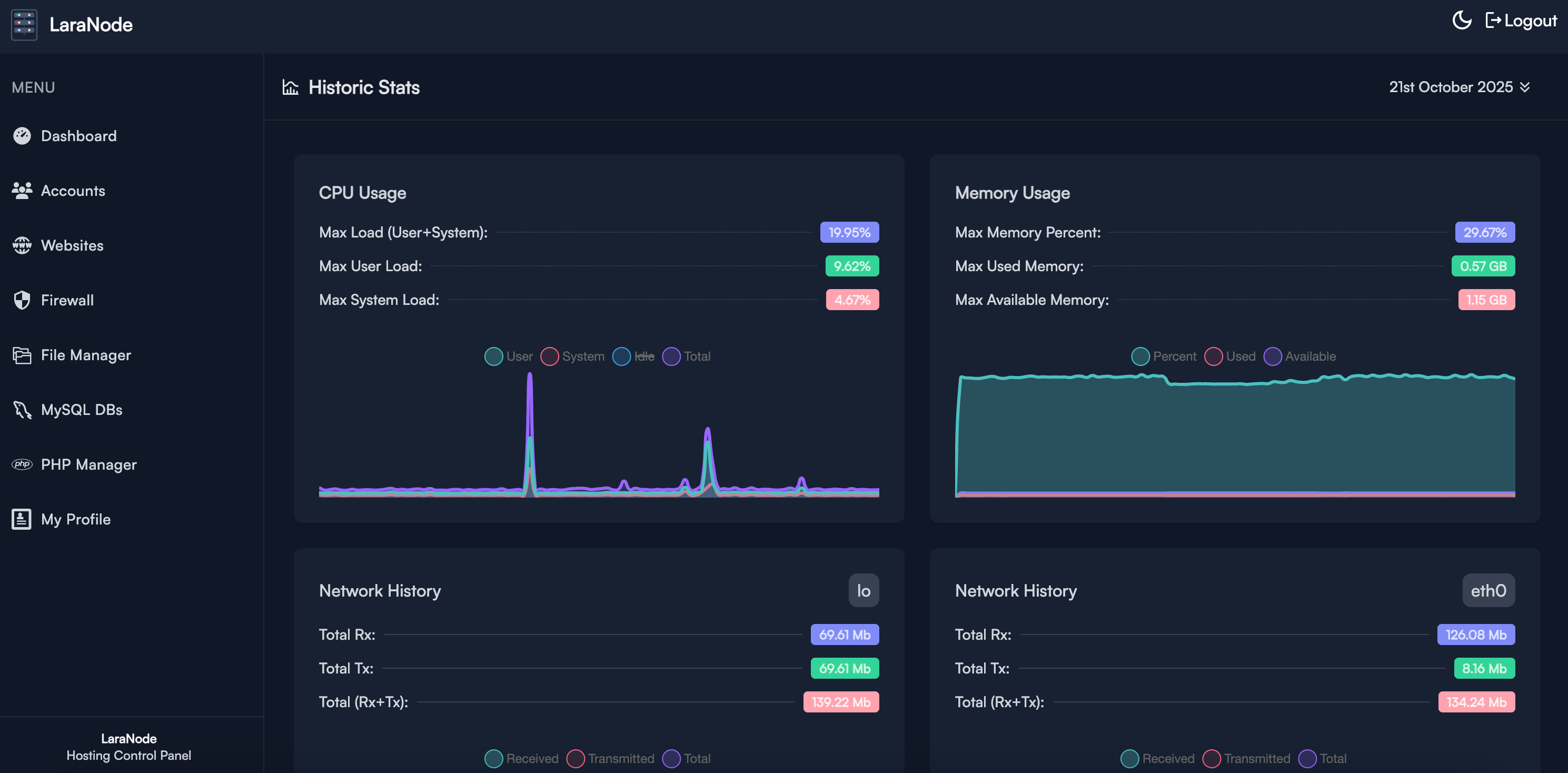
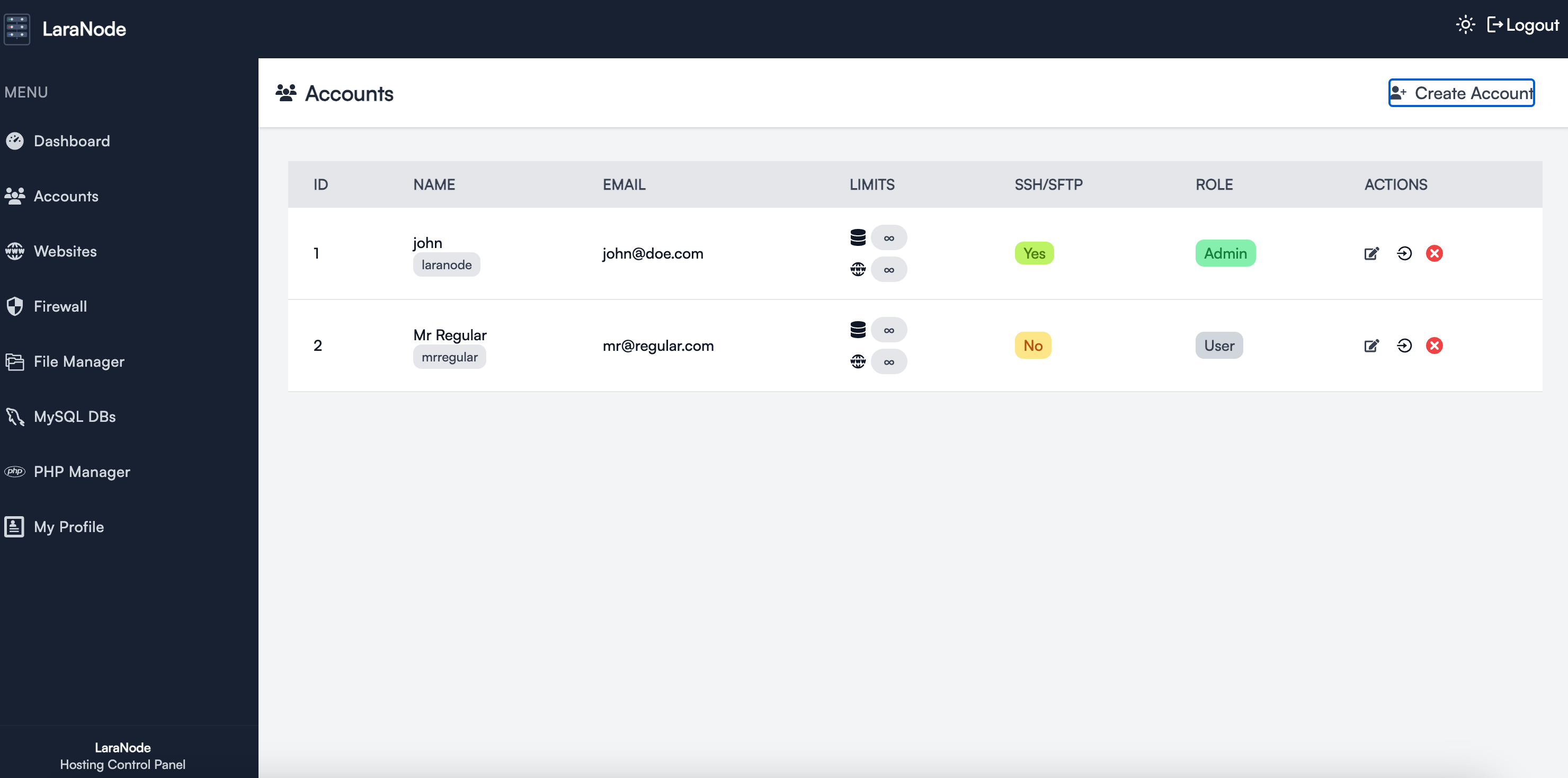
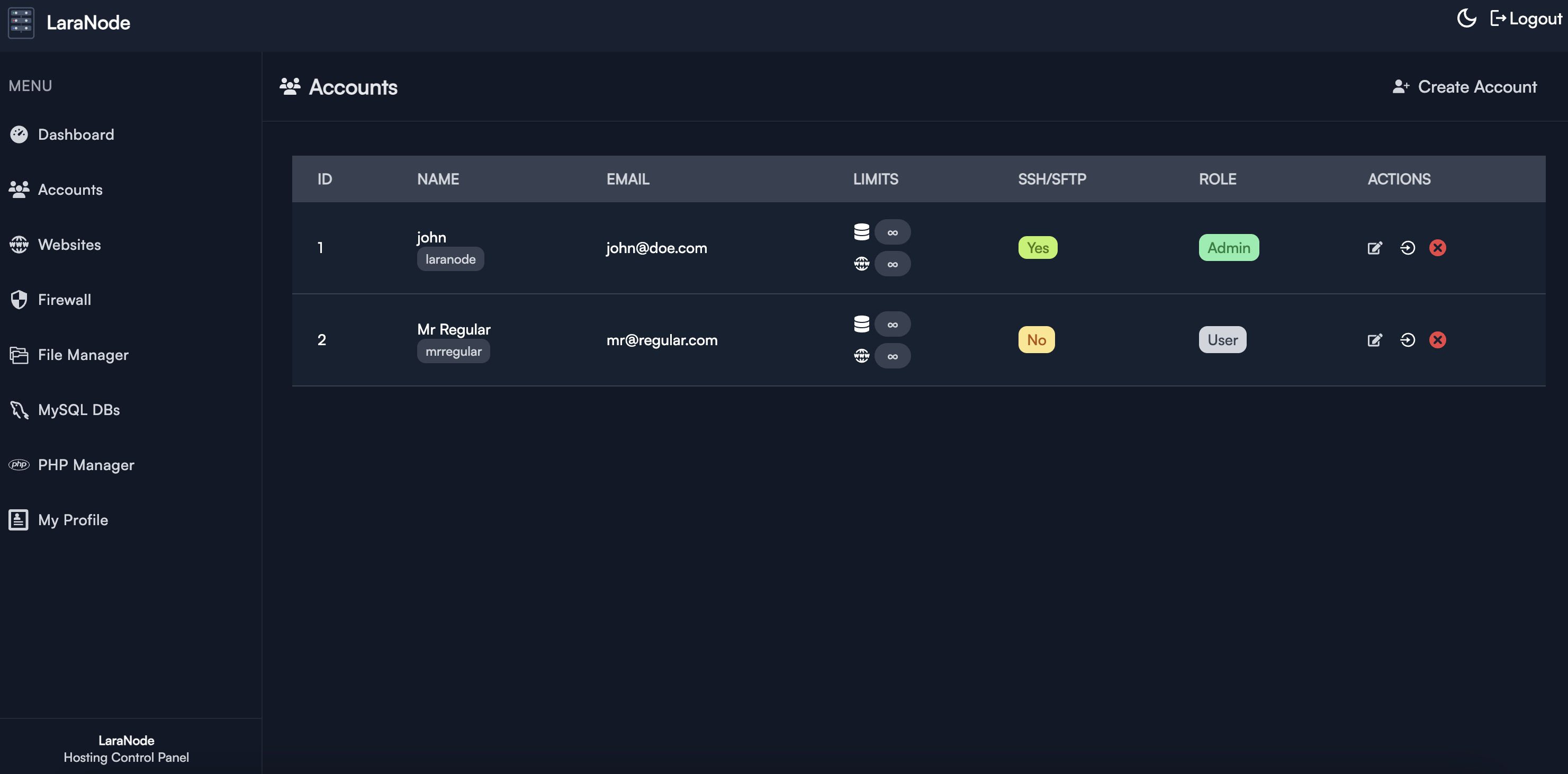
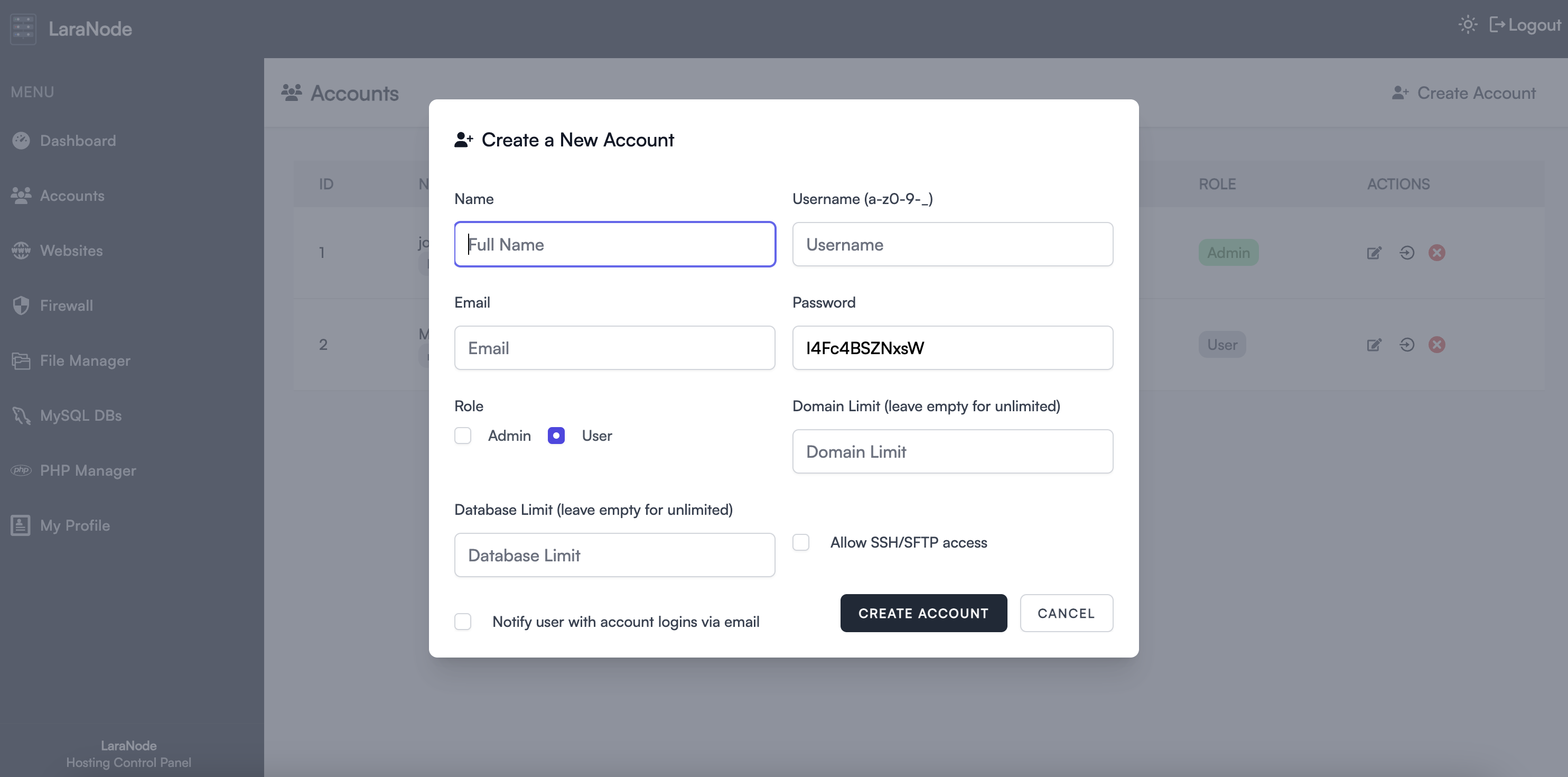
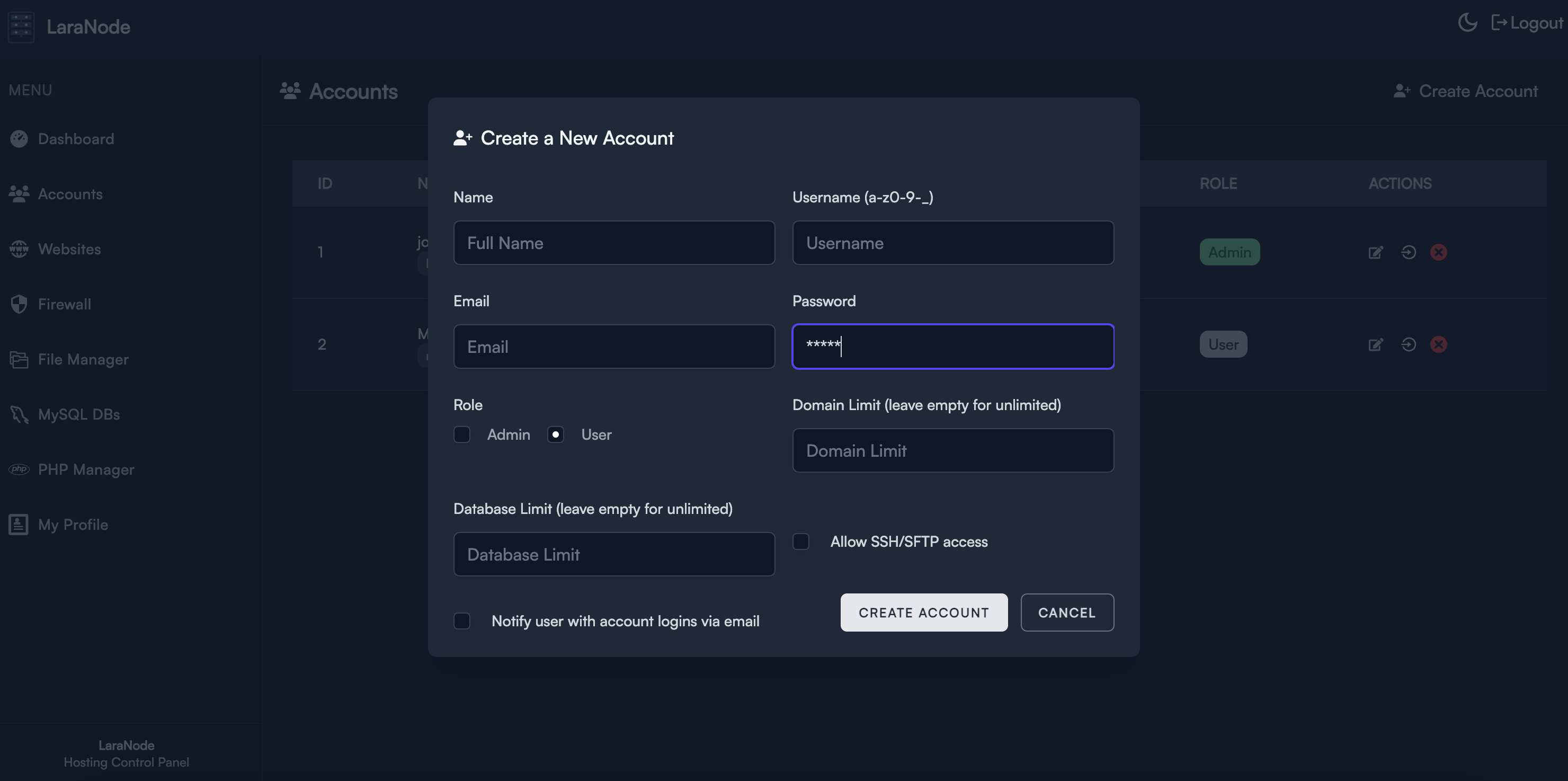
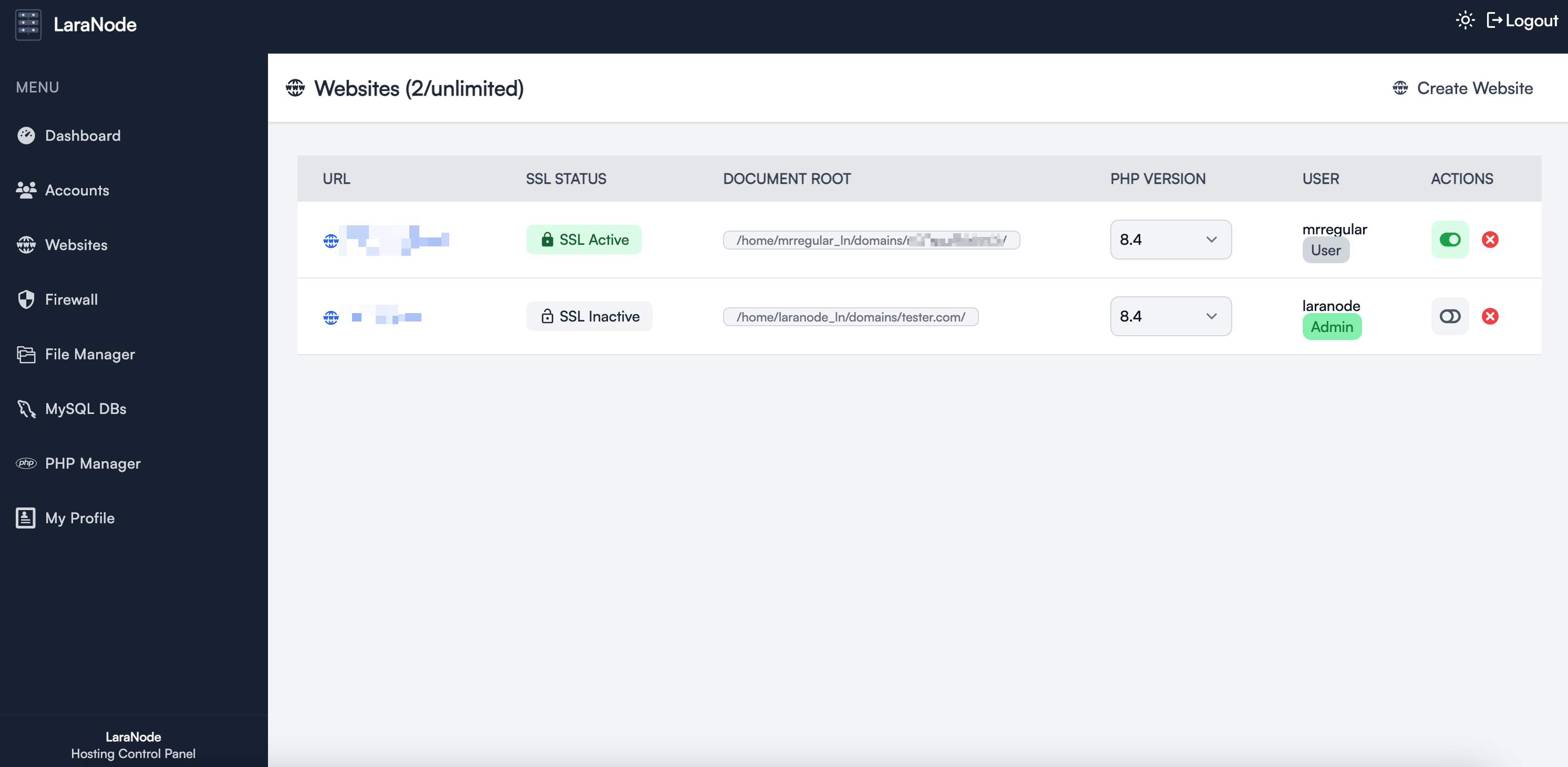
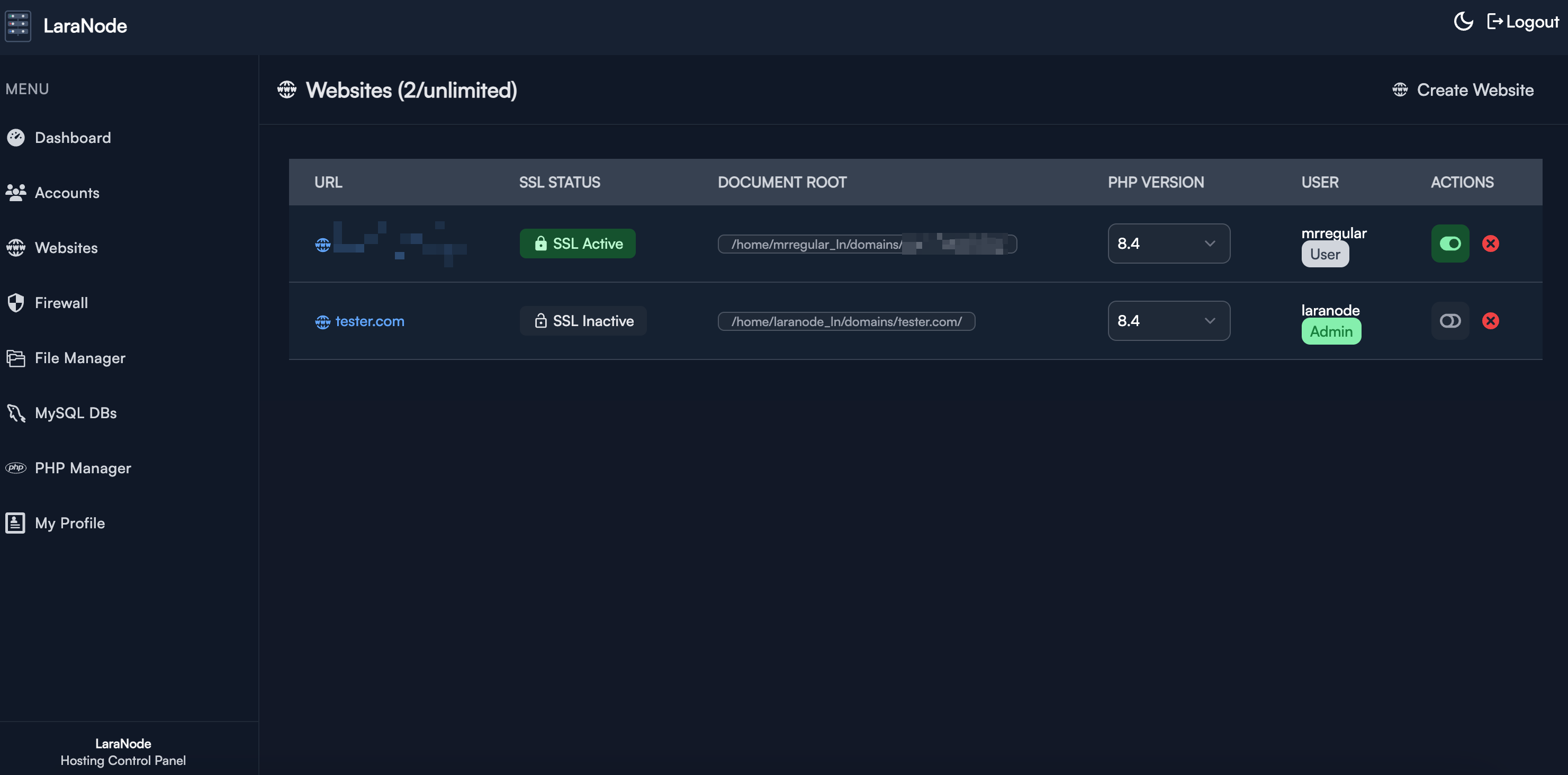
This open-source hosting control panel serves as a free alternative to cPanel and Plesk for managing VPS and dedicated servers. It provides a web interface to create and manage websites, configure per-site PHP versions (7.4 through 8.5), issue Let's Encrypt SSL certificates, manage MySQL databases, control UFW firewall rules, and handle backups stored locally, on S3-compatible storage, or via SFTP. The panel includes a built-in file manager, live system statistics via WebSockets, and role-based multi-account support. It runs on Ubuntu 24.04+ and can be installed via a one-line shell script or as a Docker Compose stack that bundles Apache, MySQL, PHP-FPM, and Laravel Reverb in a single system container. The project is MIT-licensed and actively maintained with regular releases.
Should you self-host laranode?
laranode scores 51/100 on selfhost.directory (how scoring works) and ranks #7 of 10 in Control Panel. It has 756 GitHub stars.
It shipped 8 stable releases in the past year. The latest, v1.2.5, came out on 23 September 2026. New versions land roughly every 1 days.
Setup is moderate: expect some configuration beyond a single command. It is MIT-licensed and written mostly in PHP.
Its closest alternative on selfhost.directory is 1panel (79/100, 37 298 stars). It scores higher overall, so compare the two before you pick. See laranode vs 1panel side by side.
Features
- Backup and Restore
- File Manager
- LAMP stack administration
- Live System Statistics
- Multi-Account Role-Based Access
- MySQL Database Management
- PHP Version Manager
- SSL Certificate Management
- UFW Firewall Management
- Website Management
laranode README
More in Web Hosting
 openpanel-coOpenPanel is a self-hosted web hosting panel using rootless Podman for per-user isolation — an alternative to cPanel and Plesk.
 osInfinite OS is a self-hosted, open-source hosting environment that runs in a single container with a cPanel-like dashboard to deploy apps without Dockerfiles.
 public-websites-dockerA Docker Compose guide for self-hosting static sites with Traefik, Matomo analytics, and remark42 comments — all with automatic Let's Encrypt TLS.
 SandstormAn open-source, self-hosted platform for running web apps: each document or chat room gets its own sandboxed container, with one-click installs and unified sharing.
 VoxelSwarmSelf-hosted deployment layer turning VoxelSite into a multi-tenant platform with isolated accounts and per-client AI API keys. PHP 8.2+, SQLite, control panel adapters.
 weirdWeird is a self-hosted, local-first CMS for personal digital gardens — WordPress meets Notion with Linktree simplicity. Rust/SvelteKit, Rauthy OIDC, optional p2p.
 CloudPanelSelf-hosted server control panel for PHP, Node.js, Python and static sites on Ubuntu or Debian, with free Let's Encrypt certificates and a command-line interface.
 dockpanelDockPanel is a free, self-hosted server panel in Rust/React managing sites, databases, Docker apps, SSL, backups, mail, DNS, security. ~49MB RAM, 147 templates
 hestiaOpen-source, self-hosted control panel for Debian and Ubuntu servers: manage web domains, mail, DNS zones, databases and free SSL from one dashboard.
 Jabali PanelSelf-hosted open-source hosting panel for WordPress/PHP on Debian 13. Tenant isolation via per-user PHP-FPM, mail with auto DKIM/DMARC, DNS with DNSSEC.
0 comments