
Self-host houndarr
v1.13.3Polite automated search companion for *arr media stacks
- Stars
- 303
- Port
- 8877 (Web UI and API)
ghcr.io/av1155/houndarr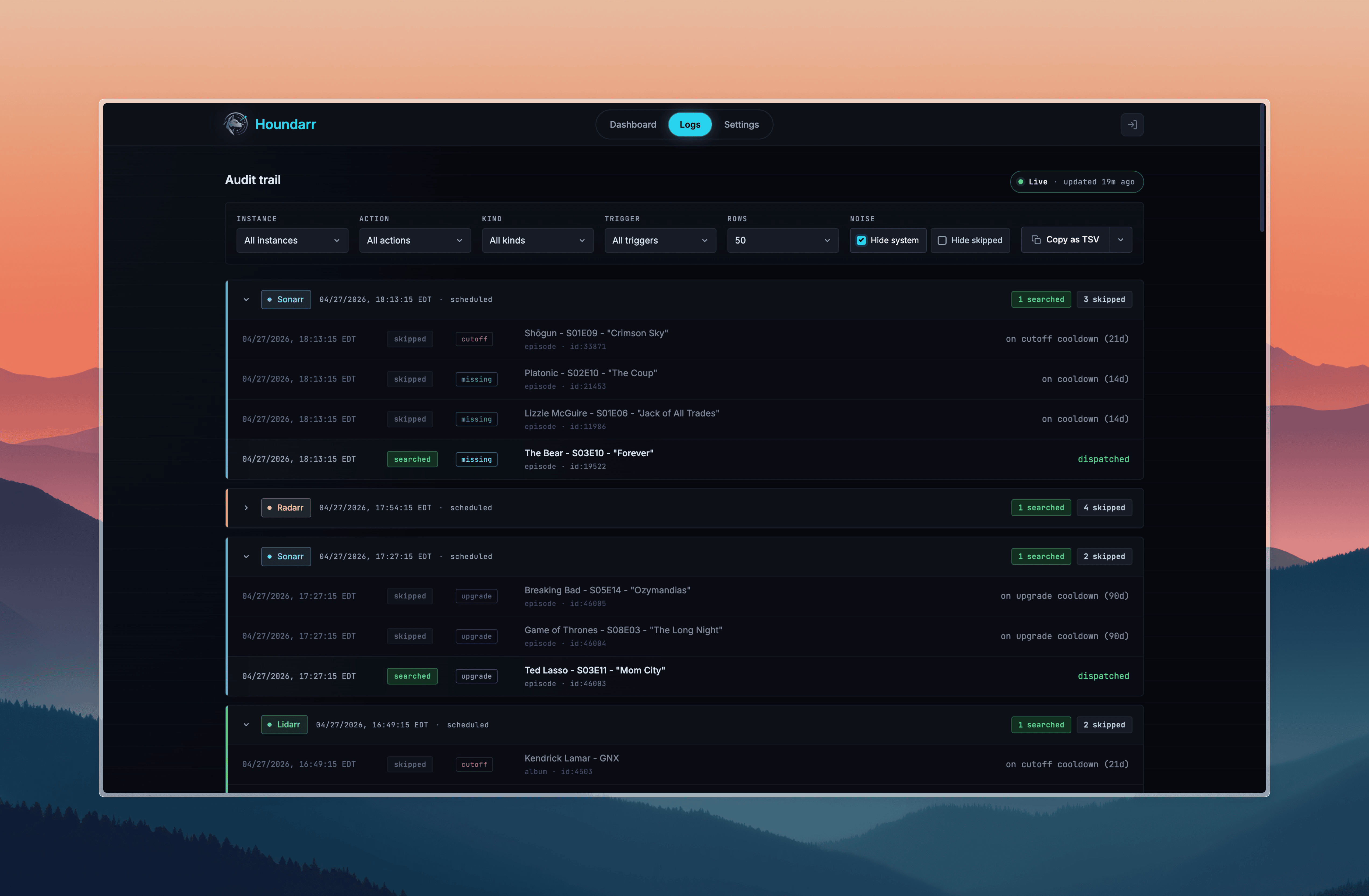
What is houndarr?
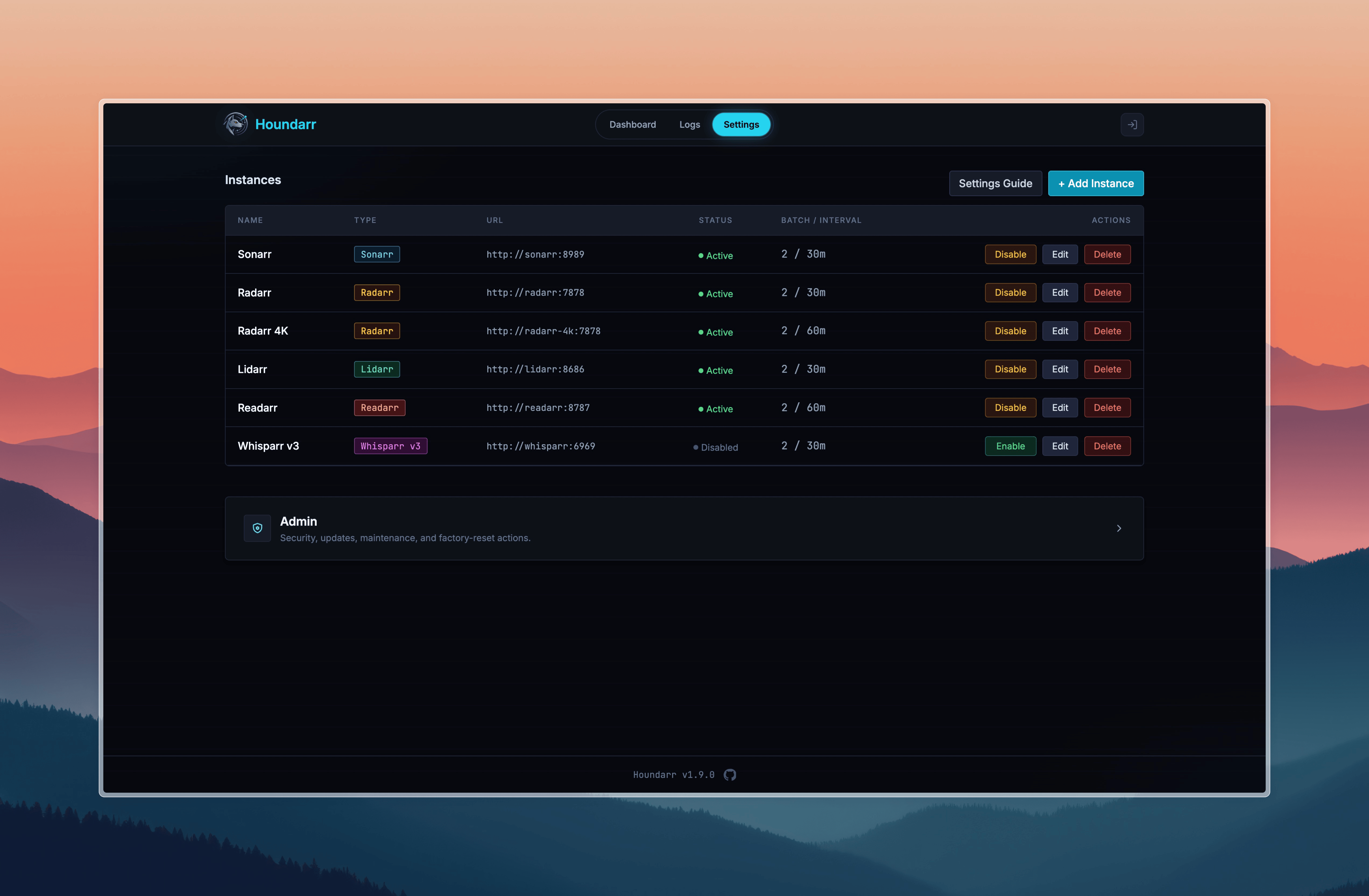
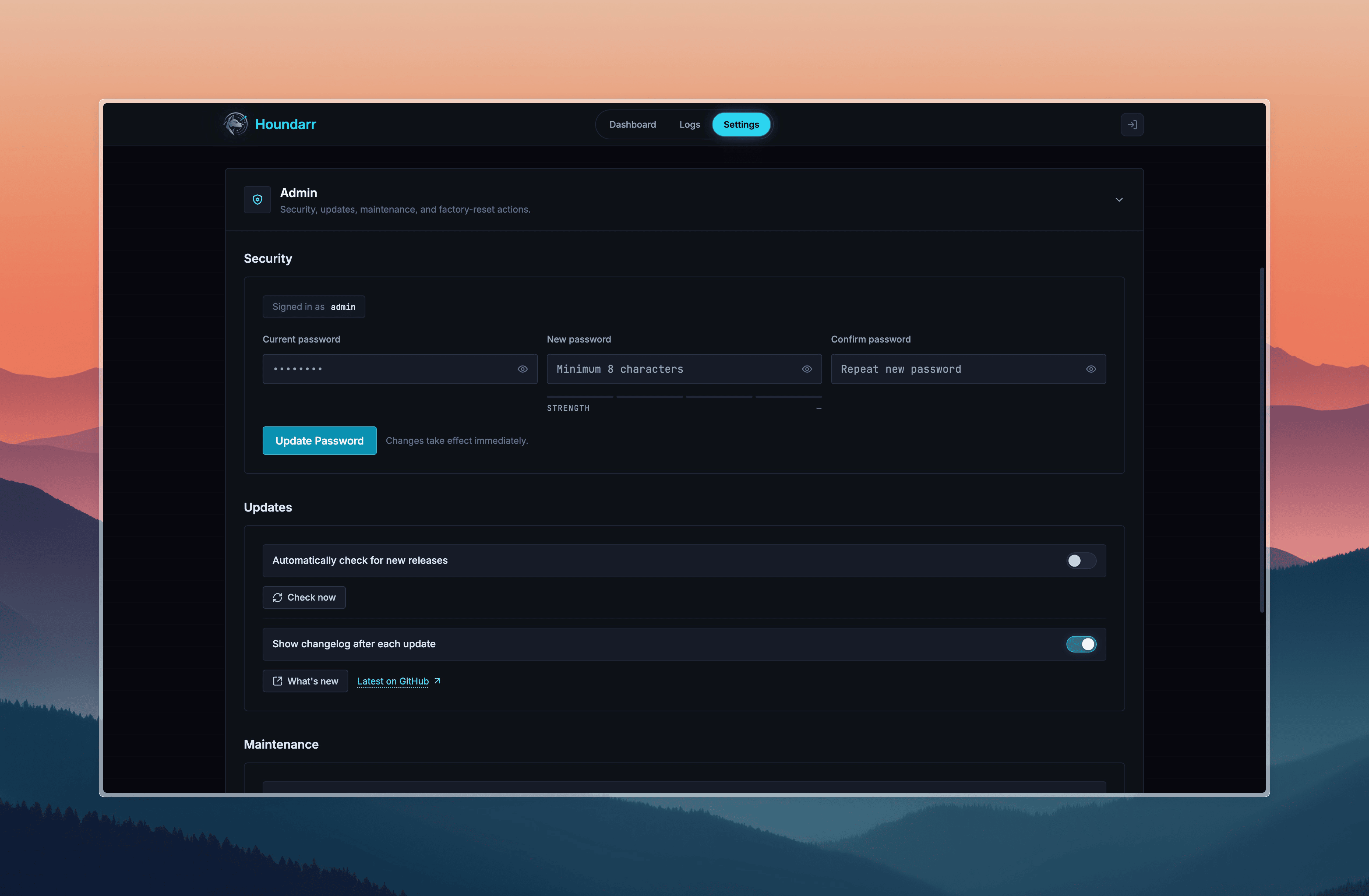
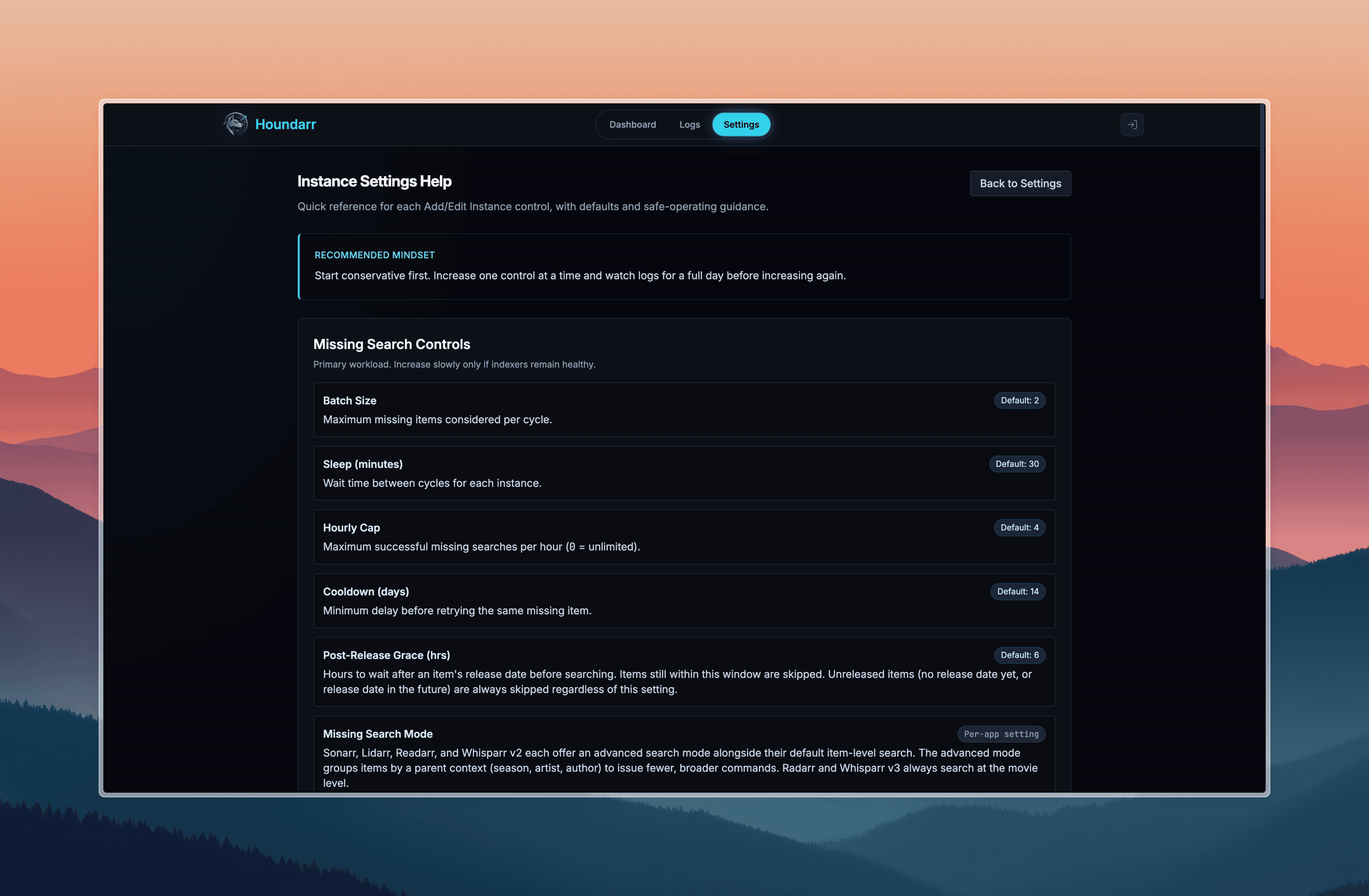
Houndarr is a self-hosted utility that plugs into the *arr media automation stack and automatically searches for missing files and better-quality upgrades. It safeguards indexers by searching in very small batches with intentional pauses, per-item cooldown periods, and hourly request limits. Everything runs in a single container that provides a dark-themed web dashboard for monitoring search activity, reviewing logs, and adjusting each connected instance separately. User login uses bcrypt-hashed passwords, signed session cookies, CSRF tokens, and login throttling, with an option to delegate authentication to an external SSO proxy such as Authelia, Authentik, or oauth2-proxy. All credentials are secured at rest with Fernet encryption. The program makes no external network calls whatsoever; it communicates only with the *arr instances you set up.
Should you self-host houndarr?
houndarr scores 53/100 on selfhost.directory (how scoring works) and ranks #54 of 142 in Media Management. It has 303 GitHub stars.
It shipped 14 stable releases in the past year. The latest, v1.13.3, came out on 19 September 2026. New versions land roughly every 9 days.
Setup is easy: most people get it running in one sitting. An official Docker image is available. It is AGPL-3.0-licensed and written mostly in Python.
Its closest alternative on selfhost.directory is Sonarr (81/100, 17 472 stars). It scores higher overall, so compare the two before you pick. See houndarr vs Sonarr side by side.
Features
- Built-in Authentication
- Cutoff-unmet search
- Encrypted API keys
- Library upgrade searchOptional, disabled by default
- Missing media search
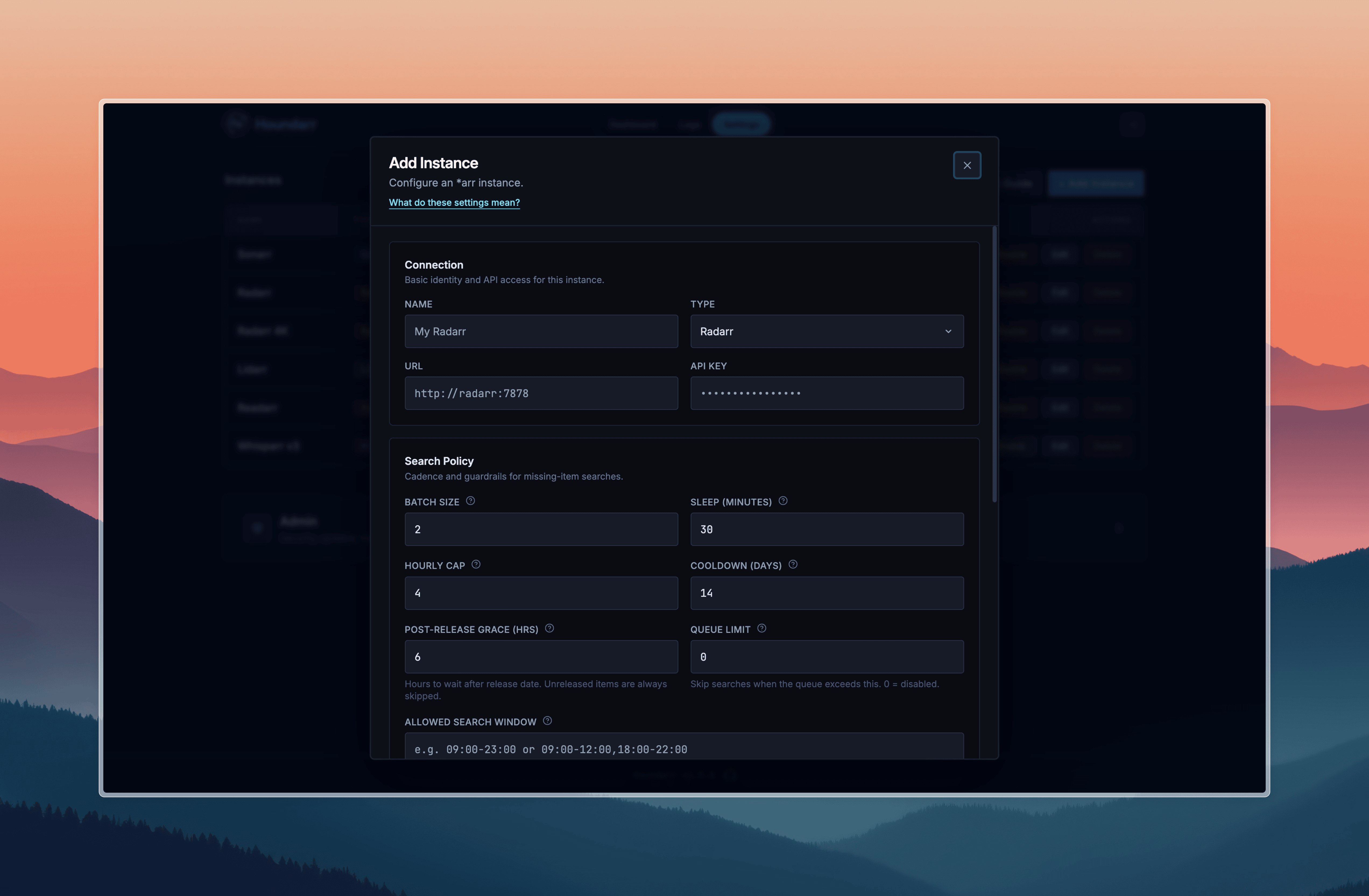
- Multi-Instance Support
- Non-root container execution
- No telemetry
- Per-instance time windows
- Rate limiting and safety
- Search order modes
- SSO proxy authentication
- Tag Filtering
- Web UI dashboard
houndarr README
FAQ
Does Houndarr respect custom format scores?
Houndarr does not evaluate quality, custom formats, or release attributes. It only triggers search commands. Your *arr instance handles all quality evaluation, custom format scoring, and download decisions.
I deleted files to free up space. Will Houndarr re-download them?
If items are still monitored in your *arr instance, yes: they will appear in the wanted/missing list and Houndarr will eventually search for them. To prevent re-downloads, unmonitor the items in your *arr instance.
Houndarr's history shows titles that aren't in my *arr library. Where do they come from?
Every title in the history was reported by the *arr at the configured URL moments before the row was written. A second container (4K instance, old stack) or an import list quietly adding items is the usual cause.
Can Houndarr search for things that aren't in my *arr instance yet?
No. Houndarr only triggers searches within your *arr instances for items already tracked there. For request workflows, use Overseerr or Jellyseerr alongside your *arr stack.
What is upgrade search? How is it different from cutoff?
Cutoff search targets items below your quality cutoff. Upgrade search targets items that already meet cutoff but might have better releases based on quality profiles and custom format scoring. Upgrade search has hard caps: batch capped at 5, cooldown floored at 7 days, hourly cap at 5.
Why is Houndarr searching so slowly?
Defaults ship with batch size 2, hourly cap 4, and 14-day cooldown. With a large backlog, clearing it takes weeks. Throughput can be raised gradually.
Does Houndarr search my whole library?
It searches items from wanted/missing and wanted/cutoff, rotating through the list over time so every item gets evaluated. With upgrade search enabled, it also re-searches library items that already meet cutoff.
Does Houndarr decide whether my file meets cutoff?
No. Your *arr instance maintains the Wanted -> Cutoff Unmet list based on your quality profiles. Houndarr reads that list and schedules searches for items on it.
Why isn't Houndarr finding new releases right after they come out?
Some indexers surface releases hours after the release date. Post-release grace prevents searching too early, and Hot Retry Window can keep checking on a short interval before the normal missing cooldown takes over.
Why is Houndarr skipping so much?
Each skipped row logs a reason string. A high skip count with zero errors is the engine pacing itself. Errors signal problems; skips do not.
I added an instance and it shows 0 wanted. Is it broken?
Counts come from a snapshot taken shortly after adding the instance and refreshed every 10 minutes. Until the first snapshot completes, the card shows "waiting for first sync". A freshly reset *arr also reports nothing until it finishes importing its library.
I have 500 monitored movies. Why did Houndarr only search 3?
Monitored does not mean wanted. Most library items are already downloaded and meet quality cutoff. Of wanted items, cooldowns, post-release grace windows, and hourly caps filter out most of the rest.
Why not just use Sonarr's built-in search?
Sonarr and other *arr apps monitor RSS feeds for new releases but don't re-search content already available before current indexers or quality profile changes. Their "Search All Missing" button fires every item at once, flooding indexers and risking bans. Houndarr works through backlogs automatically in small, rate-limited batches.
More in Automation
 HuginnSelf-hosted, open-source automation server where agents watch websites, RSS, mail and webhooks, then act on events and post to Slack, Telegram and other services.
 Immich AutoTagImmich AutoTag is a self-hosted, open-source rule engine that auto-creates albums, assigns tags, and fixes dates in your Immich library via a config file.
 immich-power-toolsSelf-hosted, open-source companion app for Immich: bulk people merges, album suggestions, missing-location fixes, date offsets, analytics and natural-language search.
 inboxzeroSelf-hosted, open-source AI email assistant for Gmail and Outlook that sorts mail, drafts replies, bulk unsubscribes, and ships its own email app.
 ITOps Agent PlatformSelf-hosted multi-agent AIOps platform automating incident lifecycle from alert to remediation with AI root cause analysis and human-in-the-loop approval.
 JanitorrSelf-hosted tool that removes unwatched media from Jellyfin/Emby using Radarr, Sonarr, and Seerr with configurable age and disk-space rules.
 job-opsJobOps is a self-hosted, open-source job-search pipeline that pulls listings from 10+ job boards, scores fit with AI, rewrites your CV per role, and tracks every reply.
 JobSyncOpen-source, self-hosted job search tracker that scores resumes against postings, drafts cover letters, and pulls new roles from Greenhouse, Lever and Ashby boards.
 Just A Bunch Of Starr ScriptsFour PowerShell 7+ scripts automating *arr media tasks — renaming, collection monitoring, upgrade searching, release-group tagging — run on Linux, Windows, Unraid, Docker
 Keeper.shOpen-source, self-hosted calendar syncer keeping CalDAV, iCloud, Google, Fastmail and Outlook schedules in step, with every Pro feature plus an MCP server.
 KibitzrKibitzr is a self-hosted, open-source web monitoring tool that checks pages for changes and sends notifications via email, Slack, Telegram, and more.
 leatherleather is a self-hosted, open-source local agent runtime running declarative AI agents from a single zero-dependency Go binary.
0 comments