
Self-host Grai Core
v0.1.76Open-source data lineage and metadata platform
- Stars
- 317
- Port
- 8000 (backend API server)
- Requires
- PostgreSQL, Redis
ghcr.io/grai-io/grai-core/grai-server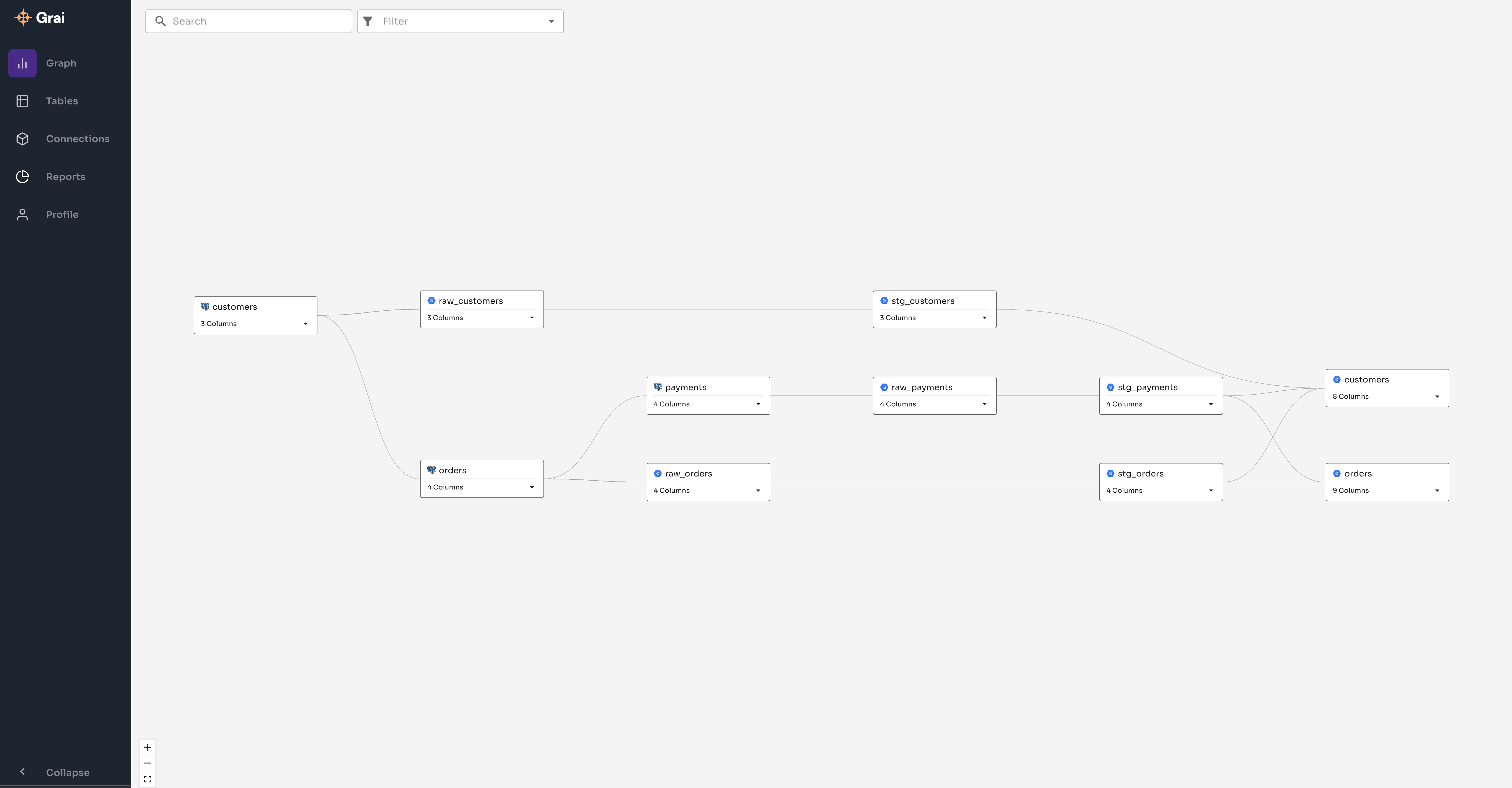
What is Grai Core?
Grai is an open-source data lineage platform that helps data teams map how their data connects across different systems. It provides pre-built connectors for popular data sources including Snowflake, BigQuery, Redshift, PostgreSQL, MySQL, SQL Server, dbt, Fivetran, Metabase, and Looker. The platform automatically synchronizes lineage metadata and supports centralized data validation tests that run when upstream sources change. It integrates with GitHub Actions for CI/CD validation. Grai can be self-hosted using Docker Compose, Helm charts, or the Grai CLI, and consists of a Django/PostgreSQL backend server, a React frontend, a Python CLI client, and integration libraries. The default deployment includes PostgreSQL with pgvector, Redis, a backend API server on port 8000, a frontend on port 3000, and Celery workers for background tasks.
Should you self-host Grai Core?
Grai Core scores 47/100 on selfhost.directory (how scoring works) and ranks #7 of 8 in Data Pipeline. It has 317 GitHub stars.
There was no stable release in the past 12 months, so check the repository's recent activity before you rely on it.
Setup is moderate: expect some configuration beyond a single command. An official Docker image is available. It is MIT-0-licensed and written mostly in Python.
Its closest alternative on selfhost.directory is apache-nifi (73/100, 6 277 stars). It scores higher overall, so compare the two before you pick. See Grai Core vs apache-nifi side by side.
Features
- Centralized data tests
- Column-level data lineage
- Docker Compose Deployment
- GitHub Actions Integration
- Metadata schema library
- Pre-built Connectors
- Python CLI client
- Web-based lineage graph
Grai Core README
More in Data Pipeline
 jitsuOpen-source MIT customer data platform and Segment alternative: capture events and stream them to warehouses and SaaS tools; self-hosted on Kubernetes or Docker.
 lakehouse-at-homeSelf-hosted lakehouse for local data engineering with Spark, Iceberg, and Kafka via Docker Compose, plus optional Airflow and test data tools.
 logging-flumeOpen-source, self-hosted ingestion service from Apache: streaming agents with sources, channels and sinks move large amounts of log data to HDFS, Kafka or HBase.
 logstashAn open-source server-side data pipeline that ingests, transforms and routes events with 200+ plugins; self-hosted via Docker, deb/rpm packages or tar/zip downloads.
 multiwovenSelf-hosted, open-source Reverse ETL platform syncing data from Snowflake, BigQuery, Redshift to 50+ tools like Salesforce, HubSpot, Slack. AGPL-3.0 licensed.
 PeerDBSelf-hosted, open-source (AGPL-3.0) ETL tool streaming Postgres to ClickHouse and other warehouses via CDC, with a web UI and a Postgres-compatible SQL interface.
 PontoonPontoon is a self-hosted, open-source data export platform for vendors to send data directly to customer warehouses like Snowflake, BigQuery, Redshift, and Postgres.
 rudderstackAn open-source, Segment-alternative customer data platform: run the self-hosted Go/React event pipeline and route data to 90+ warehouse and tool destinations.
 TrenchTrench is a self-hosted, open-source analytics infrastructure built on ClickHouse and Kafka for tracking events at scale, compliant with Segment API and GDPR/PECR.
 airbyteAirbyte is a self-hosted data movement platform with hundreds of connectors for ELT pipelines and AI agents, deployable via Docker, Kubernetes, and abctl CLI.
 Apache HopApache Hop is a self-hosted, open-source data integration platform for visual pipelines that run on local, Hop Server, Spark, Flink, and Dataflow without rewriting.
 apache-nifiApache NiFi is an open-source, self-hosted data flow automation platform with browser-based UI, provenance tracking, and secure configuration.
0 comments