
Self-host domain-watchdog
v1.4.6Domain monitoring and backordering via RDAP
- Stars
- 403
- Port
- 8080 (HTTP web interface)
- Requires
- PostgreSQL, Redis/Valkey
maelgangloff/domain-watchdog


What is domain-watchdog?
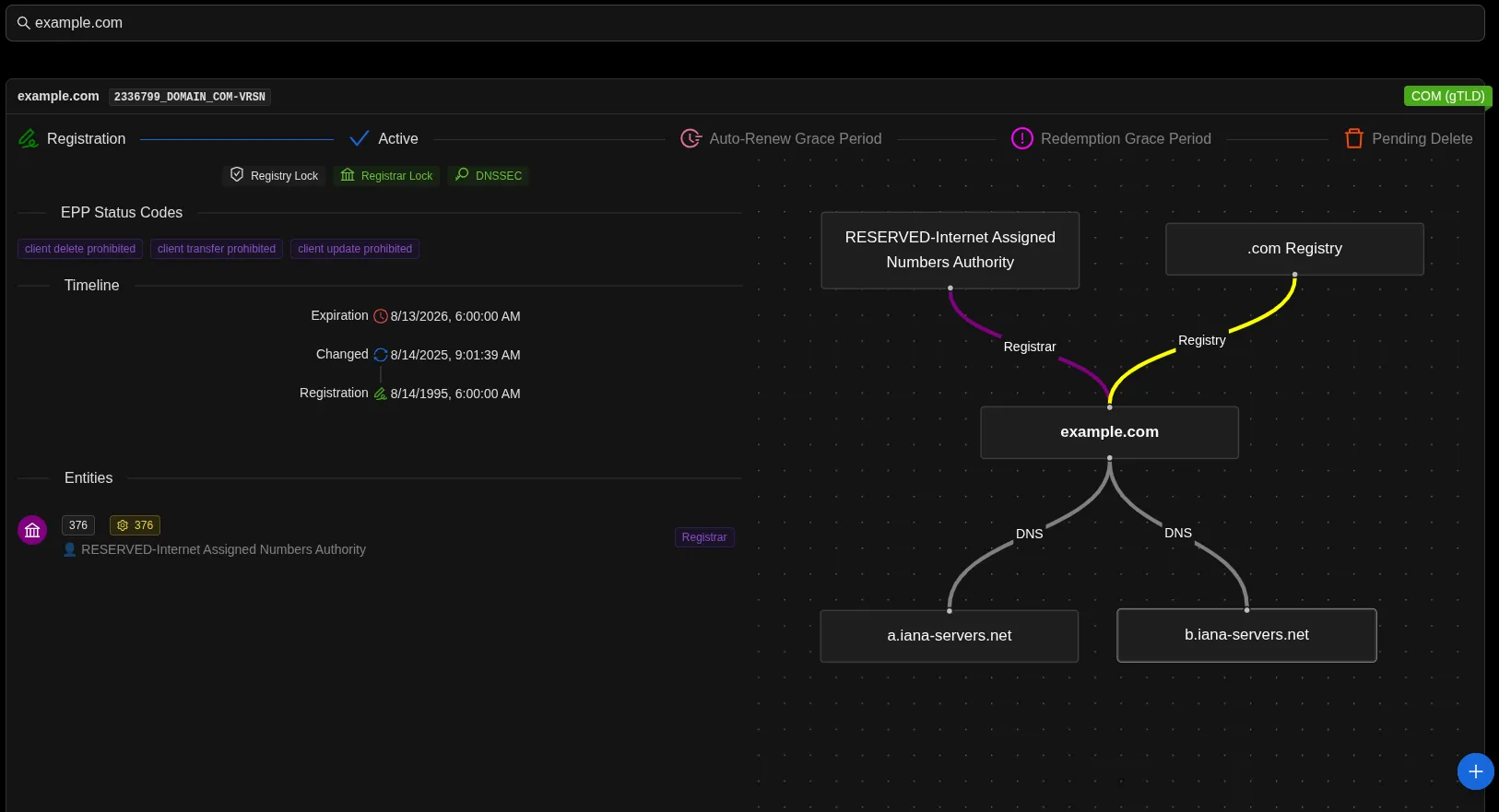
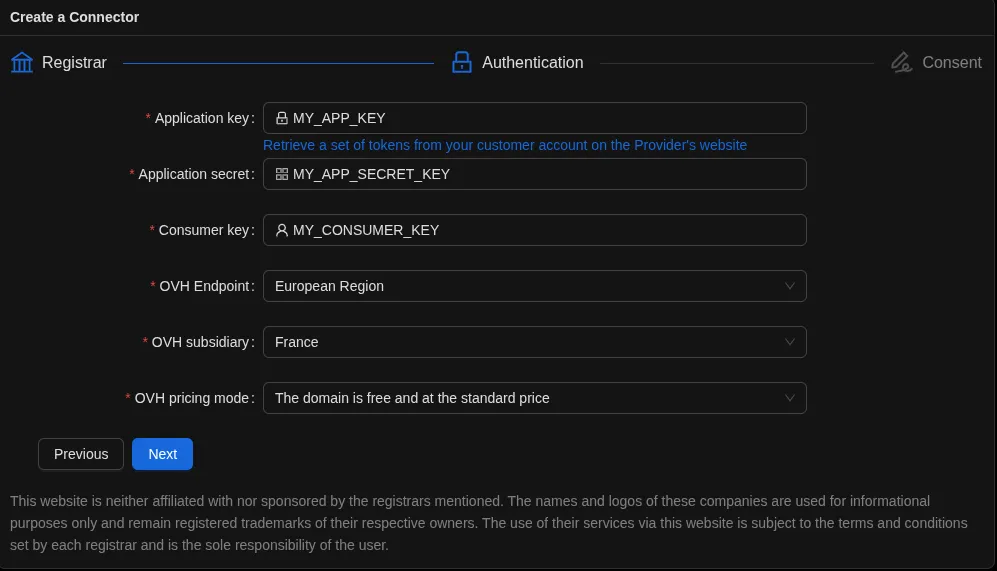
Domain Watchdog is a self-hosted application for monitoring domain names using the RDAP protocol. It tracks domain history including creation, renewals, transfers, and deletions. Users can create watchlists to monitor domains and receive notifications via email or webhooks (Slack, Mattermost, Discord). It supports automated domain backordering through integrations with registrars like OVH, Gandi, Namecheap, AutoDNS, Name.com, and custom EPP servers. The application is built with PHP/Symfony backend and React/TypeScript frontend, requires PostgreSQL and Redis/Valkey, with optional InfluxDB for metrics. It supports OAuth 2.0 for SSO authentication.
Should you self-host domain-watchdog?
domain-watchdog scores 51/100 on selfhost.directory (how scoring works) and ranks #20 of 51 in Monitoring & observability. It has 403 GitHub stars.
It shipped 9 stable releases in the past year. The latest, v1.4.6, came out on 24 October 2026. New versions land roughly every 3 weeks.
Setup is advanced: plan for several services and some ongoing maintenance. An official Docker image is available. It is AGPL-3.0-licensed and written mostly in PHP.
Its closest alternative on selfhost.directory is GoAccess (75/100, 21 094 stars). It scores higher overall, so compare the two before you pick. See domain-watchdog vs GoAccess side by side.
Features
- Automated Domain Backordering
- Deletion Forecasting
- Domain Monitoring & Alerts
- Email notifications
- Historical Domain Timeline
- iCal/RSS feeds
- OAuth 2.0 SSO
- RDAP domain search
- REST API
- Webhook Notifications
domain-watchdog README
More in Security
 drydockSelf-hosted open-source container update monitor watching 23 registries with 21 notification and action integrations.
 elasticsearchOpen-source distributed search engine that handles structured, unstructured, and vector data for real-time search, observability, and AI workloads.
 emisaremisar gives AI agents declared infrastructure actions instead of shell. Policy gates actions, approvals for risky changes, tamper-evident audit trail.
 endlessh-goendlessh-go is a self-hosted, open-source Go SSH tarpit that traps brute-force attackers while exporting Prometheus metrics for a Grafana dashboard.
 Eufy SecurityHome Assistant integration to manage Eufy Security devices as cameras, home base stations, doorbells, motion and contact sensors.
 facial-access-controlSelf-hosted facial recognition access control managing biometrics, integrating with kerberos.io cameras, and providing plugin-based access on your infrastructure.
 Fail2BanPython daemon that bans IPs after authentication failures by scanning logs and updating firewall rules. Open-source for securing SSH, Apache against brute force attacks.
 Fail2Ban-ReportSelf-hosted web dashboard aggregating Fail2Ban logs from multiple servers into searchable JSON reports with UFW blocklist sync and role-based auth.
 Fail2NetworkBanFail2NetworkBan is a self-hosted, open-source Python client/server that sends Fail2Ban bans to Proxmox for network-wide IP blocking across all VMs.
 falcoSelf-hosted, open-source CNCF runtime security agent that watches Linux syscalls through eBPF and alerts on host, container and Kubernetes threats.
 FCaptchaSelf-hosted, open-source CAPTCHA detecting AI agents and bots with behavioral analysis and proof-of-work. Drop-in replacement for Turnstile, reCAPTCHA, hCaptcha.
 FideliusSelf-hosted, open-source web app for one-time secret sharing with end-to-end browser encryption. Server never sees plaintext; secrets deleted after one view.
0 comments