
Self-host collins
v2.2.0Infrastructure CMDB and automation for physical assets
- Stars
- 574
- Port
- 9000 (HTTP web UI and REST API)
tumblr/collins



What is collins?
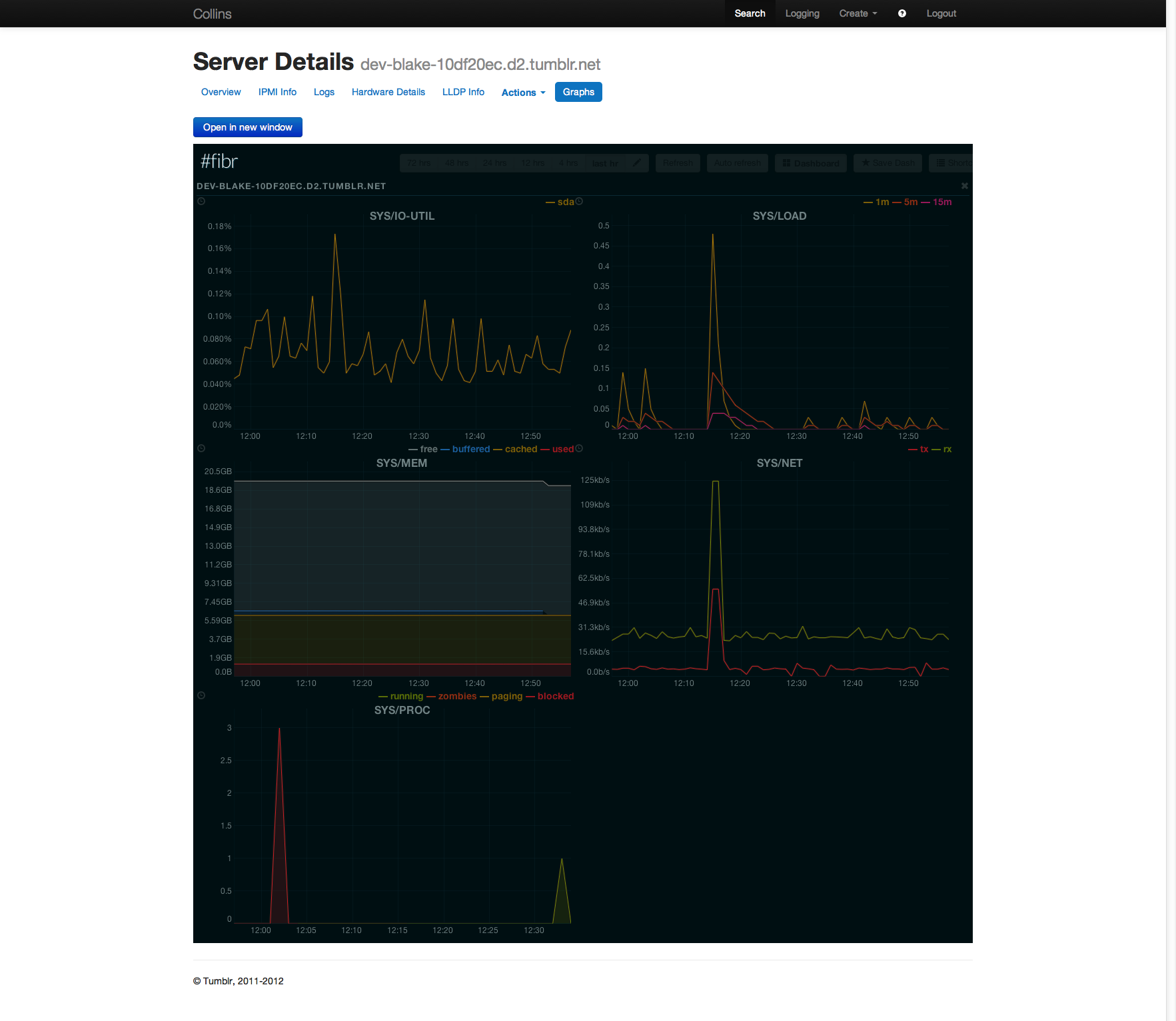
Collins is an infrastructure management platform (CMDB) designed for engineers who need a source of truth for physical and virtual assets. Originally built at Tumblr to manage production hardware, it stores asset metadata, IP addresses, and hardware details, then uses that data to drive automation like cluster deployment, configuration generation, and software deploys. The platform provides a documented REST API with client libraries in Python, Ruby, and Go, a command-line shell for scripting, and a web UI for asset search, provisioning, power management, and maintenance workflows. It supports multiple authentication backends (LDAP, file-based, in-memory), flexible permissions per API endpoint, IP address allocation and management (IPAM), power management via IPMI, and distributed operation across multiple datacenters. Collins runs on Java 1.7/1.8 with MySQL 5.5 (or H2 for development) and can be deployed via Docker, downloadable zip releases, or built from source using the Play Framework. The project is licensed under Apache-2.0 and last released version 2.2.0 in October 2017.
Should you self-host collins?
collins scores 50/100 on selfhost.directory (how scoring works) and ranks #3 of 3 in Infrastructure. It has 574 GitHub stars.
There was no stable release in the past 12 months, so check the repository's recent activity before you rely on it.
Setup is advanced: plan for several services and some ongoing maintenance. An official Docker image is available. It is Apache-2.0-licensed and written mostly in Scala.
Its closest alternative on selfhost.directory is Pulumi (78/100, 25 826 stars). It scores higher overall, so compare the two before you pick. See collins vs Pulumi side by side.
Features
- Asset intake
- Asset tagging and query language
- Callback System
- Client Libraries
- Command-line shell
- Encrypted attributes
- External monitoring integration
- Flexible Permissions
- IP Address Management (IPAM)
- Multi-datacenter support
- Power Management
- Provisioning
- REST API
- Script Engine
collins README
More in Configuration Management
 ConfigarrConfigarr is a self-hosted, open-source tool that automates configuration for Sonarr, Radarr, and other *arr apps by syncing custom formats from TRaSH-Guides.
 coreCFEngine is a self-hosted, open-source configuration management system automating infrastructure, security, and compliance at scale.
 Dock-DploySelf-hosted web app for visually building Docker Compose files, generating Homepage configs, and creating schedulers in cron, GitHub Actions, and systemd formats.
 FleetOpen-source MDM and endpoint management for macOS, Windows, Linux and mobile: self-hosted software patching, vulnerability tracking and live device reports.
 FliptSelf-hosted, open-source feature flag platform that keeps flags as code in your own Git repositories, with multi-environment support and REST/gRPC APIs.
 gansSelf-hosted open-source tool that monitors a local Git repository for changes and automatically executes only the modified Ansible playbooks via a web interface.
 git-confedSelf-hosted web tool that scans folders for Git repos and applies shared config blocks (user, remotes) to multiple repos via a Bootstrap UI.
 hass-configuratorSelf-hosted, open-source web UI to edit Home Assistant YAML files with syntax highlighting, linting, Git integration, and a file browser — runs on any Python 3 system.
 MantraeSelf-hosted web UI for managing Traefik dynamic config without editing YAML, with agent discovery and DNS integration.
 mcp-server-managerMCP Server Manager is a self-hosted, open-source tool that simplifies managing Model Context Protocol servers for AI clients via a web UI and single YAML config.
 openvoxOpenVox is a self-hosted, open-source configuration management platform compatible with Puppet for automating Linux, Unix, and Windows servers.
 oxidizedOxidized is a self-hosted, open-source network device config backup tool replacing RANCID. Supports 150+ device types, REST API, web UI, and Git/file/HTTP storage.
0 comments