
Self-host Codeman
xterm-zerolag-input@0.4.2Dashboard for running AI coding agents on your own hardware
- Stars
- 821
- Port
- 3000 (Web dashboard and API server)
- Requires
- Node.js
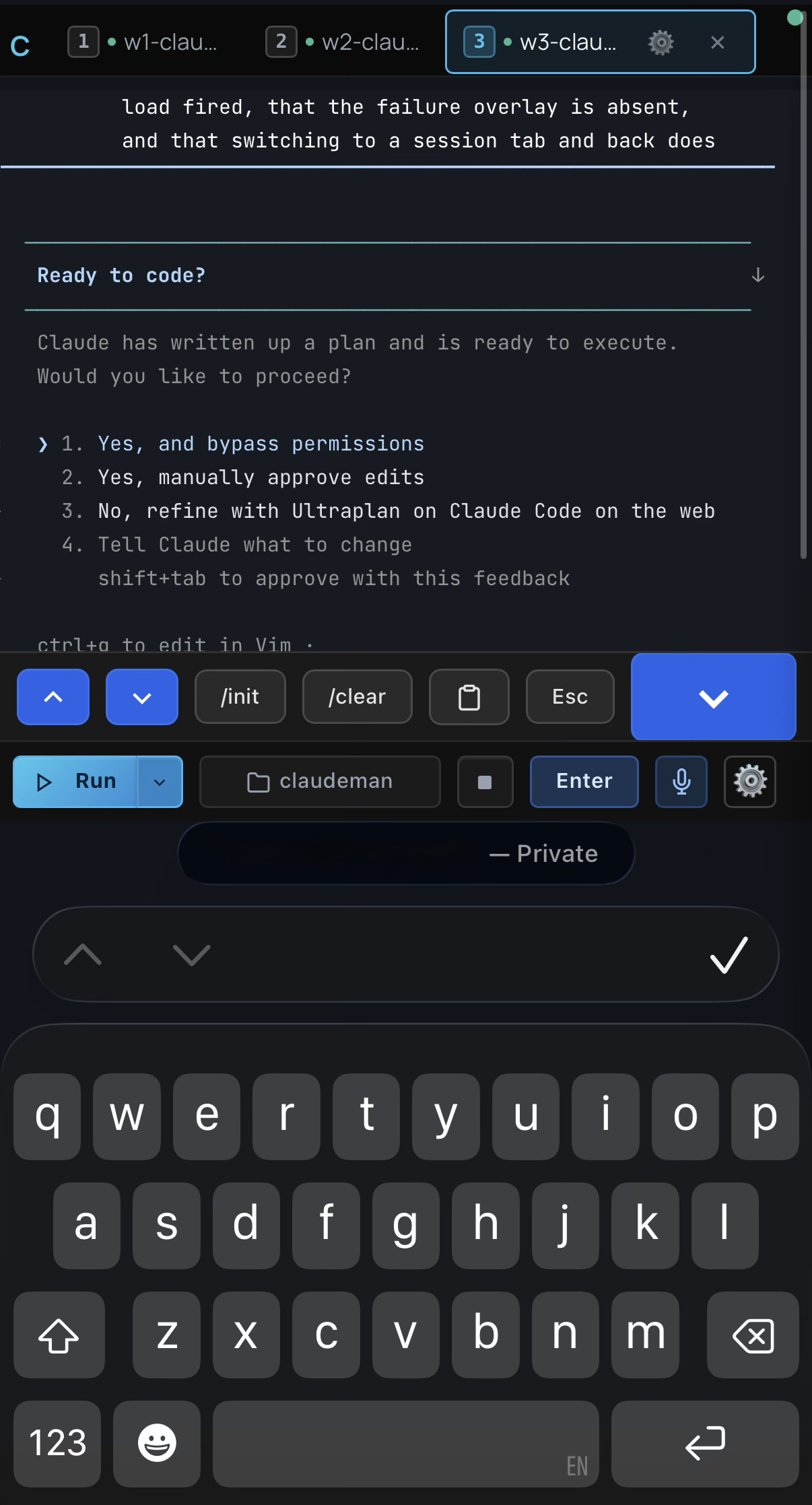
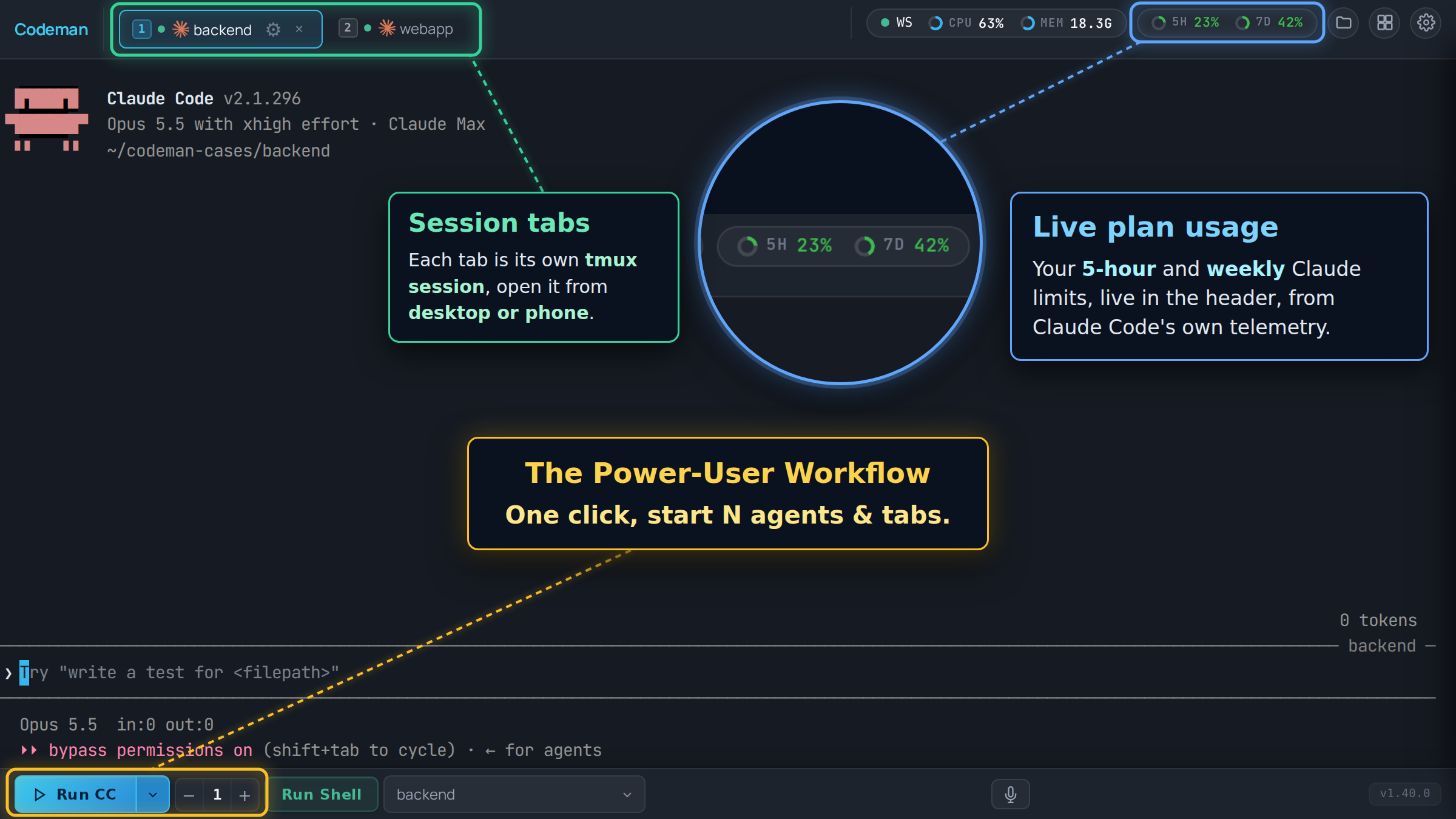
What is Codeman?
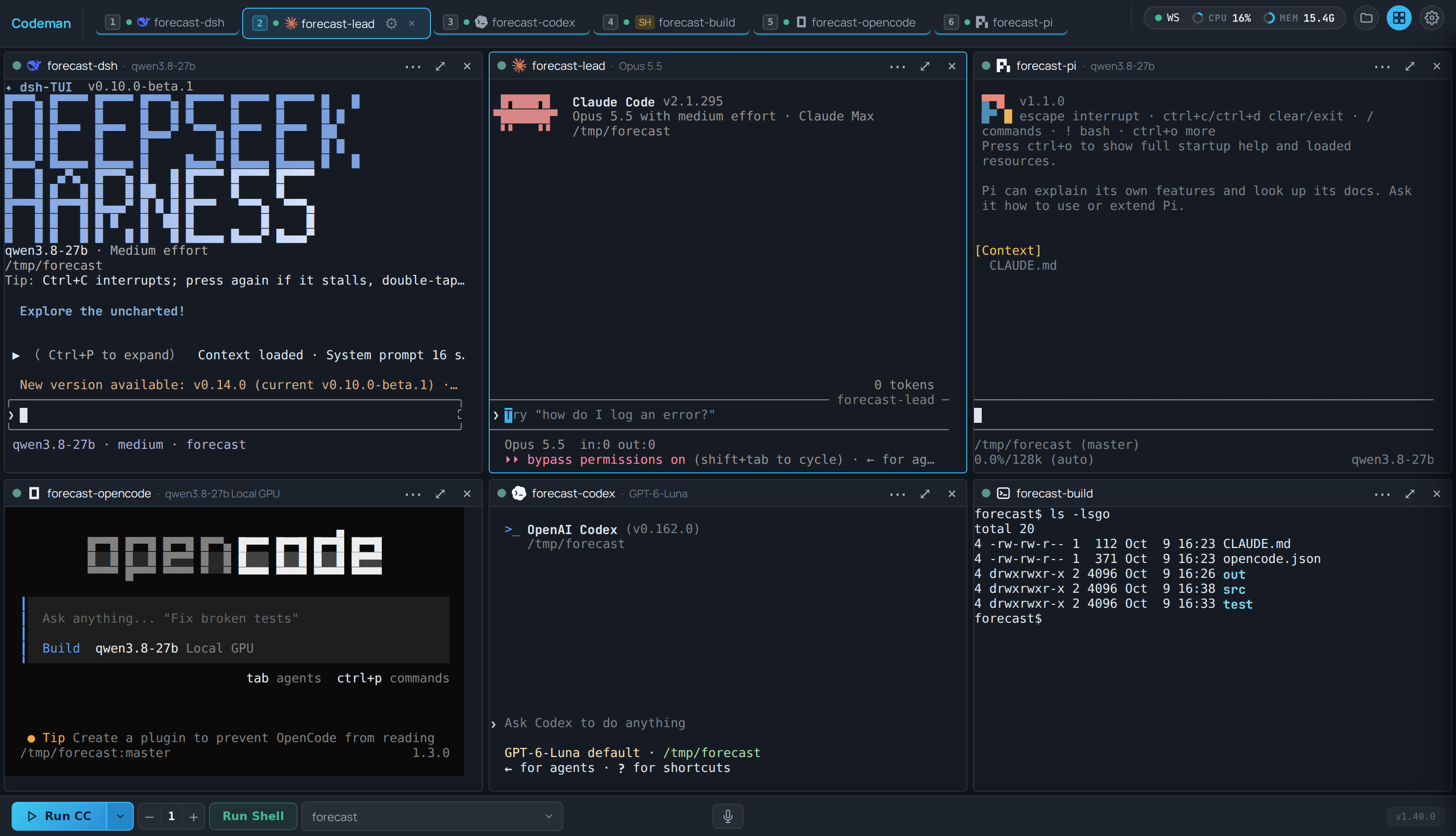
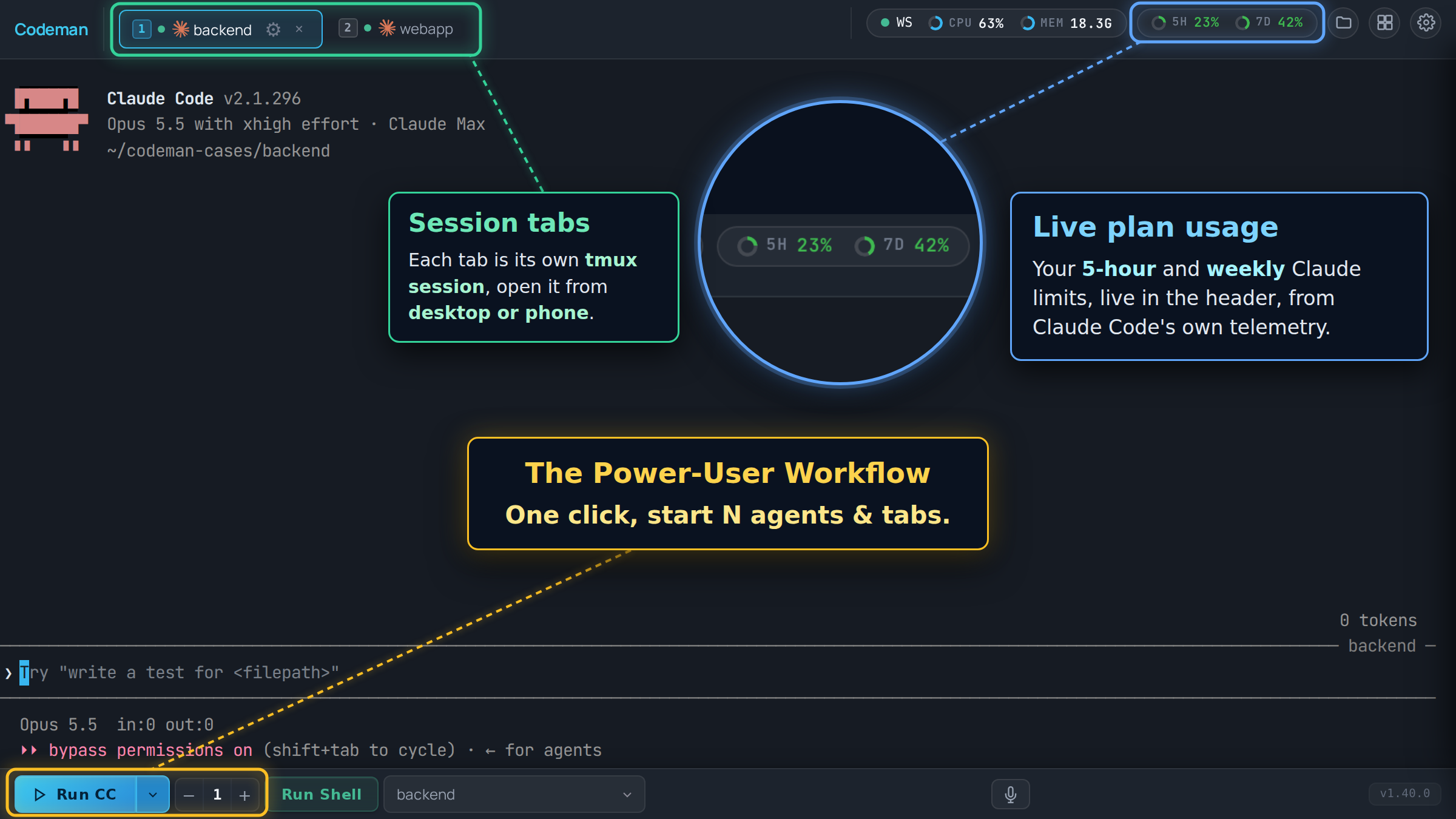
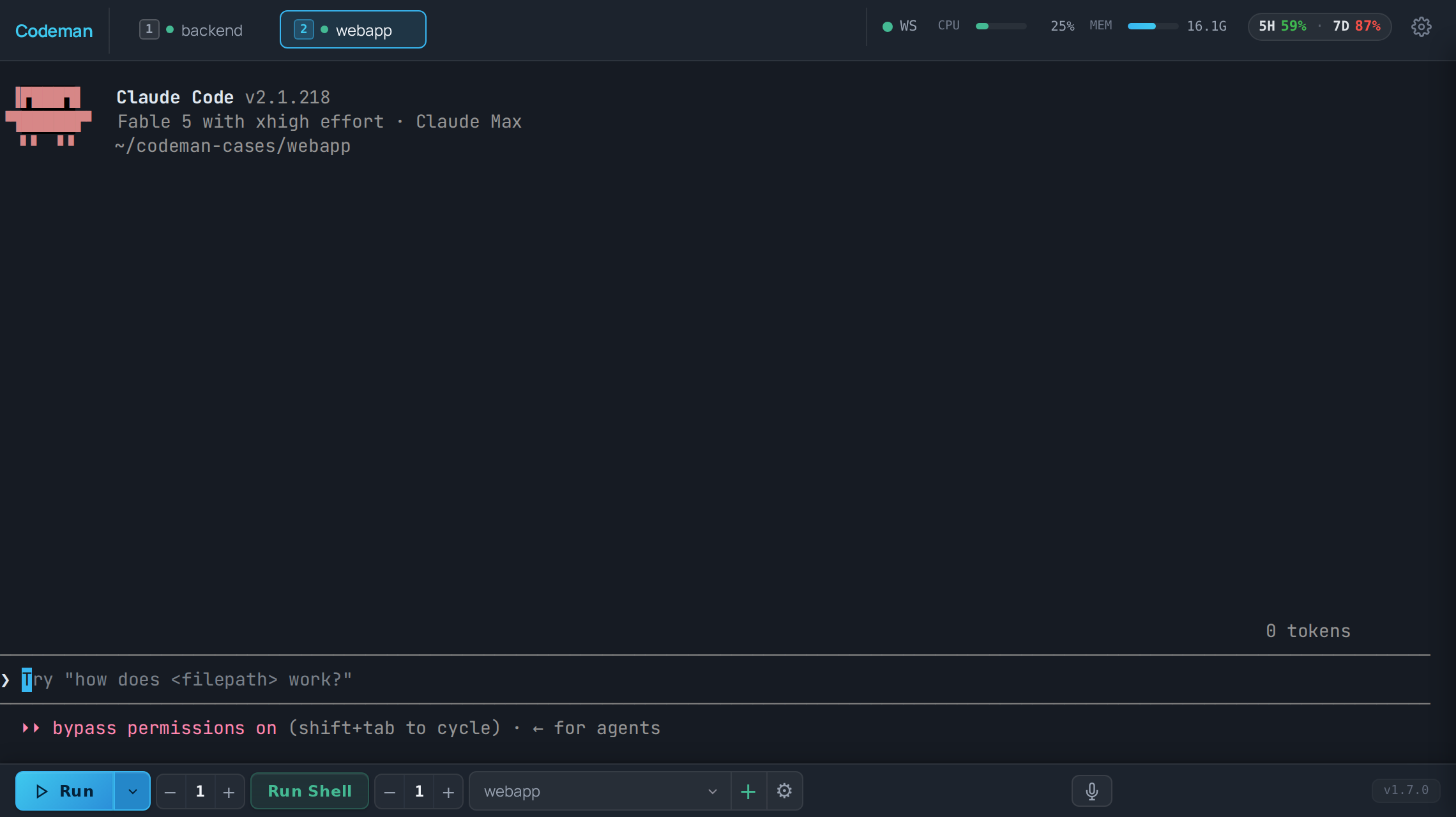
Codeman is a self-hosted web dashboard that runs AI coding agents in tmux sessions on your own hardware. It streams live terminals to any browser or phone with a zero-lag local echo overlay, QR code login, and push notifications. The interface displays every agent in tabs or a tile grid with live status, token usage, and background sub-agent visualization. Key capabilities include autonomous respawn with auto-resume after usage limits, an orchestrator for multi-agent workflows, scheduled cron jobs, Docker and SSH isolation for cases, a file viewer with inline previews, and an MCP server for programmatic control. You can install it via a one-line script, Docker Compose, or npm; it binds to loopback by default with optional Tailscale or Cloudflare tunnel exposure, and is MIT-licensed with no telemetry.
Should you self-host Codeman?
Codeman scores 61/100 on selfhost.directory (how scoring works) and ranks #39 of 166 in Developer Tools. It has 821 GitHub stars.
It shipped 10 stable releases in the past year. The latest, codeman@1.46.0, came out on 27 October 2026. New versions land roughly every 2 days.
Setup is moderate: expect some configuration beyond a single command. It is MIT-licensed and written mostly in Typescript.
Its closest alternative on selfhost.directory is openhands (87/100, 92 068 stars). It scores higher overall, so compare the two before you pick. See Codeman vs openhands side by side.
Features
- File viewer with inline previews
- Session persistence via tmux
- Tile grid (6 sessions side-by-side)
- Zero-lag remote typing
Codeman README
FAQ
How much does Codeman cost?
Nothing. Codeman is MIT-licensed open source with no telemetry, no account, and no cloud component; it runs entirely on your own hardware.
Is it safe to expose Codeman to the network?
It binds to loopback only by default. To expose it, set a password and reverse-proxy it, or use Tailscale. DNS-rebinding protection, Origin/CSRF guard, and rate-limited auth are always on.
How does Codeman compare to Herdr?
Herdr is terminal-first with a background server and combined agent list. Codeman is web-first with the same persistent sessions streamed to any browser, real phone UI, tabs that blink when agents need you, push notifications, QR login, and zero-lag typing over high-latency links.
Can I run multiple Claude Code sessions at once?
Yes. Every session is its own tmux session and browser tab. Tabs turn yellow/red when an agent needs you, and the tile grid shows up to six live terminals side by side.
Does Codeman support Codex, Gemini, Grok, DeepSeek and the other CLIs too?
Yes, all 11 CLIs run as first-class session types side by side: Claude Code, OpenCode, Codex CLI, Antigravity CLI, Gemini CLI, Pi, Grok Build, DeepSeek Harness, OMP, GitHub Copilot CLI, plus plain shell.
Can I use Claude Code from my phone?
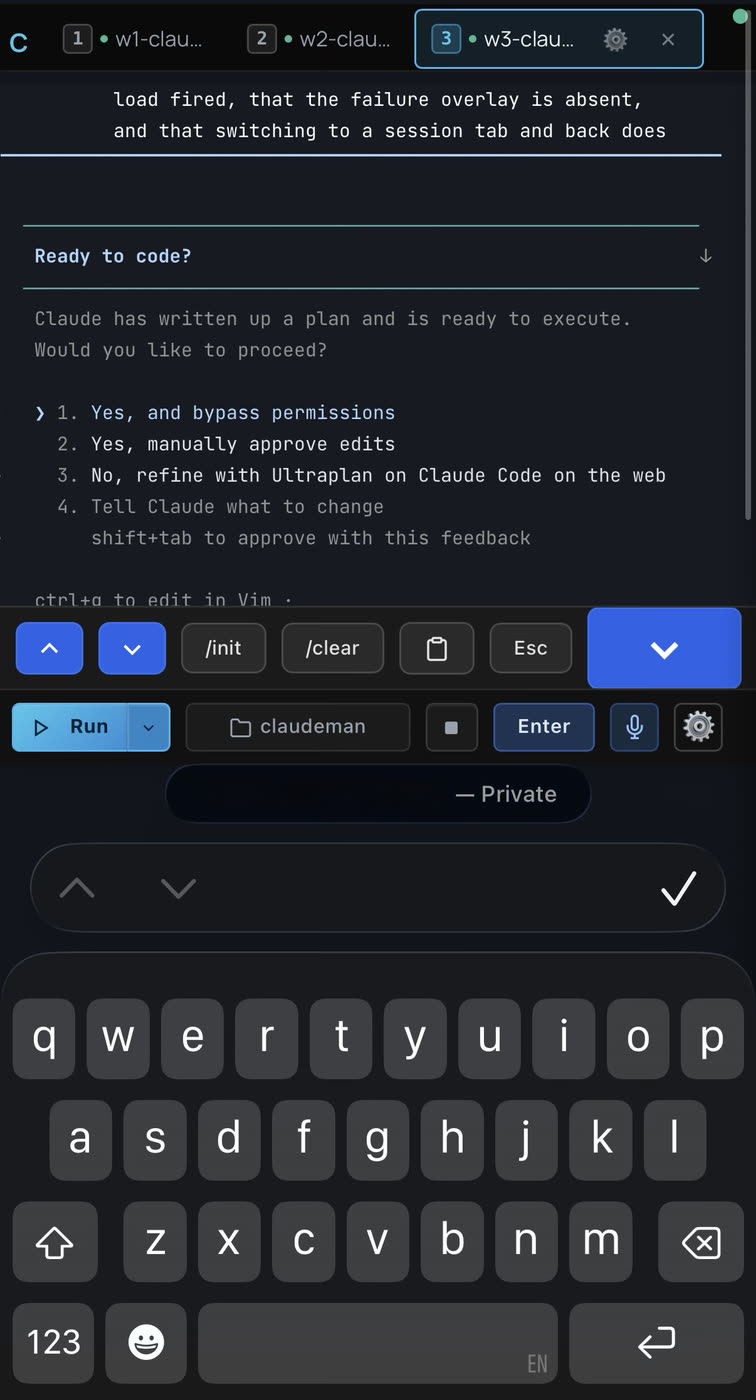
Yes. Scan a single-use QR code to log in, get push notifications when an agent needs you, and type with zero perceived lag thanks to a Mosh-inspired local echo overlay.
Will Claude Code keep running if I close my laptop?
No, closing the laptop lid puts it to sleep and suspends all processes. Install Codeman on a machine that stays on (Mac mini, home server, VPS) — agents run in persistent tmux sessions there, so closing your laptop changes nothing.
More in Terminal
 C-SSHCross-platform SSH client with terminal, file management, monitoring, and AI. Optional self-hostable Creation Cloud for encrypted config sync.
 DesktopCommanderMCPOpen-source, self-hosted MCP server that gives Claude, ChatGPT and other AI clients terminal, file and process control on your own machine.
 DumbTermSelf-hosted web terminal with Starship prompt, PIN protection, dark mode, PWA, and pre-installed CLI tools. Deploy via Docker, Compose, or Node.js.
 electerm-webelecterm-web is a self-hosted, open-source web terminal and SSH/SFTP client with AI assistance, multi-language support, cloud sync, and responsive mobile design.
 IM.codesSelf-hosted open-source messaging and control layer for AI coding agents providing shared memory, remote desktop, supervised execution, and cross-provider audit.
 marchatSelf-hosted, open-source terminal chat for developers with real-time WebSocket messaging, optional E2E encryption, plugin system, and SQLite/PostgreSQL/MySQL backends.
 MulmoTerminalSelf-hosted browser terminal running multiple AI coding agents in a grid, color-coded by state. Uses tmux for persistence and git worktrees for isolation.
 Myrlin WorkbookSelf-hosted workspace manager that unifies Claude Code and Codex sessions with live terminals, scrollback, cost tracking, kanban, and phone UI.
 nexus4ccSelf-hosted web terminal bridging browsers to tmux sessions running Claude Code and other AI agents, with project/channel management, file browser, and PWA support.
 NoEyesSelf-hosted terminal chat with E2E encryption and a blind-forwarder server that cannot read messages or identify users. For small trusted groups wanting private comms.
 Open TerminalA self-hosted, open-source terminal server exposing a real remote shell and file APIs over REST for AI agents and automation; deploy via Docker, pip, or uvx.
 oxkerAn open-source, self-hosted terminal UI, written in Rust, for watching Docker containers, tailing logs, and running start/stop/exec commands from the keyboard.
0 comments