
Self-host Claude Unlimited
v1.3.1Local proxy rotating AI accounts for seamless coding
- Stars
- 328
- Ports
- 4317 (HTTP daemon and dashboard), 4400 (Alternative port when 4317 is taken)
- Requires
- Claude CLI, Git, Python

What is Claude Unlimited?
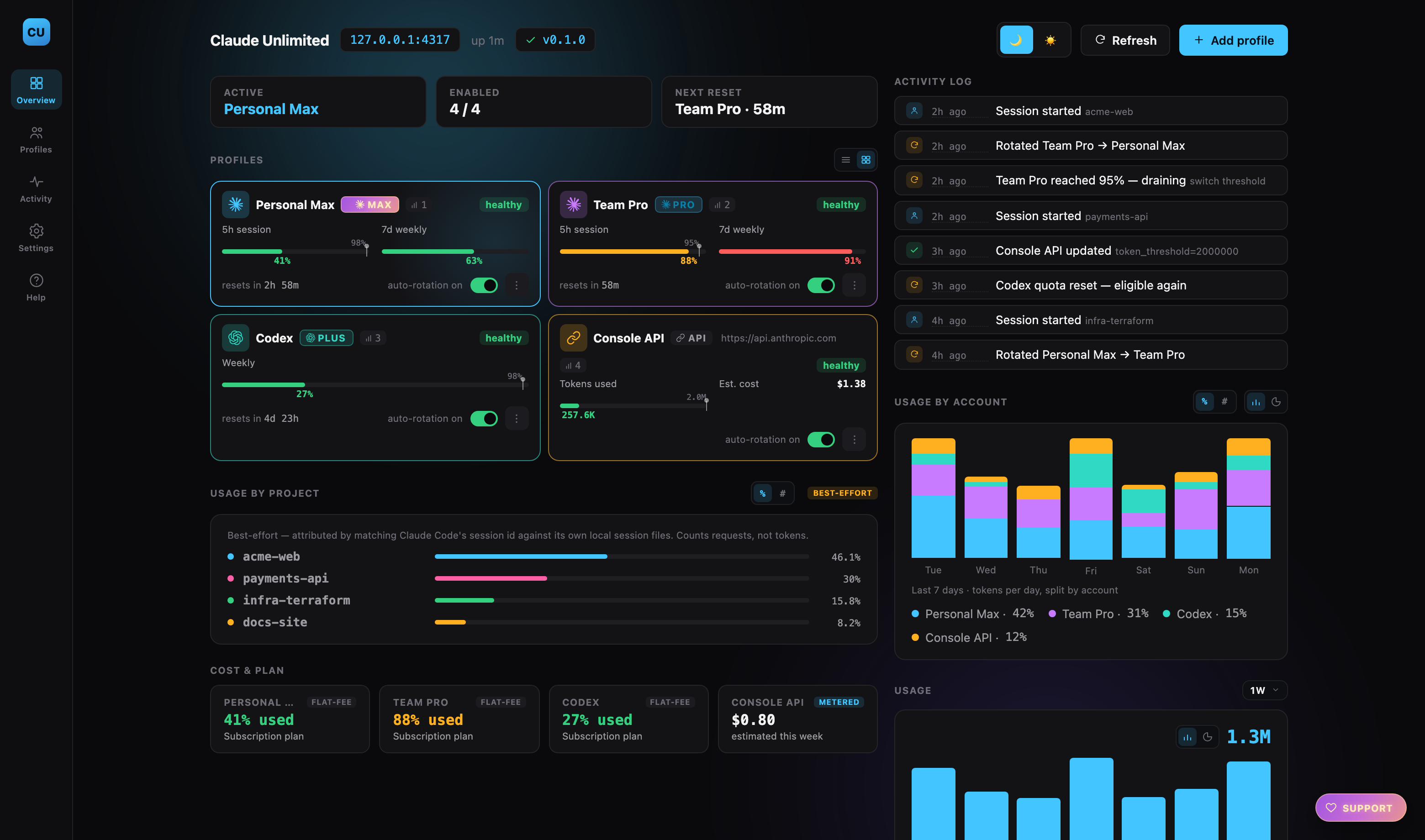
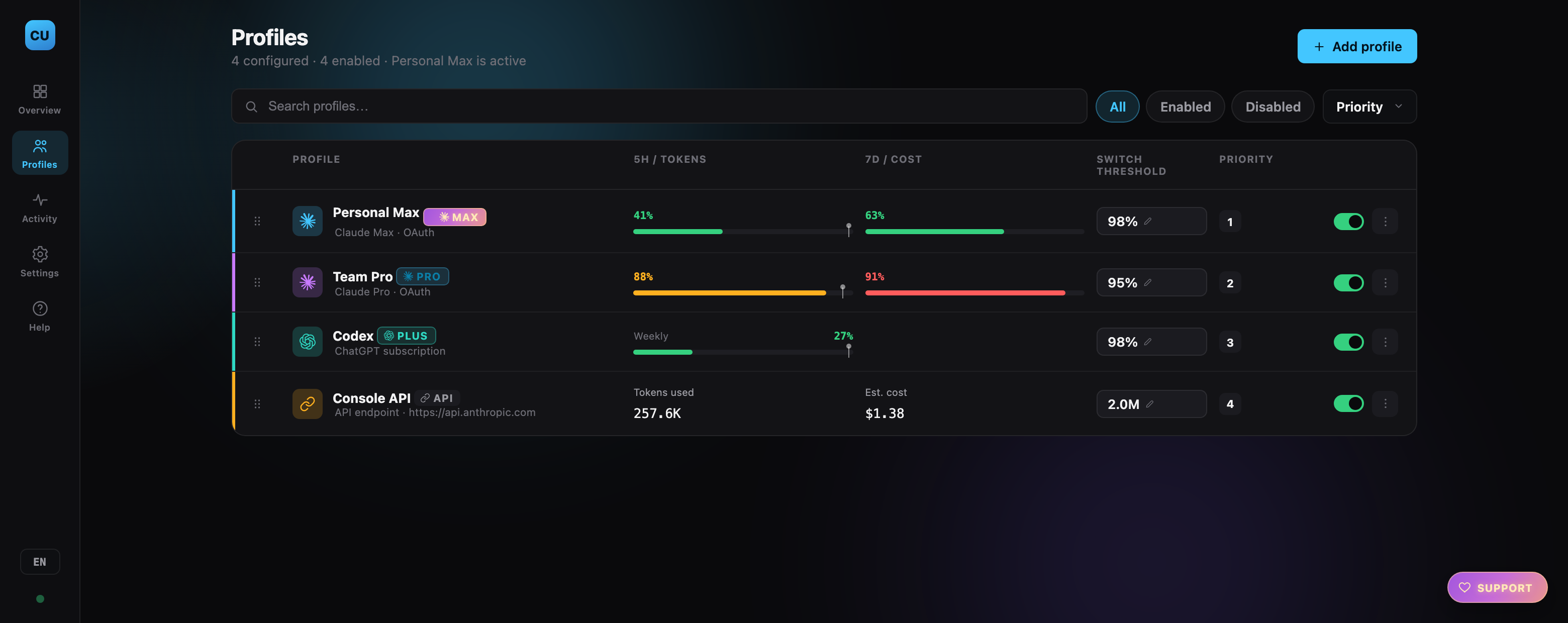
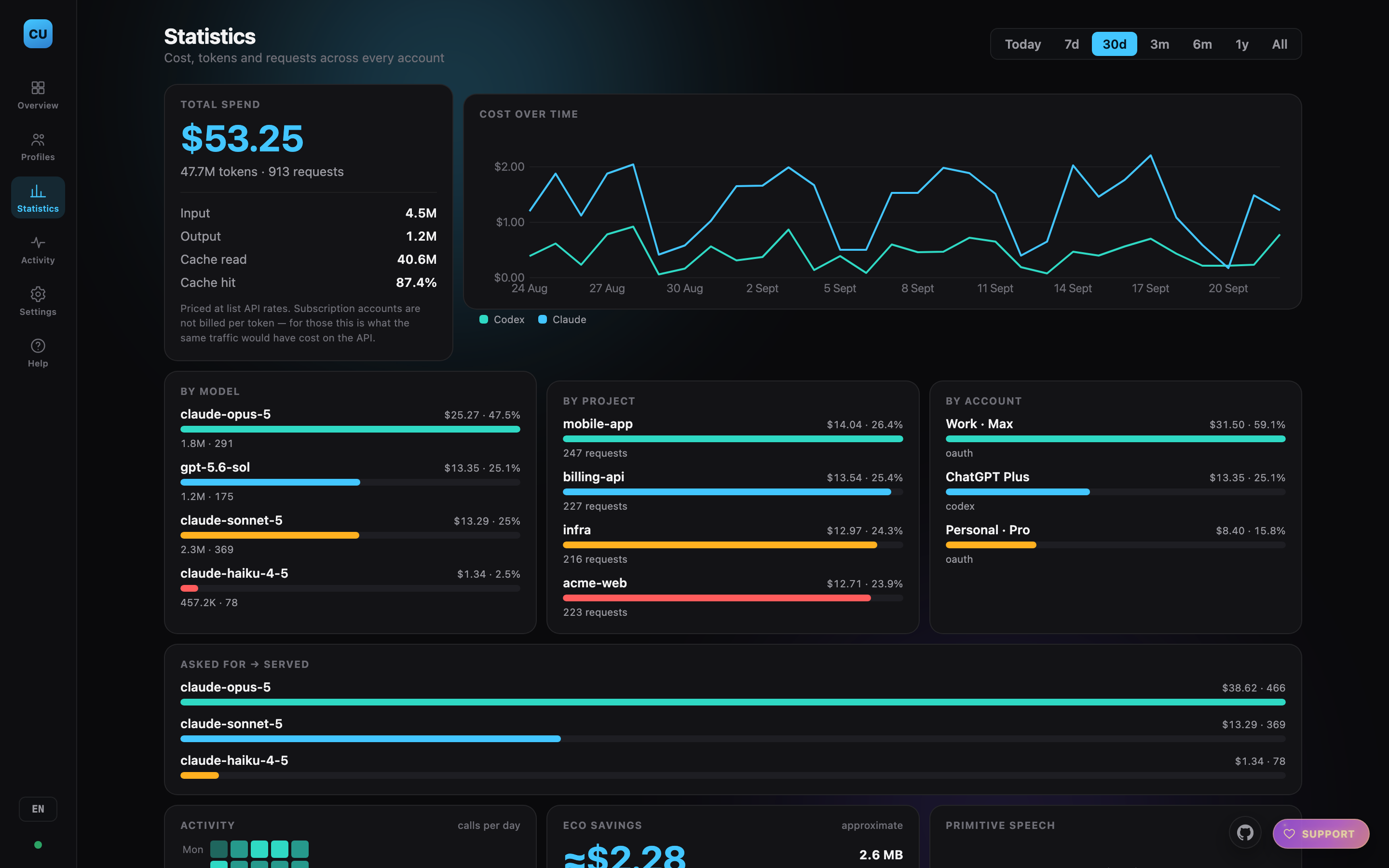
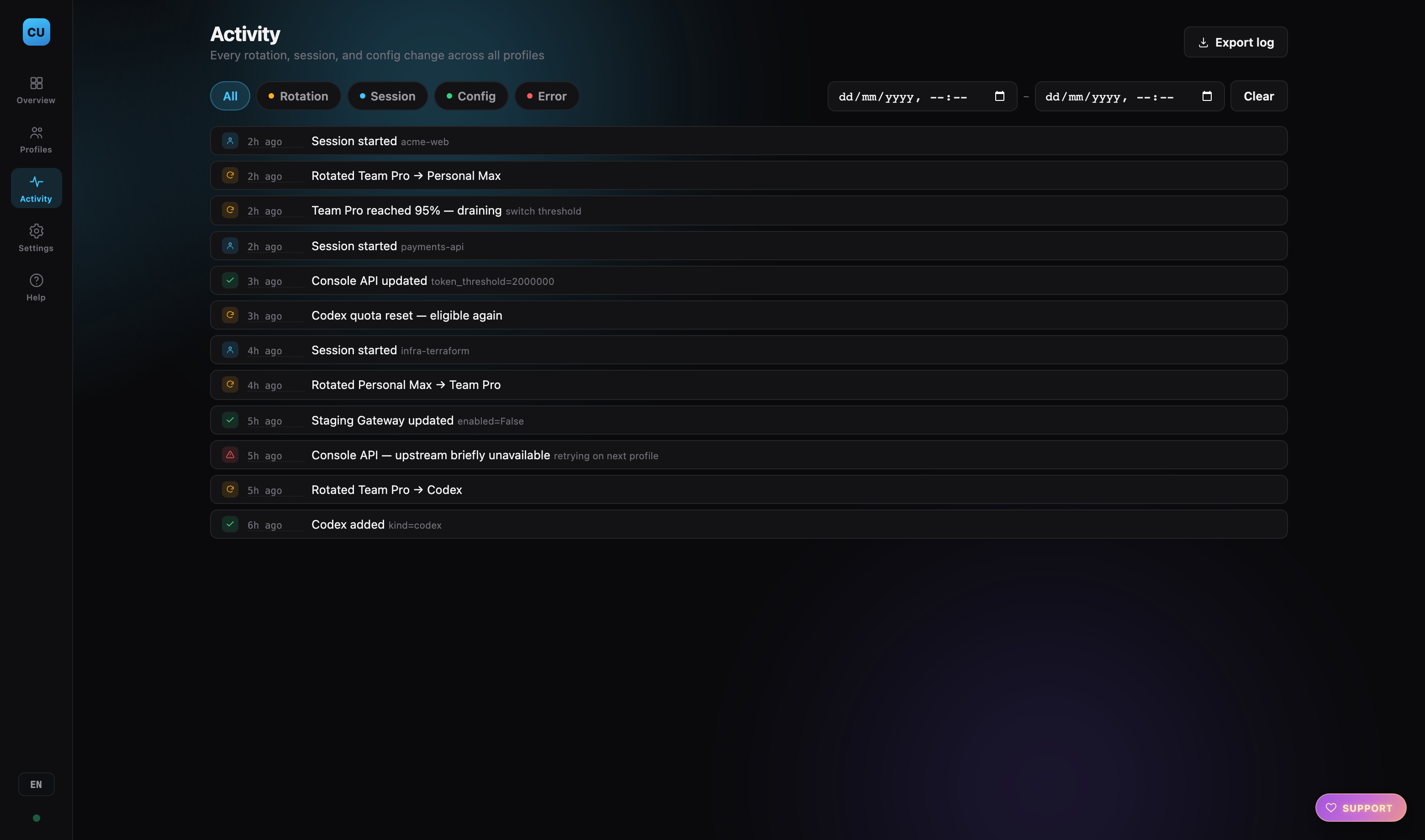
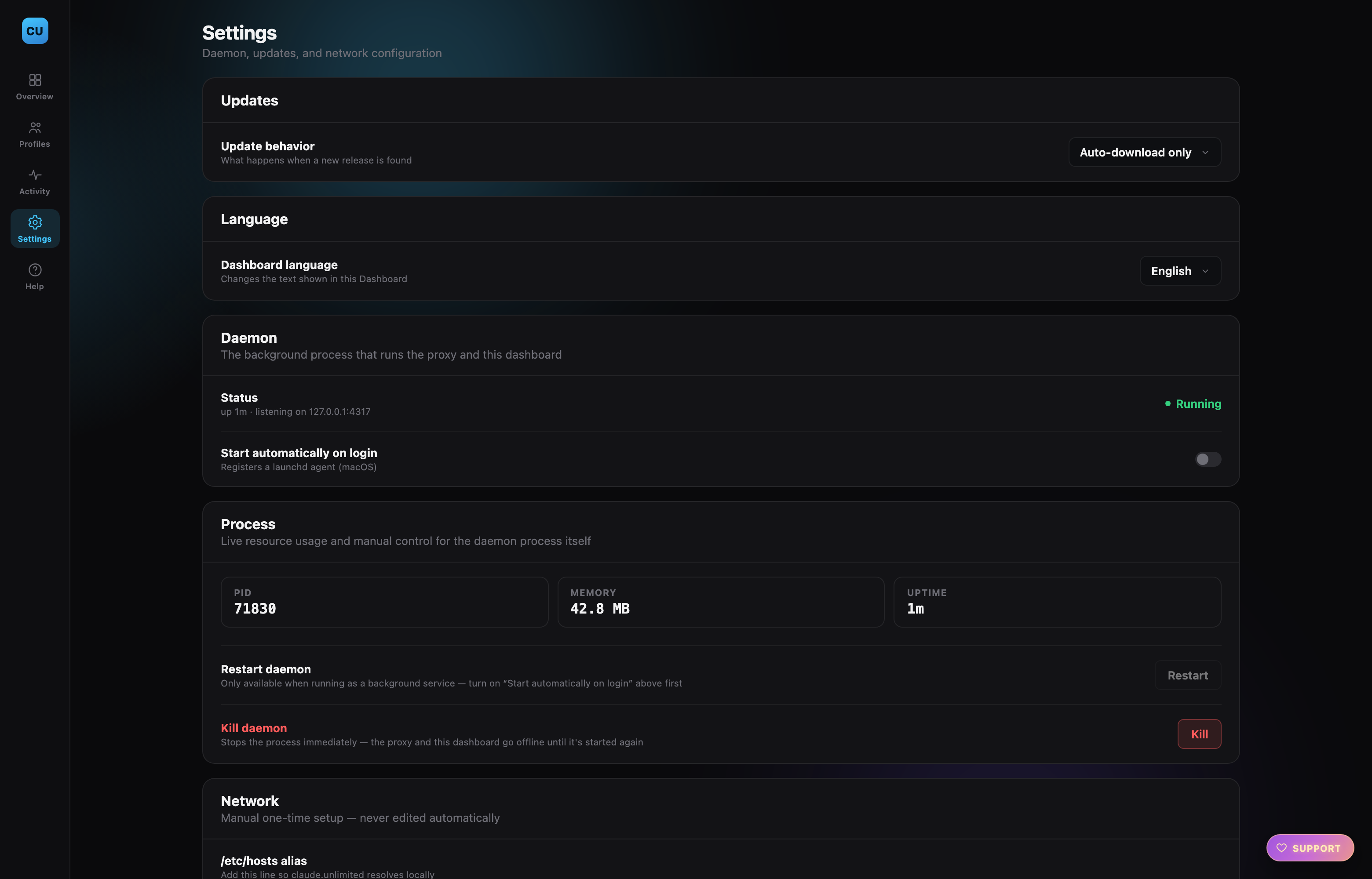
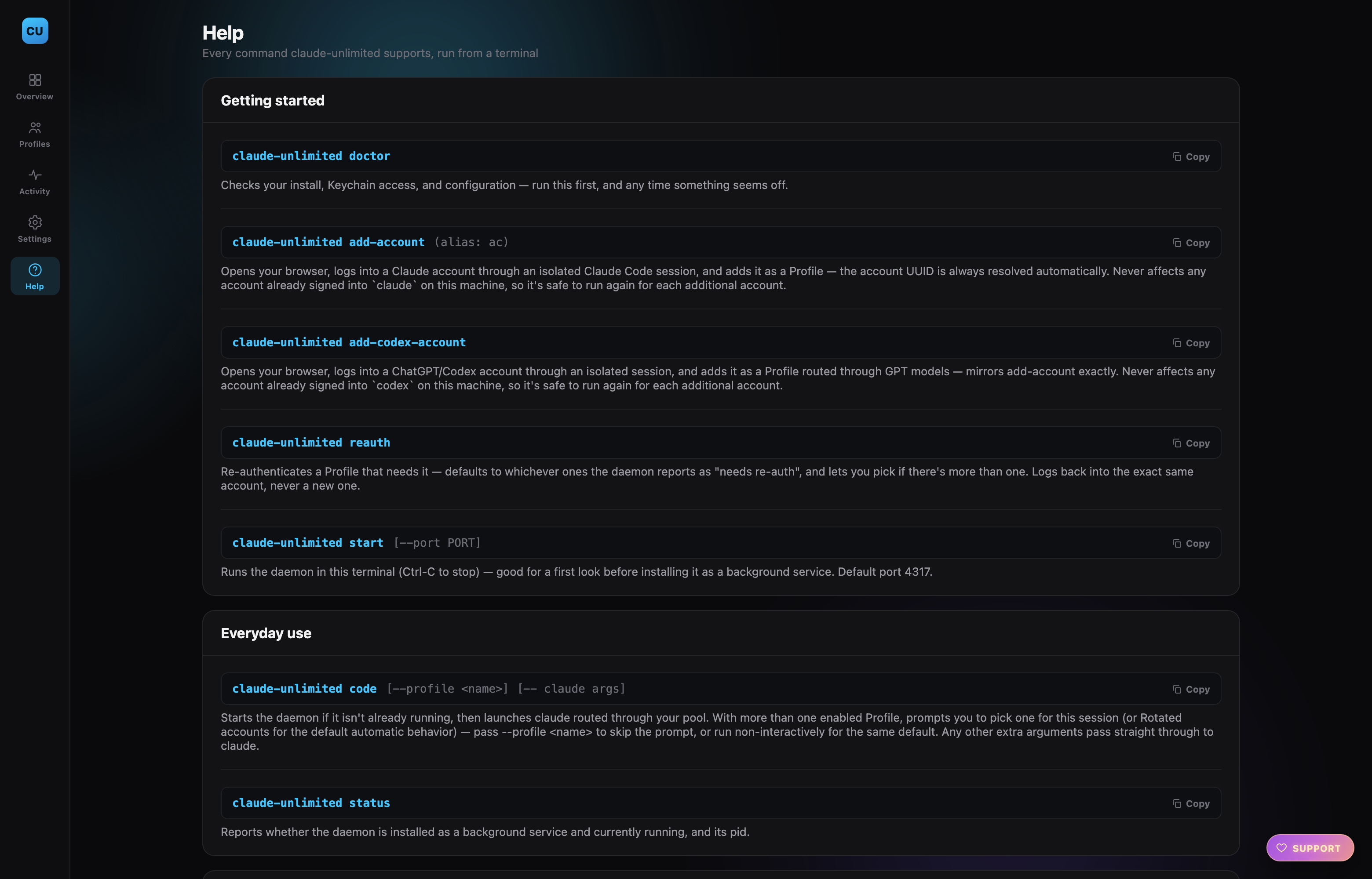
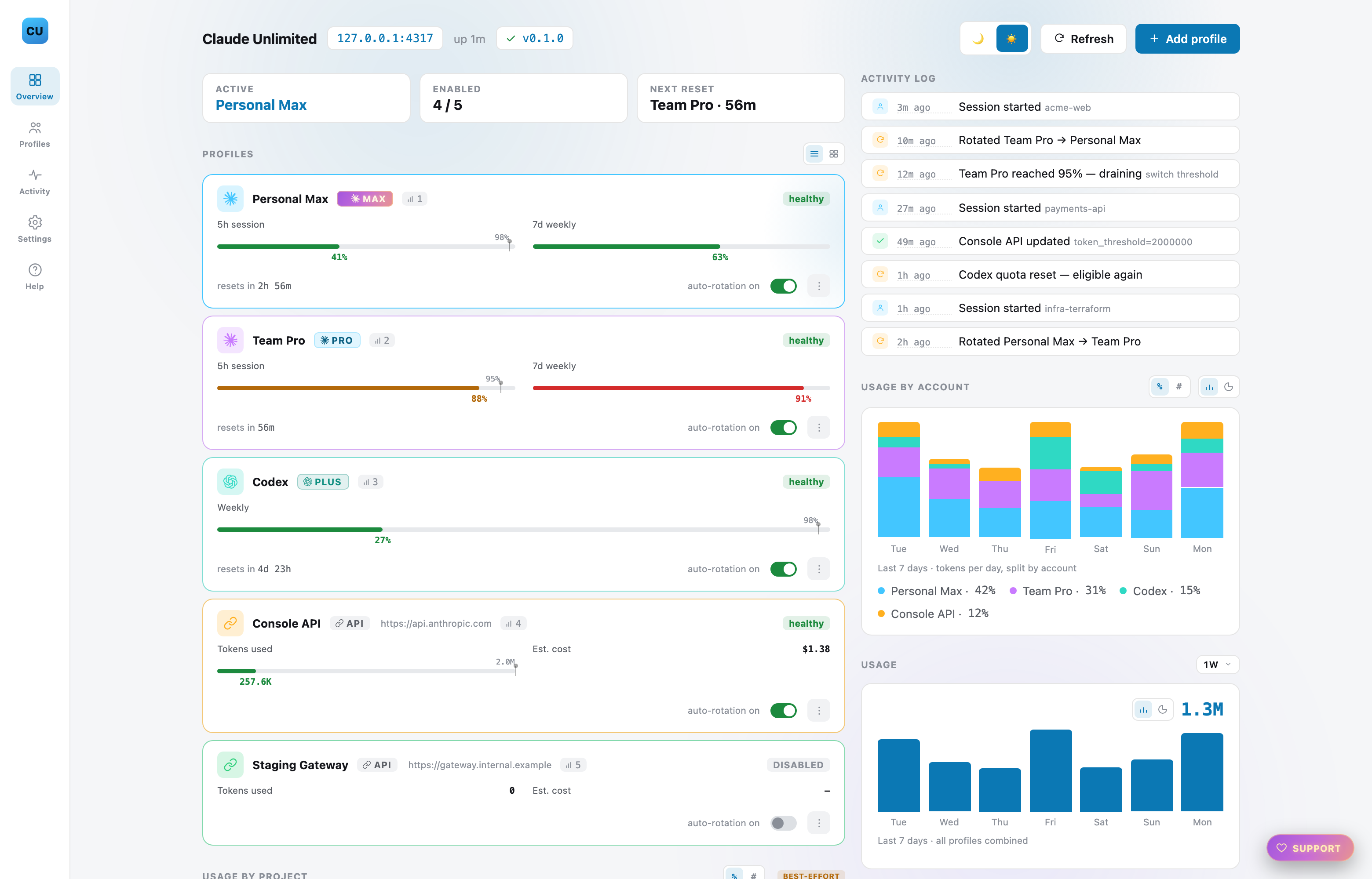
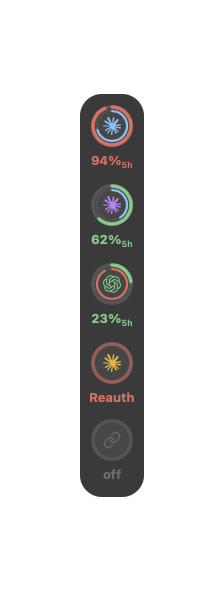
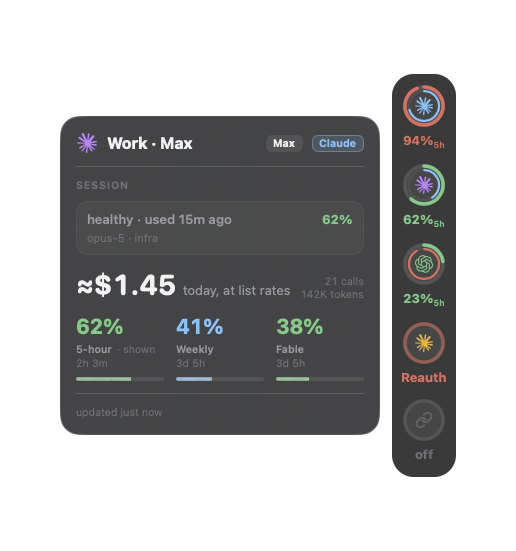
This software runs a local proxy between the Claude Code command-line tool and your AI provider accounts. It aggregates multiple paid plans and API keys — including compatible local model servers — into a single pool. When one account exhausts its quota, the next automatically handles the following request without interrupting your session or forcing a restart. A web dashboard at 127.0.0.1:4317 provides live usage metrics, cost tracking, model breakdowns, per-project attribution, and activity logs. Configuration options include model mapping, context optimization, session balancing, and notifications. A macOS HUD widget shows account usage at a glance. Credentials remain in your operating system's keystore, never on disk. The daemon listens only on localhost, has no telemetry, and no cloud component. Installation uses a one-line script that creates an isolated Python environment and registers a login service. Requirements: Python 3.10 or newer, git, and the claude CLI. HUD requires macOS 13 or newer. Linux and Windows are supported but less tested. Licensed MIT.
Should you self-host Claude Unlimited?
Claude Unlimited scores 51/100 on selfhost.directory (how scoring works) and ranks #34 of 120 in AI Assistant. It has 328 GitHub stars.
It shipped 10 stable releases in the past year. The latest, v1.3.1, came out on 23 September 2026. New versions land roughly every 1 days.
Setup is easy: most people get it running in one sitting. It is MIT-licensed and written mostly in Python.
Its closest alternative on selfhost.directory is hermes-agent (89/100, 258 049 stars). It scores higher overall, so compare the two before you pick. See Claude Unlimited vs hermes-agent side by side.
Features
- Seamless account rotation
Claude Unlimited README
More in Proxy
 email-oauth2-proxySelf-hosted open-source proxy adding OAuth 2.0 to legacy email clients for Exchange, Gmail, and more.
 flaresolverrSelf-hosted open-source proxy that drives a real Chrome browser to solve Cloudflare and DDoS-Guard challenges, returning cookies and HTML to your HTTP clients.
 frpfrp is a self-hosted, open-source fast reverse proxy that exposes local servers behind NAT or firewalls to the internet via TCP, UDP, HTTP, and HTTPS with P2P support.
 g3proxyOpen-source, self-hosted enterprise forward proxy in async Rust: HTTP, SOCKS5, SNI and TPROXY modes, MITM auditing, proxy chaining, ICAP hooks and StatsD metrics.
 grokbuild-proxySelf-hosted proxy translating Anthropic and OpenAI API requests to Grok Build, letting you use your personal Grok account with Claude Code and compatible clients.
 GUSTGUST is a self-hosted, open-source web proxy running as a single HTML file in any browser, using WebAssembly and WISP tunneling to bypass filters without Service Workers.
 hettyAn HTTP toolkit for security research.
 HevSocks5ServerA self-hosted, open-source SOCKS5 proxy server with dual-stack IPv4/IPv6, UDP relay and username/password auth; runs on Linux, macOS, Windows, Android and iOS.
 hls-restream-proxySelf-hosted HLS proxy that injects headers and rewrites playlists for Jellyfin, Emby, Plex and other media servers to play IPTV streams requiring specific HTTP headers.
 HysteriaSelf-hosted, open-source proxy server and client that rides a customized QUIC stack masquerading as HTTP/3, with SOCKS5, HTTP, forwarding, TProxy and TUN modes.
 i6.sharkSelf-hosted IPv6 proxy generating random /48 subnet addresses per request to defeat IP rate limits. HMAC-SHA256 auth, runs as Go binary on Linux.
 iodineOfficial git repo for iodine dns tunnel
0 comments