
Self-host tidaloader
Self-hosted Tidal music downloader with playlist imports
docker compose up -d- Stars
- 160
- Port
- 8001 (Web UI and API)
ghcr.io/rayz3r0/tidaloader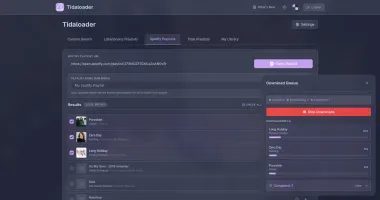

What is tidaloader?
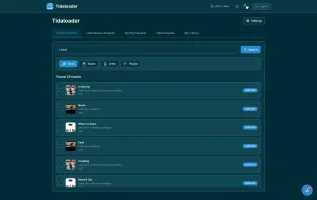
Tidaloader lets you download music from Tidal in formats like FLAC Hi-Res, FLAC Lossless, Opus, MP3, and AAC. You can search for tracks, albums, artists, and playlists, or paste Tidal URLs directly. It imports Spotify playlists without track limits using SpotAPI, and pulls ListenBrainz recommendations like Weekly Jams and Year in Review. Monitored Tidal playlists sync automatically on a schedule. Your local library is organized by artist with cover art, metadata tags (MusicBrainz IDs, track numbers, release years), and optional lyrics from LrcLib. Beets integration can run after each download. The queue handles concurrent downloads with retries and persists across restarts. Over 20 themes are available with a light/dark toggle. The UI is responsive for mobile and desktop. Run it via Docker Compose, plain Docker, or manual install on Linux, macOS, Windows, or Android Termux. Authentication uses a built-in username/password.
Should you self-host tidaloader?
tidaloader scores 46/100 on selfhost.directory (how scoring works) and ranks #21 of 31 in Music. It has 160 GitHub stars.
There was no stable release in the past 12 months, so check the repository's recent activity before you rely on it.
Setup is moderate: expect some configuration beyond a single command. An official Docker image is available. It is MIT-licensed and written mostly in JavaScript.
Its closest alternative on selfhost.directory is Beets (77/100, 15 857 stars). It scores higher overall, so compare the two before you pick. See tidaloader vs Beets side by side.
Features
- Beets Integration
- File organization templates
- Group compilations
- ListenBrainz playlist integration
- Local library management
- Lyrics Support
- Monitored Tidal playlists
- Multi-format audio downloads
- Queue Management
- REST API
- Rich metadata tagging
- Spotify playlist import
- Theme Support
- Tidal search and download
tidaloader README
More in Audio
 tunesynctooltunesynctool is a self-hosted, open-source web app that transfers and syncs playlists between Spotify, Deezer, YouTube Music, and Subsonic-compatible servers.
 whisper-asr-webserviceSelf-hosted, open-source speech-to-text webservice wrapping OpenAI Whisper, Faster Whisper and WhisperX behind a REST API with Swagger docs.
 YouCastYouCast is a self-hosted desktop app that converts YouTube channels and playlists into podcast feeds for any podcatcher, running a local server on port 22703.
 YuE-GPYuEGP is a self-hosted tool for generating full songs from lyrics using YuE models, optimized for consumer GPUs with 10+ GB VRAM.
 ACE-StepSelf-hosted, open-source AI music generator: full songs in seconds from text, lyrics or reference audio, with covers, stem separation and LoRA training on consumer GPUs.
 audio.cppSelf-hosted C++ framework running 100+ audio models locally with CUDA, Vulkan, Metal, CPU backends, built-in WebUI, no Python deps.
 AudioserveSimple personal server to serve audiofiles files from folders. Intended primarily for audio books, but anything with decent folder structure will do.
 aurralOpen-source self-hosted music discovery with personalized recommendations, rotating playlist flows, and library management. Works standalone or with Lidarr.
 BeetsOpen-source, self-hosted music library manager: the beet CLI auto-tags your collection from MusicBrainz and can serve a web UI or an MPD-protocol player.
 BokeBoxSelf-hosted private AI podcast studio turning videos, links, articles, and meetings into spoken episodes with customizable persona, voice, and MCP/plugin extensibility.
 Breeze TTS 2Self-hosted open-weight TTS model with voice cloning, design from descriptions, and voice direction. Streaming REST API and CLI for real-time synthesis on NVIDIA GPUs.
 clean-castSelf-hosted Go app converting YouTube playlists/channels to podcast RSS feeds with on-demand audio download and SponsorBlock sponsor removal.
0 comments