
Self-host temporal
v1.32.2Durable workflow execution engine for crash-proof apps
docker compose up- Stars
- 24 539
- Ports
- 7233 (Frontend service gRPC endpoint (clients and workers connect here)), 7234 (History service gRPC endpoint), 7235 (Matching service gRPC endpoint), 7239 (Worker service gRPC endpoint), 7243 (Frontend service HTTP endpoint)
temporalio/server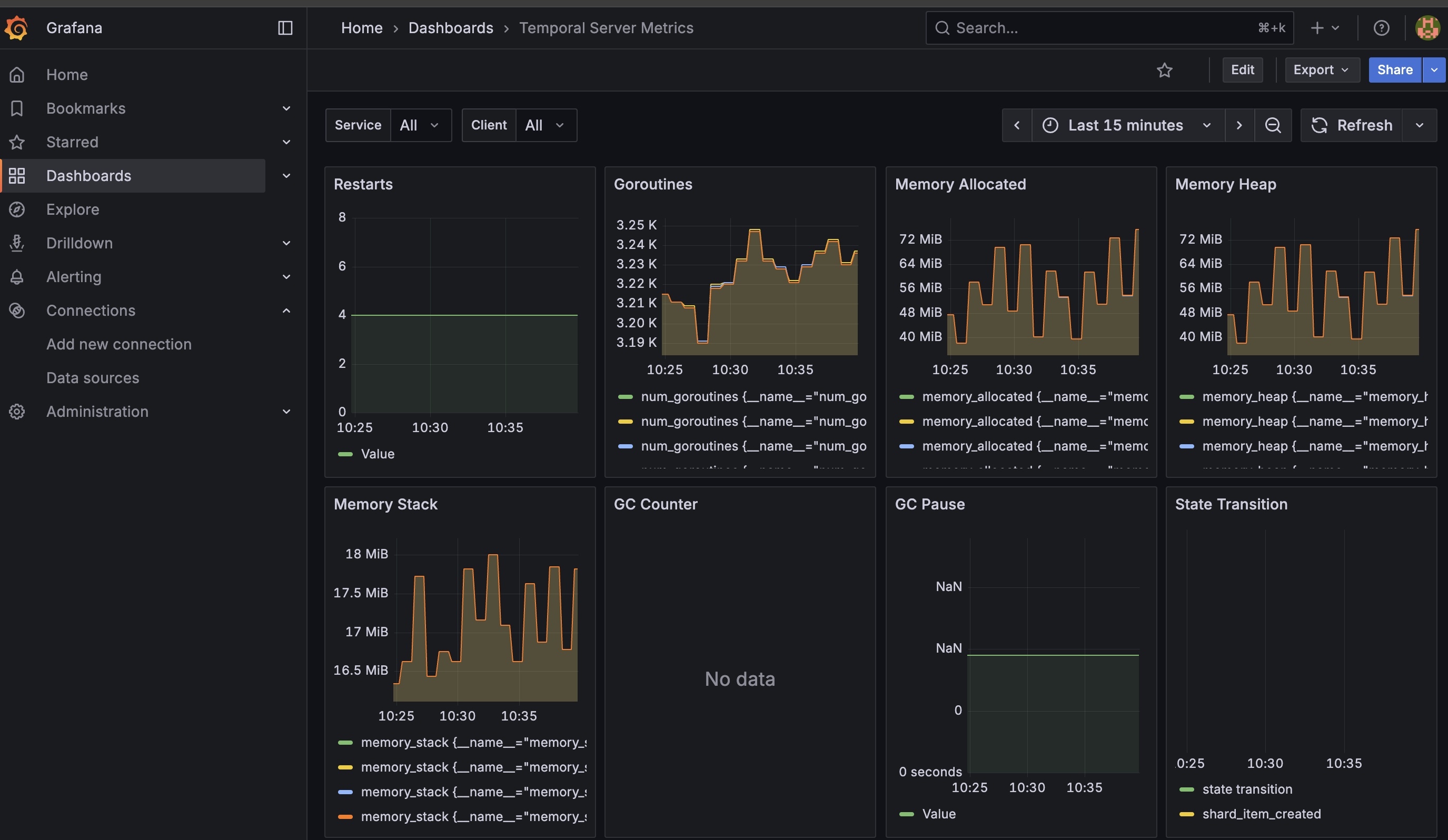
What is temporal?
Temporal is the server behind the Temporal platform: a durable execution engine that runs application logic as Workflows, persisting their state so interrupted or failed operations are retried rather than lost. Workflows and Activities are written with an SDK (samples are provided for Go and Java), while this Go service handles scheduling, history and persistence. A deployment needs one supported database for state - Cassandra, MySQL or PostgreSQL, with SQLite limited to development - and Elasticsearch or OpenSearch is recommended as the Visibility store for listing and filtering Workflow Executions. You can run it with Docker Compose, the temporalio/server image, Helm charts on Kubernetes, or the release binaries plus the separate UI server binary; the Web UI and the temporal CLI are companion tools that talk to it. Self-hosting is MIT-licensed and production-documented, but note that Archival is still experimental and unavailable in Docker, and out of the box the Frontend API has no access control, so the docs treat the host like a database: private network, TLS/mTLS, and an authorizer plugin.
temporal alternatives
 DaguSelf-hosted, open-source workflow orchestrator: declarative YAML DAGs run shell, Docker, Kubernetes and SSH steps from one binary, no database required.CompareDagu with temporal
 hatchetAn open-source durable task queue and workflow engine for teams shipping apps: self-hosted via Docker, Compose or Helm, with Postgres-backed state and a live dashboard.Comparehatchet with temporal
 cronstablecronstable is a self-hosted, open-source job scheduler and workflow orchestrator with retries, alerts, DAG workflows, and web/terminal/iOS dashboards.Comparecronstable with temporal
 duragraphDuraGraph is a self-hosted, open-source control plane for durable AI agent workflows. It uses event sourcing and CQRS to make every run replayable and crash-safe.Compareduragraph with temporal
 KestraSelf-hosted, open-source (Apache-2.0) engine that schedules and chains data, AI and infrastructure jobs from YAML or a visual editor, with 2,200+ plugins.CompareKestra with temporal
 inngestWorkflow orchestration platform for self-hosted durable step functions and AI workflows. Language SDKs for TypeScript, Python, Go automatically retry failed steps.Compareinngest with temporal
 gtsdbGTSDB is a self-hosted, open-source time-series database in Go using WAL-first architecture for sub-millisecond reads and 233x faster writes than InfluxDB.Comparegtsdb with temporal
 windmillOpen-source, self-hosted developer platform that turns scripts into APIs, background jobs, workflows and internal UIs, pitched as an alternative to Retool and Temporal.Comparewindmill with temporal
Should you self-host temporal?
temporal scores 82/100 on selfhost.directory (how scoring works) and ranks #1 of 1 in Workflow. It has 24 539 GitHub stars, +729 in the last 30 days.
It shipped 14 stable releases in the past year. The latest, v1.32.2, came out on 2 November 2026. New versions land roughly every 3 days.
Setup is advanced: plan for several services and some ongoing maintenance. An official Docker image is available. It is MIT-licensed and written mostly in Go.
Features
- Archival to blob storageExperimental; disabled by default and not supported when running through Docker.
- Durable workflow execution
- Embedded server mode
- gRPC API
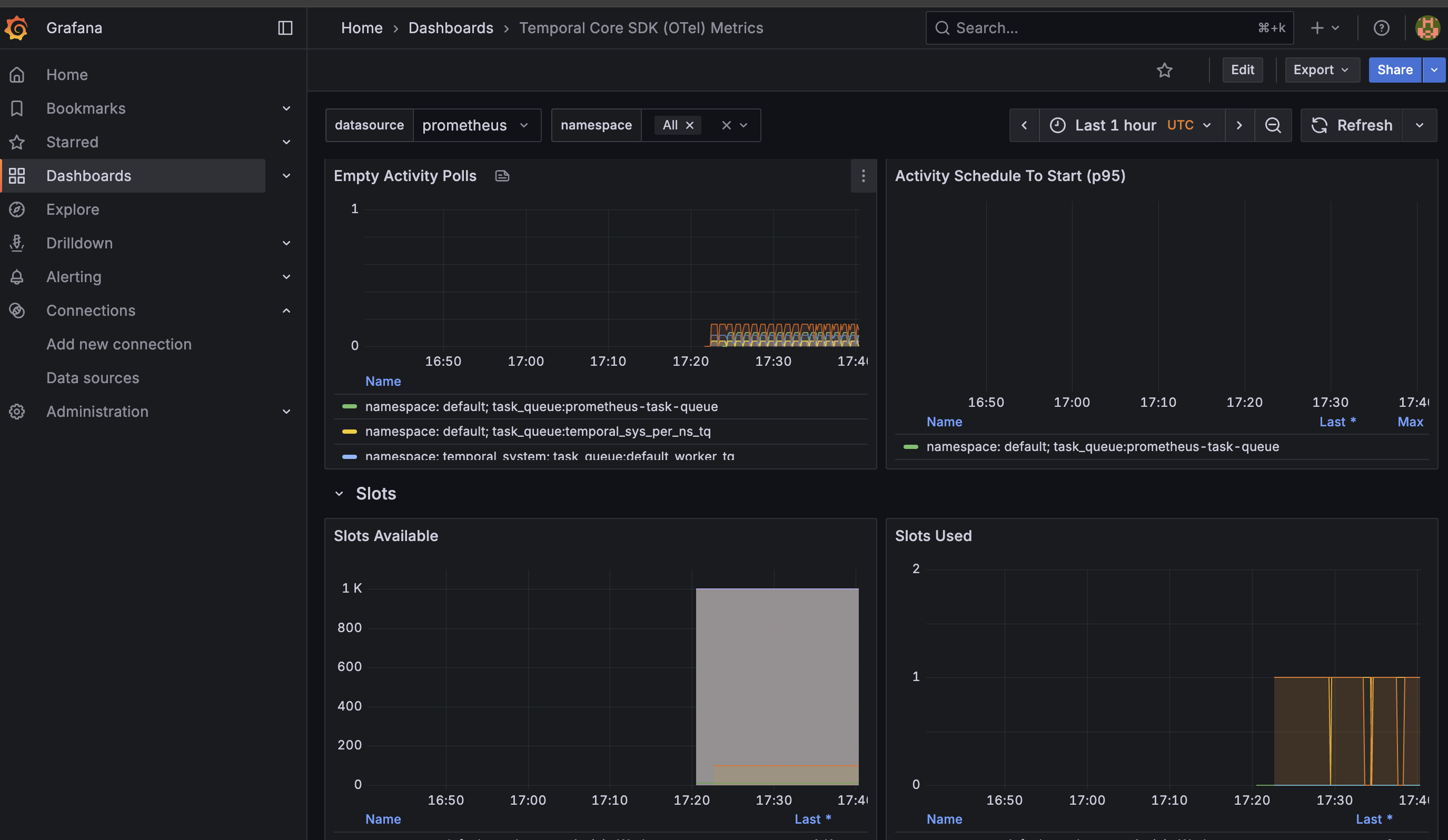
- Metrics and observability
- mTLS encryption in transit
- Multi-cluster replication
- Namespace Isolation
- Pluggable authorizationOff by default: the noopAuthorizer allows any request unless configured.
- Temporal Nexus
- Web UI
- Workflow Visibility and search
temporal README

Temporal is a durable execution platform that enables developers to build scalable applications without sacrificing productivity or reliability. The Temporal server executes units of application logic called Workflows in a resilient manner that automatically handles intermittent failures, and retries failed operations.
Temporal is a mature technology that originated as a fork of Uber's Cadence. It is developed by Temporal Technologies, a startup by the creators of Cadence.

0 comments