
Self-host Raspberry-Pi-Dashboard
v1.1.6Raspberry Pi hardware monitoring dashboard with web UI
- Stars
- 375
- Requires
- Git, PHP, Web server (Lighttpd or Apache)
What is Raspberry-Pi-Dashboard?
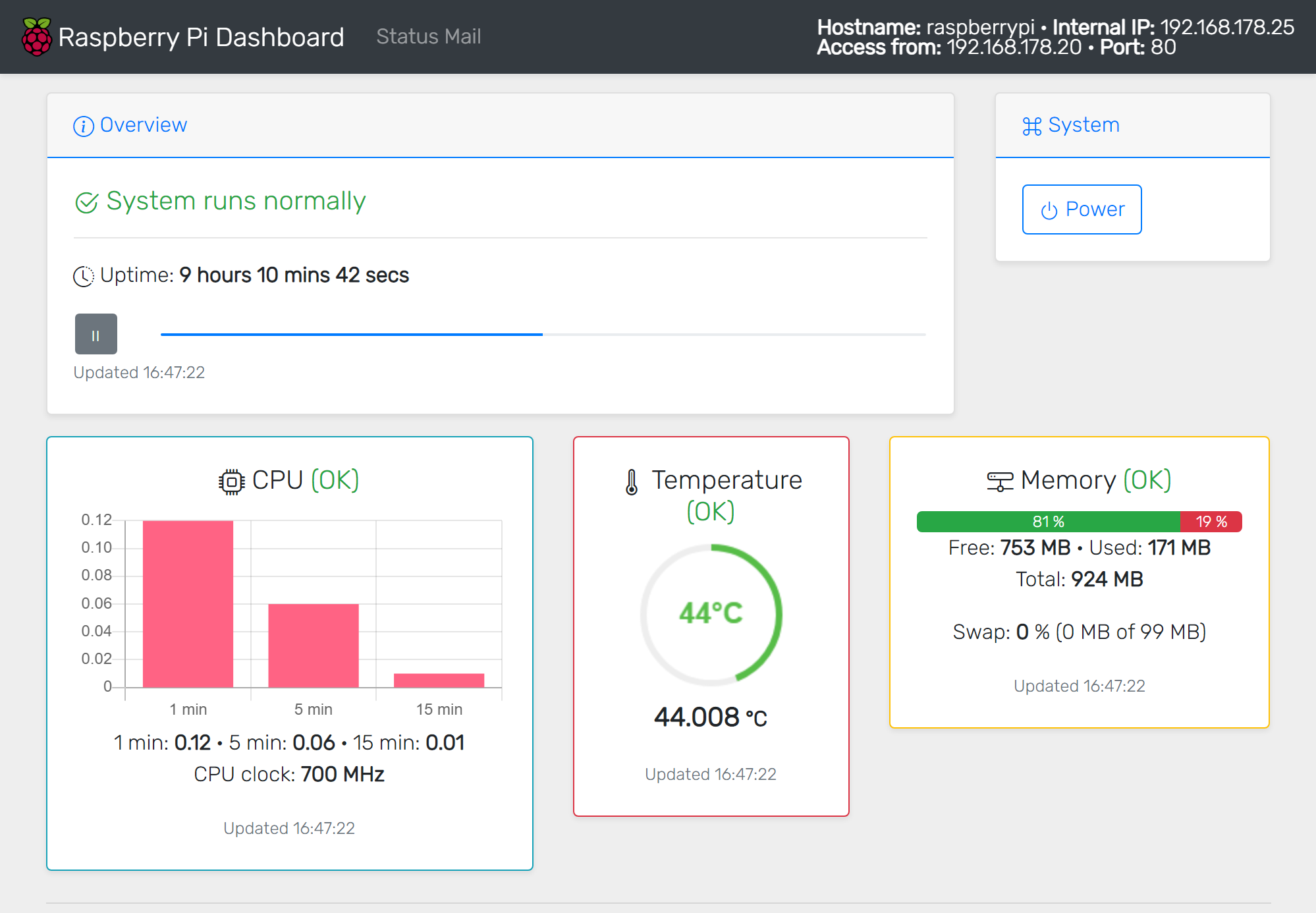
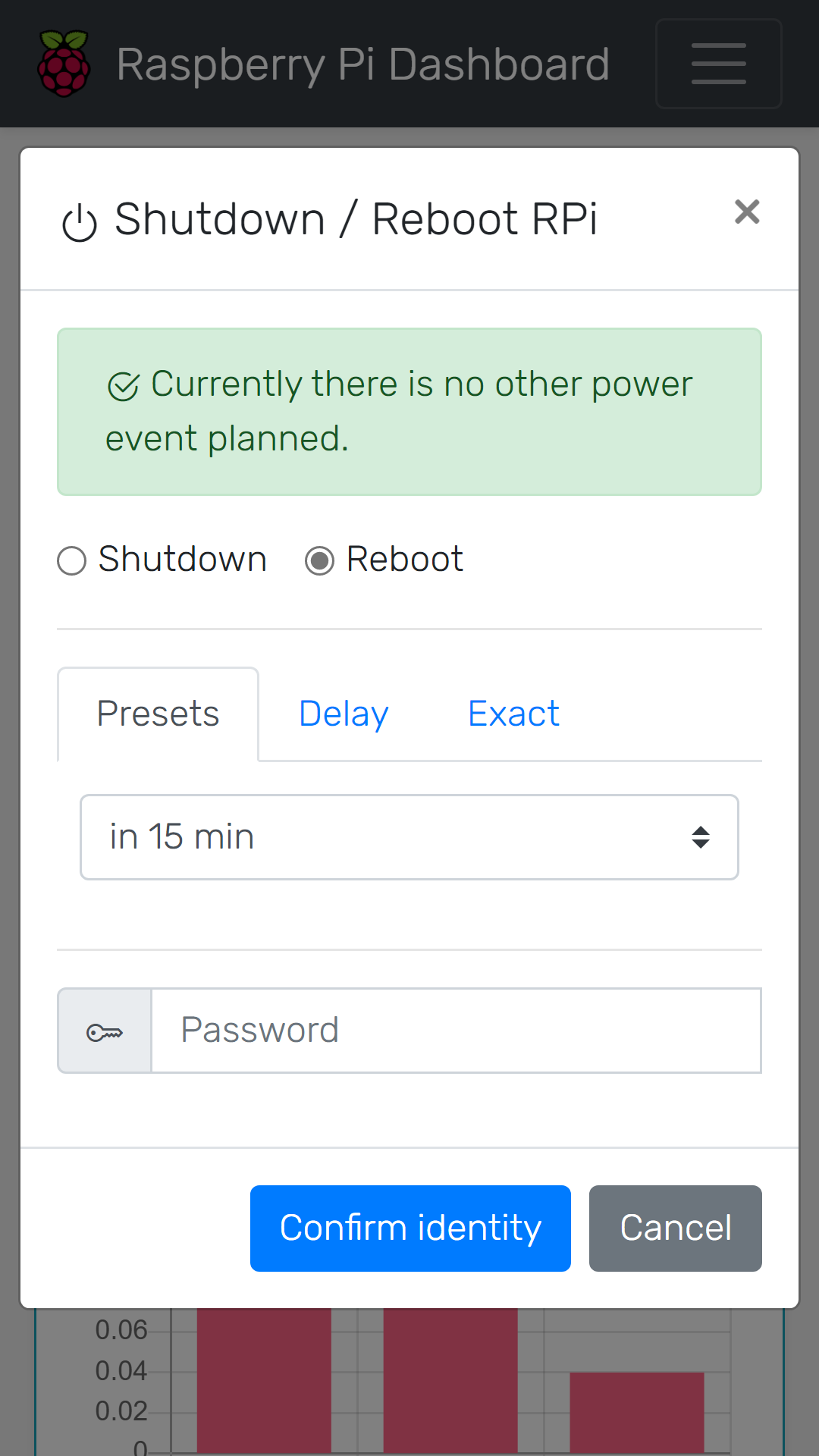
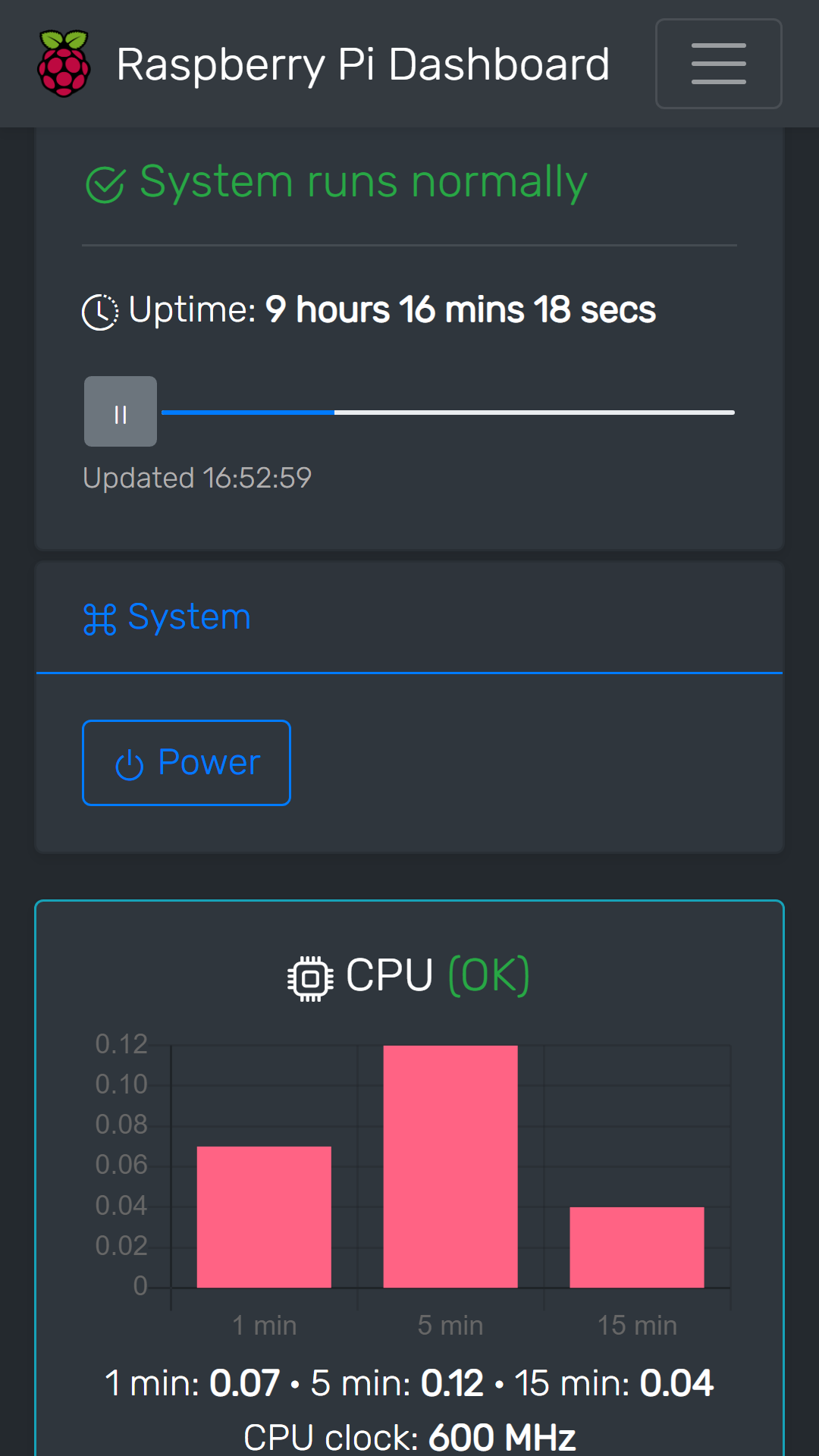
Raspberry Pi Dashboard is a self-hosted PHP web application that runs on a standard web server to provide a browser-based interface for monitoring Raspberry Pi systems. It displays live CPU temperature, frequency, and load with customizable warning thresholds, plus detailed system information including storage usage, core voltage, USB devices, kernel version, and network configuration. The dashboard includes password-protected access with the default password 'root' stored as an MD5 hash, remote shutdown and reboot capabilities with scheduling options, a responsive mobile-friendly UI, and both manual and automatic dark theme switching. Installation requires a web server (Lighttpd or Apache) with PHP and can be done via an installer script or manual git clone with permission setup for the www-data user. Optional advanced hardware info requires adding the www-data user to the video group and installing libraspberrypi-bin on non-Raspberry Pi OS distributions.
Should you self-host Raspberry-Pi-Dashboard?
Raspberry-Pi-Dashboard scores 47/100 on selfhost.directory (how scoring works) and ranks #31 of 51 in Monitoring & observability. It has 375 GitHub stars.
There was no stable release in the past 12 months, so check the repository's recent activity before you rely on it.
Setup is moderate: expect some configuration beyond a single command. It is GPL-3.0-licensed and written mostly in PHP.
Its closest alternative on selfhost.directory is GoAccess (75/100, 21 093 stars). It scores higher overall, so compare the two before you pick. See Raspberry-Pi-Dashboard vs GoAccess side by side.
Features
- Hardware monitoring
- Password ProtectionDefault password is 'root'
- Remote shutdown/rebootRequires www-data ALL=NOPASSWD: /sbin/shutdown in sudoers
- System information
Raspberry-Pi-Dashboard README
More in Home Server
 seedboxSeedbox is a self-hosted, open-source Docker Compose stack for a personal seedbox and media server with Plex, Sonarr, Radarr, Deluge, managed via Traefik with auto HTTPS.
 self-hosted-printing-serverSelf-hosted printing server that lets users upload files and print to IPP-compatible printers via a web interface, with Docker Compose deployment and JWT authentication.
 server-homepageServer Homepage is a self-hosted, open-source dashboard for monitoring home servers with system metrics, custom links, and iOS/Firefox integrations.
 SongloftOpen-source self-hosted music server in Go that indexes your local audio and video files, streams radio, and runs via Docker, binaries, or a Home Assistant add-on.
 Sovereign StackSelf-hosted Pi 5 stack replacing cloud services with Nextcloud, Home Assistant, Vaultwarden, Forgejo, featuring 3-2-1 backups and NetBox discovery.
 standalone-rpiSelf-hosted Standard Notes syncing infrastructure packaged for Raspberry Pi using Docker Compose with Caddy, MariaDB, and Redis. Open-source under MIT license.
 StartOSOpen-source, self-hosted Linux server OS: run services in isolated containers from a web UI with a marketplace, local HTTPS, Tor and encrypted backups.
 SUI-StartpageSUI-Startpage is a self-hosted, open-source startpage for your server or browser new tab page with customizable apps, bookmarks, search providers, and color themes.
 Sun-PanelSelf-hosted icon navigation panel and browser start page for servers, NAS boxes and Docker containers, with multi-account isolation and no external database.
 SyncloudSyncloud is a self-hosted, open-source platform turning your hardware into a personal app server with one-click installs for 50+ apps.
 tillitTilliT is a self-hosted, open-source messaging platform using Signal Protocol encryption with built-in Tor. Run your own server on a Raspberry Pi — no phone numbers.
 timenestOpen-source, self-hosted Time Capsule replacement for Raspberry Pi and Linux servers. Gives Macs automatic Bonjour discovery, per-user quotas, and a web dashboard.
0 comments