
Self-host paste
v0.1.1An anonymity-friendly, multi-file pastebin written in Rust
- Stars
- 615
- Port
- 8000 (Rocket backend server inside the Docker container (nginx fronts it on host ports 80/443))
- Requires
- PostgreSQL, Redis, Sidekiq
jkcclemens/paste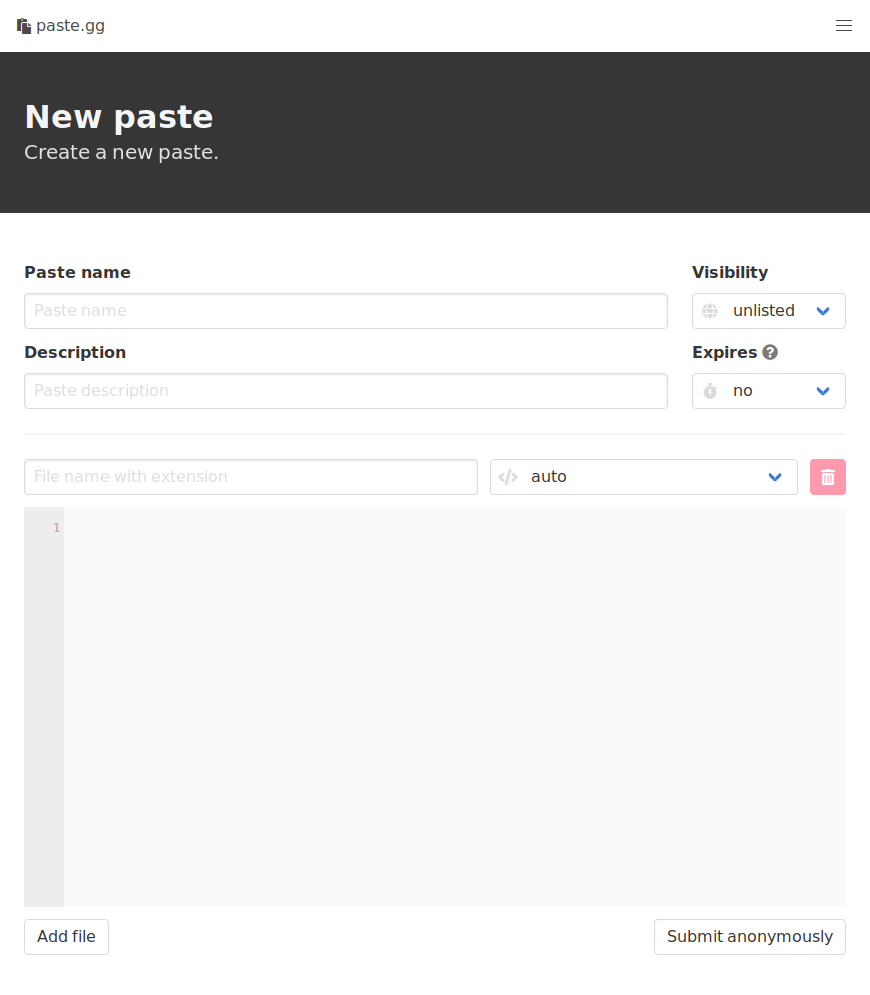
What is paste?
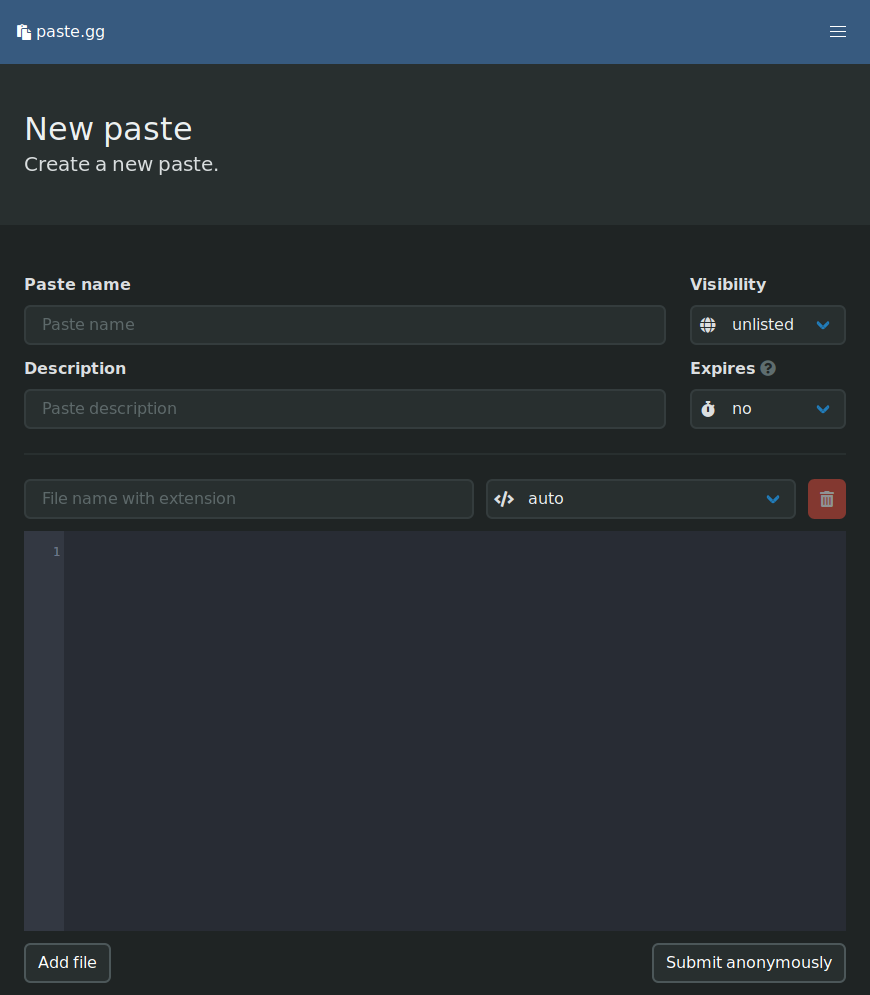
paste is a pastebin server written in Rust on the Rocket framework, MIT-licensed, created by jkcclemens as an easy-to-use alternative after GitHub Gist dropped anonymous pastes. It supports pastes holding multiple files, syntax highlighting with language autodetection in the web UI, public/unlisted/private visibility, optional expiry dates, anonymous pastes guarded by a deletion key, raw file endpoints, user accounts with open or email-whitelisted registration, regex-based content filters, SMTP email sending, and an optional camo image proxy. The JSON REST API at /api/v1 is declared stable and covers full paste and file CRUD; the web interface and backend internals are described as unstable. Self-hosting is documented through a docker-compose production stack (behind nginx, with PostgreSQL, Redis and Sidekiq) or a manual build requiring nightly Rust, Ruby, Postgres 9.x+ and Redis; TLS is mandatory. The author also hosts the public instance paste.gg, though that site now describes itself as built on Cloudflare Workers. GitHub releases stopped at v0.1.1 (2018) and the repository's last push was in November 2023.
Should you self-host paste?
paste scores 47/100 on selfhost.directory (how scoring works) and ranks #13 of 19 in Pastebins. It has 615 GitHub stars.
There was no stable release in the past 12 months, so check the repository's recent activity before you rely on it.
Setup is advanced: plan for several services and some ongoing maintenance. An official Docker image is available. It is MIT-licensed and written mostly in Rust.
Its closest alternative on selfhost.directory is Drift (46/100, 1 364 stars). paste scores higher overall. See paste vs Drift side by side.
Features
- Admin roles
- Anonymous pastes
- Avatar conversion and caching
- Content Filtering
- Email notifications via SMTP
- Image proxying (camo)
- Multi-file pastes
- Paste expiration
- Paste visibility levels
- Raw file output
- REST API
- Syntax highlighting
- User accounts and registration control
paste README
More in Pastebins
 pasteburnPasteburn is a self-hosted, open-source pastebin that encrypts content in the browser and destroys it after a set number of views or time limit.
 PastefySelf-hosted, open-source pastebin alternative with folders, encrypted pastes, Markdown/Mermaid previews and a REST API; runs as a Docker image plus MySQL.
 pasteyPastey is a minimal, open-source, self-hosted paste platform with automatic language detection, optional encryption, expiration, and a JSON API. Run via Docker or Python.
 QBinSelf-hosted pastebin alternative with Monaco editor, Cherry Markdown, PWA offline, customizable paths, OAuth2 login, and multi-level caching.
 quickdropQuickDrop is an open-source, self-hosted file sharing app with pastebin and URL shortener. Chunked uploads, per-file encryption, expiring share links.
 rustypasteOpen-source, self-hosted file upload and pastebin service in Rust: expiring and one-shot links, URL shortening, password-protected files, and no database.
 SuperBinSelf-hosted open-source tool combining pastebin, file sharing, and URL shortening with AES encryption, QR codes, and curl uploads. Handles large files with fixed memory.
 WastebinA self-hosted, open-source minimal pastebin in Rust with 170+ language highlighting, Markdown rendering, encrypted pastes, expiry, burn-after-reading and nine themes.
 binbin is a self-hosted, open-source paste bin written in Rust with no database requirement, offering syntax highlighting and curl support for quick text snippet sharing.
 bucketsBuckets is a self-hosted, open-source pastebin that stores text and files in memory for 24 hours, with a simple curl-friendly API and web UI.
 cowyoSelf-hosted pastebin with real-time collaborative editing, E2E encrypted private pages, password-encrypted blocks, page locking, publishing, and self-destructing notes.
 DriftA self-hosted, open-source GitHub Gist clone for sharing private, public, unlisted and password-protected code snippets with syntax highlighting.
0 comments