
Self-host FreeSBC
v0.6.3Single-binary SIP/WebRTC edge proxy for FreeSWITCH/Asterisk
- Stars
- 270
- Ports
- 5060 (SIP UDP/TCP), 5061 (SIP TLS (SIPS)), 443 (WebRTC WSS), 8080 (Admin WebUI / WebSocket (dev)), 20000 (RTP range start (default 20000-29999)), 29999 (RTP range end (default 20000-29999))
- Requires
- FreeSWITCH or Asterisk
What is FreeSBC?
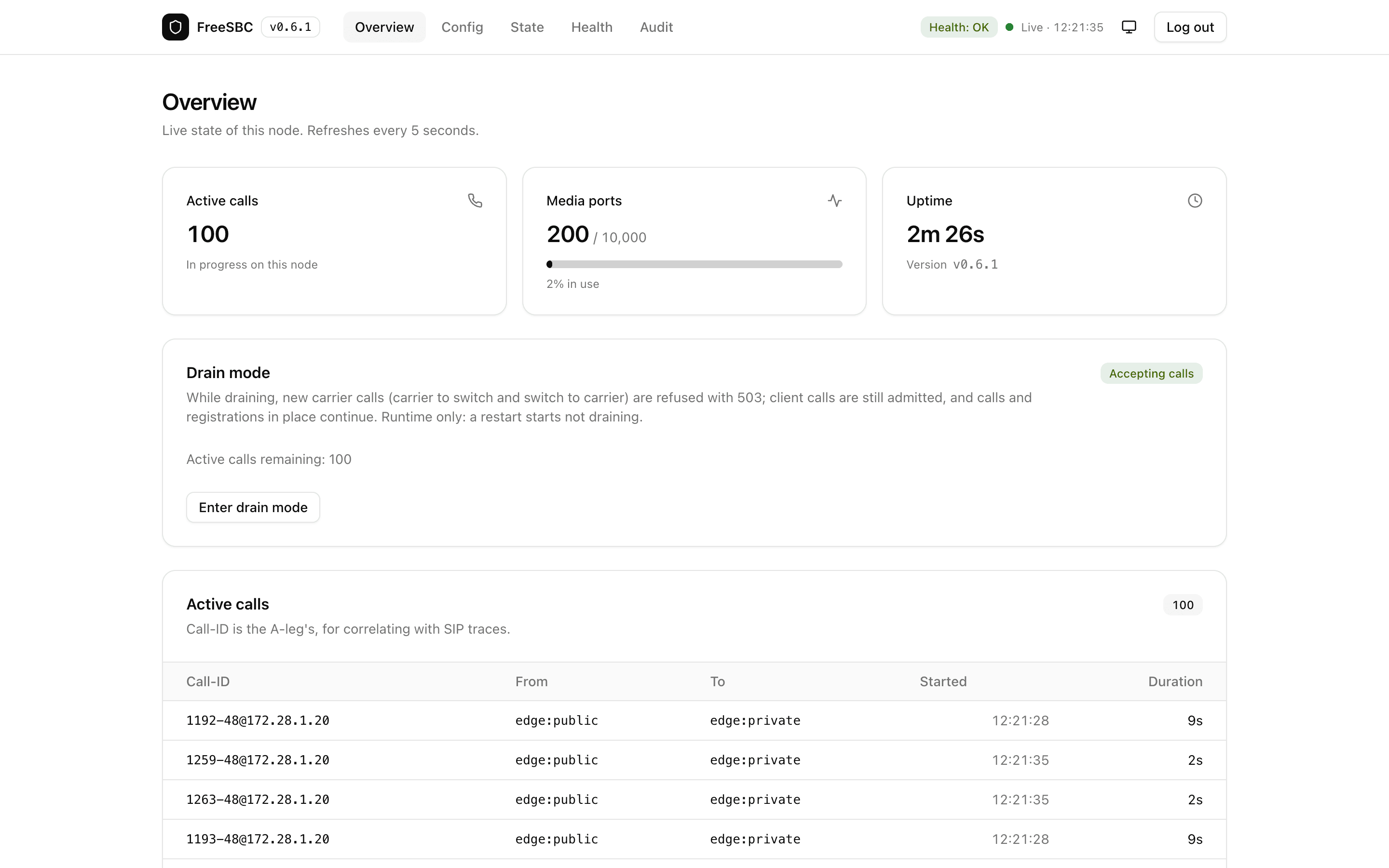
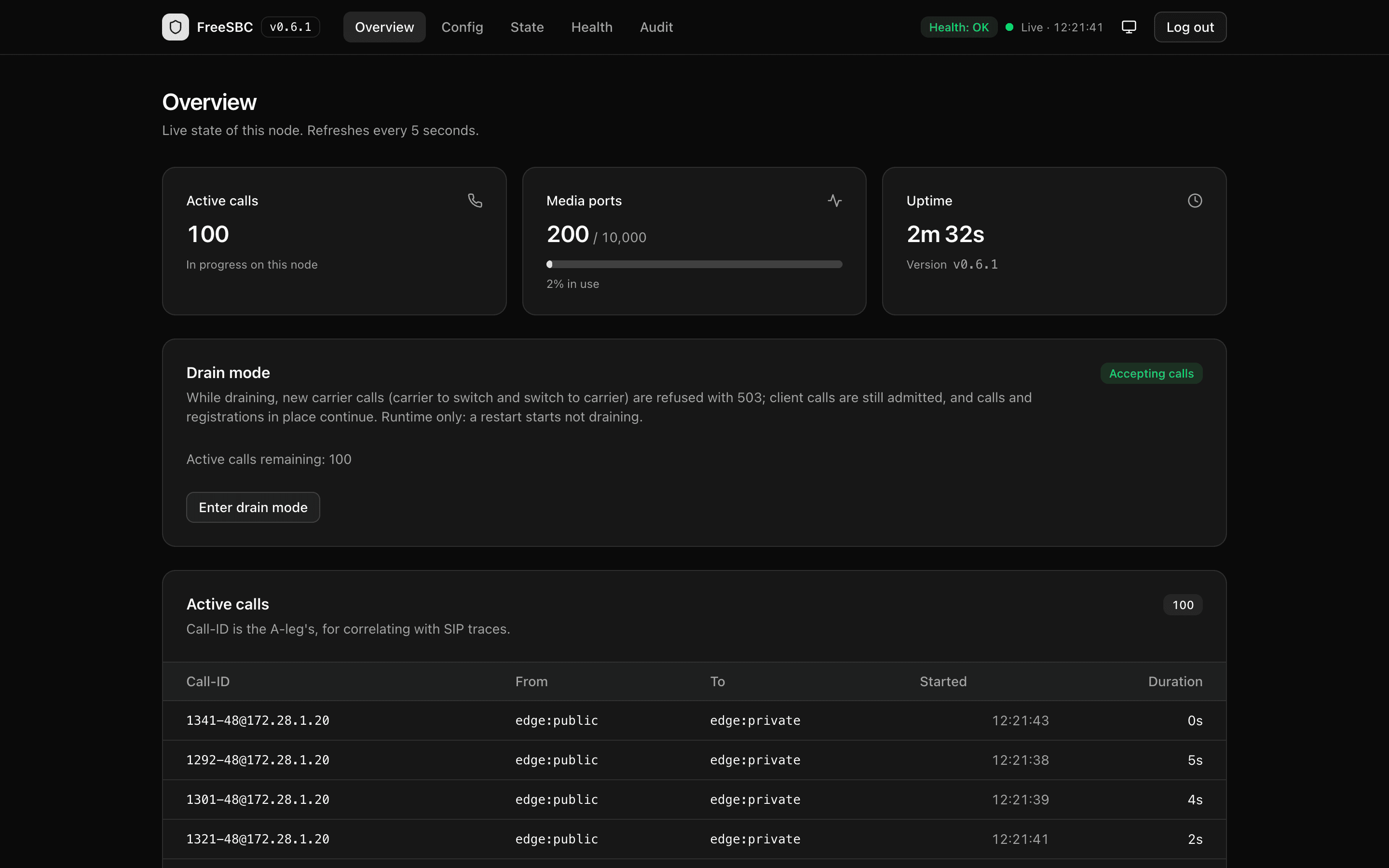
FreeSBC is a Go-based Session Border Controller that creates a protective boundary between the public internet and a private SIP switch such as FreeSWITCH or Asterisk. It processes SIP signaling over UDP, TCP, TLS, WebSocket, and WebRTC on a public-facing IP while the switch remains on a private LAN. Every media stream is anchored to FreeSBC ports through hardened first-packet latching and a silence watchdog, with absolutely no transcoding. Security capabilities encompass per-IP rate limiting, scanner fingerprinting, REGISTER brute-force and enumeration blocking, and silent rejection of calls from unregistered endpoints. An embedded WebUI, REST API, and Prometheus metrics endpoint are secured behind bcrypt-checked admin authentication. FreeSBC executes as a single static binary with zero external dependencies — no database, Redis, kernel modules, or separate media process. Configuration relies on one YAML file, and installation options include a shell script, manual binary download, or building from source, with systemd service support on Linux.
Should you self-host FreeSBC?
FreeSBC scores 48/100 on selfhost.directory (how scoring works) and ranks #14 of 16 in VoIP. It has 270 GitHub stars.
It shipped 10 stable releases in the past year. The latest, v0.6.3, came out on 28 October 2026. New versions land roughly every 1 days.
Setup is advanced: plan for several services and some ongoing maintenance. It is Apache-2.0-licensed and written mostly in Go.
Its closest alternative on selfhost.directory is Mumble (71/100, 8 370 stars). It scores higher overall, so compare the two before you pick. See FreeSBC vs Mumble side by side.
Features
- Carrier Support
- Config Validation
- Embedded WebUI
- HOMER Integration
- Hot Shield Reload
- Prometheus Metrics
- REST API
- RTP/SRTP Media Relay
- SDES-SRTP
- SIP Proxy
- SIP Security
- Switch Pool
- Topology Hiding
- Two-Node Failover
- WebRTC Gateway
FreeSBC README
More in WebRTC
 FreeSWITCHOpen-source self-hosted softswitch replacing proprietary telecom hardware: SIP PBX with dialplan, voicemail, conferencing, WebRTC and an ESL control API.
 jangoutsOpen-source, self-hosted Hangouts-style conferencing app: browser video, voice, screen broadcast and typed chat across unlimited rooms, powered by Janus Gateway.
 JanusJanus WebRTC Server
 Janus WebRTC ServerSelf-hosted open-source WebRTC media server in C: relays RTP/RTCP to browser PeerConnections while plugins add video rooms, streaming, audio bridges and SIP gatewaying.
 Jitsi Video BridgeJitsi Videobridge is an open-source, self-hosted WebRTC SFU that routes video for scalable multiparty conferencing.
 Nextcloud SignalingSelf-hosted, open-source signaling server for Nextcloud Talk video calls and screen sharing via WebRTC, NATS, Janus, and TURN.
 OpenViduOpenVidu is an open-source, self-hosted WebRTC platform: the ready-made OpenVidu Meet conferencing app plus programmable SDKs, built on LiveKit and mediasoup.
 SRSOpen-source, self-hosted C++ media server for live video over RTMP, WebRTC, HLS, HTTP-FLV, SRT, DASH and GB28181, with Docker and Kubernetes deployment.
 waterbus-rsWaterbus is a self-hosted, open-source WebRTC SFU media server in Rust for low-latency real-time video, audio, and data streaming with simulcast and egress.
 webrtc_turnOpen-source TURN relay for AndroMeld that relays encrypted WebRTC traffic when P2P fails. Deploy via Docker on your VPS or one-click Cloudflare Worker.
 ant-media-serverOpen-source, self-hosted media server for live video: RTMP/HLS ingest, WebRTC, recording, DVR and playback via a web dashboard, with paid Enterprise extras.
 CoturnOpen-source TURN and STUN server relaying WebRTC and VoIP media through NAT; self-hosted via apt or Docker, with Prometheus metrics and SQL/Redis user databases.
0 comments