
Self-host lightNVR
0.44.3Lightweight NVR with WebRTC streaming and object detection
- Stars
- 288
- CPU
- Any Linux-compatible processor (ARM, x86, MIPS, etc.)
- RAM
- 256MB RAM minimum (more recommended for multiple streams)
- Storage
- Any storage device accessible by the OS
- Ports
- 8080 (Web UI (HTTP)), 8554 (RTSP streaming), 8555 (WebRTC (TCP/UDP)), 1984 (Internal go2rtc API (loopback only))
- Requires
- Go2rtc, SQLite
ghcr.io/opensensor/lightnvr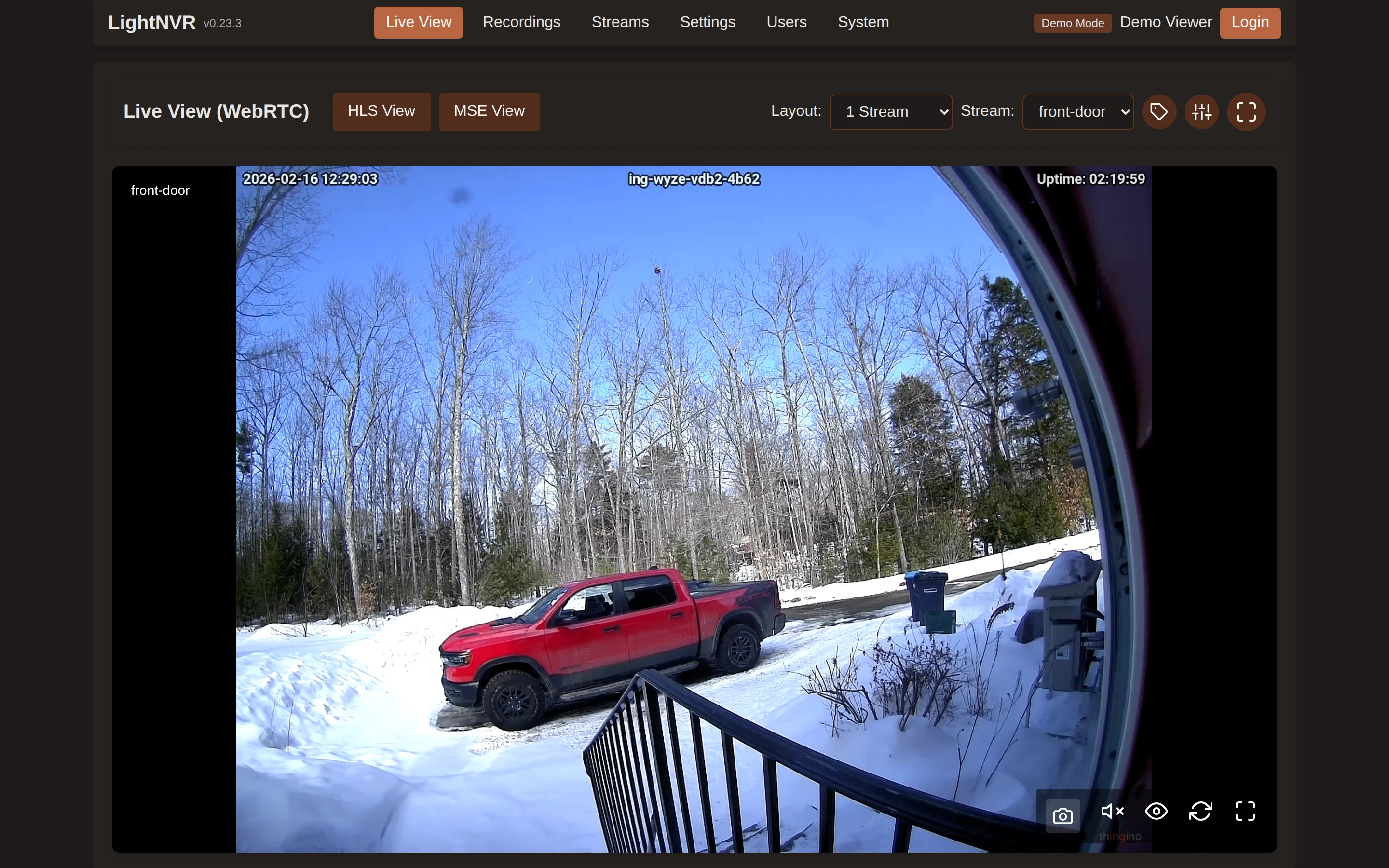
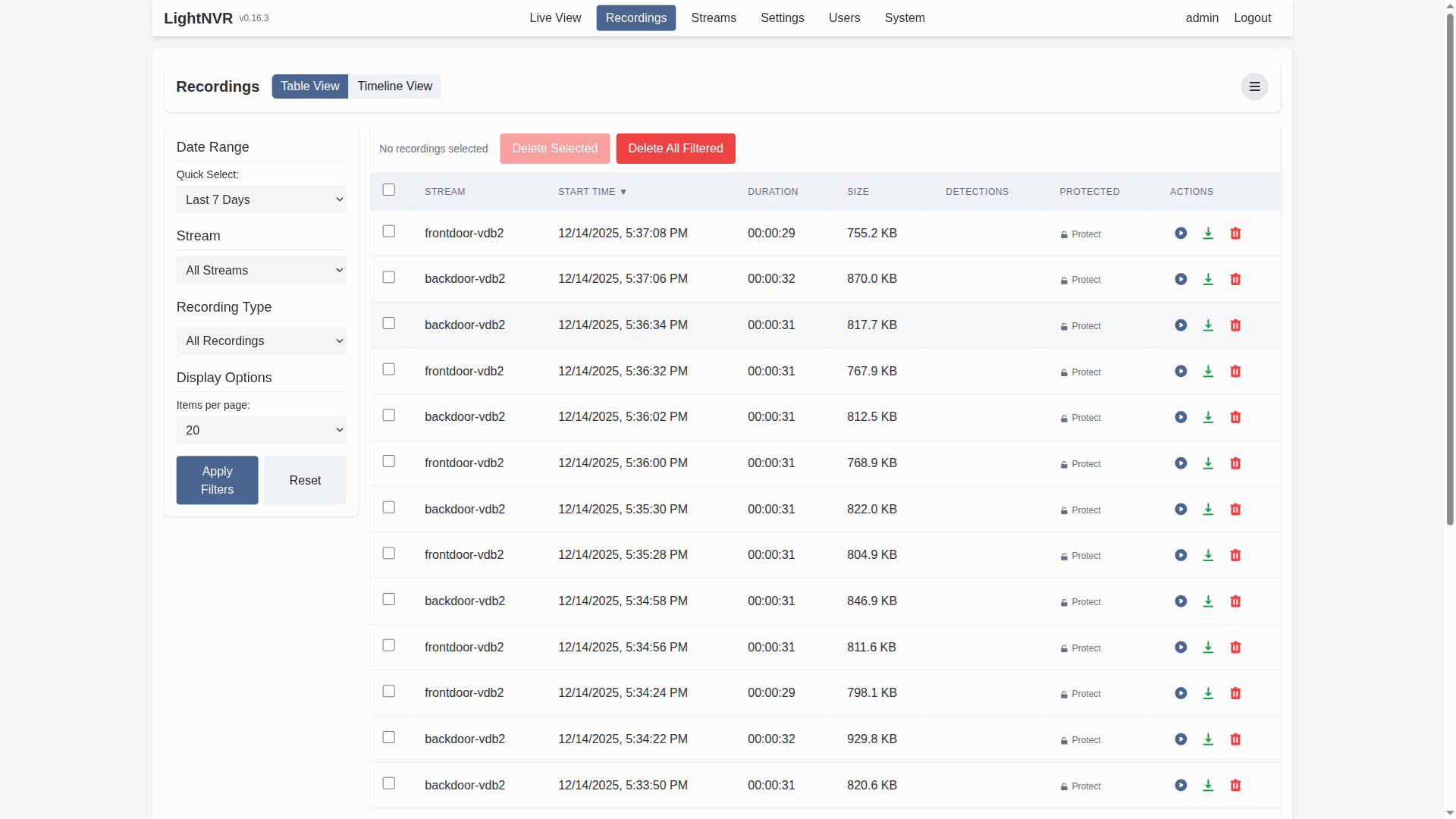
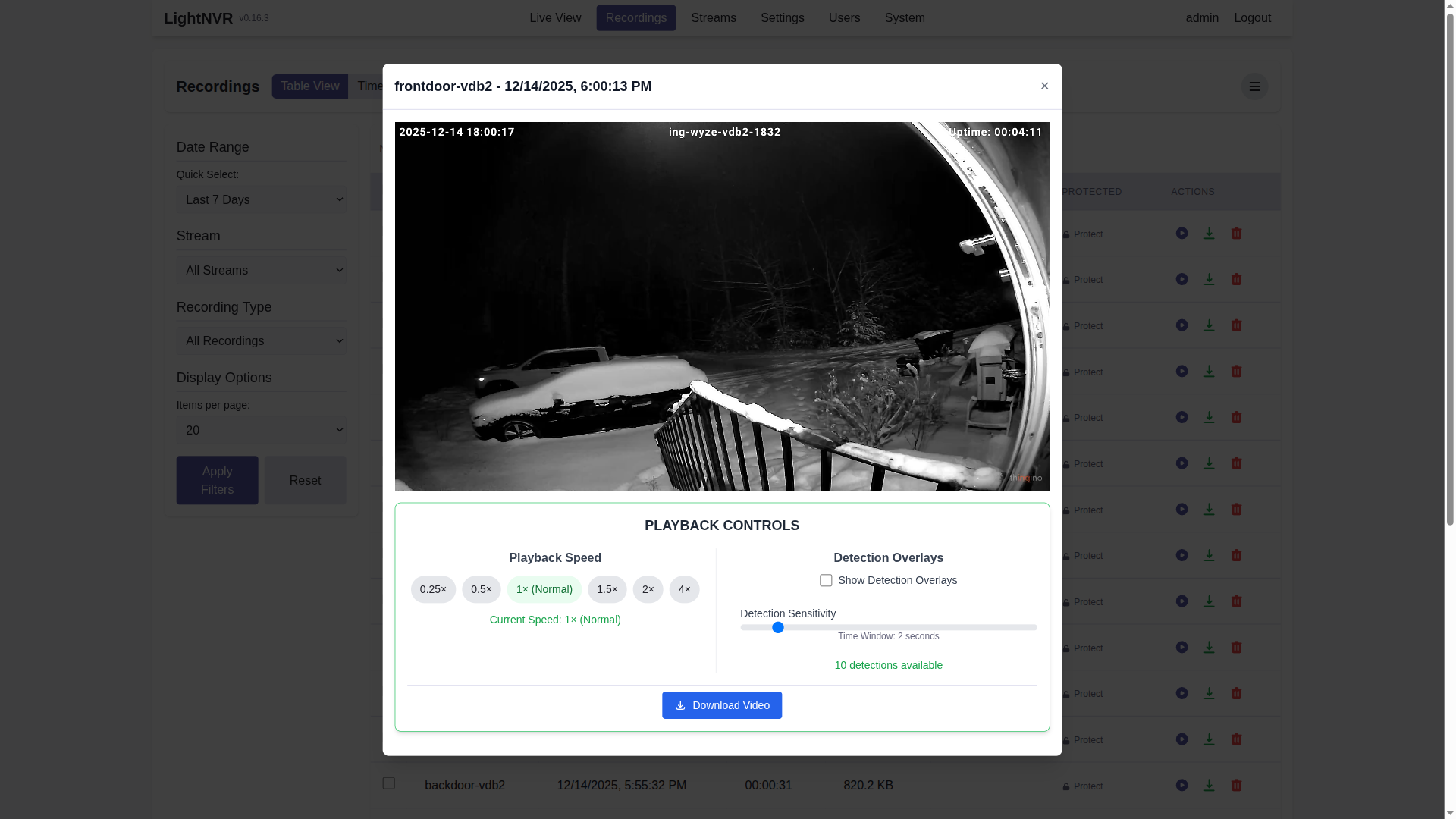
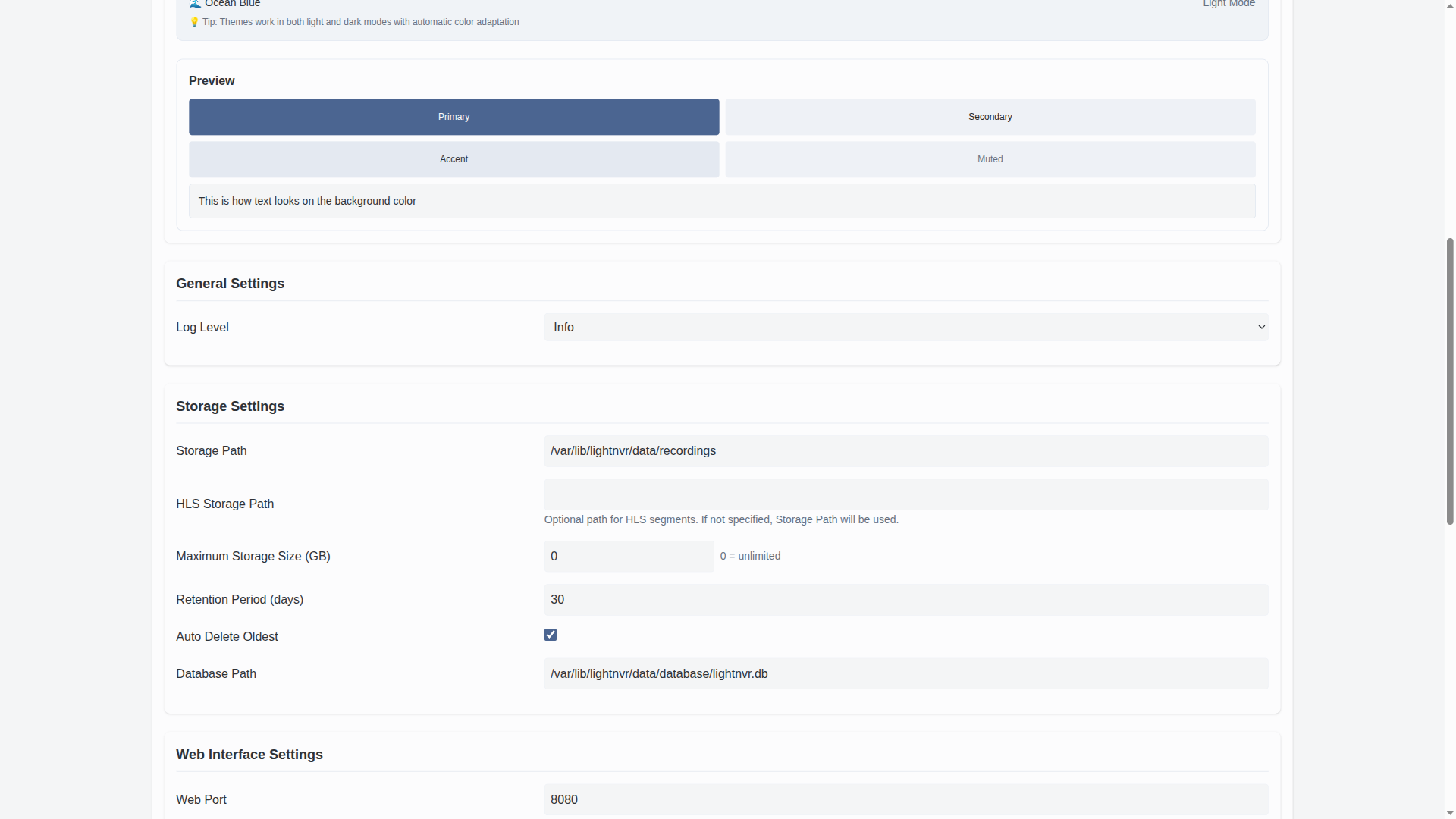
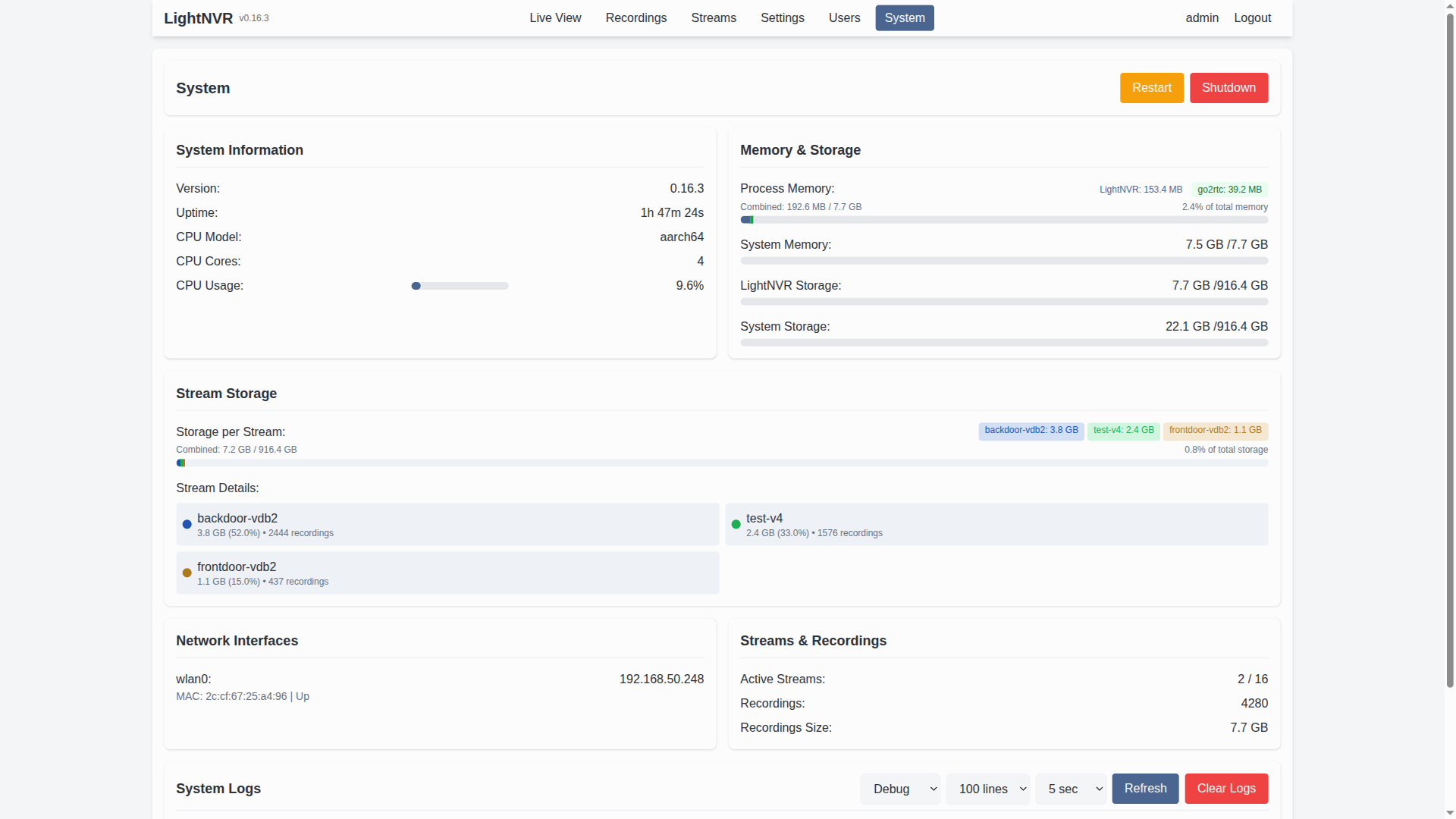
What is lightNVR?
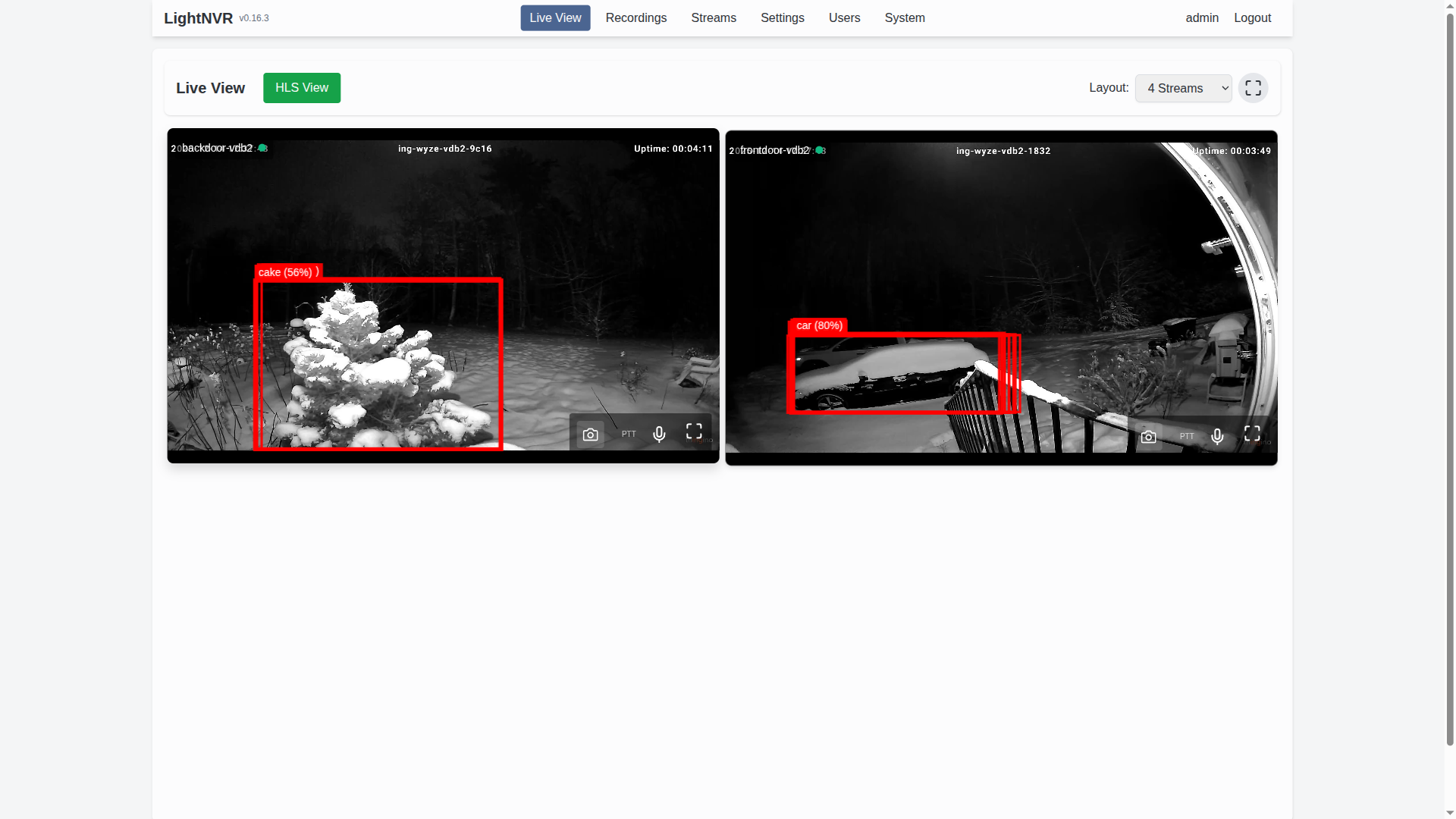
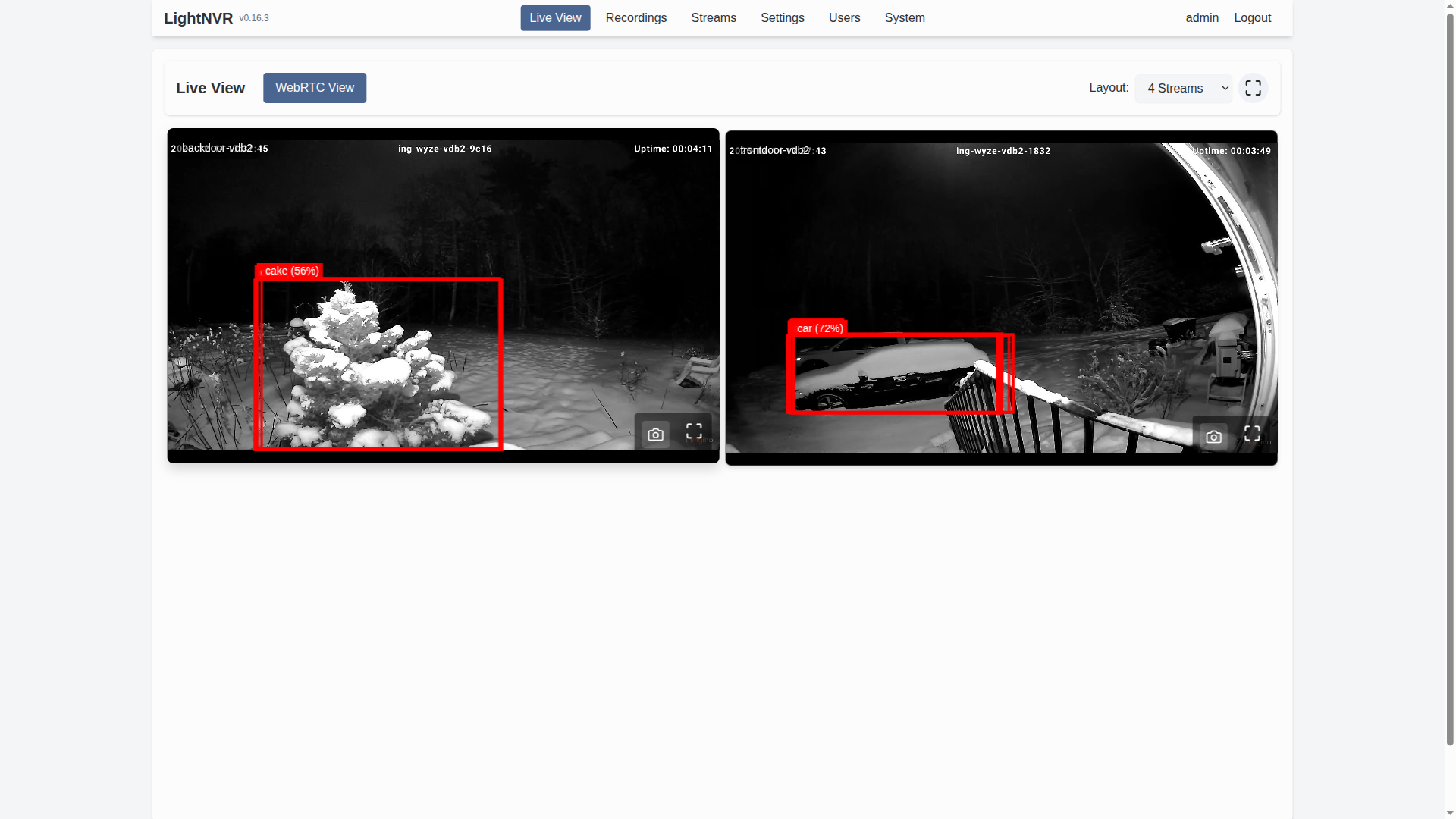
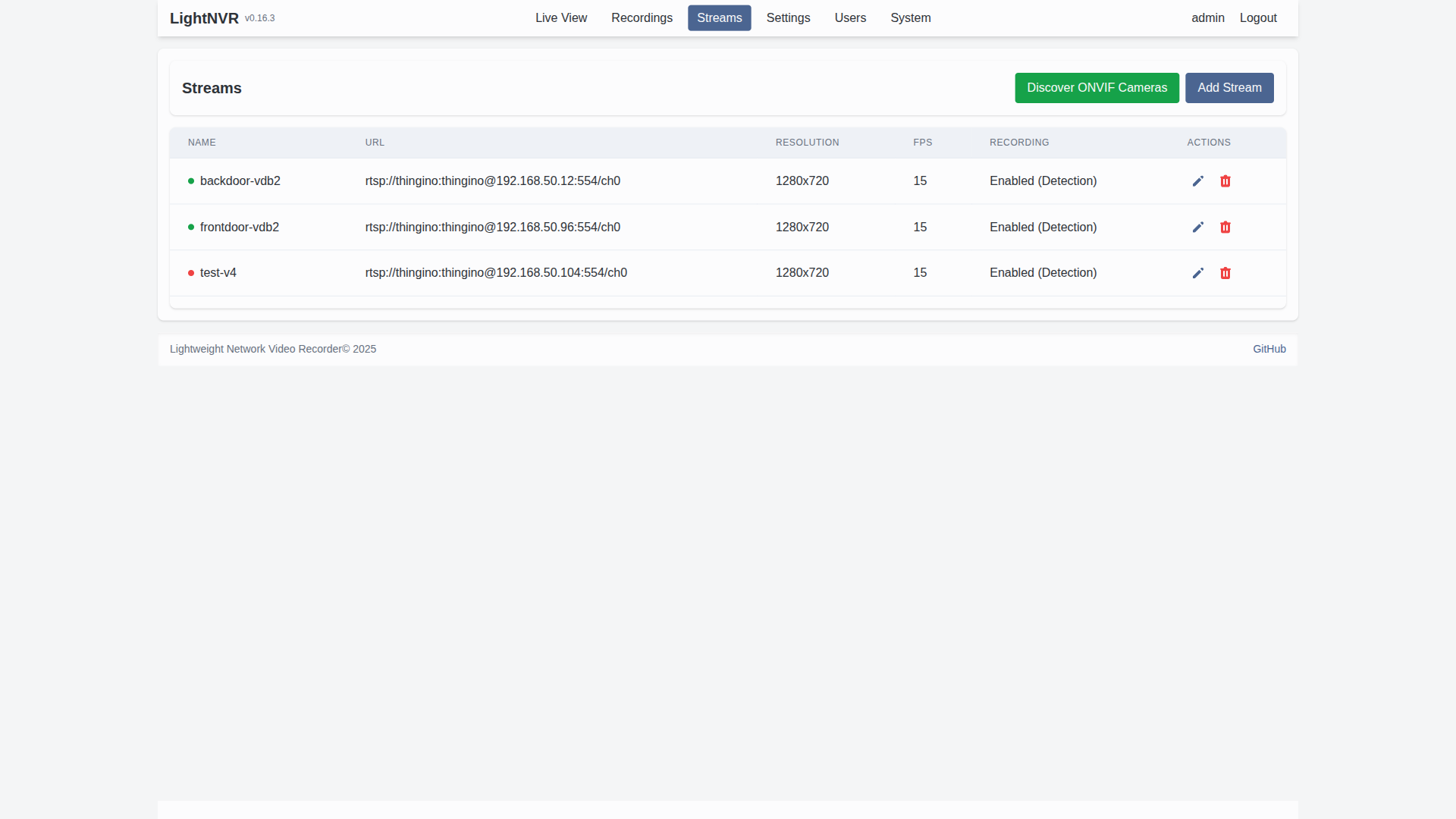
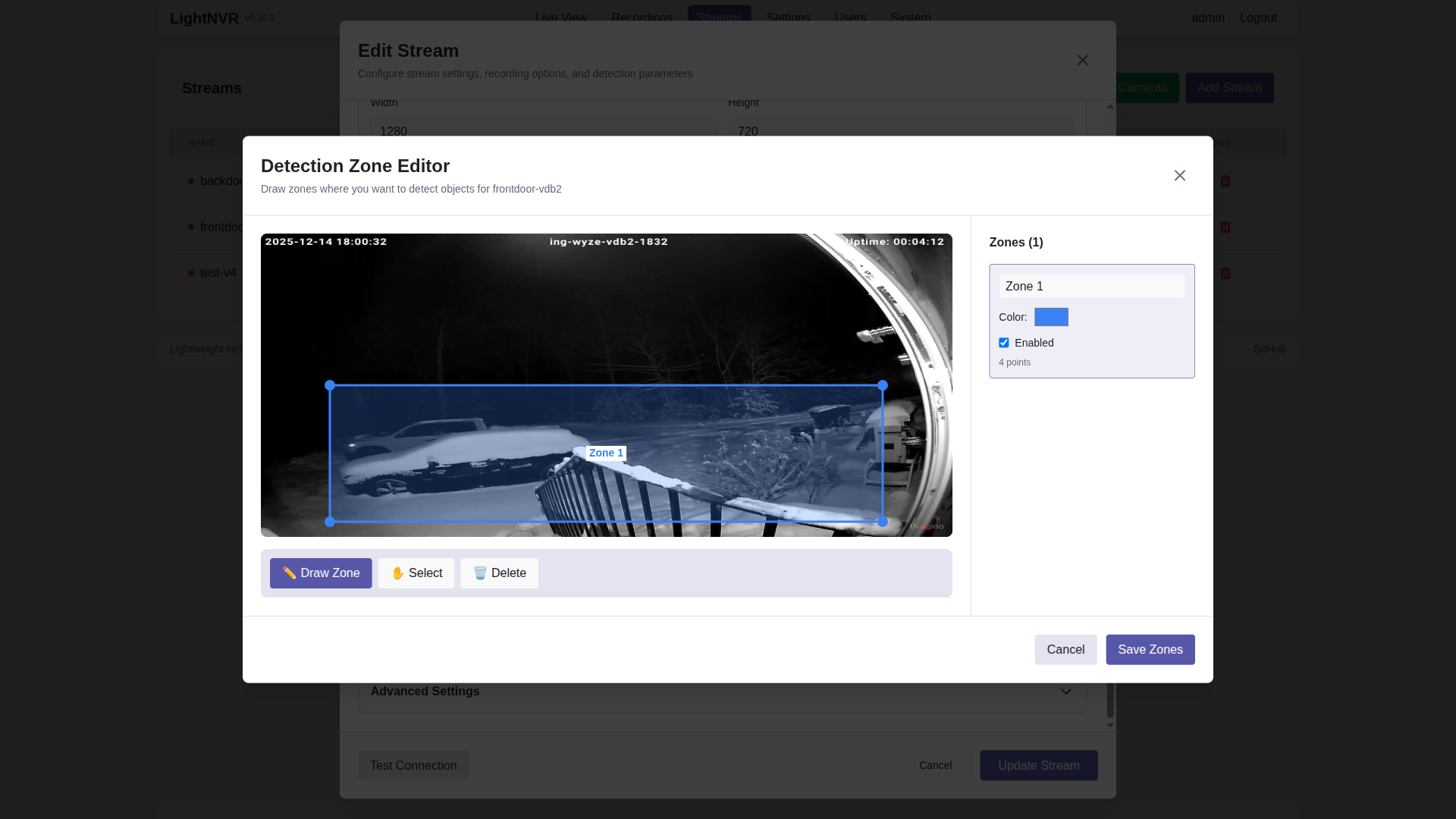
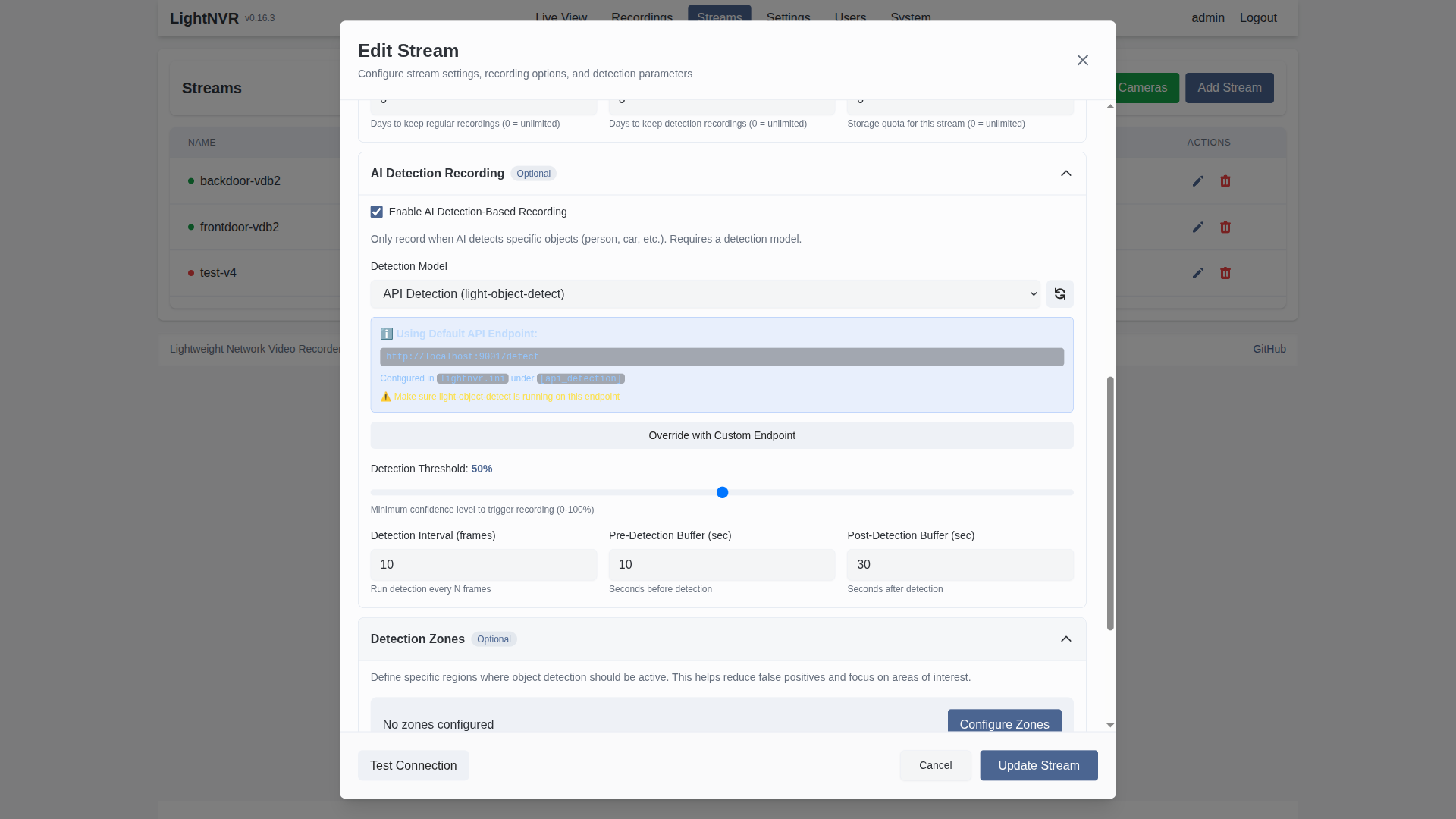
LightNVR is a lightweight network video recorder designed to run efficiently on resource-constrained Linux devices such as Raspberry Pi and other SBCs with as little as 256MB RAM. Written in C with a Preact/Tailwind web UI, it handles multiple IP camera streams via RTSP and ONVIF, recording to standard MP4/MKV containers. The streaming backbone is go2rtc, providing ultra-low-latency WebRTC and compatible HLS playback with automatic NAT traversal. Object detection uses an external API (typically light-object-detect) supporting ONNX and TFLite models with visual polygon-based detection zones. The UI offers 8 color themes with light/dark modes and adjustable intensity. It supports TOTP two-factor authentication, MQTT event streaming for Home Assistant integration, and Prometheus metrics. Deployment options include Docker, Docker Compose, native systemd service, and a Home Assistant add-on. Commercial licenses are available for organizations that cannot comply with GPL-3.0.
Should you self-host lightNVR?
lightNVR scores 49/100 on selfhost.directory (how scoring works) and ranks #14 of 24 in Video Surveillance. It has 288 GitHub stars.
It shipped 21 stable releases in the past year. The latest, 0.44.3, came out on 27 October 2026. New versions land roughly every 3 days.
Setup is moderate: expect some configuration beyond a single command. An official Docker image is available. It is GPL-3.0-licensed and written mostly in C.
Its closest alternative on selfhost.directory is OpenNVR (45/100, 183 stars). lightNVR scores higher overall. See lightNVR vs OpenNVR side by side.
Features
- Configurable Resolution and Frame Rate
- Demo Mode
- Detection Zones
- H.264/H.265 codec support
- HLS Streaming
- MQTT Event Streaming
- Multi-stream Support
- Object Detection
- ONVIF Motion Events
- Prometheus Metrics
- RTSP and ONVIF Support
- Storage Management
- TOTP two-factor authentication
- WebRTC Streaming
lightNVR README
More in Video Surveillance
 motionEyeSelf-hosted, open-source browser interface for the motion surveillance backend: runs USB, Pi and IP cameras with motion detection, recordings, timelapse and email alerts.
 motioneyeosSelf-hosted Linux distro that converts a single-board computer such as a Raspberry Pi into a video surveillance system with motion detection and a browser UI.
 OpenNVRSelf-hosted NVR with open AI adapter contract — run any model on your hardware, air-gapped by default, with full audit trails and model fingerprinting.
 Plate-MinderSelf-hosted license plate recognition for RTSP/MJPEG streams using OpenALPR, with SQLite, MQTT, Home Assistant auto-discovery, and web UI.
 ScryptedSelf-hosted video integration platform providing smart detections and NVR recording. Streams camera feeds to HomeKit, Google Home, Alexa, and Home Assistant.
 SeclusoSelf-hosted open-source home security camera for Raspberry Pi with MLS end-to-end encryption, mobile app, and optional self-hosted relay.
 SentryShotSelf-hosted, open-source VMS in Rust for CCTV/NVR setups: sub-2s full-resolution live view, 24/7 recording, motion zones and TFLite object detection.
- ShinobiShinobi is an open-source CCTV and NVR solution written in Node.js, supporting IP and local cameras with RTSP, ONVIF, H.264/H.265, motion/object detection, multi-tenancy, and a web/mobile interface.
 speed-cameraSelf-hosted, open-source speed camera using OpenCV to track moving objects, calculate speed, and serve data via a built-in web server. Runs on Raspberry Pi, Windows, Unix
 UnblinkUnblink is a self-hosted, open-source camera monitoring app using vision language models to analyze feeds, chat naturally, and search recorded frames.
 UniFi-Protect-BackupPython tool to backup unifi event clips in realtime
 unvr-nas-backupA self-hosted Docker container that backs up 24/7 UniFi Protect footage to network storage, turning proprietary video into standard MP4 files organized by camera and date
0 comments