
Self-host Income Generator (IGM)
3.0.0-beta.9Passive income app manager with multi-proxy scaling
- Stars
- 237
- Port
- 4747 (WebUI dashboard)
- Requires
- Docker (container runtime), WSL2 (on Windows)
What is Income Generator (IGM)?
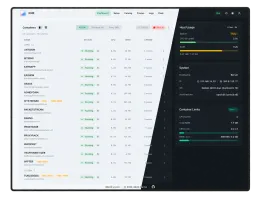
Income Generator (IGM) is a self-hosted manager for passive income applications that share unused bandwidth. It supports over 20 bandwidth-sharing services including Honeygain, EarnApp, Peer2Profit, and Traffmonetizer. IGM provides a CLI, a terminal UI (TUI), and a web dashboard (port 4747) to deploy, monitor, and scale these applications across multiple proxies. It runs on Linux, macOS, and Windows via WSL2, with automatic ARM emulation via QEMU for low-power SBCs like Raspberry Pi. Features include credential encryption, automatic updates and reward claims, configurable resource limits, and fleet management across nodes. The software is distributed under a proprietary license that permits personal and commercial use but forbids redistribution or hosted services.
Should you self-host Income Generator (IGM)?
Income Generator (IGM) scores 38/100 on selfhost.directory (how scoring works) and ranks #19 of 20 in Network Utilities. It has 237 GitHub stars.
It shipped 1 stable release in the past year. The latest, 2.0.1, came out on 17 April 2026.
Setup is moderate: expect some configuration beyond a single command. It is Other-licensed and written mostly in Shell.
Its closest alternative on selfhost.directory is MyIP (75/100, 12 239 stars). It scores higher overall, so compare the two before you pick. See Income Generator (IGM) vs MyIP side by side.
Features
- ARM emulation (QEMU)
- Auto claim
- Auto-update
- CLI Interface
- Credential encryption
- Fleet management
- Multi-Platform Support
- Multi-proxy scaling
- Proxy install limits
- Quick actions
- Resource Limits
- TUI interface
- Web Dashboard
- WebUI interface
Income Generator (IGM) README
More in Network Utilities
 IT ToolsSelf-hosted, open-source collection of web tools for developers: hashing and encryption, format converters, QR codes, subnet math, cron and regex helpers.
 LadderSelf-hosted, open-source HTTP proxy that strips CORS and paywall headers, injects code, and applies per-domain YAML rulesets; runs as a Go binary, Docker or Helm chart.
 LibreSpeedSelf-hosted, open-source HTML5 speed test measuring download, upload, ping and jitter in the browser, with optional telemetry and multiple test points.
 LuckySelf-hosted networking suite for routers: IPv6/IPv4 port forwarding, DDNS, reverse proxy, STUN tunneling, WOL, ACME certs, run as one Go binary with a web admin UI.
 Maza ad blockingOpen-source, self-hosted local ad blocker written only in Bash: one command rebuilds your hosts file to block ad domains, no browser extensions needed.
 MyIPOpen-source, self-hosted IP toolbox: look up IP and geolocation, detect WebRTC and DNS leaks, run speed, MTR, ping and Whois tests, all in one Docker container.
 MySpeedSelf-hosted speed test tracking monitors internet connections with configurable retention, cron scheduling, multiple servers, and visualization options.
 mystOpen-source GPL-3.0 implementation of a blockchain-based decentralized VPN network: WireGuard transport, provider and consumer modes, plus a browser NodeUI dashboard.
 NetProbe_PythonA containerized network monitor that checks connectivity, DNS response times, and bandwidth, then shows results in a dark-themed web dashboard with historical graphs.
 netronomeOpen-source, self-hosted network speed testing and monitoring: Speedtest.net, iperf3 and LibreSpeed tests, packet loss and DNS monitors, and server agents.
 networking-toolboxSelf-hosted, offline-first toolbox with 100+ networking utilities for IP addressing, subnetting, converting and verifying server configs.
 nsupdate.infoSelf-hosted dynamic DNS service using dyndns2 for clients and RFC 2136 for nameservers like BIND and PowerDNS.
0 comments