
Self-host deq
deq-server-v0.9.15Lightweight homelab control plane with Android app
- Stars
- 194
- CPU
- Any (virtually no CPU idle)
- RAM
- ~20 MB
- Storage
- Minimal (server.py is ~350KB)
- Ports
- 5050 (Web interface and HTTP API), 9051 (DeQ Nodes HTTP service for remote Wake-on-LAN)


What is deq?
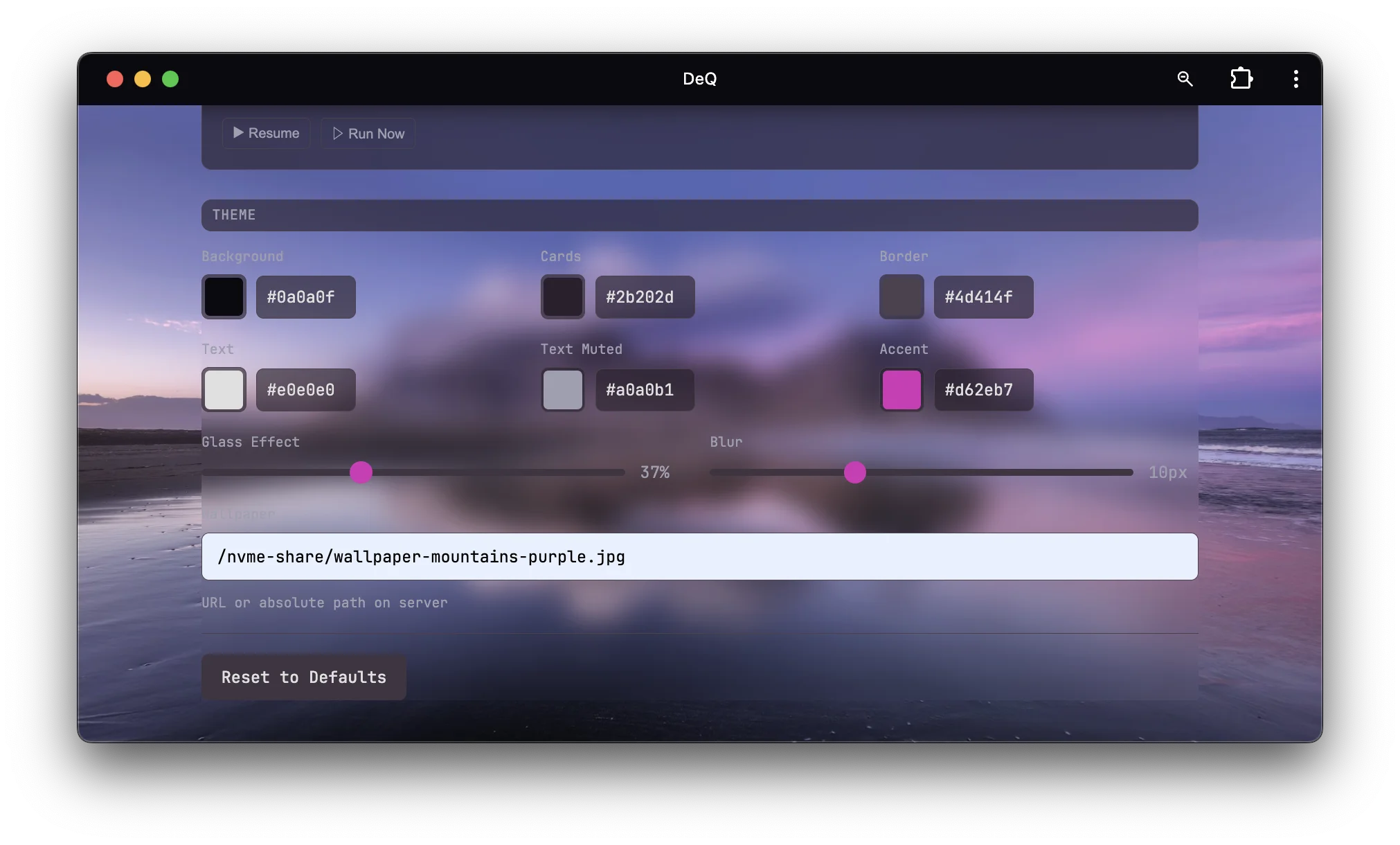
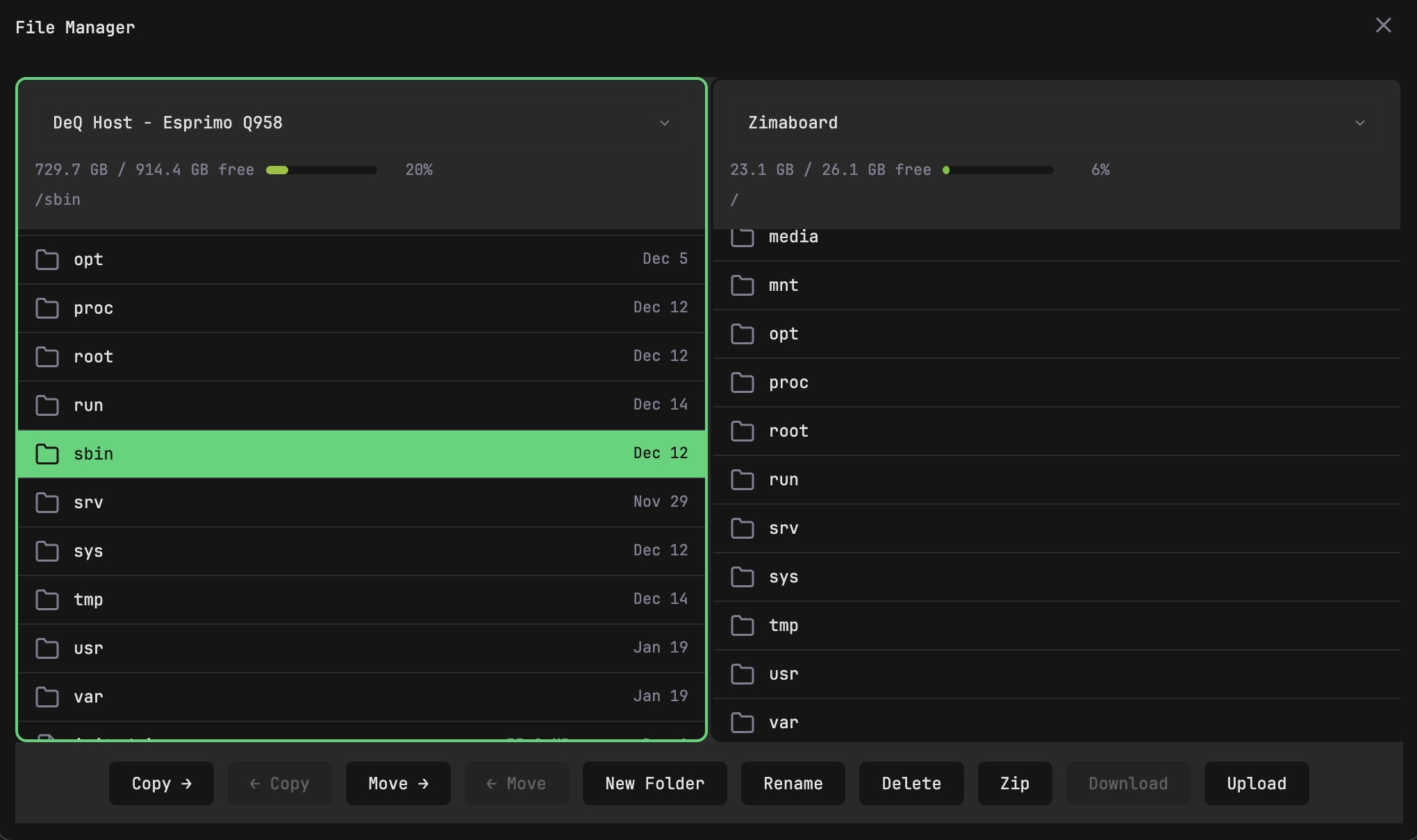
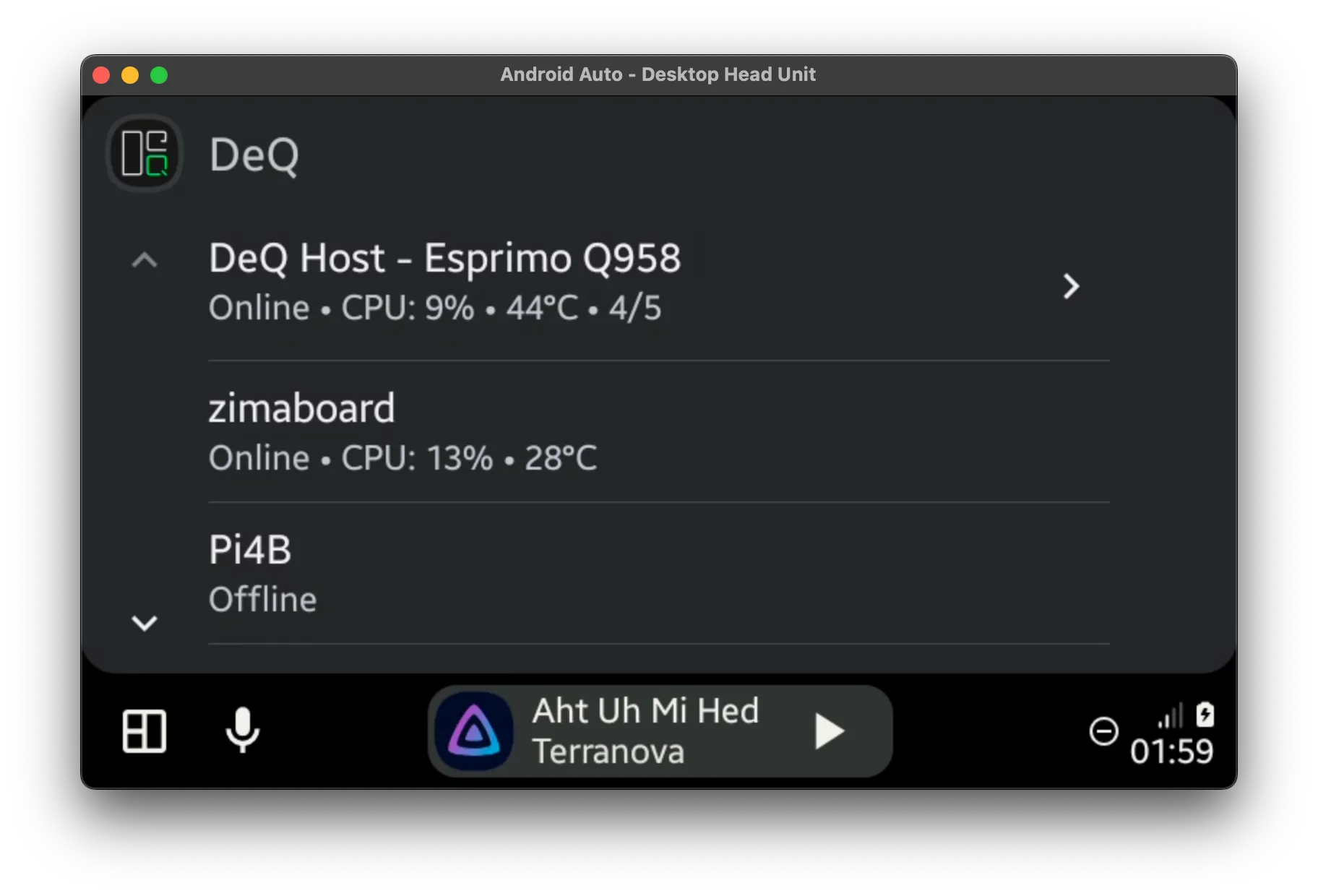
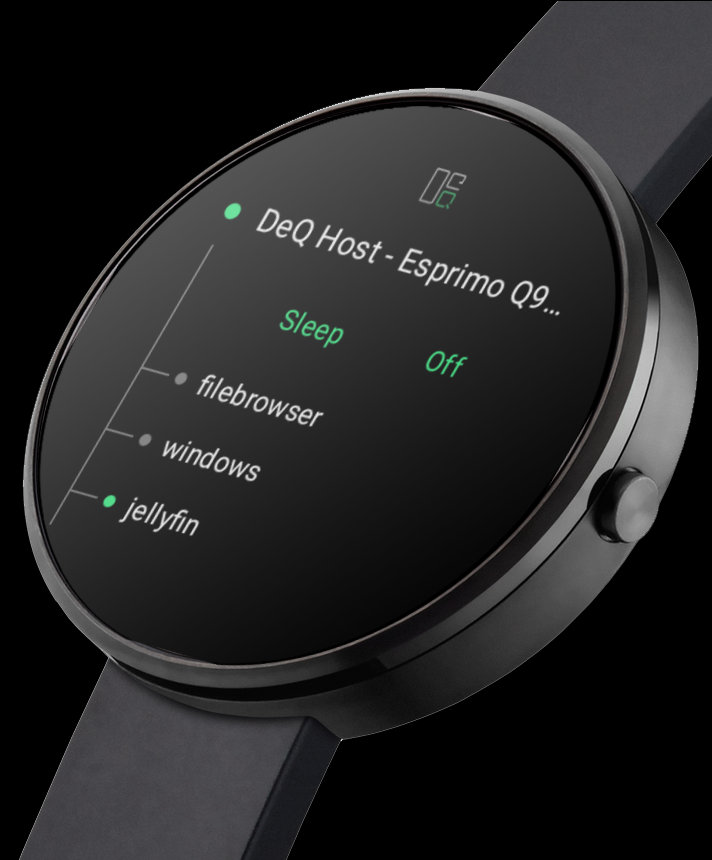
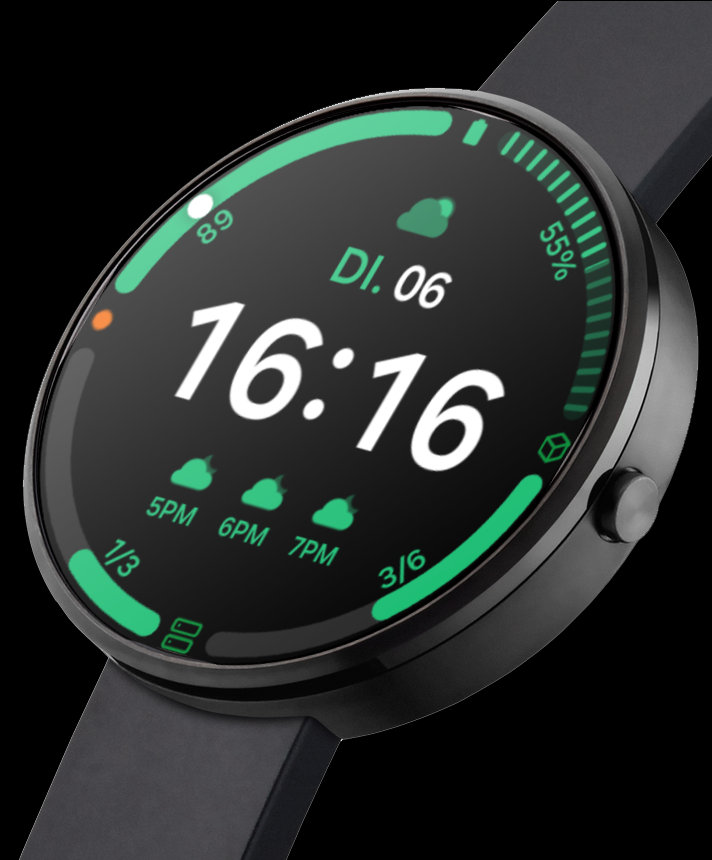
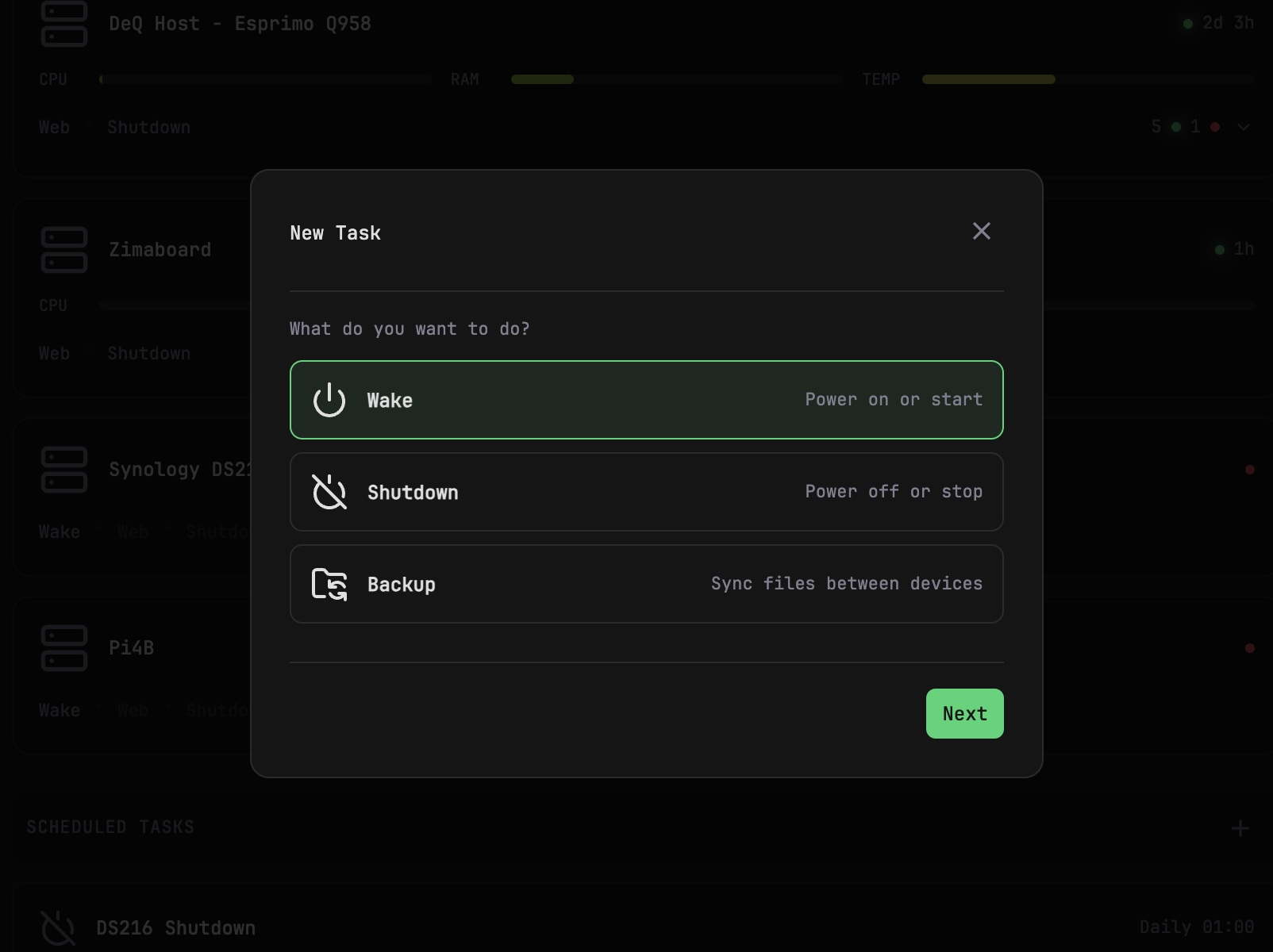
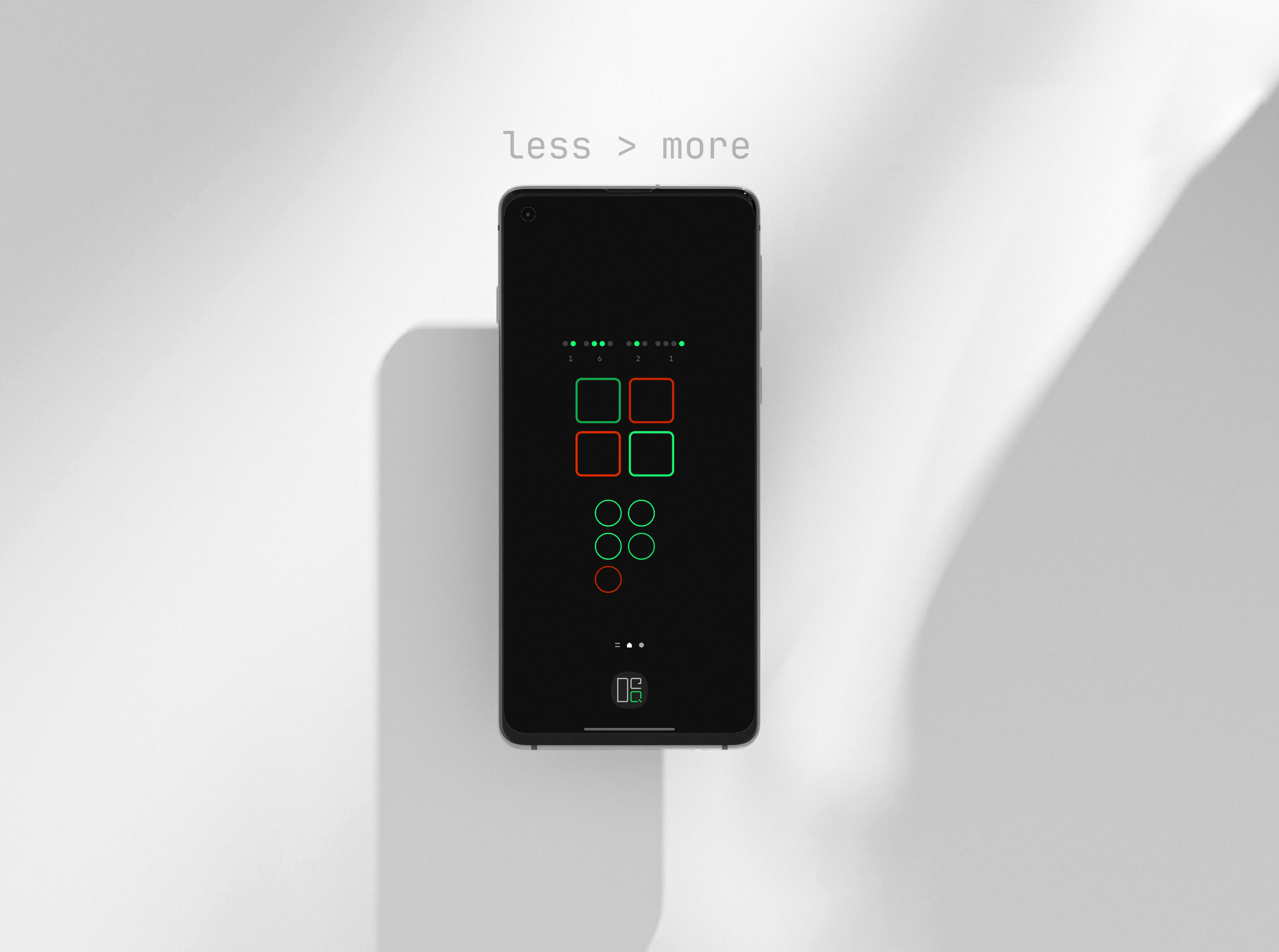
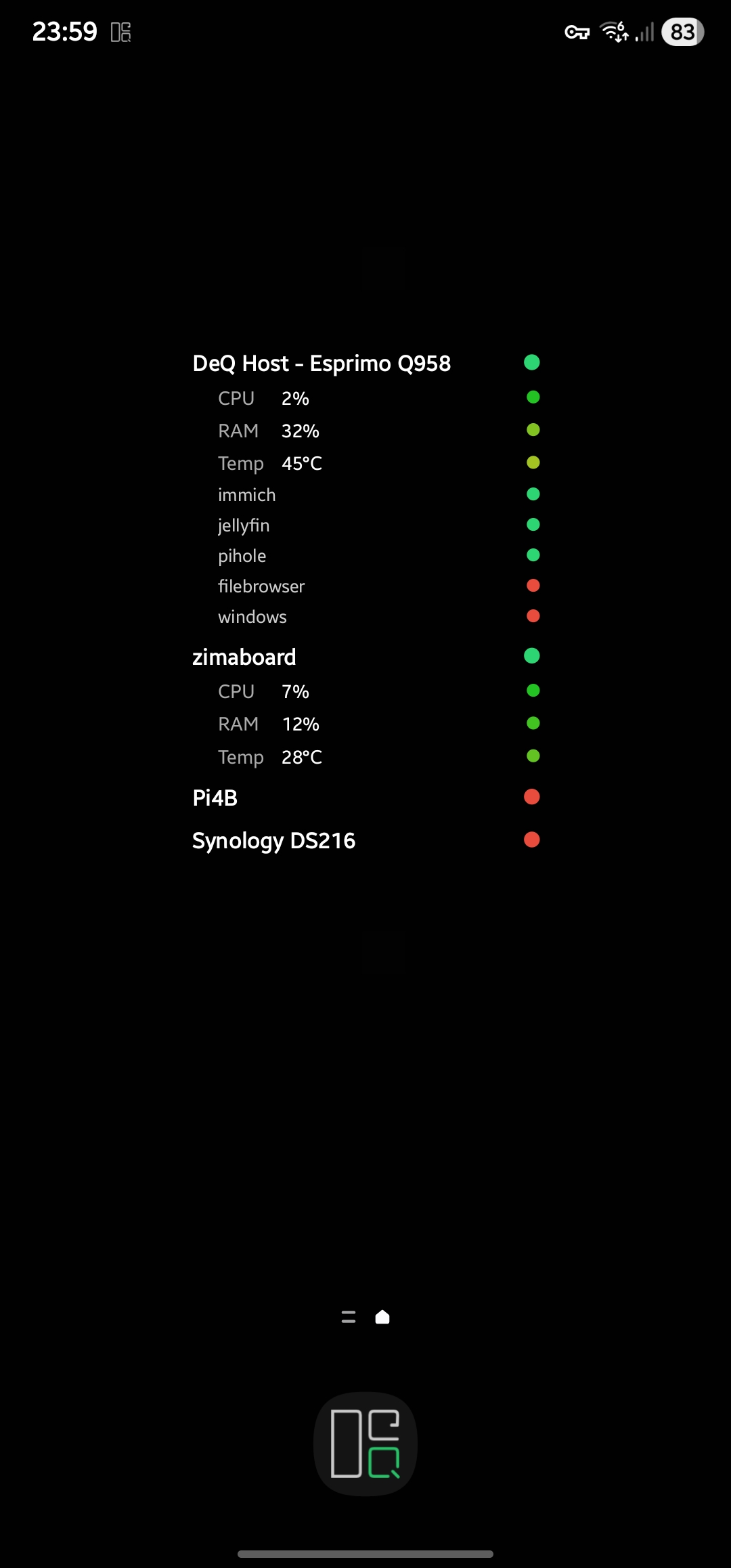
DeQ is a lightweight homelab control plane that runs as a single Python file (~350KB) on Linux with systemd. It provides SSH-based control over network devices including Wake-on-LAN, shutdown/suspend, Docker container management, dual-pane file manager with cross-device transfers, and scheduled tasks for automated backups and power management. The web interface is mobile-first, responsive, supports PWA installation, theming, and an optional admin password. A native Android app (free on Google Play and GitHub) provides background monitoring with push notifications, while the Pro version (€6.99) adds widgets, live wallpaper, ambient mode, Android Auto, Wear OS, and "Sleep With Me" automation. DeQ also offers HTTP and Extension APIs for integration with Home Assistant, Tasker, and custom Python extensions. It runs on minimal hardware (tested on Pi Zero, recommended Pi 4/ZimaBoard class) using ~20MB RAM and near-zero CPU. Licensed CC BY-NC 4.0 (free for personal use, no commercial use without permission).
Should you self-host deq?
deq scores 43/100 on selfhost.directory (how scoring works) and ranks #4 of 6 in Administration. It has 194 GitHub stars.
It shipped 10 stable releases in the past year. The latest, deq-server-v0.9.15, came out on 27 January 2026. New versions land roughly every 2 days.
Setup is moderate: expect some configuration beyond a single command. It is Other-licensed and written mostly in Python.
Its closest alternative on selfhost.directory is Nexterm (64/100, 5 113 stars). It scores higher overall, so compare the two before you pick. See deq vs Nexterm side by side.
Features
- Admin password authentication
- Android Pro appPaid feature (€6.99 one-time)
- DeQ Nodes
- Device monitoring with alarms
- Dual-pane file manager
- Extension API
- HTTP API
- Native Android app (free)
- Scheduled tasks wizard
- Sleep With Me automationPro feature only
- SSH-based device control
- Systemd Service
- Theming
deq README
FAQ
Can I contribute to core?
PRs welcome for bug fixes, performance improvements, code cleanup. New core features require an issue first. Features requiring external dependencies or breaking Pi Zero compatibility will be declined.
What is the development philosophy?
Single-file, zero dependencies (Python stdlib only). 500KB limit forces hard choices. Unix philosophy — lightweight wrappers around rsync, SSH, system calls. "Works on a Pi Zero" is a hard requirement for core server.
Does DeQ replace Homepage/Homarr?
No. DeQ is complementary. Homepage/Homarr are beautiful dashboards with widgets and service integrations. DeQ provides Wake-on-LAN, shutdowns, file transfers, container control on remote hosts, and scheduled backups.
Where does DeQ fit compared to other tools?
DeQ is a control layer, not a dashboard. Unlike Heimdall/Homer (link dashboards) or Homepage/Homarr (feature-rich Docker dashboards) or Cockpit/Webmin (heavy admin panels), DeQ provides actual system control (WoL, shutdowns, file ops, container control, backups) at 350KB on a 5W device.
How can DeQ be so lightweight?
Unix philosophy — DeQ wraps rsync, ssh, systemctl rather than replacing them. SSH is the universal interface. No external libraries, Python standard library only. Backend is 82KB.
How is Android battery life?
Free version uses 30-minute background polling. Pro allows configurable intervals. Real-world testing shows under 1% battery over 24 hours at 60-second intervals, invisible at 5-minute intervals.
What is the 500KB limit?
A deliberate constraint to prevent scope creep. Features compete for space, forcing only genuinely useful ones to survive. The goal is software you install once and forget about.
Why JSON instead of YAML or a database?
JSON is deterministic with no whitespace sensitivity or ambiguous type coercion. Python's json module is in the standard library. DeQ stores devices, tasks, preferences — a config file, not a dataset.
Why no Docker?
DeQ provides system control (Wake-on-LAN, shutdowns, filesystem access, SSH) which would require host networking, Docker socket access, privileged mode, and volume mounts in a container, negating isolation benefits while adding overhead.
Is DeQ's minimal approach equal to a lack of features?
No. Minimalism means minimal overhead and dependencies, not minimal features. Everything lives in one Python file with no pip install, node_modules, or database.
Pi or bigger hardware?
DeQ runs on a Pi Zero as proof of architecture. Pi 4 / ZimaBoard class is recommended for headroom. Bigger hardware gives snappier file operations but defeats the low-power philosophy.
More in Administration
 EpoptesOpen-source computer lab management tool for screen broadcasting, monitoring, remote command execution, and client control in educational environments.
 garage-s3-webuiOpen-source admin web UI for Garage, the self-hosted S3-compatible object store: health status, cluster layout, buckets, object browser and access keys.
 HeadplaneSelf-hosted, open-source web admin panel for Headscale, the open Tailscale control server: nodes, ACLs, DNS, SSO and browser SSH.
 headscale-adminSelf-hosted web UI for headscale (Tailscale control server). Manage users, nodes, routes, ACLs via static files in Docker or any web server.
 IPMI-Fan-ControllerSelf-hosted web interface to manually control Dell server fan speeds through IPMI, replacing loud automatic fan curves with quiet manual control for homelab servers.
 iRedAdminiRedAdmin is a self-hosted, open-source web admin panel for iRedMail email servers with unlimited domains, users, and multi-language support.
 KetesaKetesa is a self-hosted, open-source admin UI for Matrix homeservers managing users, rooms, media, and federation. Supports 10 languages, OIDC/SSO, runs via Docker.
 MCSManagerSelf-hosted, open-source game-server control panel for Minecraft, Palworld, Terraria and Steam servers, with Docker, multi-user permissions and distributed nodes.
 NextermOpen-source, self-hosted server management console: SSH, VNC and RDP sessions, an SFTP file manager, Docker deployments, monitoring and team organizations.
- NirvatiSelf-hosted Rust backend for the n5i/Nirvati Kubernetes server-management stack: GraphQL API, node and app agents, plugins; this fork adds Tailscale and Longhorn.
 Postfix AdminOpen-source, self-hosted web interface for administering Postfix mail servers: virtual domains, mailboxes, aliases, quotas, DKIM keys, TOTP logins and fetchmail.
 poweradminSelf-hosted, open-source web control panel and REST API for PowerDNS: manage zones, records, DNSSEC and users, with LDAP/SSO and Docker deployment.
0 comments